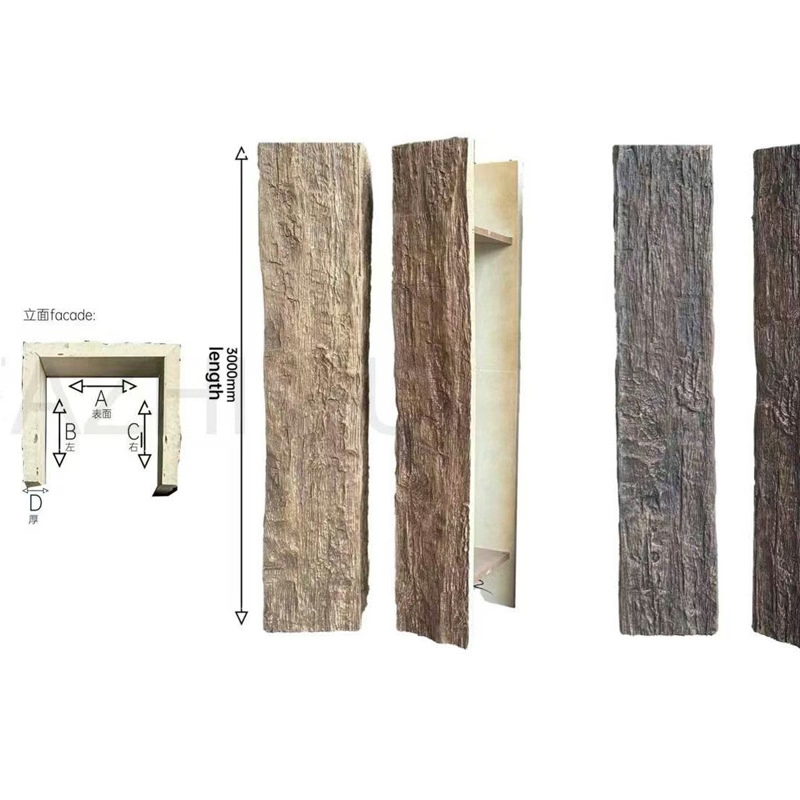
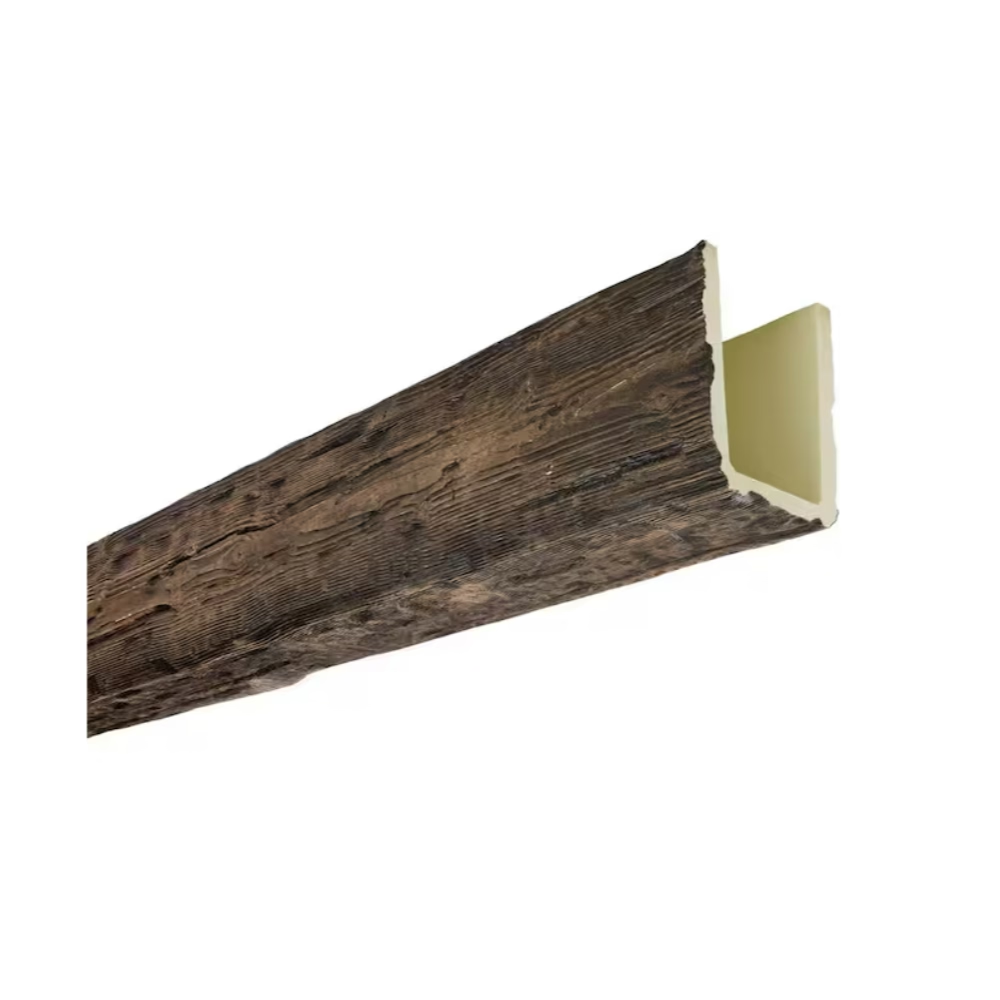
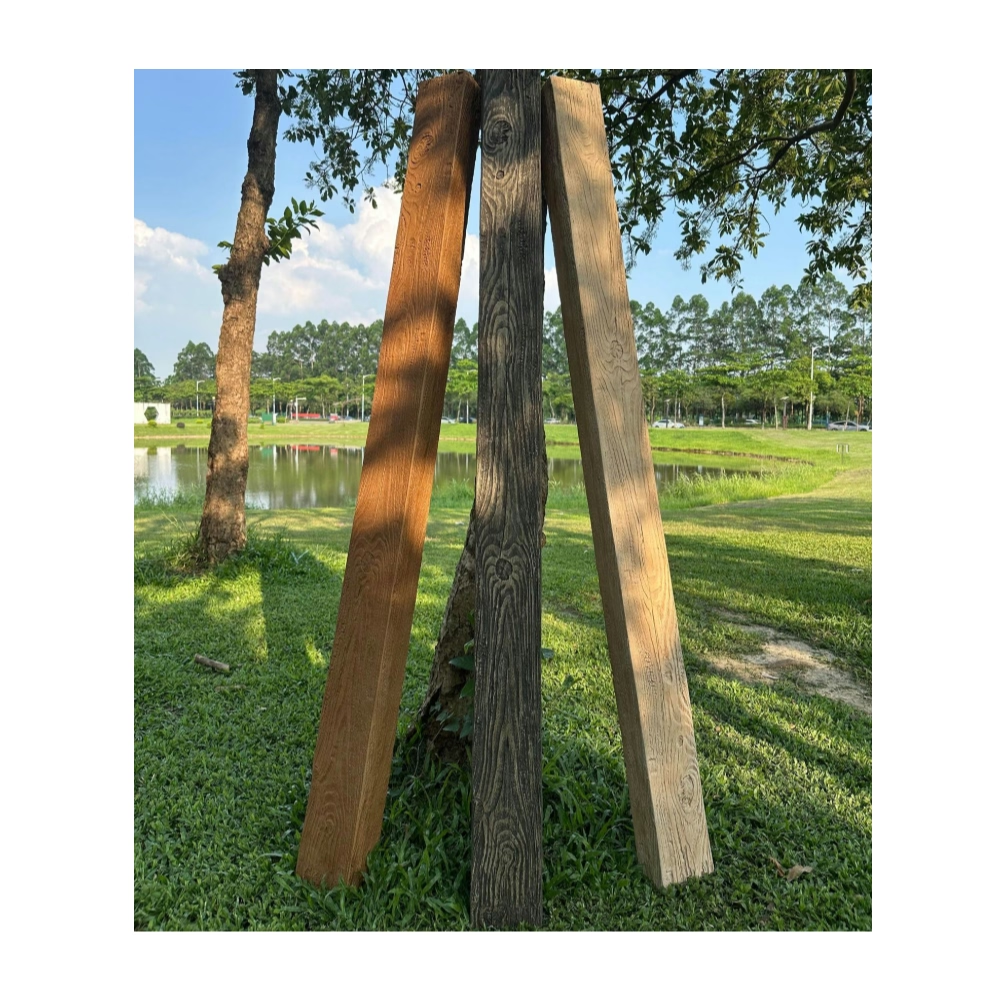
A model home is not a real home. It is a carefully constructed sales tool that has to do the work of convincing buyers to commit to the largest purchase of their lives. Every element in the space is chosen because it tells a story about the life that the buyer could live there. Faux beams have become one of the most effective storytelling elements in the model home toolkit because they signal warmth, craftsmanship, and permanence without the practical concerns that real timber brings to a development schedule.
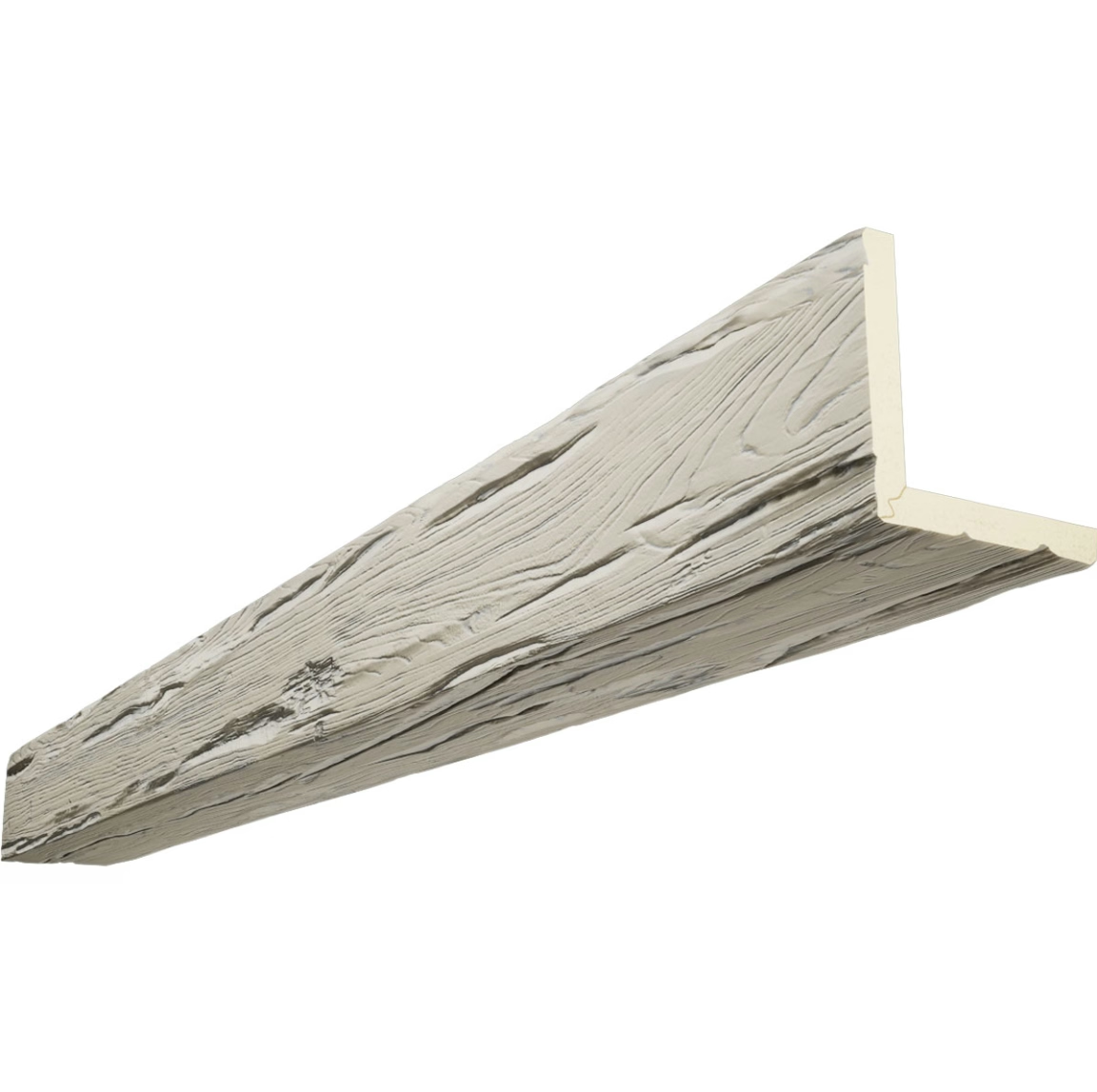
Polyurethane faux beams work particularly well in the model home context because they combine aspirational appearance with development-friendly logistics. The beams can be installed quickly during the model construction phase, photographed beautifully for marketing materials, and maintained without the risk of warping or fading during the months or years that the model stays on display.
The Storytelling Power of Beams
Ceiling beams are one of those architectural elements that everyone recognizes but few people think about deliberately. They suggest a home with character. They suggest a builder who cares about details. They suggest an interior that has been considered rather than thrown together.
In a model home, that suggestion is exactly what the builder wants. A bare drywall ceiling reads as a starter home. The same ceiling with a few carefully placed faux beams reads as a custom home. The cost difference is modest, but the perception difference is dramatic.
The beams in a model home also help define the space. A great room with a single beam at the ridge anchors the volume. A dining area with two parallel beams creates a sense of intimacy within an open plan. A kitchen with a beam over the island defines the work zone. Each of these visual moves is something that a buyer can imagine in their own home.
Why Polyurethane Is the Model Home Standard
Model homes are built on tight schedules. A typical single-family model home is constructed over a few months, fully furnished and decorated, and opened to the public within a window that the developer has already announced. Real timber beams do not fit that schedule well. They have to be sourced, often from a supplier with a wait time. They have to be delivered, often in awkward lengths that are difficult to stage on the construction site. They have to be finished on-site, often with stain and sealer that adds days to the schedule and fumes to the model.
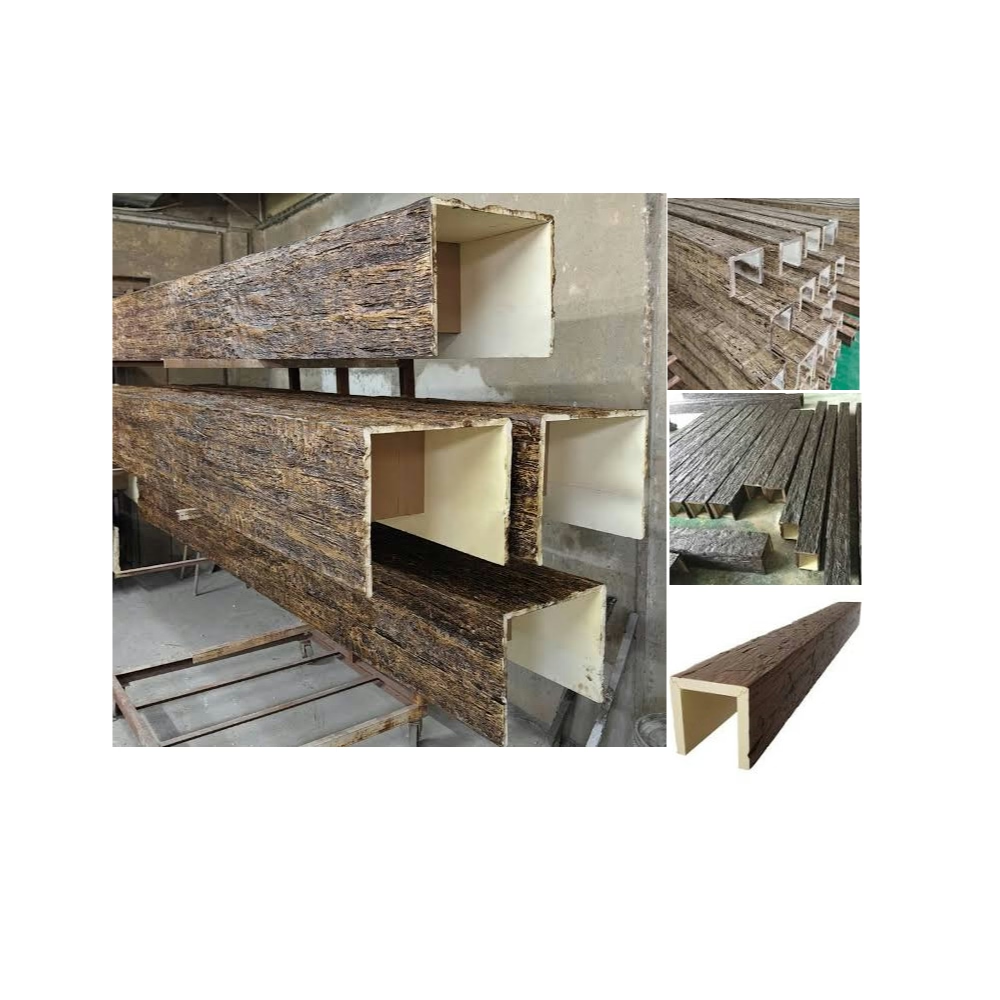
Polyurethane beams eliminate those problems. They arrive on schedule, ready to install, with the finish already applied. A crew of two installers can hang a complete beam package in a single day. The model home opens on time, with the beams in place and looking exactly as they will in marketing materials.
The weight advantage is also significant in the model home context. Construction crews are working on tight tolerances, and the additional dead load of heavy timber can complicate ceiling framing decisions. Faux beams add a fraction of the load, so the ceiling structure can be designed for normal residential loads without reinforcement.
Designing the Beam Package
The beam package in a model home has to be coordinated with the rest of the interior design. The beams should match the flooring tone, complement the cabinetry, and harmonize with the wall finishes. In a model home where every other element is being chosen for visual effect, the beams cannot be an afterthought.
Most model home designers work with a small palette of beam finishes that complement popular flooring and paint colors. A warm walnut beam works with medium-tone hardwood floors and warm neutral walls. A driftwood gray beam works with lighter floors and cooler wall tones. A dark ebony beam works with white walls and pale floors in modern model homes.
The layout of the beams also has to be coordinated with the lighting plan. Pendants are usually hung from the beams, so the beam position has to allow for the pendant drop and the desired light distribution. Recessed lighting is often placed between beams, and the layout has to avoid conflicts between beams and light fixtures.
For model homes with coffered ceilings or other elaborate ceiling treatments, the beams are typically integrated into the overall ceiling design rather than applied as an afterthought. The beams define the coffers, anchor the chandeliers, and articulate the geometry of the room.
Coordinating With Furniture and Accessories
Model home designers are skilled at creating visual vignettes that tell a story about a lifestyle. The beams contribute to that story by providing a backdrop for the furniture and accessories. A dining table under a beam suggests family gatherings. A reading chair next to a beam suggests quiet evenings. A kitchen island under a beam with pendants suggests cooking as a social activity.
The beam finish has to be chosen with the furniture in mind. Light oak beams with traditional furniture create a classic American look. Dark walnut beams with leather and metal create a transitional look. Gray driftwood beams with white slipcovered furniture create a coastal or modern farmhouse look. Each combination tells a different story.
Accessories such as chandeliers, pendants, fans, and ceiling-mounted speakers have to be coordinated with the beams as well. The hardware should complement the beam finish without competing with it. A wrought iron chandelier looks natural against a dark stained beam. A polished nickel pendant looks natural against a lighter beam finish. The combination has to feel intentional.
Installation Timing in the Construction Sequence
Model home construction follows a predictable sequence. The framing goes up first, followed by the mechanical systems, then the drywall, then the finish work. Beams are typically installed after the drywall and painting are complete but before the flooring is finished. The order allows the beams to be installed without risk of damage from later trades.
For most model homes, the beam installation takes one to three days depending on the size of the home and the number of beams. The crew arrives with the pre-finished beams, mounting hardware, and a layout drawing. They mark the beam positions on the ceiling, install the blocking or mounting hardware, and then lift each beam into place.
The speed of installation is one of the main advantages of polyurethane beams in this context. A model home builder cannot afford to have beams taking up a week of construction time. The faster the beams are in, the faster the model opens, and the sooner the developer starts earning on the investment.
Touch-Up and Maintenance During the Sales Period
Model homes stay on display for months or even years. During that time, the beams are touched by visitors, exposed to direct sunlight through the windows, and subjected to the same wear as any residential ceiling. Polyurethane beams handle this exposure better than real timber because the finish is factory-applied and designed for long-term stability.
Dust accumulation on the beams is the main maintenance issue. Periodic dusting with a soft cloth keeps the beams looking fresh. For beams in areas with high touch traffic, a light cleaning with a damp cloth removes fingerprints and smudges without affecting the finish.
Touch-up kits from the beam supplier address any minor damage that may occur during the sales period. A scuff from a ladder, a small scratch from moving furniture, or a chip from an accidental impact can be repaired with the color-matched filler and finish provided in the kit. The repair is usually invisible after the finish is blended.
Marketing the Model Home With Beams
Once the model home is complete, the beams become part of the marketing toolkit. Professional photography captures the beams at their best, with lighting that emphasizes the texture and color. Virtual tours and video walkthroughs show the beams in context, helping buyers imagine living in the space.
The beams often appear in the brochure, the website, and the social media posts that promote the development. A well-designed model home with faux beams photographs better than the same home without them. The visual interest of the beams draws the eye and makes the marketing imagery more compelling.
Sales agents also use the beams as a talking point during the sales process. Buyers who comment on the beams are given a brief explanation of the material, the finish, and the maintenance. The conversation is an opportunity to reinforce the quality of the home and the attention to detail that the developer has invested.
Beams Across the Price Range
Faux beams are not limited to the most expensive model homes. They appear in entry-level homes, move-up homes, luxury homes, and active adult communities. The beam style and finish change with the price point, but the principle is the same. Beams signal quality and character at any price level.
In entry-level homes, beams are typically simple in profile and modest in finish. A smooth or lightly grained beam in a warm neutral tone is sufficient to add visual interest without overwhelming the space or the budget. The installation is quick and the impact is immediate.
In move-up homes, beams are typically more detailed. A rough-sawn profile or a hand-hewn texture in a richer tone adds the kind of character that move-up buyers expect. The beams often coordinate with the cabinetry and the flooring to create a coordinated design.
In luxury homes, beams are typically the most detailed and the most carefully integrated. Master craft detail, custom finishes, and coordinated corbels and brackets all contribute to the sense of quality that luxury buyers demand. The beam package is treated as an architectural feature rather than a decoration.
What Buyers Notice and Remember
Buyers do not always remember the beams by name, but they remember how the space felt. A model home with well-designed beams feels warmer, more considered, more like a real home. A model home without beams feels colder, more generic, more like a builder's basic package.
The emotional impact of beams in a model home is well documented in market research. Buyers consistently rate model homes with beams higher than equivalent homes without beams on measures of warmth, character, and quality. The beams are not the only factor in those ratings, but they are a significant contributor.
Developers who understand this dynamic invest in their model home beam packages accordingly. The investment is modest compared to the overall model home budget, and the return in buyer perception is substantial. A well-designed model home with beams can move a development more quickly than a comparable home without beams.
Common Mistakes to Avoid
Some model home beam installations miss the mark. Beams that are too dark can make a ceiling feel lower. Beams that are too light can disappear against a pale ceiling. Beams that are too thick can overwhelm a modest ceiling height. Beams that are too thin can look out of proportion with the room.
Working with a designer who has model home experience is the best way to avoid these problems. The designer knows the typical ceiling heights in the development, the standard paint colors, and the lighting plans. The designer can specify a beam package that works with all of those elements.
Sample evaluation is also important. A beam that looks correct in a sample board can look wrong in the actual room. The lighting in the model home may be different from the lighting in the supplier's showroom. The proportions may be different from the sample. Reviewing samples in the actual room, even before construction is complete, helps confirm that the beam package will work.
The Long-Term Value of Model Home Beams
The beams in a model home serve the sales effort during the display period. After the development is sold out, the model home is often sold as a regular home. The beams remain in place and become a permanent feature of the property. The buyer of the model home gets the benefit of the beam package that was originally chosen for the sales effort.
In that sense, the beam package in a model home is an investment in two phases. It contributes to the sales effort while the model is on display. It becomes a permanent architectural feature after the model is sold. The developer benefits from the first phase. The eventual buyer benefits from the second phase. Both get more value from the property than they would without the beams.
Polyurethane faux beams are uniquely suited to this dual purpose. They photograph well for the sales effort, perform well during the display period, and remain in excellent condition as a permanent architectural feature. Few other building materials offer the same combination of sales-friendly appearance, development-friendly logistics, and long-term durability.
Technical References
ASTM standards cited in every specification
Test Data
Lab results from internal testing program
Updated 2026
Reviewed against current product specs