Farmhouse interiors have a particular way of making a room feel both lived-in and considered. The warmth comes from materials that look as though they've been part of the home for generations, and the architecture feels substantial without being heavy. Ceiling beams are central to that aesthetic. They give farmhouse rooms their signature horizontal structure, the sense that the ceiling is doing real work rather than just sitting there as a flat surface.
What Distinguishes Farmhouse Beam Decor
Farmhouse beam decor tends toward chunky proportions and warm tones. The beams are typically substantial in cross-section, often 6 to 10 inches wide and 4 to 8 inches deep, and they're usually spaced far enough apart to feel structural rather than decorative. The finishes range from raw weathered wood looks to softly aged painted treatments in cream, soft gray, and warm white tones.
Real timber beams in farmhouse style tend to be reclaimed or hand-hewn for authenticity, which brings real character but also real challenges. Reclaimed timber is expensive, often inconsistent in dimension, may carry old finishes or contaminants, and frequently requires structural reinforcement of the ceiling to handle the weight. Hand-hewn beams are beautiful but cost more than most residential budgets allow.
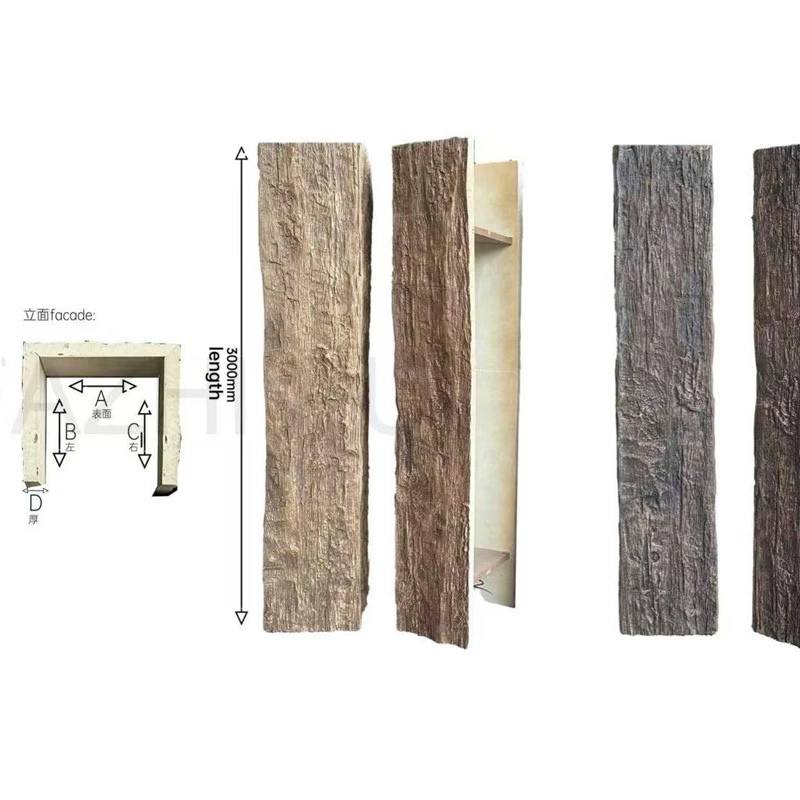
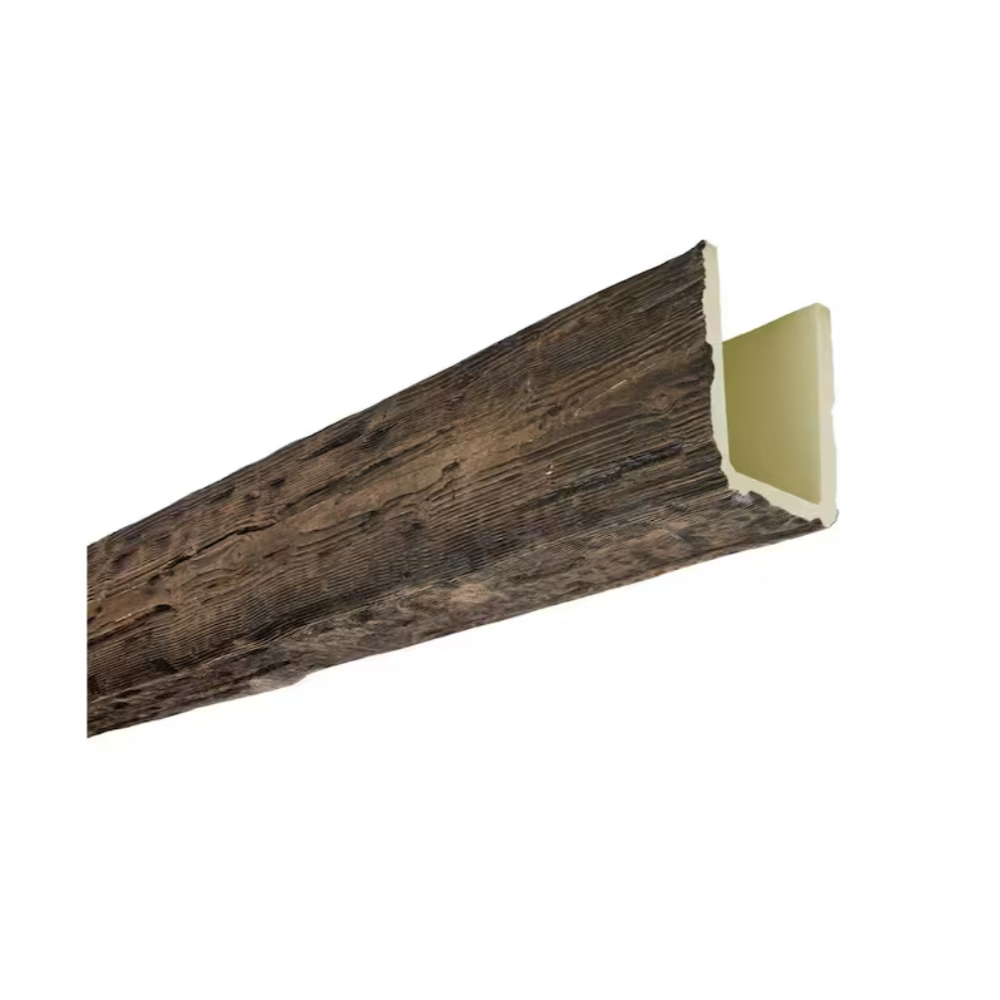
PU faux timber beams offer a way to achieve the farmhouse look without those trade-offs. The molded surface carries convincing hand-hewn texture, the cross-section dimensions are consistent from beam to beam, the weight is manageable for standard ceiling construction, and the cost is typically a fraction of reclaimed timber.
Profile Choices for Farmhouse Looks
Several beam profiles work particularly well in farmhouse interiors. The rough-sawn profile, with visible saw marks across the surface, gives the beams a hand-worked quality that pairs naturally with farmhouse materials like shiplap walls and apron-front sinks. The hand-hewn profile, with broader irregular tooling marks, suggests even older construction and works well in more rustic farmhouse interpretations.
For modern farmhouse interiors, a smoother profile with just subtle grain texture reads as a refined version of the farmhouse aesthetic. These beams don't try to look reclaimed or weathered, but they carry enough warmth to anchor the space. The smooth profile also tends to work better in rooms with more contemporary furnishings, where a heavily textured beam might compete with other design elements.
The depth-to-width ratio of the beam also affects its farmhouse character. Deeper beams, with depth approaching width, feel more substantial and traditional. Shallower beams, where width exceeds depth, feel lighter and more contemporary. Most farmhouse designs work best with a balanced ratio where depth and width are roughly equal, producing a beam that feels structural without being overly massive.
Finish Options for Farmhouse Beams
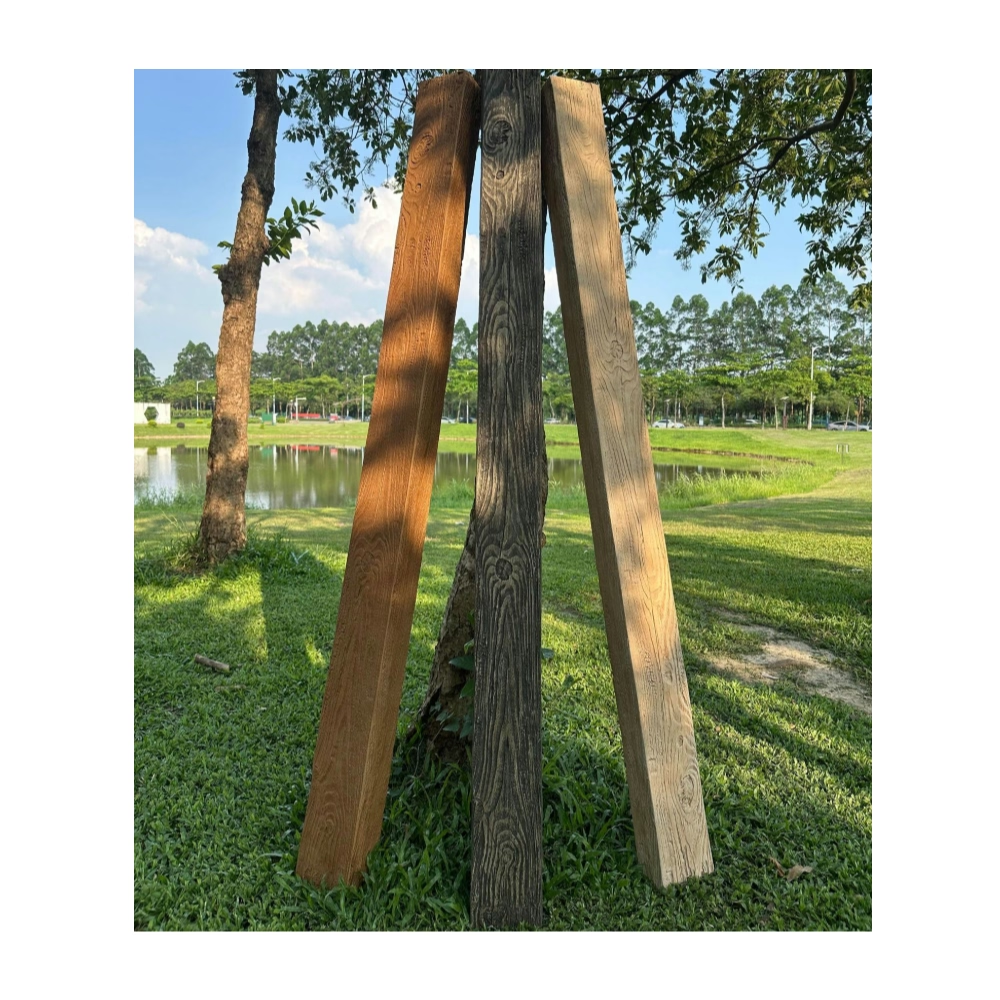
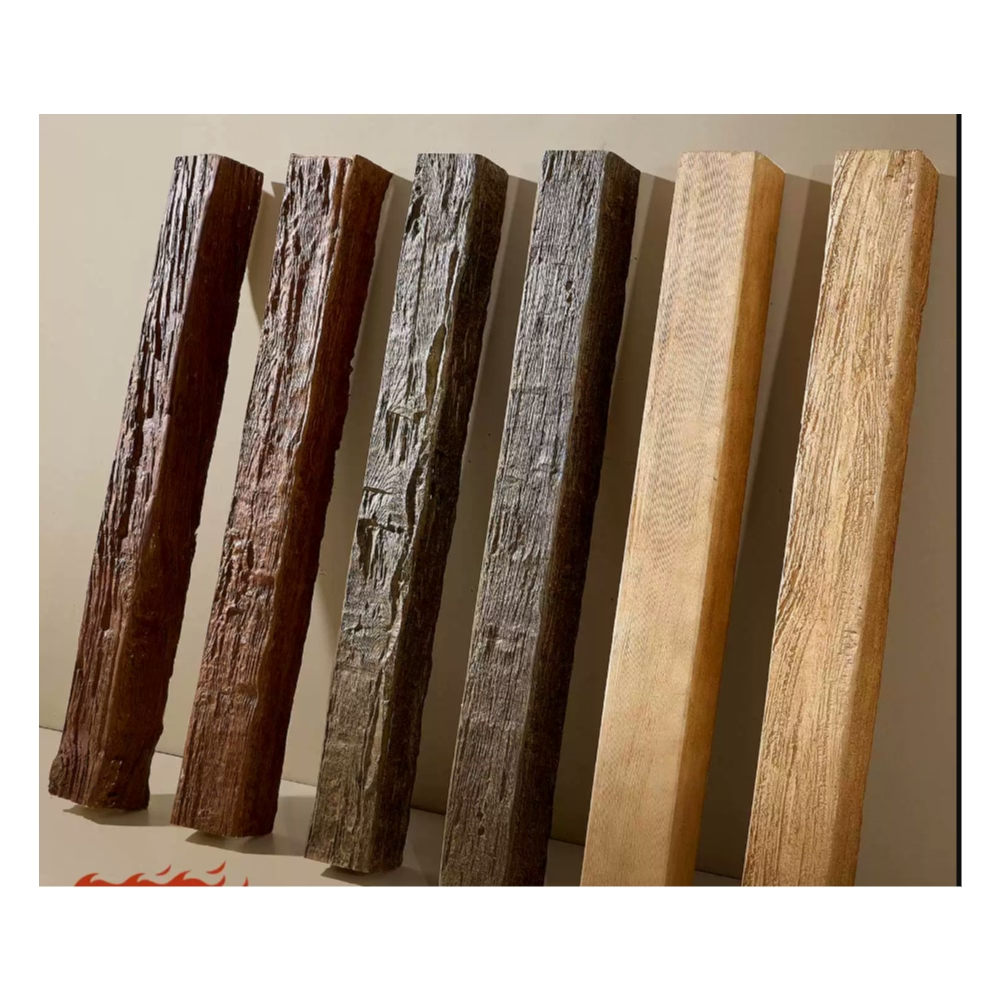
The classic farmhouse beam finish is a warm honey or amber tone that suggests decades of oil and wax treatments. These tones work in most farmhouse interiors and pair well with both painted shiplap and natural wood wall finishes. The PU versions of these finishes are typically hand-applied over the molded beam surface to add subtle variation and depth.
Weathered driftwood tones have become increasingly popular in farmhouse design, particularly for coastal farmhouse interpretations. These finishes typically combine gray and warm beige undertones to produce a beam that looks like timber aged by decades of sea air. The result is more contemporary than traditional farmhouse but works beautifully in homes that reference both traditions.
Painted farmhouse beams in cream, soft white, or pale gray create a softer, more refined look that suits transitional farmhouse interiors. These finishes let the beam profile provide the architectural interest while keeping the color palette light and bright. Painted beams work particularly well in rooms with darker walls or ceilings where the beams need to read as light elements rather than adding more visual weight.
Combining Beams With Other Farmhouse Elements
Farmhouse design is famously about combining multiple textures and finishes rather than matching them precisely. Faux timber beams anchor this layered approach by providing the substantial architectural element around which other materials gather. Shiplap walls, wide-plank flooring, exposed brick, and vintage furnishings all contribute to the layered character.
The beams serve as the most permanent element in this layered composition. Because they don't need to be refinished or replaced as tastes evolve, they provide the architectural foundation that allows other design elements to change around them. A homeowner can update wall colors, replace light fixtures, change furniture, and refresh textiles without ever touching the beams themselves.
This stability is one of the practical advantages of investing in quality beam installation early in a renovation. Even if other design decisions evolve over the years, the beam structure remains a constant that supports whatever direction the room takes. The beams essentially future-proof the architectural character of the room.
Installation Patterns for Farmhouse Ceilings
The most common farmhouse ceiling beam pattern is a simple parallel arrangement, with beams running perpendicular to the room's longest dimension. This produces the classic beamed ceiling look that's been associated with farmhouse architecture for generations. Beam spacing typically ranges from 16 to 36 inches on center depending on the room size and the desired visual rhythm.
Cross-beam patterns, where secondary beams intersect the primary beams, create a more architectural look that suggests traditional timber-frame construction. This pattern works particularly well in rooms with vaulted or cathedral ceilings, where the cross beams can follow the slope of the roof and create a sophisticated structural rhythm.
For more contemporary farmhouse interpretations, beams can be arranged in asymmetric patterns, with different beam lengths and orientations creating a less formal composition. This approach works well in open-plan spaces where the beam arrangement can help define different functional zones without requiring walls or other physical dividers.
Sizing Beams for the Right Proportion
Beam proportions matter significantly in farmhouse interiors. Beams that are too small for the room look timid and out of scale. Beams that are too large overwhelm the space and make ceilings feel lower than they actually are. The right proportion depends on both the room dimensions and the ceiling height.
For standard 8-foot ceilings, beam depths of 4 to 6 inches typically work best. Beams deeper than 6 inches begin to feel oppressive at this ceiling height. For 9 to 10-foot ceilings, depths of 6 to 8 inches feel substantial without being overwhelming. For vaulted ceilings over 12 feet, depths of 8 inches or more work well because the ceiling volume can accommodate the additional mass.
Width typically matches or slightly exceeds depth for farmhouse profiles. Wider beams with the same depth feel more contemporary, while more square cross-sections feel more traditional. The choice between these proportions often comes down to the specific design direction of the room and the other elements it's working with.
Technical References
ASTM standards cited in every specification
Test Data
Lab results from internal testing program
Updated 2026
Reviewed against current product specs