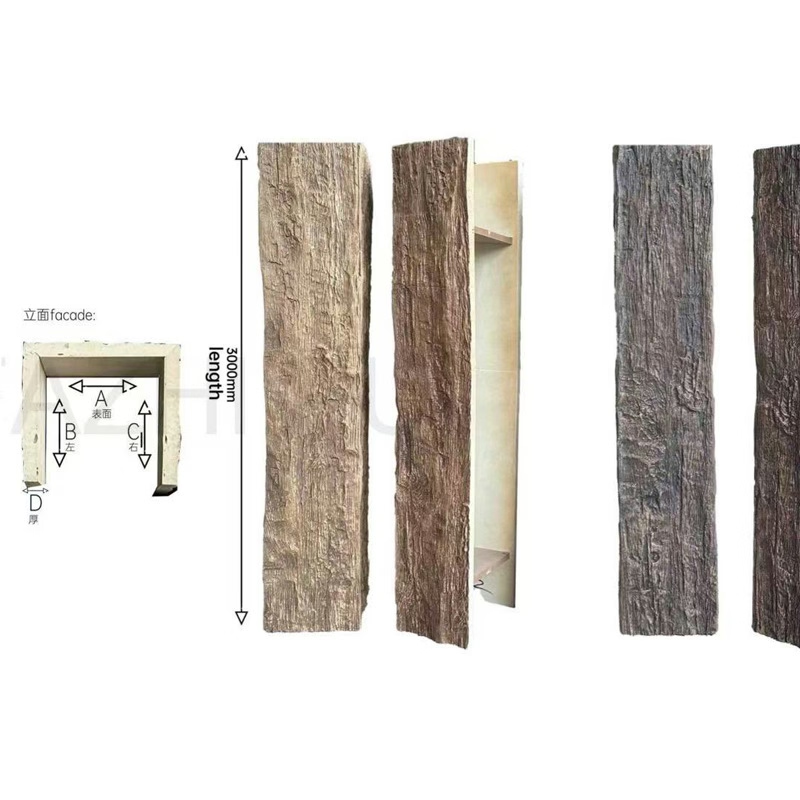
There is something deeply satisfying about opening a delivery confirmation email at 7 AM and seeing that the ceiling beams you ordered the night before are already on a truck headed your way. The renovation is moving again. The contractor has the materials on site. The homeowner can plan the weekend install. Ready-stock polyurethane faux ceiling beams make that experience normal rather than miraculous. The trick is keeping actual finished product on the shelf, not just a website listing that promises to "make it soon."
What "Ready-Stock" Actually Means
A ready-stock product is one that is sitting in a warehouse right now, finished, packaged, and waiting to be pulled. Not on a production line. Not in a mold waiting to cure. Not on a ship crossing the Pacific. On a shelf, in a box, in a warehouse rack, ready to go.
We track stock levels daily and publish real inventory counts on the website. If the listing says 24 are in stock, then 24 are physically in the warehouse. If the count drops to zero, the listing goes to "backorder" with an honest estimated ship date.
The Stocked SKUs
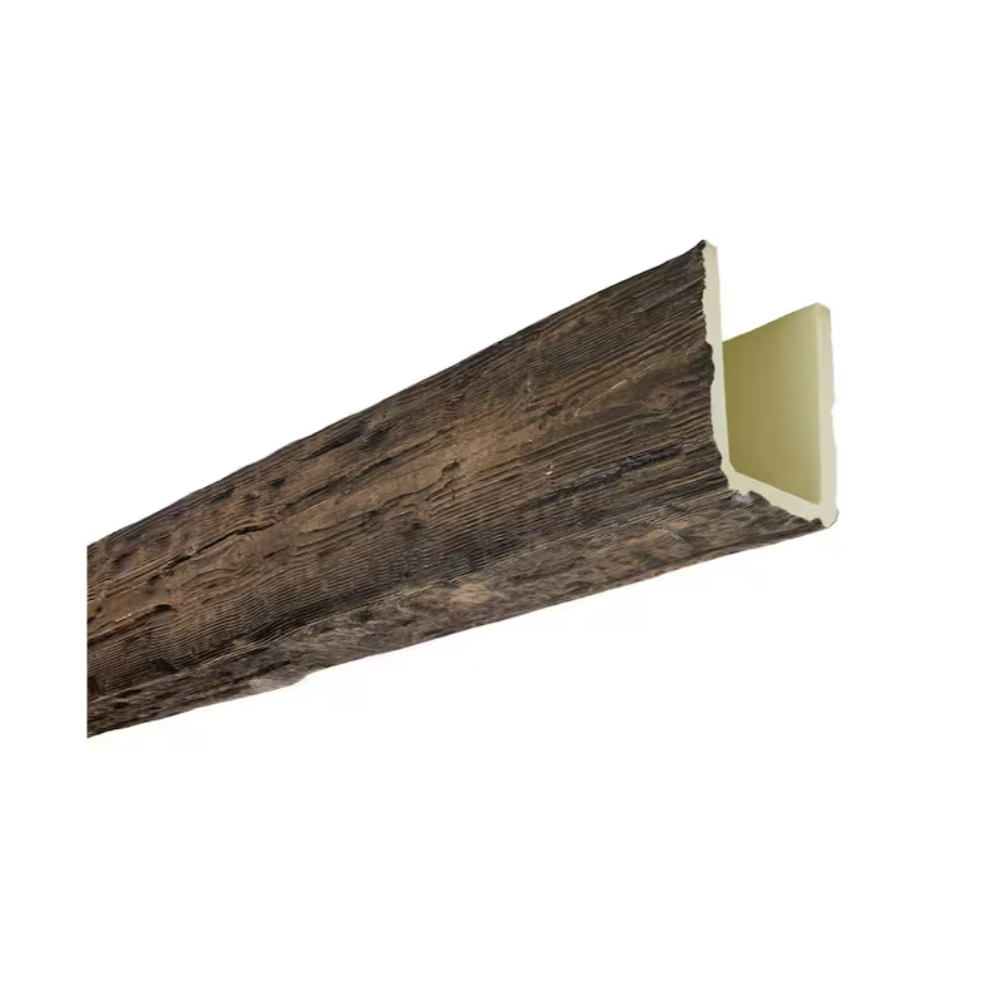
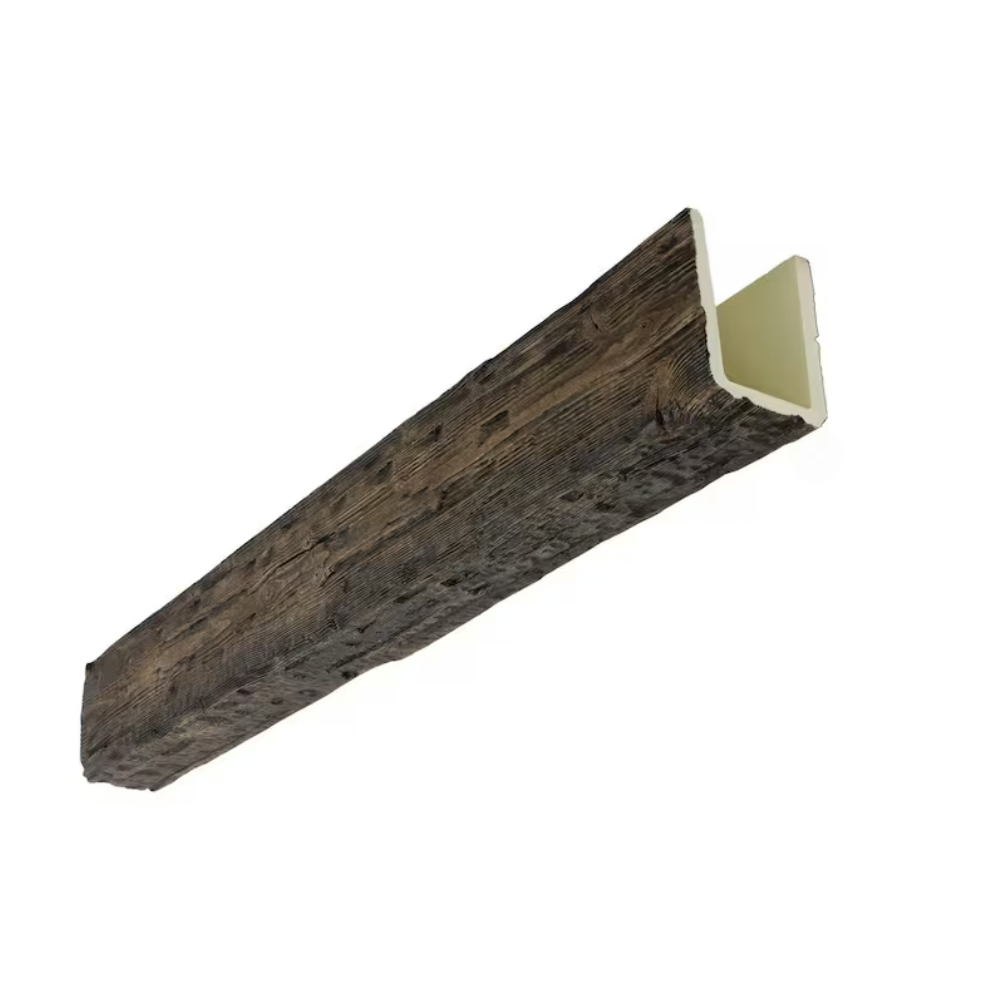
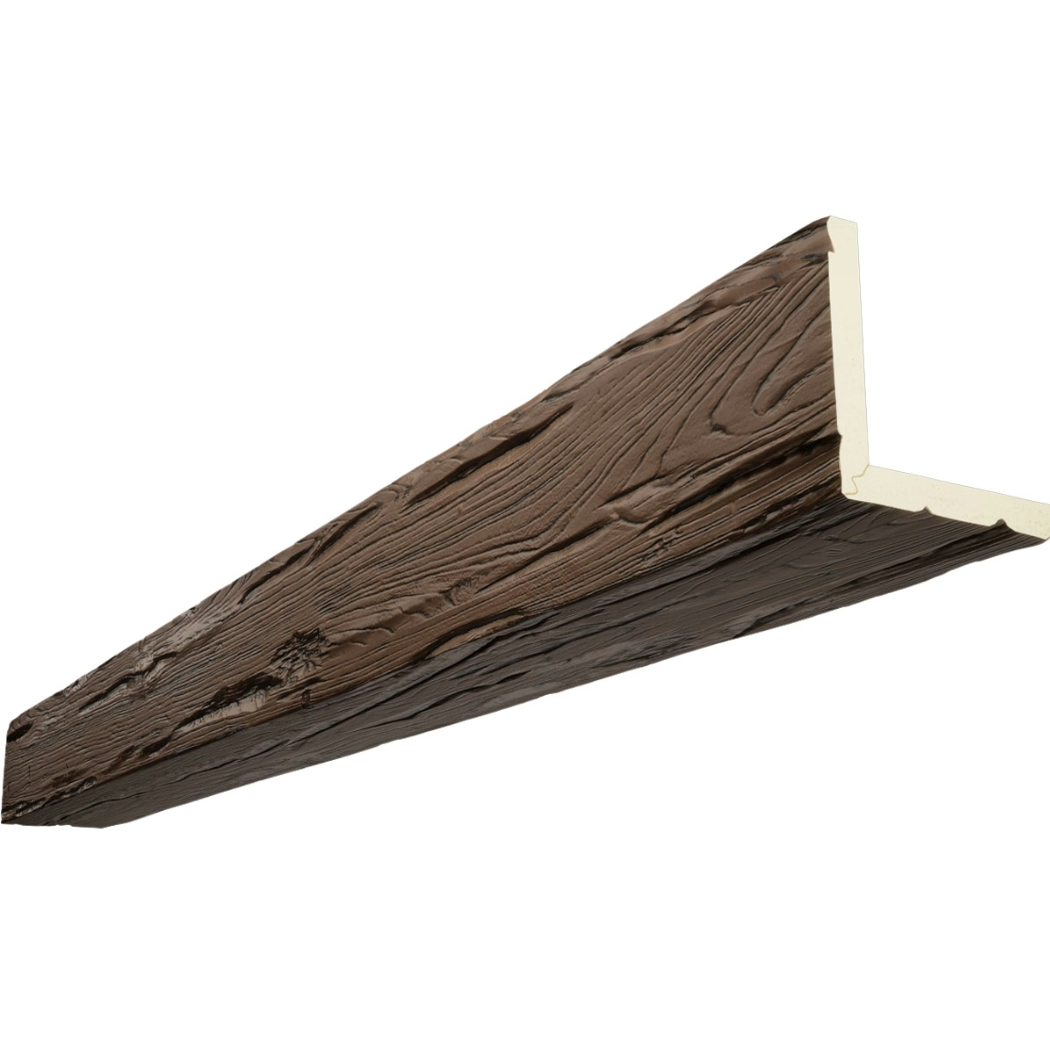
The ready-stock program covers the products that move through the warehouse every week: standard 3-sided U-beams in 4, 6, 8, and 10-inch widths, lengths from 8 to 16 feet, in six finish options. Solid 4-sided box beams in matching finishes. Decorative end caps in the four most popular profiles. Matching beam straps and iron-look hardware kits. Standard 90-degree corner pieces for the boxed beams.
That sounds like a lot, but it is actually less than half of the full catalog. The other half — custom profiles, exotic finishes, oversized beams, unusual colors — still runs through factory production. Ready-stock exists to serve the orders that have to move this week.
Volume Refresh Cycle
Stock levels are constantly turning. A beam that ships on Monday gets replaced by a new production run on the following Monday. Our inventory system tracks sell-through velocity and triggers replenishment orders before stock dips below the threshold. The customer should never see a "backorder" status on a product that was listed as ready-stock yesterday.
The 24-Hour Shipping Commitment
For orders placed during business hours, ready-stock products ship within 24 hours. For orders placed after the warehouse cut-off, they ship the next morning. Either way, the customer knows the ship date before they finish checking out.
Order Placed at 9 AM
A customer in Phoenix places an order at 9 AM Mountain Time on Tuesday. The order routes to the California warehouse. The picker pulls the beams by 11 AM. Packing finishes at 1 PM. The carrier picks up at 4:30 PM. The beams are on a truck to Phoenix the same afternoon, with delivery expected Thursday.
Order Placed at 9 PM
A customer in Atlanta places an order at 9 PM Eastern on Sunday. The order routes to the Pennsylvania warehouse and sits in the queue overnight. Pickers pull it at 7 AM Monday. Packing finishes by 10 AM. The carrier picks up at 4 PM Monday. Delivery expected Wednesday.
Order Placed on Friday
A customer in Dallas places an order at 11 AM Friday. The order ships that afternoon from the Texas warehouse. Delivery expected Monday or Tuesday. No waiting through the weekend for the package to "process."
What Makes Ready-Stock Possible
Three things have to align for ready-stock to work: real warehouse space, accurate inventory data, and disciplined replenishment. Without all three, the program falls apart.
Real Warehouse Space
We rent warehouse space in three US regions: Los Angeles (West Coast), Dallas-Fort Worth (central), and Allentown, Pennsylvania (East Coast). The warehouses are owned by commercial real estate operators with long-term leases. We hold exclusive use of the racking and pallet positions. There is no shared storage with other tenants, no ambiguity about what is on the shelf.
Accurate Inventory Data
The inventory system is updated in real time as orders are placed. When a customer orders three beams, the stock count drops by three immediately. The website reflects the new count within seconds. The replenishment system flags when stock dips below threshold and triggers a production order to refill.
Disciplined Replenishment
Every stocked SKU has a reorder point, a target stock level, and a lead time for replenishment. When stock hits the reorder point, a new production order is triggered automatically. The order runs through the factory on the next production slot. By the time stock hits zero on the website, the replenishment is already in production or already in transit from the factory.
Common Customer Profiles for Ready-Stock
Different buyers use ready-stock for different reasons, but the underlying benefit — speed — is the same.
Contractors With Multiple Active Jobs
A contractor running three or four renovations simultaneously needs materials to flow with the job schedule, not against it. Ready-stock lets them order what they need for next week's install on Monday and have it on site by Wednesday. No "we'll ship when we can" delays.
Homeowners With Tight Timelines
A homeowner hosting Thanksgiving dinner in three weeks needs the dining room ceiling finished by the weekend before. Ready-stock lets them order Sunday night and have the beams in hand by Tuesday. They spend the weekend installing, and the room is ready for the guests.
Property Managers Handling Turnover
A property manager turning over a rental unit between tenants has a tight window between move-out and move-in. They cannot afford to leave the unit empty for two weeks while waiting on materials. Ready-stock compresses the timeline so the unit is ready faster.
Designers With Active Projects
A designer working on a project that is "almost finished but needs ceiling beams" does not want to push the project timeline to accommodate material lead times. Ready-stock lets them order as the project nears completion and have the beams delivered in time for the final install.
Ready-Stock vs. Factory Direct: When to Use Each
Ready-stock is not always the right answer. For large bulk orders, factory direct is more cost-effective. For highly custom products, factory direct is the only option. The trick is knowing when each approach makes sense.
Use Ready-Stock When:
- The order is for an in-stock profile and finish
- The order is small to medium volume (under 50 beams)
- The timeline is the priority over cost
- The order is for a residential or small commercial project
Use Factory Direct When:
- The order requires a custom profile or finish
- The order is a large bulk order (over 100 beams)
- The order is for a multi-month project where lead time is acceptable
- The order is for a developer who wants the most competitive unit pricing
What Happens When Ready-Stock Runs Out
Even the best-managed inventory has occasional stockouts. A popular finish sells through faster than expected. A color gets discontinued. A freight delay holds up replenishment. When that happens, the website flags the product as backorder with an honest ship date.
Backorder Ship Dates
Backorder ship dates are based on real production schedules, not wishful thinking. If the next production run is in two weeks, the website says two weeks. If the run is full and the next slot is in three weeks, the website says three weeks. Customers can decide whether to wait, switch to an in-stock alternative, or cancel.
Auto-Notifications for Back-in-Stock
For products that are temporarily out of stock, customers can sign up for back-in-stock notifications. The moment the replenishment arrives and the count goes above zero, everyone on the notification list gets an email. Many of those customers had been waiting for weeks and convert immediately when the email arrives.
Quality Control on Stocked Beams
Stocked beams have to be just as good as custom beams. There is no "stock quality" tier. Every beam that goes into the rack has passed the same inspection as every beam that ships from a custom production run. Damaged or substandard beams get pulled out and either repaired or scrapped. The shelf only holds product we are willing to put our name on.
Periodic Quality Audits
Once a month, the warehouse team pulls random samples from the rack and sends them through a quality audit. The audit checks dimensions, finish consistency, structural integrity, and packaging condition. If the audit finds a pattern of issues, the production team gets a notification and the issue is corrected upstream.
Damage Rates on Ready-Stock
Domestic ready-stock damage rates are under 1%. Long-haul international damage rates run 3–5% depending on the destination. The lower damage rate is one of the underappreciated benefits of stocking domestically — the beams travel less, get handled fewer times, and arrive in better condition.
Common Questions About Ready-Stock
Q: What is the largest beam you keep in ready-stock? 16-foot U-beams in our most popular widths. Longer beams and unusual sizes require factory production.
Q: Do you restock on weekends? The warehouses do not run production over the weekend. Replenishment orders go into production on Monday. Saturday orders ship Monday.
Q: Can I reserve stock for a project that starts next month? For projects with specific deadlines, we can hold stock with a deposit. The deposit is non-refundable if the order is canceled, but the customer knows the product will be on the shelf when they need it.
Q: What if I need a beam that is not in ready-stock? We will quote the factory-direct lead time. If the timeline does not work, we can recommend an in-stock alternative that achieves a similar look.
Speed Without Sacrifice
The whole point of ready-stock is that the customer gets speed without giving up quality, finish selection, or dimensional accuracy. The beams on the shelf are the same beams we would produce for a custom order — they just happen to be already made, already finished, and already packaged. For the customer, that means the renovation moves forward on their schedule, not the factory's.
Technical References
ASTM standards cited in every specification
Test Data
Lab results from internal testing program
Updated 2026
Reviewed against current product specs