Most beam projects start with a search through catalog options, and most projects end with a selection from those catalog options. But a meaningful share of projects have specifications that no standard catalog covers. The ceiling is an unusual height. The profile needs to match existing historic millwork. The finish must coordinate with a one-of-a-kind color palette. The texture should replicate a wood species that nobody catalogs. These situations call for custom manufacturing rather than selection from stock.
Custom polyurethane faux wood beam manufacturing is more accessible than many buyers realize. The same factories that produce catalog products can typically produce custom specifications with reasonable lead times and cost premiums. The flexibility comes from the molding process, which allows nearly any shape, texture, and finish to be replicated in polyurethane without the tooling investment that custom wood products would require.
The key to successful custom beam projects is specification clarity. Buyers who can clearly communicate what they need get accurate quotes and predictable results. Buyers with vague requirements get quotes based on assumptions that may not match their actual needs. Spending time on specification before requesting quotes pays dividends throughout the project.
Where custom beams become necessary
Historic restoration projects frequently need beams that match existing original millwork. The original beams may have profiles that are no longer standard, dimensions that differ from modern construction, or finishes that have aged in distinctive ways. Custom manufacturing can replicate these characteristics to create beams that integrate seamlessly with historic elements.
Architectural feature projects sometimes call for beam profiles designed specifically for one project. The architect or designer creates a custom profile that defines the project's aesthetic, and the beams are manufactured to that profile. This approach is common in high-end residential work and signature commercial projects where standard products would compromise the design intent.
Unusual dimension requirements arise when ceiling heights, room sizes, or structural constraints don't match standard offerings. Very tall ceilings may need beams with proportions different from standard. Very long spans may need beams manufactured in extra-long lengths. Unusually shallow or deep beams may be needed to fit specific ceiling configurations.
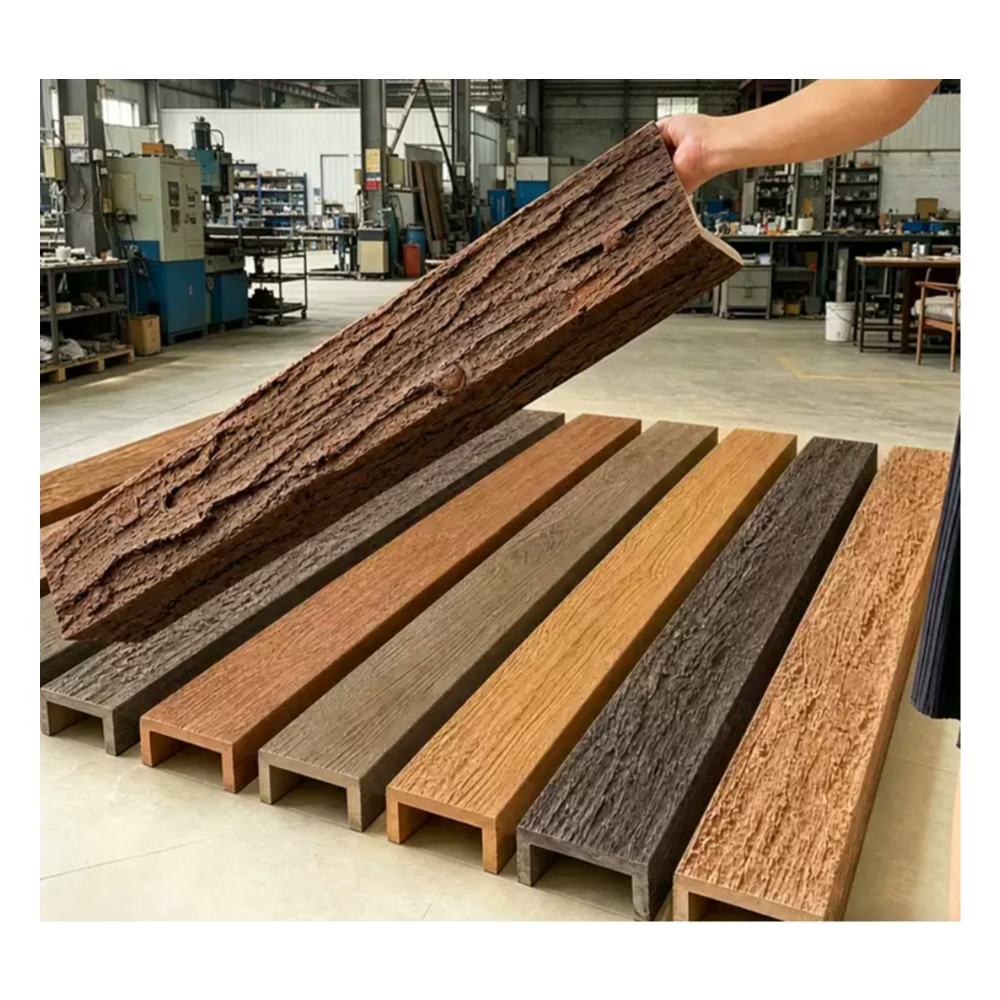
Color matching beyond standard offerings is a common custom requirement. The project specifies a particular stain color, paint color, or finish treatment that does not match any standard catalog offering. Custom finishing applies the specified color and treatment to standard or custom beam shapes.
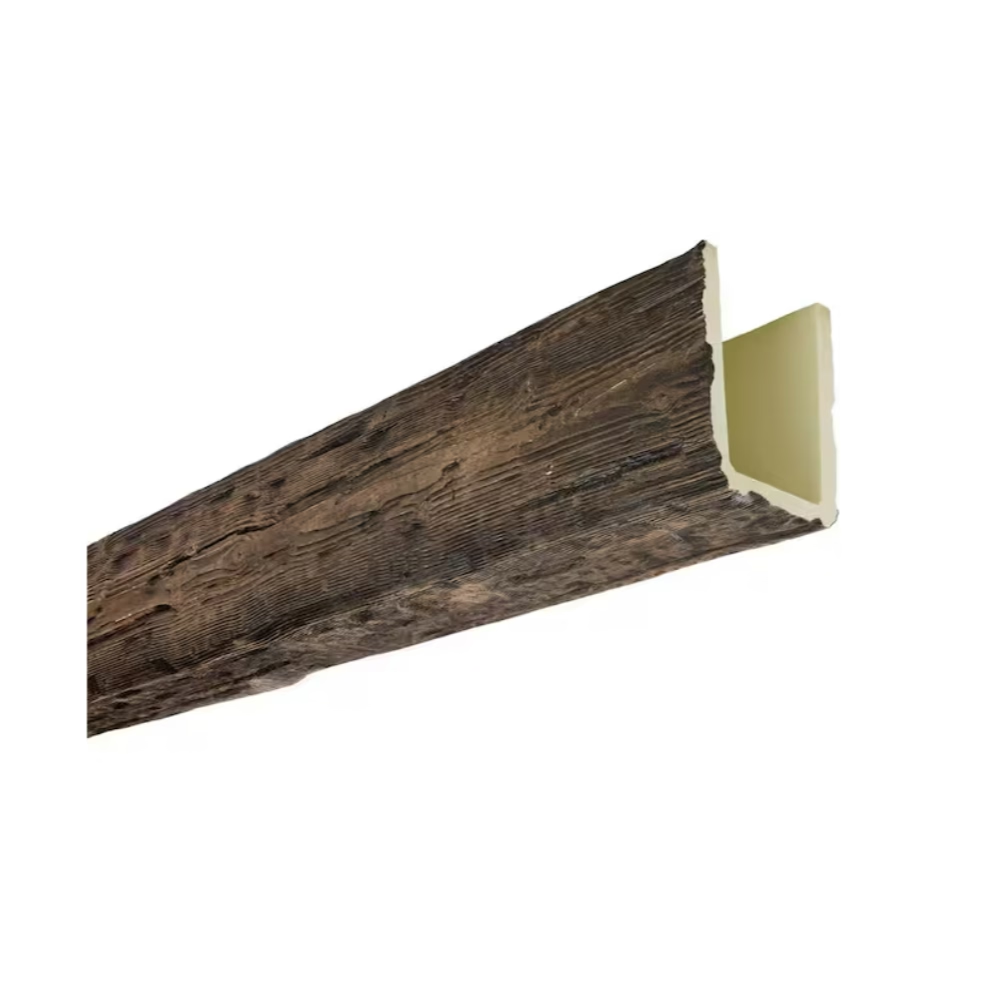
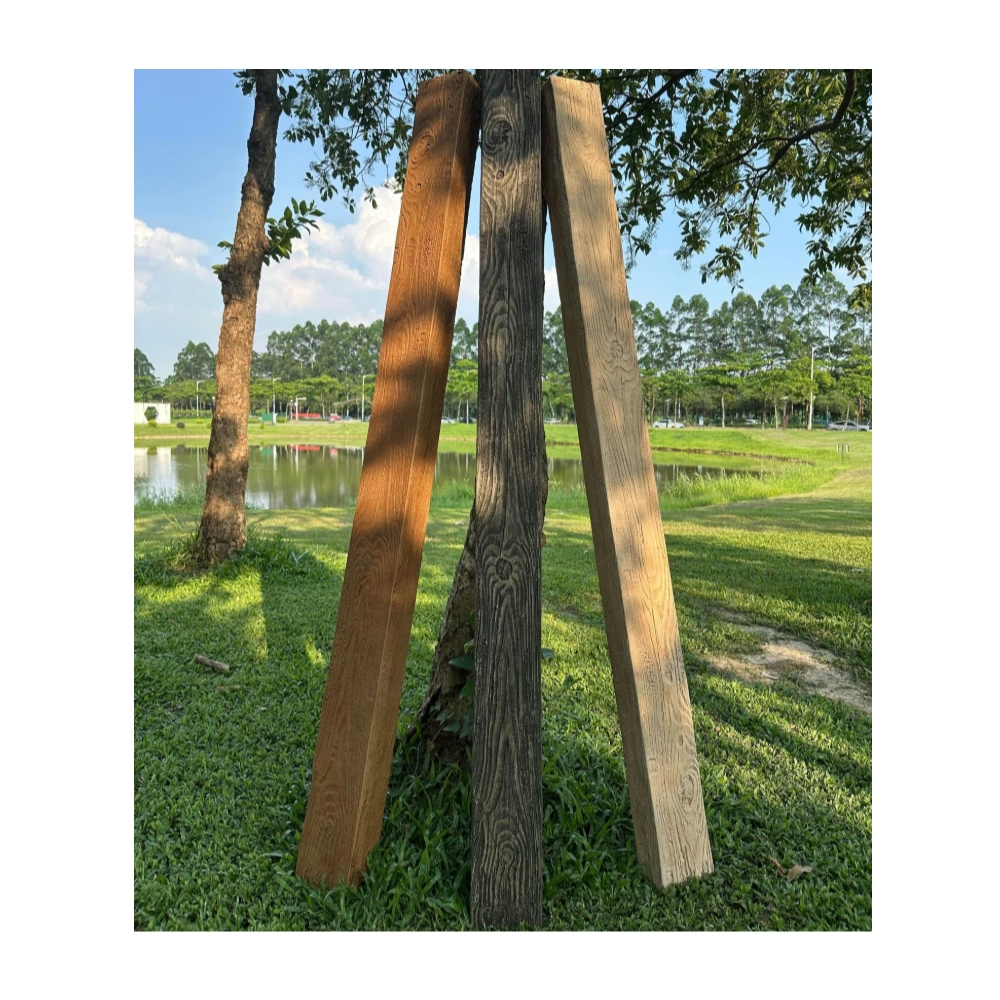
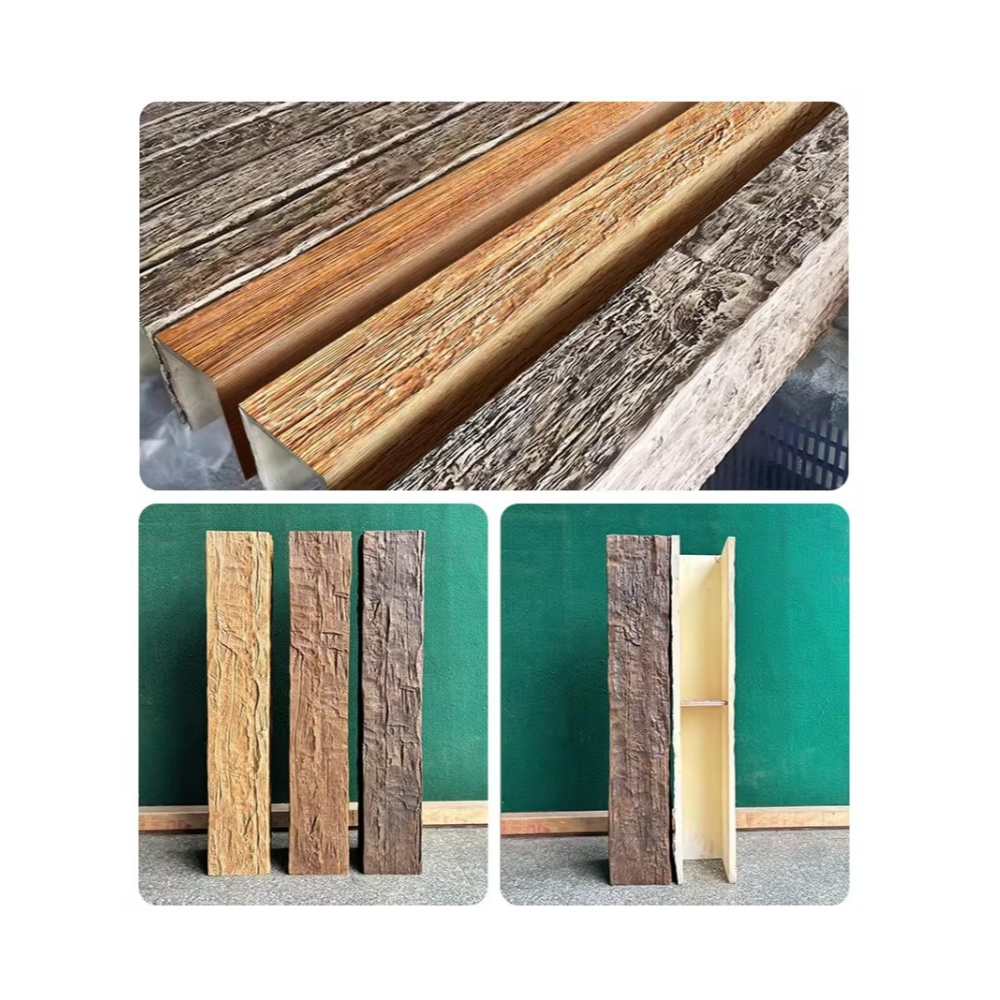
Texture replication from samples is another frequent custom request. The buyer provides a wood sample, a photo, or a description of the desired texture, and the manufacturer creates a mold or finish that replicates it. This approach allows beams to match specific wood species, aged conditions, or design treatments.
The custom manufacturing process
Specification development is the first step. The buyer and manufacturer work together to define exactly what the beams should look like. Dimensions, profile shape, texture, finish, fire rating, quantity, and delivery requirements all need to be specified. The more detailed the specification, the more accurate the quote and the final product.
Mold creation or selection follows specification agreement. For projects requiring custom profiles, a mold is manufactured based on the specification. Mold creation takes time and adds cost, but the mold is typically owned by the buyer and can be reused for future projects. For projects using modified standard profiles, existing molds may be adjusted rather than creating entirely new molds.
Sample production allows the buyer to verify that the specification translates correctly to an actual product. Samples show the texture, color, and finish in physical form. They reveal characteristics that cannot be fully communicated through specifications alone. Sample approval before full production prevents costly rework.
Production run manufacturing follows sample approval. The full quantity of beams is produced according to the approved sample. Quality control during production catches any drift from the approved sample. Production schedules accommodate the time required for proper curing, finishing, and quality verification.
Delivery and installation support complete the custom project. Custom beams are delivered with documentation specific to the project, including any certifications, care instructions, and warranty information. Some manufacturers provide installation support or referrals to installers familiar with their products.
Cost considerations for custom beams
Mold costs are the largest variable for projects with truly custom profiles. Mold creation can range from a few hundred to several thousand dollars depending on the beam size, profile complexity, and mold material. For projects producing enough beams, the mold cost per beam becomes negligible. For small projects, the mold cost per beam may make custom beams uneconomical.
Unit costs for custom beams are typically higher than catalog equivalents. The premium reflects the smaller production run, the additional specification work, and the lower efficiency of custom production. Premiums of 20 to 50 percent over catalog pricing are common for modest customizations. Larger customizations may command higher premiums.
Minimum order quantities may apply for custom production. Manufacturers need to recover mold costs and setup time, so they typically require minimum orders for custom work. The minimum varies by manufacturer and project complexity. Buyers with small custom needs may need to find a manufacturer willing to accept smaller orders, possibly at higher per-unit costs.
Setup costs beyond mold creation include color matching, finish development, and quality control setup. These costs are typically amortized across the production run. Larger runs have lower per-unit setup costs. Smaller runs may need to absorb more of the setup cost per unit.
Lead time for custom projects is longer than for catalog orders. Mold creation, sample production, and approval add weeks or months to the timeline. Buyers planning custom projects need to start early enough to accommodate the longer lead time. Rush options may be available but typically carry significant premiums.
Specification details that matter
Dimensional specifications should include not just length, width, and height but also tolerances. Specifying acceptable dimensional variation prevents disputes about whether delivered beams match the order. Tighter tolerances cost more but produce more consistent installations.
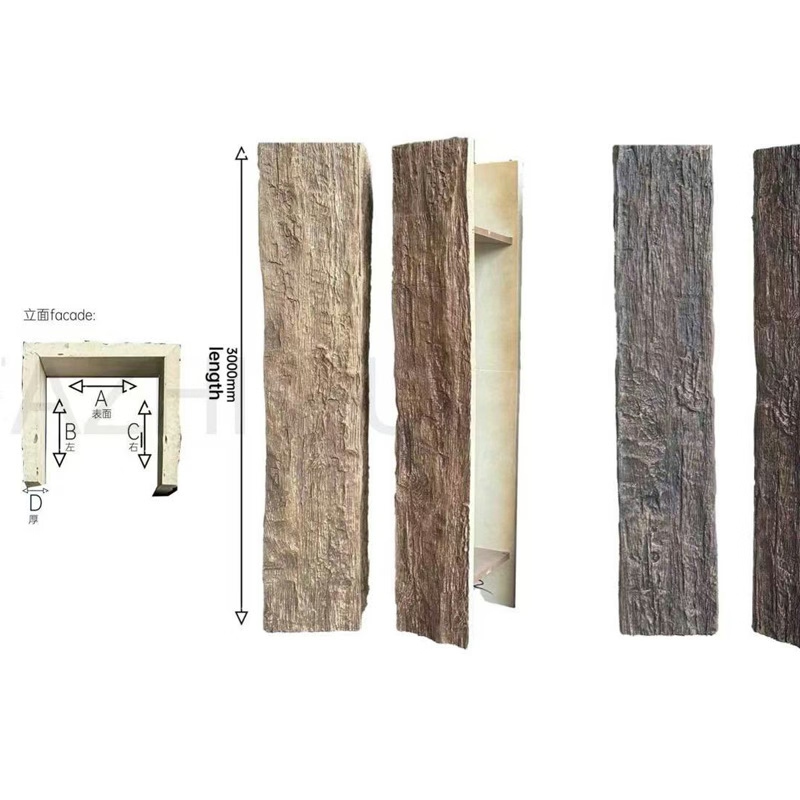
Profile drawings should accompany profile specifications. A cross-section drawing showing the exact shape eliminates ambiguity about what the manufacturer should produce. Standard profile drawings can be modified, or new drawings can be created for truly custom profiles. The drawing should include dimensions at key points and notes about any features that require special attention.
Texture specifications are challenging because texture is difficult to describe in words alone. Physical samples, photographs, or reference products help communicate texture requirements. The manufacturer may need to develop a new texture or modify an existing texture to match the specification. Texture approval should happen during the sample phase.
Finish specifications should include base color, topcoat, sheen level, and any special treatments like glazing, weathering, or distressing. Color specifications should reference a standard color system or physical sample. Finish samples should be viewed under the lighting conditions where the beams will be installed.
Fire rating specifications are critical for many commercial projects. The fire rating required for the project should be specified, along with the testing standard that applies. The manufacturer should confirm that the custom formulation can meet the required rating. Test reports or certifications should accompany delivery.
Quantity specifications should include the number of beams of each length. Custom projects often involve beams of multiple lengths to fit specific room dimensions. Quantities should be verified against the room layout to ensure that enough beams are ordered without significant over-ordering.
Working with custom beam manufacturers
Communication clarity accelerates the custom process. Buyers who can articulate their requirements clearly reduce the back-and-forth that extends project timelines. Visual references, sketches, and physical samples communicate more efficiently than text descriptions.
Iterative refinement through samples produces the best results. First samples rarely match the specification exactly, but they provide a starting point for refinement. Each iteration brings the product closer to the desired result. Allowing time for multiple sample iterations produces better outcomes than rushing to a single sample approval.
Long-term manufacturer relationships make custom work easier over time. Manufacturers who know a buyer's preferences and quality expectations can produce custom work more efficiently than manufacturers working with a buyer for the first time. Building these relationships through smaller projects before committing to larger custom work establishes the foundation for successful custom manufacturing.
Technical consultation from the manufacturer adds value to custom projects. Experienced custom beam manufacturers can suggest specifications that the buyer might not have considered. They can identify potential problems with proposed specifications and recommend alternatives. This consultation is part of what buyers pay for when working with experienced manufacturers.
Documentation of custom specifications protects both buyer and manufacturer. Detailed specifications that both parties agree to before production begins prevent disputes about what was ordered. Specifications should be in writing and signed by both parties. Changes during production should be documented as formal change orders.
Realistic expectations for custom timelines
Sample production typically takes two to four weeks after specification agreement. This allows for mold preparation or modification, sample casting, finishing, and quality verification. Complex custom profiles or finishes may require longer sample production times.
Sample iteration may add several weeks to several months depending on how many iterations are needed. Each iteration requires sample production and review. Buyers who can make decisions quickly based on samples accelerate this process.
Full production runs typically take four to eight weeks after sample approval, depending on quantity. Large production runs may require longer. Rush production is sometimes available but carries significant premiums.
Shipping adds additional time depending on the destination and shipping method. International shipments take weeks. Domestic shipments take days. Buyers should account for shipping time when planning custom beam projects.
Installation scheduling depends on delivery timing. Custom beams should be scheduled for installation only after delivery is confirmed. Installation delays due to beam delivery problems are expensive, especially for projects where the beam installation is on the critical path.
Common custom project challenges
Specification ambiguity causes most custom project problems. Specifications that are clear to the buyer may be unclear to the manufacturer. Taking time to ensure that both parties understand the specification the same way prevents most problems.
Communication gaps during production allow small issues to become big ones. Regular updates from the manufacturer about production progress, quality issues, and schedule changes help the buyer stay informed. Buyers who do not receive regular updates should request them.
Quality variation between the approved sample and the production run is a common issue. Samples may receive more individual attention than production units. Buyers should specify acceptable quality variation in the original specification. Inspection of production units before shipment catches quality drift early.
Schedule slippage due to unforeseen production issues is common in custom work. Custom projects involve more variables than catalog orders, and variables sometimes create delays. Building schedule buffer into custom project timelines absorbs delays without derailing installation schedules.
Cost overruns from specification changes during production affect custom projects more than catalog orders. Changes during production may require mold modification, sample re-approval, and partial production rework. Disciplined change management during production prevents cost overruns.
Technical References
ASTM standards cited in every specification
Test Data
Lab results from internal testing program
Updated 2026
Reviewed against current product specs