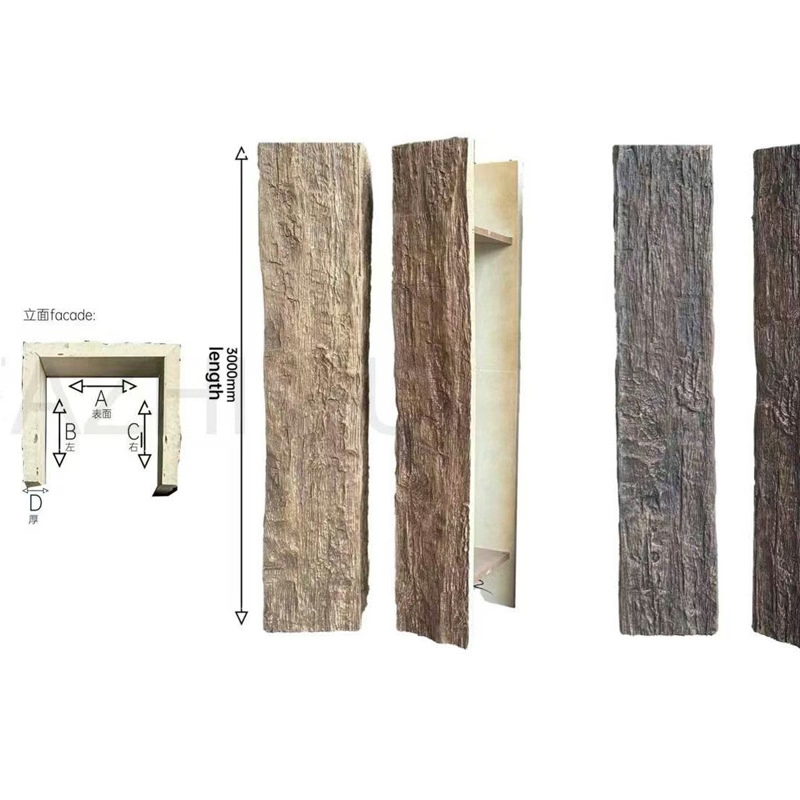
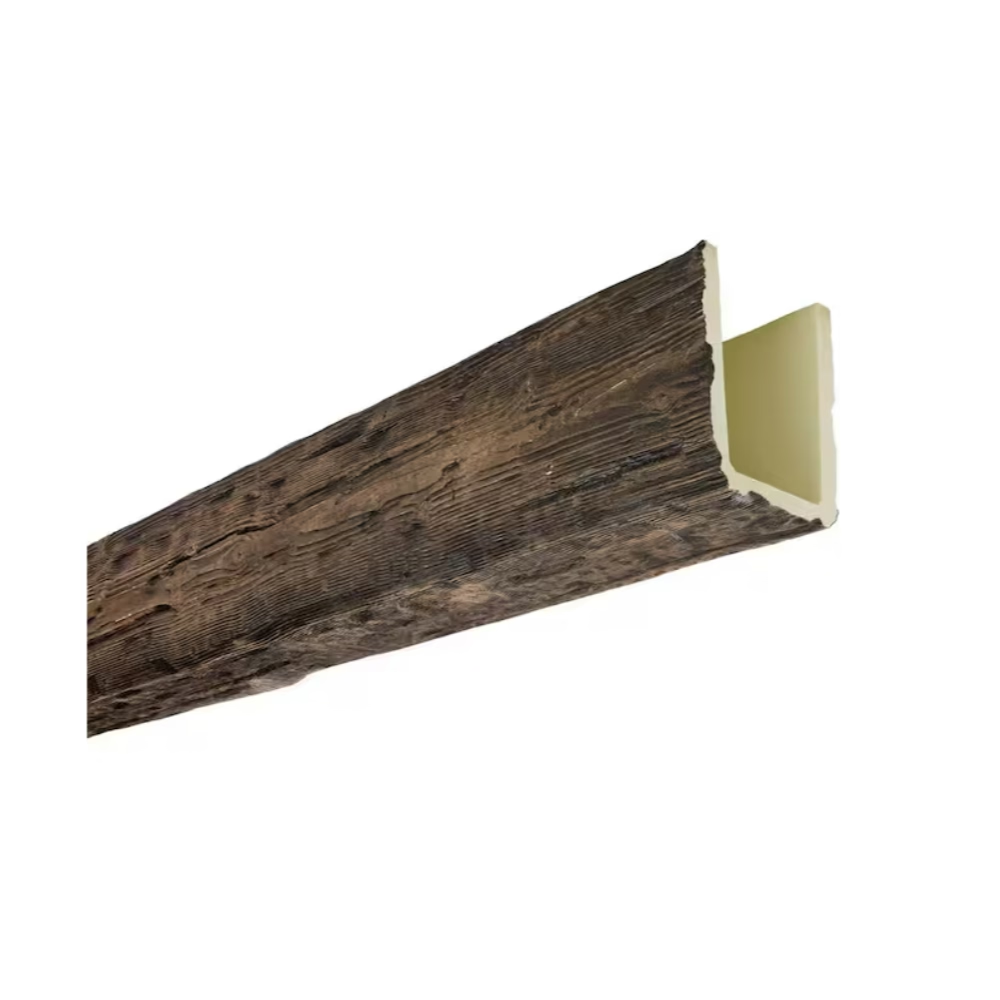
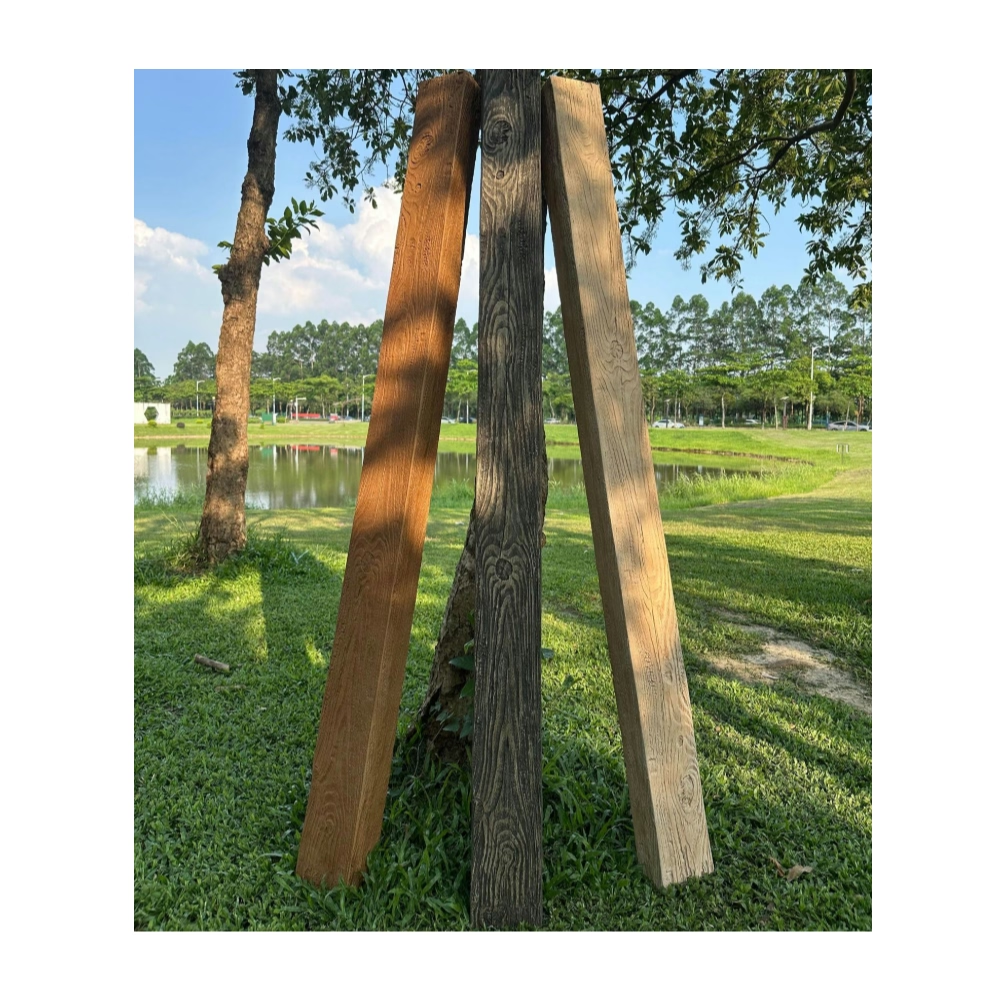
Interior designers spend their careers developing distinctive design visions. Standard catalog products sometimes serve those visions perfectly, but distinctive work often requires products that exist nowhere except in the designer's imagination. Custom manufacturing transforms that imagination into physical beams that fulfill the design intent while delivering the practical benefits of polyurethane construction.
The relationship between designers and custom beam manufacturers works best as a collaboration rather than a transaction. Designers bring aesthetic vision and project requirements. Manufacturers bring production capability and material expertise. Together they produce beams that neither could create independently. This collaboration produces better results than either party working alone because the design vision is grounded in production reality from the beginning.
Custom beam projects for designers range from simple modifications of standard products to completely original designs. A simple modification might be a catalog beam in a non-standard length with a custom stain color. A completely original design might be a beam profile created specifically for one project, manufactured from a one-off mold, with a finish developed exclusively for that installation. Both ends of the spectrum are achievable with the right manufacturing partner.
Designer priorities for custom beams
Aesthetic precision is the primary concern for most designers. The beams must match the design vision exactly, not approximately. Approximate matches that look almost right can be more disappointing than clearly different products because the inconsistency becomes more noticeable. Custom manufacturing provides the precision that approximate matches cannot.
Material authenticity matters even when using synthetic materials. Designers want beams that look like genuine timber, not like plastic imitations of timber. High-quality polyurethane with realistic wood grain, natural color variation, and tactile surface texture delivers authenticity that satisfies both designers and their clients.
Project timeline alignment is critical for designers working on multiple projects. Custom beam manufacturing must fit within the project schedule without delaying other elements. Late beam delivery can derail an entire project timeline because beam installation often affects subsequent finishes, lighting, and millwork.
Budget alignment requires that custom beam costs fit within the project budget. Designers must balance their design vision against budget realities. Custom beam manufacturers who can suggest cost-effective approaches that preserve the design intent help designers deliver projects that satisfy both aesthetic and financial goals.
Coordination with other materials in the project ensures that beams work with flooring, wall finishes, furniture, and other elements. Custom beams can be designed to match or complement these other materials. The manufacturer should be willing to receive samples or specifications for adjacent materials and produce beams that coordinate with them.
Common custom design requirements
Unique profiles that match specific architectural styles. A designer working on a French country interior might specify a profile inspired by Provençal timber framing. A designer working on a Japanese-influenced interior might specify a beam profile with clean lines and minimal ornamentation. Custom profiles are achievable through custom mold creation.
Exact color matching to other materials in the project. The designer provides a floor stain sample, a cabinet finish sample, or a paint color specification, and the manufacturer creates a beam finish that coordinates. This color matching extends beyond standard catalog colors to whatever the project requires.
Texture variations that reflect specific wood species or aged conditions. The designer might want beams that look like reclaimed barn wood, weathered cedar, freshly milled oak, or any other specific wood condition. Custom texture molding or finishing creates these variations.
Dimension combinations not available in catalogs. The designer might want a beam that is very long and relatively shallow for a modern ceiling, or very deep and short for a massive traditional installation. Custom manufacturing can produce dimension combinations that catalogs do not include.
Special features like integrated lighting channels, concealed wiring pathways, or built-in mounting points. Custom beams can incorporate features that simplify installation or enable lighting integration that would otherwise require additional coordination.
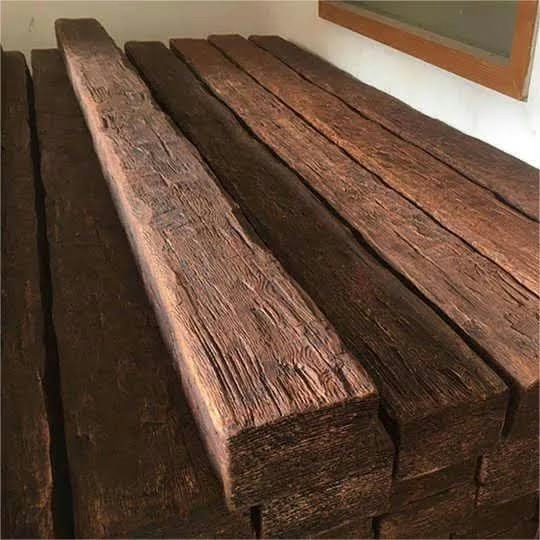
The design-to-production workflow
Concept development begins with the designer's vision. Sketches, material samples, reference photos, and written descriptions all contribute to developing the concept. The clearer the concept, the more accurately it can be translated into manufacturing specifications.
Specification refinement translates the concept into manufacturing language. The designer and manufacturer work together to define dimensions, profiles, textures, finishes, and quantities in terms that the factory can execute. This refinement often reveals practical considerations that affect the concept.
Sample production creates physical examples of the specification. First samples are rarely perfect but provide a starting point for refinement. Each iteration brings the sample closer to the design intent. Sample costs are typically credited against the production order if the project proceeds.
Sample approval formalizes the specification that will be used for production. Approval should be documented with signatures or formal communications. Changes after sample approval should be documented as change orders with adjusted pricing and schedule.
Production manufacturing follows sample approval. Quality control during production ensures that production units match the approved sample. Production progress should be communicated to the designer at regular intervals.
Delivery and installation support complete the project. Beams should arrive with documentation specific to the project. Installation guidance helps installers achieve the design intent. Post-installation support addresses any issues that arise.
Coordinating custom beams with other design elements
Material sample submission helps manufacturers match adjacent materials. Designers who can provide physical samples of flooring, cabinetry, or other wood elements enable more accurate color matching. Digital photos can supplement but rarely substitute for physical samples.
Lighting coordination is often necessary for beam installations. Recessed lights in beams, pendant lights hung from beams, or cove lighting integrated with beams all require coordination between beam manufacturing and lighting design. Cutout locations, wire routing paths, and mounting provisions should be specified during the design phase.
Adjacent surface finish coordination ensures that beam finishes work with ceiling, wall, and trim finishes. Sometimes the beam finish is specified to match adjacent surfaces. Sometimes it is specified to contrast. Either approach requires that the manufacturer understands the full material palette of the project.
Millwork integration with cabinets, built-ins, or custom trim may require matching profiles or finishes. Custom beams can be designed to align with other millwork in the project. Alignment of profiles, transitions between elements, and consistent finish application all require coordination.
Furniture and accessory coordination is often overlooked but affects how beams look in the finished space. Large statement furniture, lighting fixtures, and decorative accessories all relate visually to ceiling beams. Designers who specify furniture and accessories before finalizing beam specifications ensure that everything works together.
Cost management for custom designer projects
Value engineering identifies opportunities to reduce cost without compromising design intent. Manufacturers experienced with value engineering can suggest profile simplifications, finish alternatives, or dimension adjustments that reduce cost while preserving the design vision.
Phased specification allows designers to invest in customization where it matters most and use standard products where customization adds little value. Beams in primary visual locations might warrant full customization while beams in secondary locations might use standard products with minor modifications.
Quantity optimization balances customization investment against project scope. Projects with many beams can amortize mold and setup costs across more units. Projects with fewer beams may need to accept higher per-unit costs or use simpler customizations.
Lead time versus cost tradeoffs affect custom project economics. Rush production costs more than standard production timelines. Designers who can plan custom beam projects well in advance avoid rush premiums. Last-minute custom work is expensive.
Long-term manufacturer relationships reduce custom project costs over time. Manufacturers who know a designer's preferences and quality standards can produce custom work more efficiently. Initial custom projects may be expensive, but subsequent projects benefit from established relationships and possibly existing molds.
Real-world custom beam applications
Statement installations in entryways and great rooms use custom beams to create the focal architectural feature of the home. These beams justify higher custom costs because they dominate the visual impact of the space. Designers specify custom profiles, finishes, and dimensions to achieve a specific aesthetic statement.
Historic restoration work requires beams that match existing original elements. Custom manufacturing produces beams that integrate with restored historic elements without calling attention to themselves as new additions. Color matching to aged finishes, profile matching to original millwork, and dimension matching to structural requirements are all achievable through custom work.
Hospitality design projects often need beams that reinforce the brand identity of the hotel, restaurant, or venue. Custom beams can incorporate brand-specific profiles, finishes, or features. The brand consistency that custom beams provide supports the marketing position of the hospitality venue.
Commercial interior design for flagship retail or corporate environments uses custom beams to create distinctive spaces. The beams contribute to brand experience and corporate identity. Custom beam manufacturing supports the design vision that distinguishes these spaces from competitors.
Set design for film, television, or theatrical productions sometimes uses custom faux wood beams because they provide realistic appearance at lower cost and easier installation than real timber. Production schedules often require quick turnaround, which favors custom manufacturers who can deliver on tight timelines.
Working with designer-focused manufacturers
Portfolio review helps designers assess whether a manufacturer's capabilities match their needs. Manufacturers with diverse portfolios show their ability to handle various custom requirements. Portfolios that include similar project types indicate relevant experience.
Reference checks with other designers provide insights into the manufacturer's reliability and quality. Talking to designers who have completed custom beam projects reveals how the manufacturer handles communication, quality, and problem resolution.
Sample evaluation before committing to a project gives the designer confidence in the manufacturer's quality. Requesting samples of the manufacturer's existing work or commissioning preliminary samples helps designers evaluate quality before placing a full custom order.
Communication testing during the inquiry phase indicates how the manufacturer will communicate during the project. Manufacturers who respond promptly and thoroughly to inquiries typically maintain that communication throughout the project. Poor inquiry response often predicts poor project communication.
Contract terms review before committing protects the designer's interests. Contracts should clearly specify deliverables, timeline, payment terms, change order procedures, and warranty. Designers should not commit to projects without clear contractual terms.
Technical References
ASTM standards cited in every specification
Test Data
Lab results from internal testing program
Updated 2026
Reviewed against current product specs