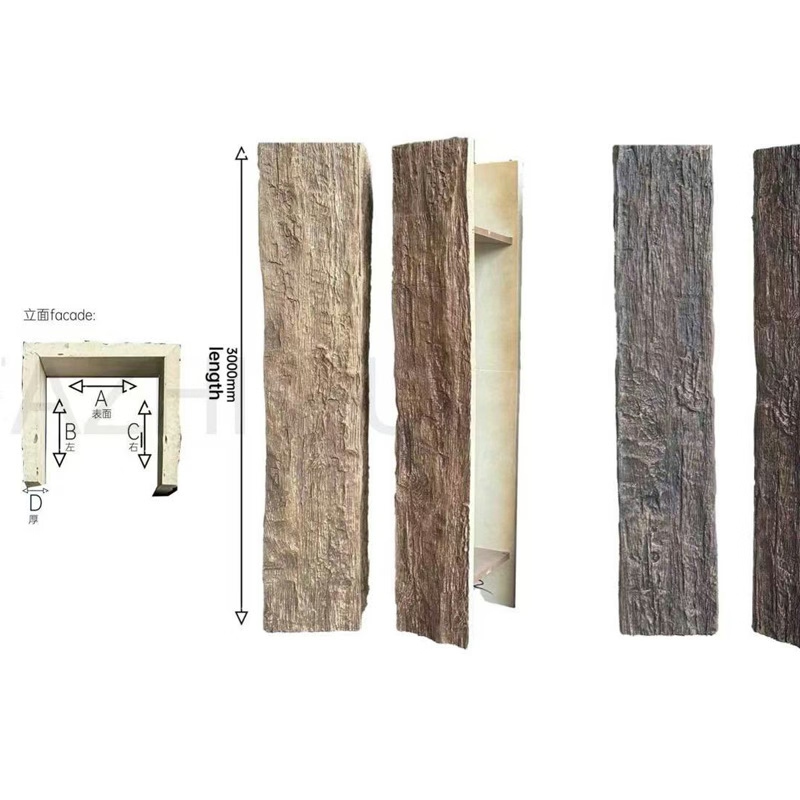
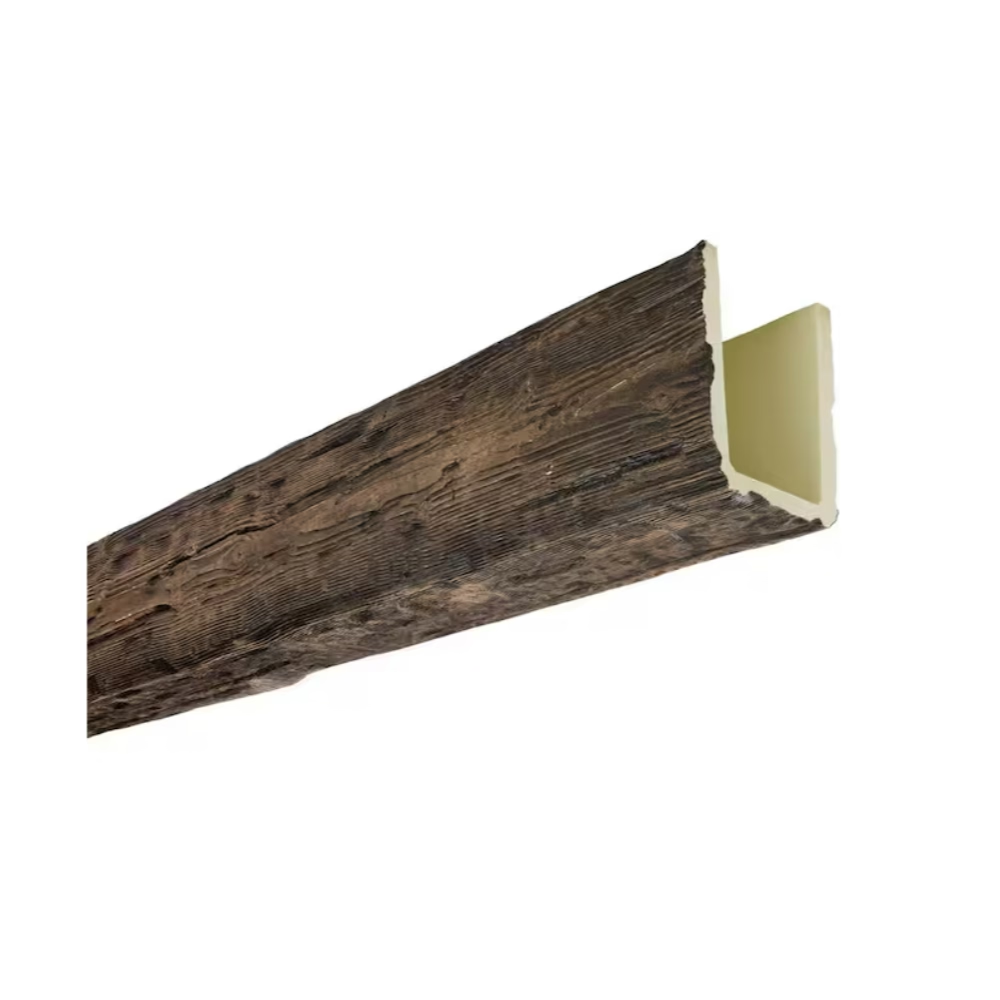
A luxury villa is not defined by the size of its rooms alone. It is defined by the architectural decisions that signal craft at every threshold — the carved stone surround, the coffered ceiling detail, the timber beam that lands with intent above the living room rather than just being there. Of those details, the grand arched beam is one of the most expressive, and polyurethane faux wood has made it accessible to projects that historically would have either committed to a laminated timber budget or skipped the curve altogether.
A grand arch in villa work is rarely a small gesture. The spans run from 3 m to 6 m, the rises range from 300 mm to 800 mm depending on the room volume, and the depth of the beam typically reads between 250 mm and 400 mm. The proportions matter. A thin arch in a tall room disappears. A heavy arch in a low room overwhelms. The right arch is one whose depth is roughly one-tenth to one-twelfth of the ceiling height, and whose rise is roughly one-fifth to one-eighth of the span.

Why villa interiors favor arches specifically
Most architectural styles have a "ceiling of significance" detail. Tudor revival uses exposed joists. Mid-century modern uses tongue-and-groove planks with a single statement ridge. Mediterranean and Spanish colonial revival use grand arches — the curve references the vaulted masonry of the historic villas the style is drawing from. The contemporary transitional villa, which is the dominant new-construction villa style in many markets, also lands on the arch because it reads as architectural without committing to any one historical vocabulary.
For an interior designer or architect specifying for a villa, the arch solves a specific problem: the great room needs something at the ceiling that organizes the space visually. Without it, the eye has nothing to track between the four walls. With it, the arch becomes the spine of the room — every other element arranges itself in relation to it. The furniture plan follows the curve. The lighting plan punctuates the apex. The wall finishes get quieter as they approach the line of the arch so the curve can stay dominant.
The PU advantage on long villa arches
A solid timber arch of the proportions used in villa work is a serious piece of joinery. The lam stock has to be curved under pressure, glued in stages, and clamped until the adhesive cures. The shipping weight runs into hundreds of kilograms per segment, and the install requires either a crane or a coordinated lift by a sizeable crew. Every one of those steps is also an opportunity for a delay or a defect.
A PU faux wood arch reaches the same visual end through a completely different manufacturing path. The mold is built to the curve specification, the polyurethane is poured and cured, and the finished segment is light enough that two installers can carry it. The weight saving is significant — typically 80 percent or more compared to solid timber. The visual result, particularly after a multi-tone wood-grain finish is applied at the factory, is indistinguishable from the eye at typical viewing distances.
For a villa project with multiple arches — say, one in the entry foyer, one in the main hall, one over the kitchen island — the labor saving alone justifies specifying PU. The same arches in timber would take a joinery shop weeks of lead time and a week of install per arch. PU arches ship in two to four weeks and install in a day or two each.
Selecting the right wood species reference
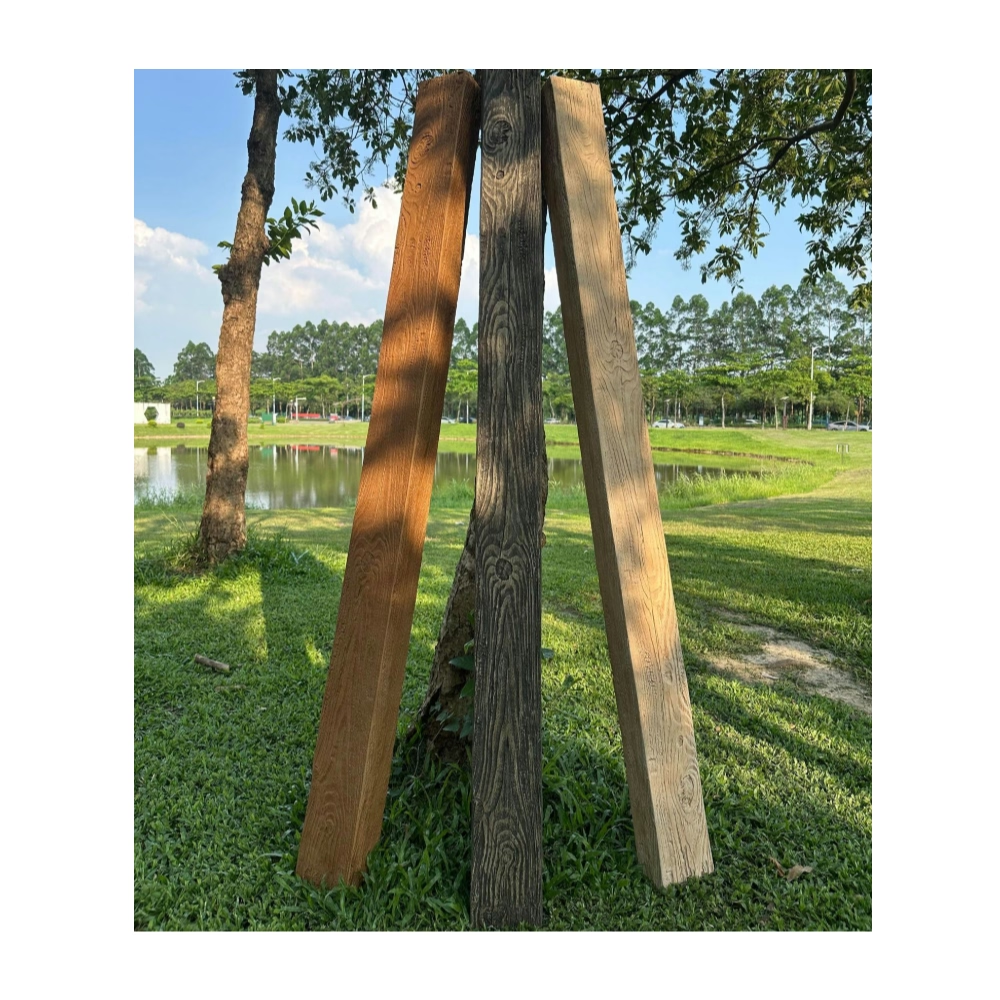
The faux wood catalog for villa arches usually includes finishes referencing oak, walnut, chestnut, cedar, and a few reclaimed or weathered tones. The right choice depends on the villa's broader material palette:
- Oak in a warm honey or medium brown reads as the most timeless and works across traditional, Mediterranean, and transitional villa styles.
- Walnut in a dark, even tone reads as more formal and contemporary, especially against pale plaster or stone walls.
- Chestnut in a hand-hewn or distressed finish reads as rustic and pairs with exposed stone, heavy drapery, and antique furnishings.
- Cedar in a slightly reddish honey tone reads as coastal or mountain lodge, depending on the surrounding material mix.
- Weathered or driftwood tones read as a softer, more recessive arch that supports the rest of the room rather than commanding it.
Most villa projects end up specifying a custom stain match to align with the floor timber or the kitchen cabinetry. That's a service the major factories offer at no significant cost, and it eliminates the one place where a faux wood arch can read as out of place — a finish that doesn't quite coordinate with the rest of the interior.
How an arch interacts with adjacent ceiling work
Villa arches rarely stand alone. They almost always land into adjoining ceiling treatments — coffered sections, tongue-and-groove planks, plaster details, or coves. The transition points are where the project either succeeds or fails visually, and they need to be detailed before the arch is ordered.
A few common pairings and how they work:
- Arch landing into a coffered ceiling. The arch springs from the wall at the same height as the coffer perimeter. The last coffer bay transitions into a flat panel that meets the arch springline. This requires the arch dimensions to be set very early in the design phase.
- Arch landing into a tongue-and-groove plank ceiling. The planks run continuously up to the arch springline and are scribed to the curve. PU faux wood arches are dimensionally stable, so the scribing holds its accuracy over time.
- Arch landing into a flat plaster ceiling. The cleanest of the three pairings. The arch simply lands at a defined height on the wall, and the plaster field is uninterrupted. This is the most contemporary look and works particularly well in minimalist transitional villas.
Lighting integration is the other coordination point. The apex of the arch is the natural location for a small pendant or a row of recessed downlights, depending on the room's function. Wire chases can be routed through the hollow PU segments before the arch is installed, which is much easier than fishing wire afterward.
A few things to specify before ordering
Villas tend to have a few quirks that affect arch specification:
- High humidity zones such as indoor pools, spas, and wine cellars require a closed-cell PU formulation rather than the standard open-cell foam. The factory can substitute this at order time.
- Coastal exposures where salt air reaches the interior through large openings require a marine-grade top coat. Again, a factory option.
- Earthquake and high-wind regions may require additional mechanical fastening. The standard install is screw-and-adhesive through the return legs, but high-load zones can specify through-bolts that integrate with the structural blocking above.
These are project-specific rather than universal, but they are worth raising with the manufacturer before the arch goes into production. Lead times for specialty formulations are longer than for stock product.
Where arches don't belong
A grand arched beam is not the right call in every villa room. The curve wants volume to develop, and it wants to land at both ends. In a long, narrow hallway, an arch reads as a tunnel rather than a ceiling. In a small study or a snug, the curve overwhelms the room's scale. In rooms where the ceiling height drops below 2.7 m, the arch eats volume the room cannot spare.
Reserve arches for the rooms where they can do their job — entry halls, great rooms, formal dining rooms, and primary bedroom suites with sufficient ceiling height. In those rooms, the arch earns its place by organizing the space visually. In rooms that don't need that organization, a simpler ceiling detail is the more honest move.

A note on long-term performance
PU faux wood arches in villa environments typically go ten to fifteen years before any finish refresh becomes desirable. The factory finishes are UV-stable for interior use, and the foam core doesn't shift with humidity. The only locations where earlier refresh is needed are south-facing rooms with extensive glazing, where direct sun reaches the curve. In those rooms, a UV-inhibitor top coat at order time extends the finish life substantially.
A PU arch in a villa is a one-time architectural decision. The curve is built into the segment, the finish is factory-applied and sealed, and the install is essentially permanent. Compare that to a wallpaper or a paint color, which the homeowner is likely to redo two or three times in the same period. The arch becomes one of the most stable design choices in the home, which is exactly what the room needs from a ceiling of significance.
Technical References
ASTM standards cited in every specification
Test Data
Lab results from internal testing program
Updated 2026
Reviewed against current product specs