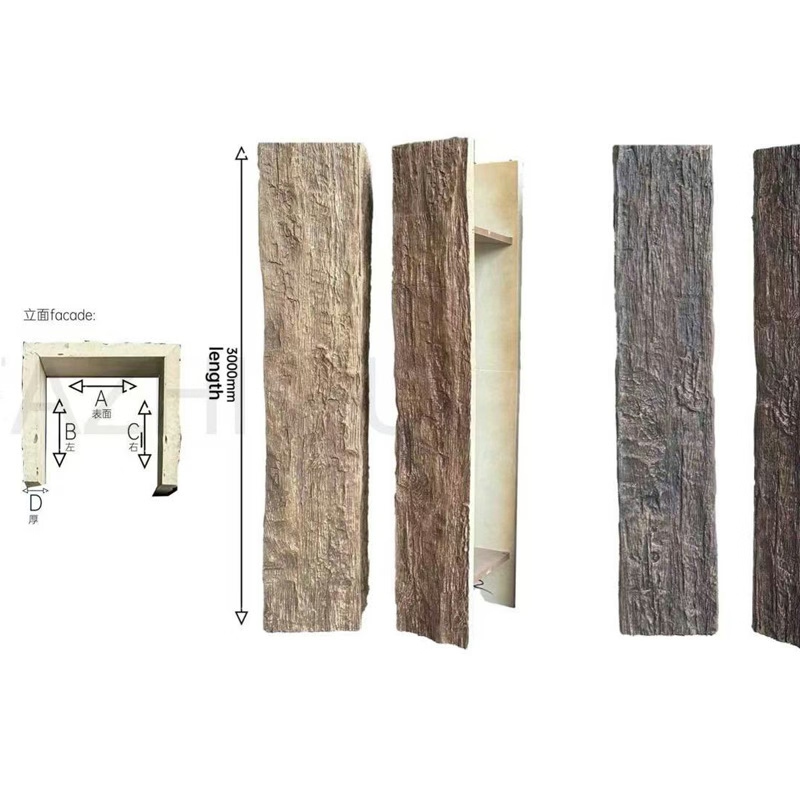
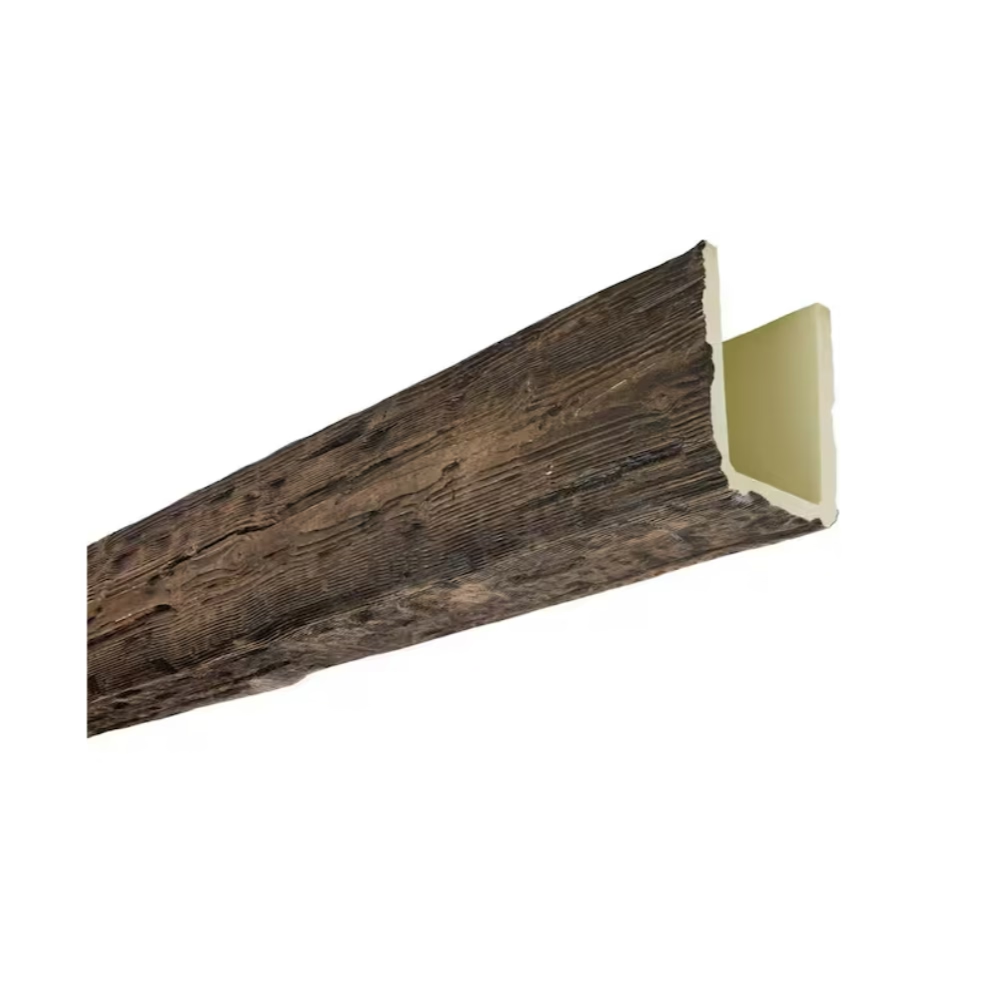
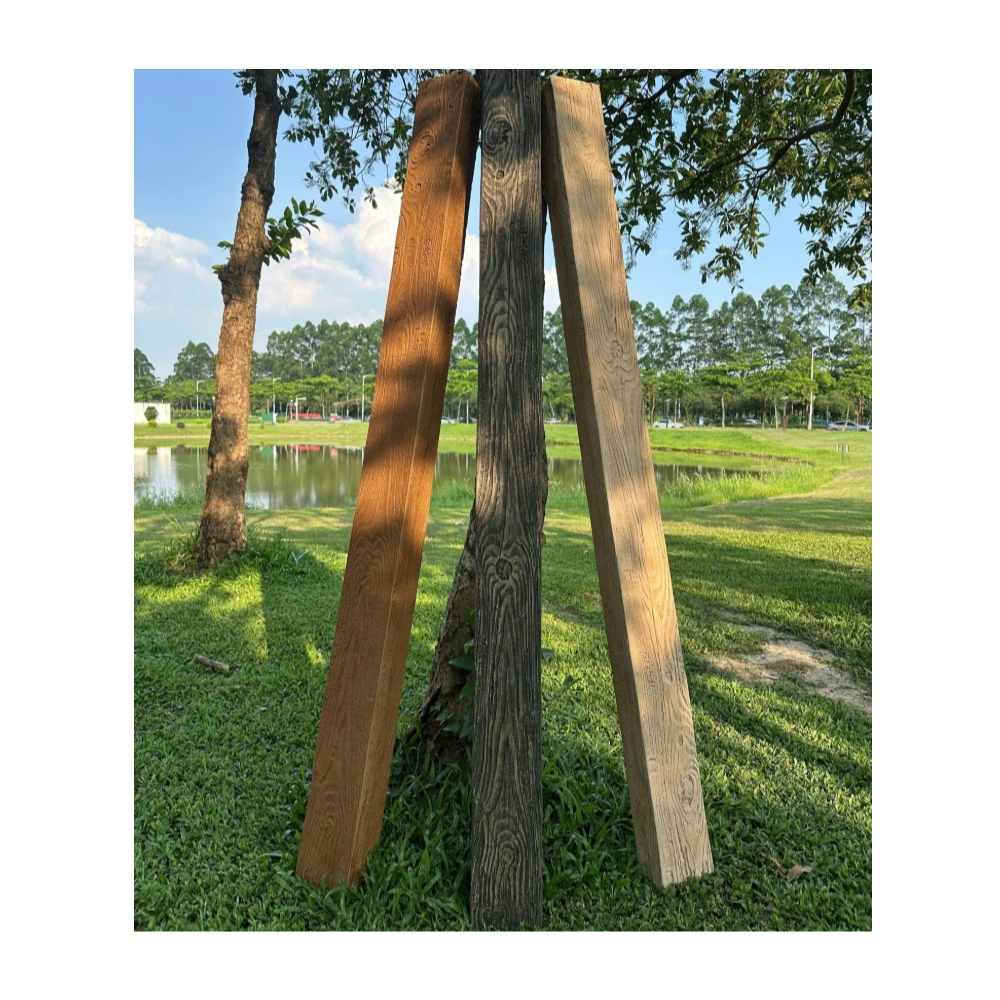
Coastal home renovations have a distinctive material palette that distinguishes them from other residential styles. White walls, natural fiber textiles, weathered or sun-bleached wood finishes, and a sense of casual elegance that references both the beach and the historical homes of seaside communities. The ceiling beam is one of the elements where this palette shows up most clearly, and the grey washed driftwood finish has become one of the more popular specifications for coastal renovations over the past decade.
The challenge with the driftwood aesthetic is that actual reclaimed driftwood is difficult to source, expensive when available, and inconsistent in finish. A driftwood beam that looks weathered in the showroom may weather further after installation, may have soft spots from prolonged moisture exposure, and may harbor insects or contaminants from its previous environment. Polyurethane faux wood beams with a grey washed driftwood finish solve all of these problems while delivering the same visual result.

Why the driftwood finish works for coastal homes
The driftwood aesthetic references the actual driftwood that accumulates on beaches — wood that has been weathered by sun, salt, and water into a pale grey finish with visible grain pattern. The aesthetic has been popular in coastal design for decades because it captures the casual, lived-in feeling of beach houses without requiring the homeowner to commit to a heavily weathered interior.
For new construction and renovation projects, the driftwood finish on a beam serves several functions:
- It signals coastal. The grey washed finish is immediately recognizable as a coastal reference, even in interiors that don't have direct ocean views.
- It softens the architecture. A grey washed beam reads as more relaxed than a dark walnut or a warm oak beam. The ceiling feels beachy rather than formal.
- It ages gracefully. The driftwood finish is meant to look weathered, so additional weathering doesn't compromise the aesthetic. The beam looks the same in year fifteen as it does in year one.
- It pairs with coastal palettes. White walls, blue accents, natural fiber textiles, and weathered wood finishes work together in ways that other finish combinations don't.
The driftwood finish is versatile enough to work across modern coastal, traditional coastal, Hamptons-style, beach house, and contemporary coastal interiors.
The PU advantage over actual driftwood
Actual reclaimed driftwood has aesthetic appeal but practical problems. The wood has typically been exposed to salt water, sand, and sun for extended periods, which leaves it with:
- Inconsistent hardness. Some pieces are still solid; others have soft spots that compromise structural integrity.
- Variable dimensions. Reclaimed driftwood doesn't come in standard beam sizes, so each beam has to be custom-fabricated from raw material.
- Potential contaminants. Salt residue, sand, and biological contaminants can affect the beam's long-term performance and the indoor air quality.
- Inconsistent finish. Each piece of driftwood has weathered differently, so a series of beams won't match in color or grain pattern.
- Limited availability. Quality driftwood in beam-sized pieces is increasingly difficult to source as beach ecosystems become more protected.
PU faux wood beams with a driftwood finish solve these problems. The factory produces the beams to standard dimensions, the finish is consistent across the entire run, the structural properties are reliable, and the material is dimensionally stable over decades.
The visual result at typical viewing distances is indistinguishable from actual driftwood. Modern PU faux wood factories use multi-tone stain systems and texture variations that capture the authentic driftwood character, including the visible grain pattern, the slight color variations, and the weathered surface texture.
The grey washed driftwood finish specification
The grey washed driftwood finish is a specific finish family within the PU faux wood catalog. The specification typically includes:
- Base tone. A pale to medium grey that references sun-bleached timber. The exact grey varies from a cool blue-grey to a warmer brown-grey depending on the manufacturer.
- Grain visibility. The wood grain pattern shows through the grey wash, often with darker grain lines that reference the natural wood structure.
- Texture. A slightly weathered surface texture that references the actual weathering of driftwood. Some manufacturers offer hand-brushed or wire-brushed textures for additional authenticity.
- Tonal variation. Multi-tone finishes that reference the natural variation in weathered timber, with slightly lighter and darker areas across the beam surface.
The factory produces this finish consistently across the entire beam length, so a series of beams reads as a coordinated composition rather than as a collection of individually weathered pieces.
Coordinating with coastal interior palettes
The driftwood finish works with a range of coastal palettes, but the right finish tone depends on the surrounding materials:
- Pure white walls. A medium grey driftwood finish provides the right contrast without overwhelming the room.
- Pale blue or seafoam walls. A cooler grey driftwood finish coordinates with the blue tones for a more tonal interior.
- Warm white or cream walls. A warmer grey driftwood finish with brown undertones coordinates with the warm walls.
- Sandy beige walls. A pale grey driftwood finish reads as a lighter layer in a beach-inspired interior.
The PU faux wood factories often offer multiple driftwood tone options within the same finish family, allowing designers to specify the version that best coordinates with the project's specific palette.
Proportions for coastal beam applications
Coastal beam applications follow the standard proportional guidelines with a few adjustments for the coastal aesthetic:
- Beam depth of one-tenth to one-twelfth of the ceiling height, slightly less than what would be specified in a formal interior. The coastal aesthetic wants the beams to read as relaxed rather than substantial.
- Beam width of one and a half to two times the depth, which gives the beam a more horizontal, plank-like appearance.
- Beam spacing in coffered layouts of 800 mm to 1.2 m. The wider spacing creates a more open ceiling, which suits the coastal aesthetic of generous light and air.
- Profile detail that's typically simpler than formal beam profiles. Chamfered edges rather than stepped faces, smooth returns rather than decorative moldings.
These proportions produce beams that read as coastal in character rather than as formal architectural elements. The driftwood finish reinforces the coastal character; the proportions support it.
Common applications in coastal renovations
The driftwood finish beam specification shows up in several common coastal renovation applications:
- Great room ceilings with exposed beam layouts that reference historic coastal homes.
- Kitchen ceilings with a single statement beam over the island or a coffered layout over the dining area.
- Bedroom ceilings with a simple beam crossing the room perpendicular to the bed wall.
- Covered porch ceilings where the beam continues the interior ceiling treatment into the outdoor living space.
- Staircase ceilings where a beam runs along the staircase direction and references the timber ceilings of historic coastal homes.
Each application has specific proportional and finish considerations that the designer works through during the specification phase.
Working with natural light
Coastal homes tend to have substantial natural light from windows facing the ocean, clerestory windows, skylights, or large sliding glass doors. The driftwood beam finish responds well to this natural light:
- Direct sun brings out the tonal variation in the multi-tone finish, with the grain pattern becoming more visible.
- Indirect daylight produces a softer, more even appearance that emphasizes the grey wash overall tone.
- Evening light from interior fixtures produces a warm, intimate appearance that shifts the driftwood tone toward warmer browns.
The finish is designed to look good across all these lighting conditions, which is one of the reasons it's become so popular in coastal renovations. The beam doesn't look right at noon and wrong at night; it looks right at all times of day.
Installation in coastal environments
Coastal homes have specific installation considerations. The salt air, the higher humidity, and the more frequent temperature swings affect material performance, even for interior applications. PU faux wood beams perform well in these environments because:
- The closed-cell PU formulation resists moisture absorption. The beams don't swell, warp, or degrade in higher humidity conditions.
- The factory finish is UV-stable and salt-resistant for interior applications. The driftwood tone doesn't shift toward yellow or brown the way some finishes do in coastal environments.
- The dimensional stability of PU faux wood means the beams don't shift with seasonal humidity changes. The joints and seams stay clean over time.
For homes with direct exposure to ocean air through open windows, the UV-inhibitor top coat option at order time provides additional protection. This is a modest upcharge that extends the finish life in particularly exposed locations.
Coordinating with flooring and furnishings
The driftwood beam finish coordinates with a range of coastal flooring and furnishings:
- Whitewashed or limed oak flooring creates a tonal match with the beam finish.
- Wide-plank pine flooring in a weathered finish complements the driftwood beam.
- Natural fiber rugs — sisal, jute, seagrass — provide textural contrast to the smooth beam finish.
- Wicker and rattan furnishings reference the casual coastal aesthetic and work with the driftwood beam tone.
- Linen and cotton textiles in white, cream, and pale blue complement the driftwood finish.
The coordination creates a coherent coastal interior rather than a collection of individually coastal pieces. Designers who specify all the elements together produce interiors that read as designed rather than assembled.
A note on the "weathered" trend
The weathered wood aesthetic has been popular in coastal design for over a decade, and the driftwood beam finish is one of the expressions of that trend. The trend has staying power because it works across a range of coastal styles and because the weathered appearance ages well itself.
Designers specifying driftwood beams today can be confident that the finish will look as good in fifteen years as it does at install. The aesthetic isn't tied to a specific fashion cycle; it's tied to the actual weathering process that the finish references. Real driftwood doesn't go out of style, and faux driftwood finishes don't either.

Coordinating with shiplap and tongue-and-groove
Coastal renovations often pair beam ceilings with shiplap or tongue-and-groove plank ceilings. The beam and the plank ceiling need to coordinate visually:
- Matching tone. The beam and the plank ceiling should use a similar driftwood tone, even if they're from different product lines.
- Contrasting texture. The beam can have a slightly different texture than the plank ceiling, which adds visual interest without breaking the palette.
- Consistent sheen. Both the beam and the plank ceiling should use the same sheen level — matte, satin, or semi-gloss — for a coordinated finish.
Most PU faux beam factories also offer shiplap and tongue-and-groove plank products, which simplifies the coordination because the finishes are designed to match across the product families.
Where the driftwood finish isn't the right call
The driftwood finish isn't the right specification for every coastal renovation:
- Formal coastal interiors that want a more polished, less weathered aesthetic. A warm honey oak or a clean whitewashed finish may be more appropriate.
- Tropical coastal interiors that reference a different material palette. Driftwood reads as Atlantic and Pacific coast; tropical interiors often reference bamboo, teak, or other tropical materials.
- Modern minimalist coastal that wants less ceiling detail. A simpler ceiling treatment without the beam may be more appropriate.
- Coastal interiors with dark color palettes. Driftwood reads as light and recessive; it doesn't work in dark coastal interiors that want the ceiling to recede into the walls.
For coastal interiors where the driftwood finish isn't the right call, alternative beam finishes include warm honey oak, whitewashed oak, weathered charcoal, or natural pine. The PU faux wood catalog typically includes several coastal-appropriate finishes, allowing designers to specify the one that best fits the specific project.
The long-term appeal of the driftwood finish
The driftwood beam finish is one of the more timeless coastal specifications. The aesthetic doesn't depend on current fashion; it depends on a centuries-old coastal design tradition. Homeowners who specify driftwood beams today are likely to be happy with the choice for decades, which is one of the reasons the finish has remained popular.
The PU faux wood beam format also supports this long-term appeal. The beams are durable, the finish is stable, and the material requires minimal maintenance. A driftwood beam install in a coastal home should look essentially the same in twenty years as it does at install, with only the finish potentially due for a refresh as interior design trends evolve. The structural PU core stays in place; only the finish gets redone.
Technical References
ASTM standards cited in every specification
Test Data
Lab results from internal testing program
Updated 2026
Reviewed against current product specs