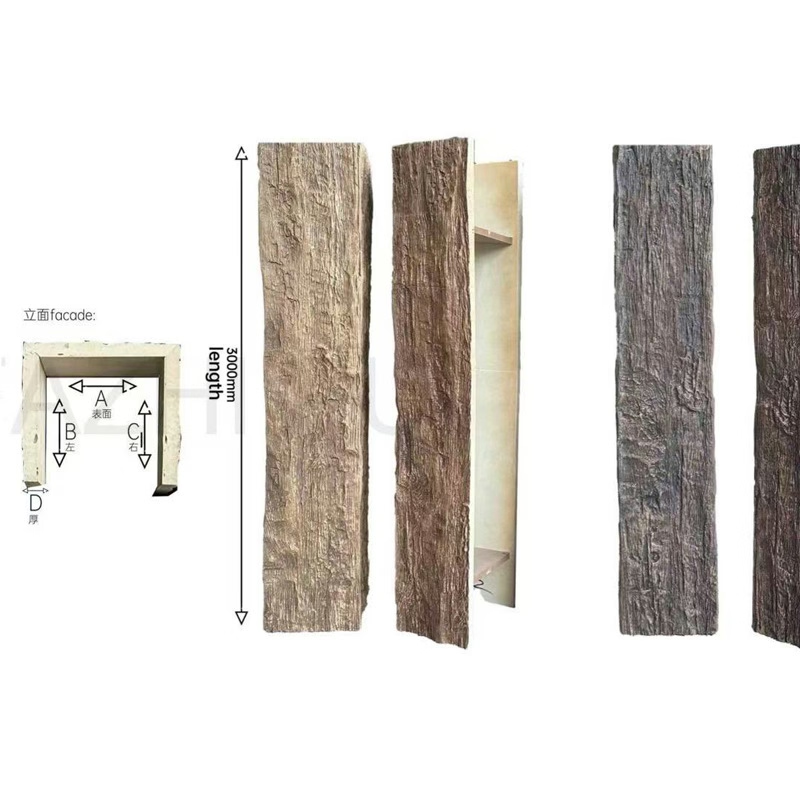
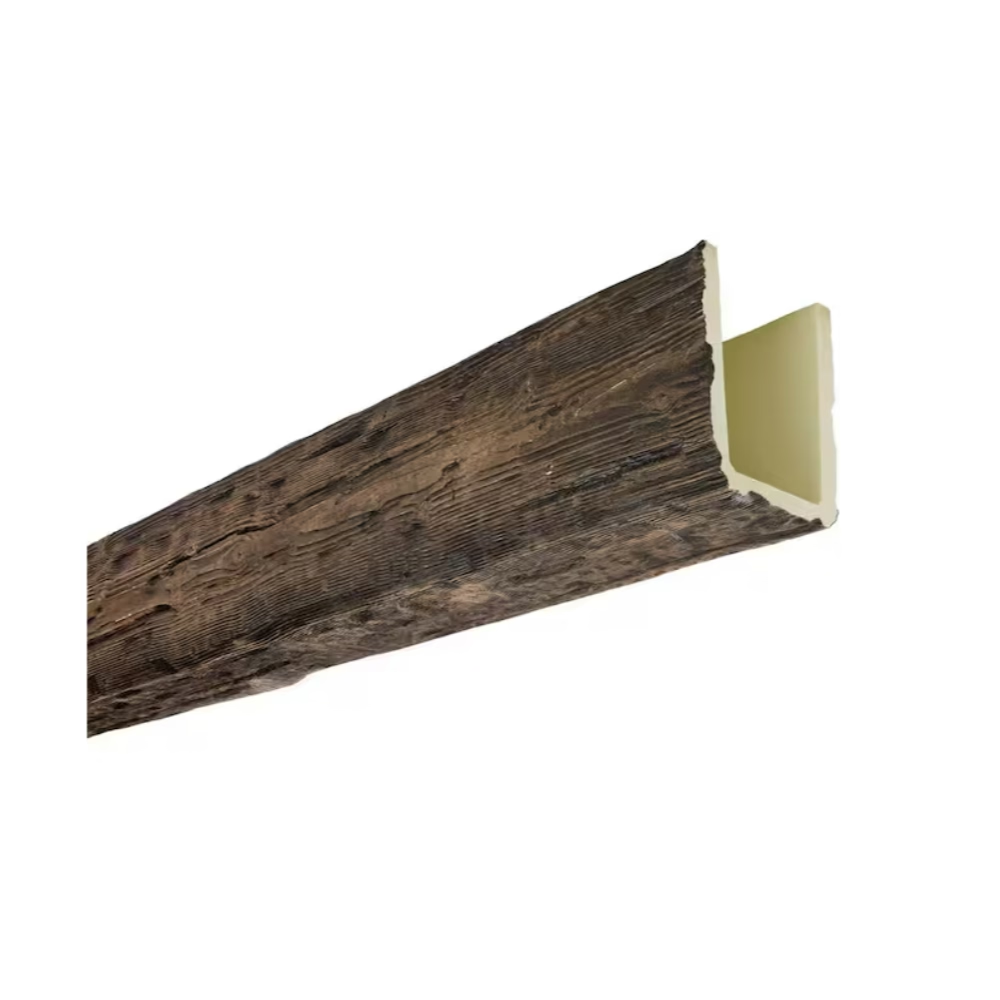
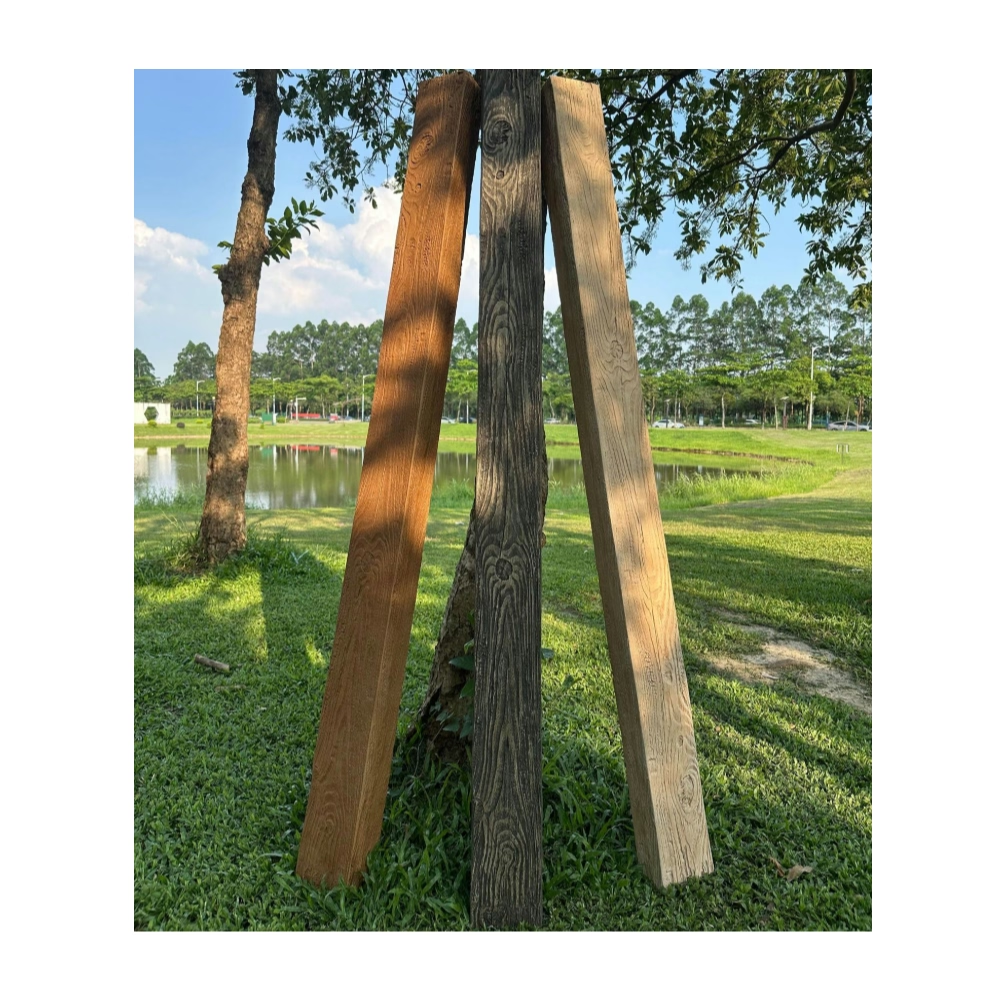
The traditional Finnish sauna depends on wood that can take punishment. Larch, aspen, alder — these species survive 80 to 100°C air temperatures, water thrown directly onto hot stones, and decades of use. They also cost serious money and require careful selection to avoid the resins that weep and the knots that crack.
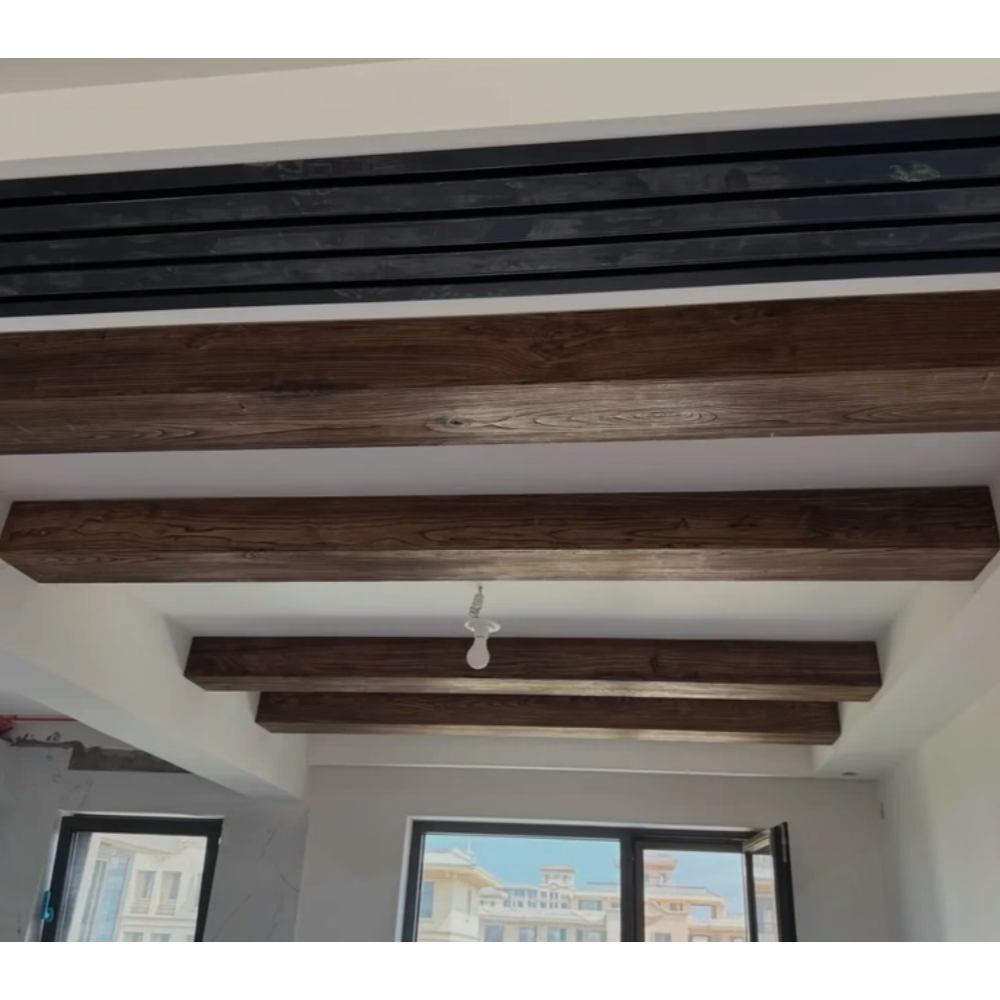
A homeowner who wants the look of a heavy timber beam across their sauna ceiling — but not the warping, the dripping resin, or the maintenance cycle — now has an option that did not exist a decade ago. Heat-resistant polyurethane faux wood beams, formulated specifically for sauna environments, deliver the visual of a substantial timber beam while handling conditions that would destroy an ordinary faux beam in months.
What a sauna actually does to a ceiling material
The numbers are worth understanding before specifying any material in this environment.
During a traditional sauna session, air temperature near the ceiling typically reaches 85 to 95°C. Surface temperatures on a beam directly below the ceiling deck can reach 75 to 85°C. When water hits the stones, the humidity spikes from a baseline of 10 to 15 percent to over 80 percent within seconds, then drops back as the steam dissipates.
This cycle repeats two to three times per session, with multiple sessions per week in an active home. The material must handle:
- Sustained high temperatures (60 to 90°C surface)
- Rapid humidity swings (15 percent to 80 percent in minutes)
- Direct water exposure from the löyly (water on stones)
- Thermal cycling as the sauna heats up and cools down
A standard polyurethane beam will soften at these temperatures. The foam structure begins to deform at 70°C, and the topcoat can blister or discolor at sustained exposure above 60°C. The wood in the room, by contrast, has been doing this for centuries.
How heat-resistant PU beams differ from standard product
Heat-resistant sauna-grade beams are not standard polyurethane beams with a special topcoat. They are a fundamentally different formulation.
Higher temperature-resistant resin system. Standard PU foam uses a polyether or polyester polyol that begins to soften at 60 to 70°C. Sauna-grade beams use a higher-temperature resin system, often based on a modified polyether that retains structural integrity to 110°C and a heat-deflection temperature above 100°C.
Post-cure processing. Standard PU beams are demolded after 24 hours and shipped within a week. Sauna-grade beams receive an extended post-cure at elevated temperature (60 to 80°C for 4 to 6 hours) that drives the polymerization reaction further toward completion. This reduces the residual monomers that can off-gas at high temperatures.
Closed-cell foam with low water absorption. The foam must not absorb steam. Closed-cell content is specified at 95 percent minimum, with water absorption below 1 percent by volume. This is verified through a 24-hour submersion test.
Ceramic-infused topcoat. Standard polyurethane or acrylic topcoats will soften in sauna conditions. Sauna-grade beams use a ceramic-particle-infused topcoat that maintains film integrity to 120°C and resists the abrasive effect of repeated steam cycles.
Antimicrobial package. The same antimicrobial additive used in tropical-grade beams applies here. Mold and mildew are constant concerns in any warm, humid environment.
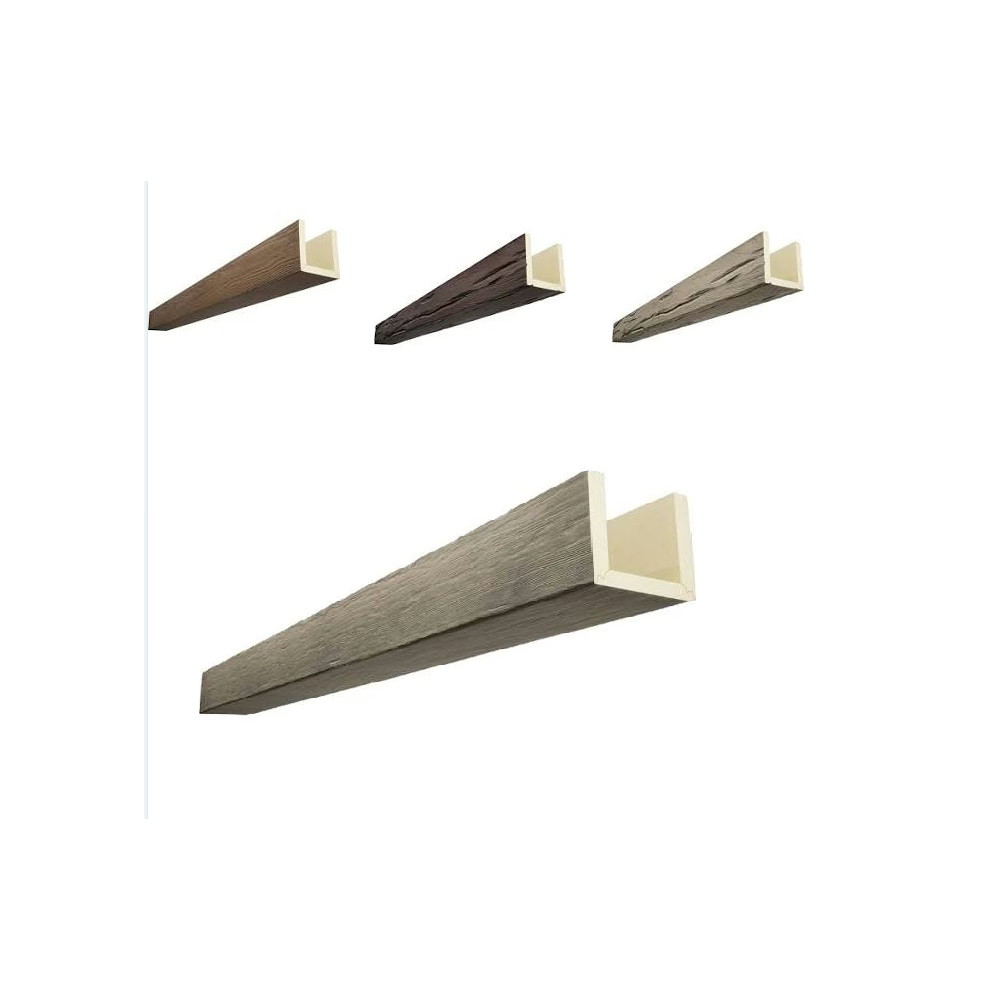
Where these beams work — and where they do not
The product has a specific application envelope. Outside of that envelope, a different specification is appropriate.
Works well:
- Traditional Finnish sauna ceilings (80 to 95°C operating temperature)
- Infrared sauna ceilings (40 to 60°C operating temperature — significantly less demanding)
- Steam room ceilings (lower temperature, higher sustained humidity)
- Hammam or Turkish bath ceilings (lower temperature, very high humidity)
- Changing room and relaxation area ceilings adjacent to sauna spaces
Does not work:
- Outdoor shower ceilings (direct water contact)
- Ceilings directly above wood-fired sauna stoves (radiant heat too intense)
- Steam rooms with continuous commercial-grade steam generators (24/7 humidity is too aggressive for any PU)

Installation in sauna environments
The installation details for sauna beams differ from standard ceiling installations in several important ways.
Mounting height. Sauna-grade beams should not be installed directly against the ceiling deck if the deck is uninsulated. The radiant heat from above can exceed the rated surface temperature of the beam. A 25 to 50 mm standoff between the beam and the ceiling deck allows air circulation and keeps the beam surface temperature within the rated range.
Stainless steel mounting hardware. In any sauna environment, only 316-grade stainless steel should be used for brackets, screws, and any visible hardware. Standard zinc or even 304 stainless will corrode visibly within months.
Ventilation gaps. The thermal expansion of a 4-meter beam at sauna temperatures is significant. Leave 8 to 10 mm expansion gaps at the ends of beams in continuous runs. The gap is hidden by the end cap or by the adjacent beam at a splice joint.
Avoid adhesive-only mounting. Sauna-grade PU construction adhesive exists, but mechanical fasteners should still be the primary load-bearing connection. Adhesive alone may creep at sustained high temperatures. Use a combination of cleats/brackets plus adhesive for the best long-term performance.
Comparing heat-resistant PU with traditional sauna wood
For purists, nothing replaces the experience of a real larch or alder ceiling in a sauna. The wood absorbs and releases moisture, contributing to the soft acoustic quality of the space. For design-forward installations where a substantial beam is desired — particularly the heavy timber look that has become popular in modern spa design — heat-resistant PU beams offer a practical alternative.
The aesthetic trade-off is that real wood ages. It grays over the years if not maintained. The heat-resistant PU beam will look identical at year ten as it did at installation, requiring only an occasional wipe-down.
The cost comparison is straightforward. A heavy timber sauna beam in larch or cedar can run $200 to $400 per linear foot installed. A heat-resistant PU faux beam of equivalent visual scale runs $80 to $140 per linear foot installed. For a residential sauna with three or four beams, the difference is significant.
Safety considerations
Any material in a sauna environment should be assessed for off-gassing at operating temperature. Standard polyurethane will release small amounts of volatile organic compounds at elevated temperature. Sauna-grade beams are tested specifically for VOCs at 90°C using a chamber test method, and the results are documented.
For homeowners with chemical sensitivities, ask the manufacturer for the high-temperature VOC test report. Quality sauna-grade products will show emissions comparable to or lower than the wood being replaced.
The flash point of properly post-cured polyurethane foam is above 300°C — well above any temperature encountered in a sauna. There is no realistic fire risk from the beam itself under normal use.
Expected service life
In a residential sauna used two to three times per week, a heat-resistant PU beam should deliver 15 to 25 years of service. The topcoat may show some surface wear at the 10 to 12-year mark in high-use saunas, but this is a recoating job, not a replacement.
Commercial saunas with daily use will see shorter service life — typically 8 to 12 years before the topcoat needs attention. The foam structure itself remains intact; only the surface finish requires maintenance.
The honest answer for a homeowner choosing between real wood and heat-resistant PU: real wood is the traditional answer and has centuries of validation. Heat-resistant PU is a modern solution that handles the environment well and removes the maintenance burden. Both are valid choices; the right one depends on the design priorities.
Technical References
ASTM standards cited in every specification
Test Data
Lab results from internal testing program
Updated 2026
Reviewed against current product specs