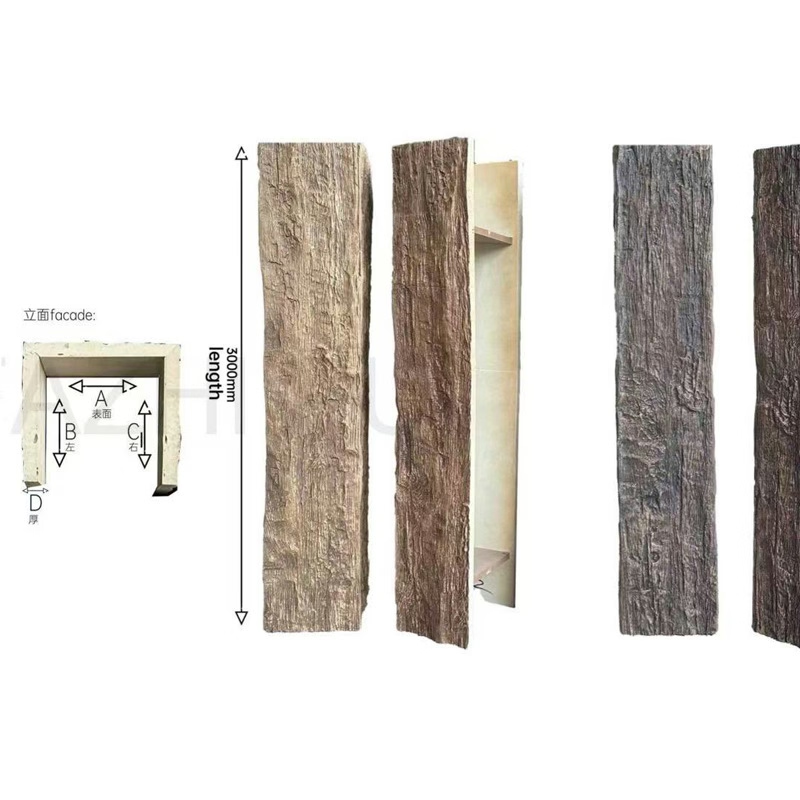
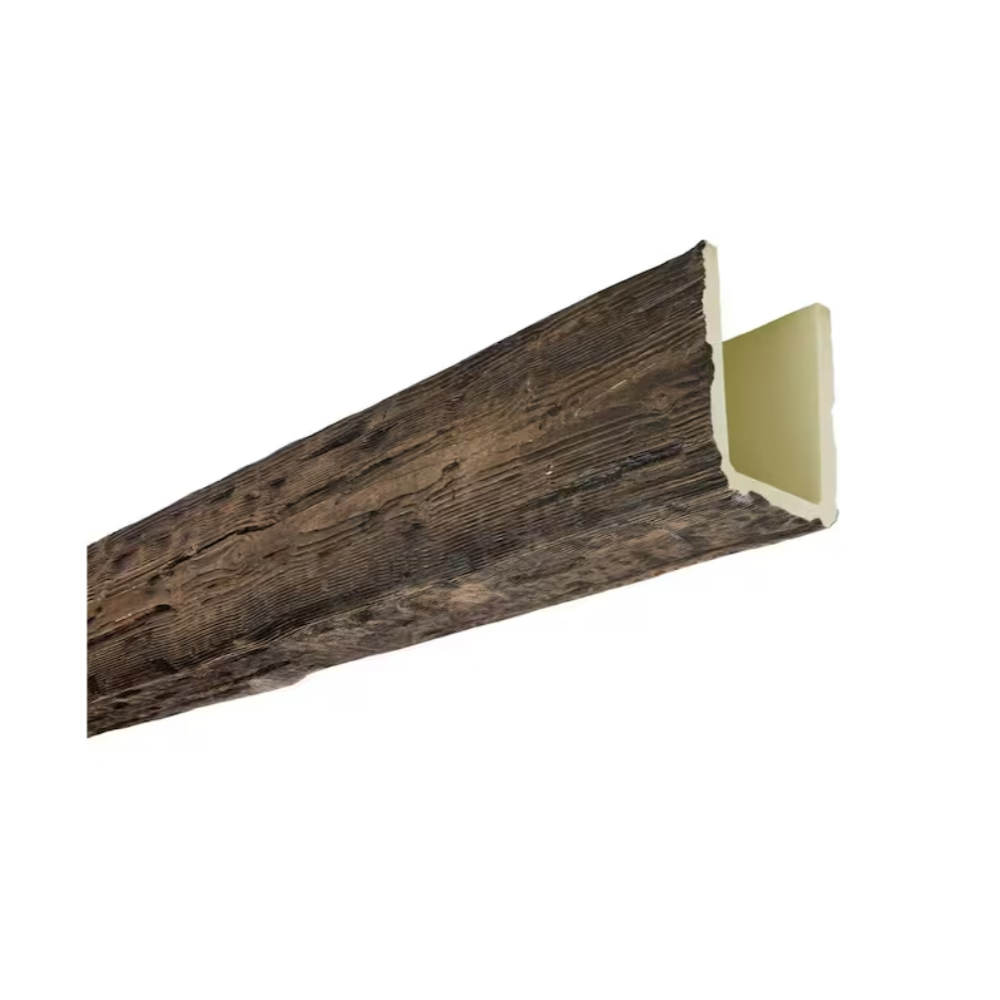
The renovation market serves homeowners with diverse budgets and priorities, from luxury projects with unlimited resources to modest improvements where every dollar must work efficiently. Cost-effective product categories exist for nearly every building material, and polyurethane faux wood beams are no exception. Understanding how value manifests in these products helps renovation planners achieve satisfying results within realistic budgets.
Material cost represents only one component of total installation expense, with labor, finishes, and mounting systems often exceeding material costs substantially. Cost-effective beam selection should consider total project economics rather than unit prices alone. Products priced slightly higher might reduce installation labor through easier handling, better mounting systems, or simpler finishing requirements that offset their initial premium.
Quality thresholds define the minimum acceptable performance below which products create problems rather than solving them. Budget products that fall below these thresholds might appear attractive initially but create ongoing issues through poor appearance, installation difficulty, or premature failure. Identifying quality thresholds that satisfy basic requirements prevents the false economy of products that cost more over their lifetimes than slightly more expensive alternatives.

Appearance quality varies substantially among cost-effective beam options, with some products achieving convincing wood simulation while others appear obviously synthetic. Photographs and descriptions cannot fully convey appearance quality, making physical sample evaluation essential for confident selection. Most manufacturers provide samples at modest cost, enabling direct comparison before committing to larger purchases.
Installation efficiency differences affect total project cost significantly. Beams that fit precisely require less adjustment and correction during installation. Products with integrated mounting features reduce hardware requirements. Light weight that single workers can handle eliminates additional labor. These practical advantages translate directly to installation cost savings that compound across larger projects.
Finish requirements influence both material costs and labor expenses for beam installation. Some products arrive pre-finished, requiring only installation labor. Others demand site finishing that adds material cost, labor time, and equipment requirements. Calculating total finished cost rather than material-only price reveals true project economics.
Finish durability affects long-term value by determining when maintenance refinishing becomes necessary. Cost-effective beams with less durable finishes might require earlier refinishing that increases lifetime costs. Products with factory-applied finishes that resist fading and wear provide better value over years of service despite higher initial cost.
Mounting system costs vary among beam products, with some requiring specialized hardware or extensive blocking that adds to total project expense. Products designed with mounting efficiency in mind reduce these ancillary costs. Manufacturer-provided mounting systems might be less expensive than alternative hardware that generic products require.
Shipping and handling costs affect total project economics for beams sourced from distant suppliers. Heavy products incur higher shipping charges than lightweight alternatives. Packaging that protects products during transport might represent significant cost. Local or regional suppliers might offer delivery advantages that offset other cost differences.
Warranty coverage provides value protection against premature failure, with some cost-effective products offering limited coverage that provides minimal protection. Longer warranty terms indicate greater manufacturer confidence, reducing risk that renovation investment depreciates prematurely. Warranty terms merit comparison alongside price when evaluating cost-effective options.
Reference installations provide evidence of real-world value performance that specifications cannot fully convey. Visiting completed renovations featuring specific products demonstrates how they appear after years of service. Speaking with homeowners about their satisfaction provides practical feedback that informs selection decisions.
DIY installation feasibility affects total project cost substantially for homeowners with construction skills. Lighter weight beams that single workers can handle enable successful DIY installation that eliminates labor costs entirely. Products with simple mounting systems that non-professionals can manage correctly provide value beyond mere material pricing.
Scope management enables cost-effective renovation by focusing improvement resources where they create greatest impact. Ceiling beams in living rooms and entryways might justify premium products, while secondary spaces like hallways or closets might use more economical options. This differentiated approach allocates budget efficiently across complete renovation projects.
Trade-off analysis helps renovation planners balance cost-effectiveness against other priorities like appearance quality, durability, and installation difficulty. No product maximizes all characteristics simultaneously, requiring informed trade-offs based on specific project priorities. Understanding which characteristics matter most for specific applications guides selection toward optimal value.
Technical References
ASTM standards cited in every specification
Test Data
Lab results from internal testing program
Updated 2026
Reviewed against current product specs