Living in a loft requires negotiating between competing demands. The industrial character that makes these spaces desirable—exposed structure, generous volumes, raw materials—sits in tension with residential needs for comfort, coziness, and domestic warmth. Successful loft interiors navigate this tension skillfully, preserving industrial authenticity while creating spaces where people actually want to live.
Ceiling treatment plays an outsized role in this negotiation. The overhead plane dominates visual perception, and its treatment significantly affects how spaces feel. For too long, loft ceilings received either neglect—leaving structure exposed without consideration—or inappropriate treatment—drop ceilings, drywall, or other residential approaches that contradicted industrial character.
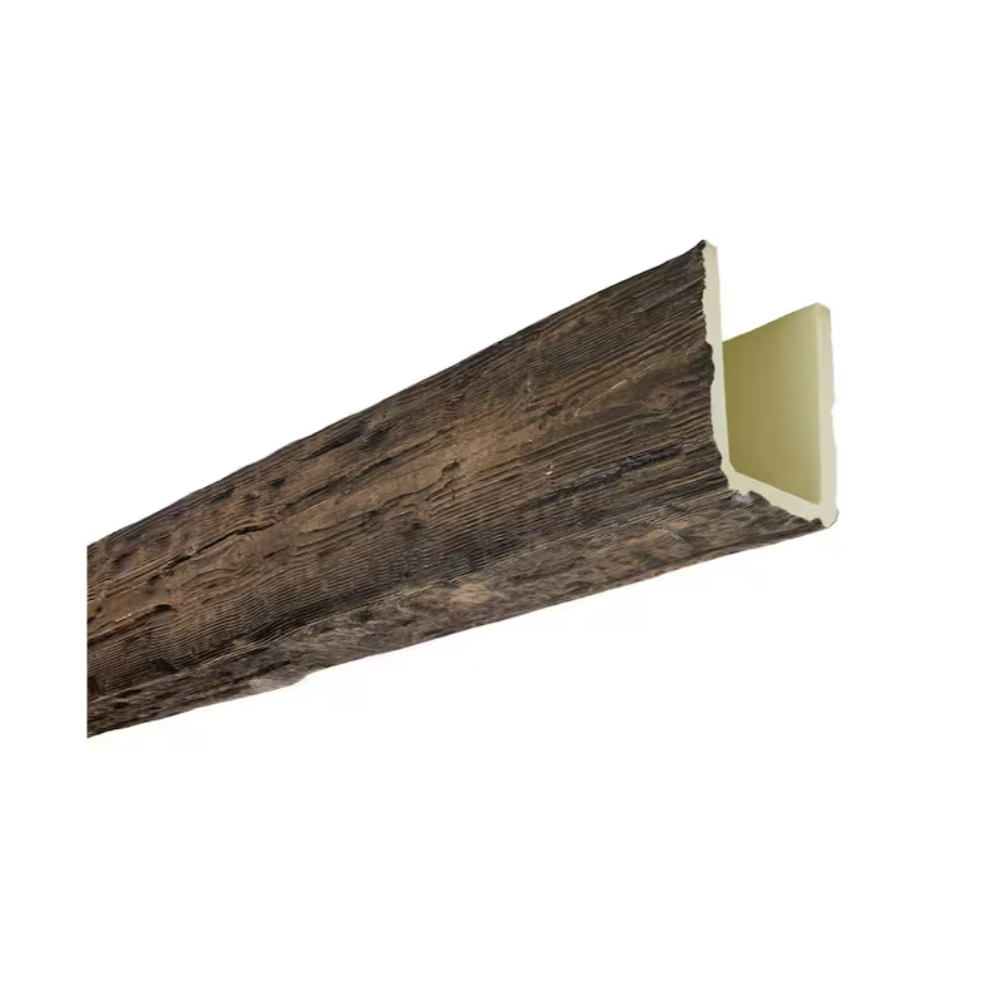
The recognition that ceiling beams could bridge this gap transformed loft interior design. Beams add warmth without undermining authenticity. They create visual interest without introducing foreign vocabulary. They make spaces feel finished without making them feel conventional.
The Challenge of Industrial Living Spaces
Industrial buildings were designed for purposes far different from residential habitation. Warehouses stored goods. Factories housed production. Commercial buildings served business. Adapting these spaces for living requires solving problems their designers never considered.
Temperature control represents a primary challenge. High ceilings, concrete floors, and brick walls create thermal mass that stores and releases heat unpredictably. Industrial buildings weren't insulated to residential standards. The result can be spaces that are difficult to heat in winter and uncomfortably warm in summer.
Acoustic challenges follow from the same characteristics. Hard surfaces reflect sound. Large volumes amplify it. The absence of conventional walls and doors eliminates natural sound barriers. Privacy becomes difficult to achieve.
Visual scale creates another category of challenges. Spaces designed for machinery and merchandise dwarf human scale. Furniture looks small. Rooms feel empty. Creating intimacy in these voluminous spaces requires design interventions that humanize without domesticating.
Ceiling beams address several of these challenges simultaneously. They add organic warmth that counters industrial coldness. Their dimensional presence breaks up sound reflections. They create visual structure that organizes otherwise overwhelming volumes.
Adding Warmth to Industrial Spaces
The contrast between industrial coldness and residential warmth represents the central challenge in loft decor. Every design decision either reinforces this contrast or works to bridge it.
Material selection drives much of this work. Hard materials—concrete, steel, glass—dominate industrial vocabulary. Adding soft materials—wood, textiles, upholstered furniture—introduces warmth that balances hard surfaces. Ceiling beams, being substantial wood elements, contribute significant warmth to overhead planes that might otherwise feel cold and inhospitable.
Color temperature affects perceived warmth significantly. Cool grays and metallics characterize industrial palettes. Warm browns, ambers, and honey tones introduce warmth. Beam color selection should consider this temperature dimension, with warmer tones contributing more heat to the visual environment.
Texture variation adds tactile interest that enhances warmth perception. Industrial surfaces tend toward smoothness—polished concrete, painted steel, glass. Wood grain introduces organic texture variation that feels more approachable and human-scaled.
Light quality influences warmth perception as well. Warmer color temperatures, diffused rather than harsh illumination, and strategic shadowing all contribute to cozy atmospheres. Beam installation affects light quality by creating shadow and providing mounting surfaces for warmer-toned fixtures.
Faux Beams as Practical Solution
The case for faux beams in loft interiors rests on practical as well as aesthetic considerations. Understanding these practical factors helps explain why faux has become the default choice for many applications.
Structural load considerations favor faux alternatives in many buildings. Loft conversions may have ceiling structures not designed for substantial additional loads. Genuine timber beams can weigh hundreds of pounds per linear foot, potentially requiring structural reinforcement. Faux polyurethane beams, weighing roughly one-tenth as much, can be installed without load concerns in most cases.
Moisture sensitivity affects material performance in loft environments. These spaces may have less controlled humidity than conventional apartments—more exposure to exterior conditions, less consistent climate control. Natural wood responds to humidity fluctuations with dimensional changes that may eventually affect appearance. Polyurethane remains stable regardless of humidity conditions.
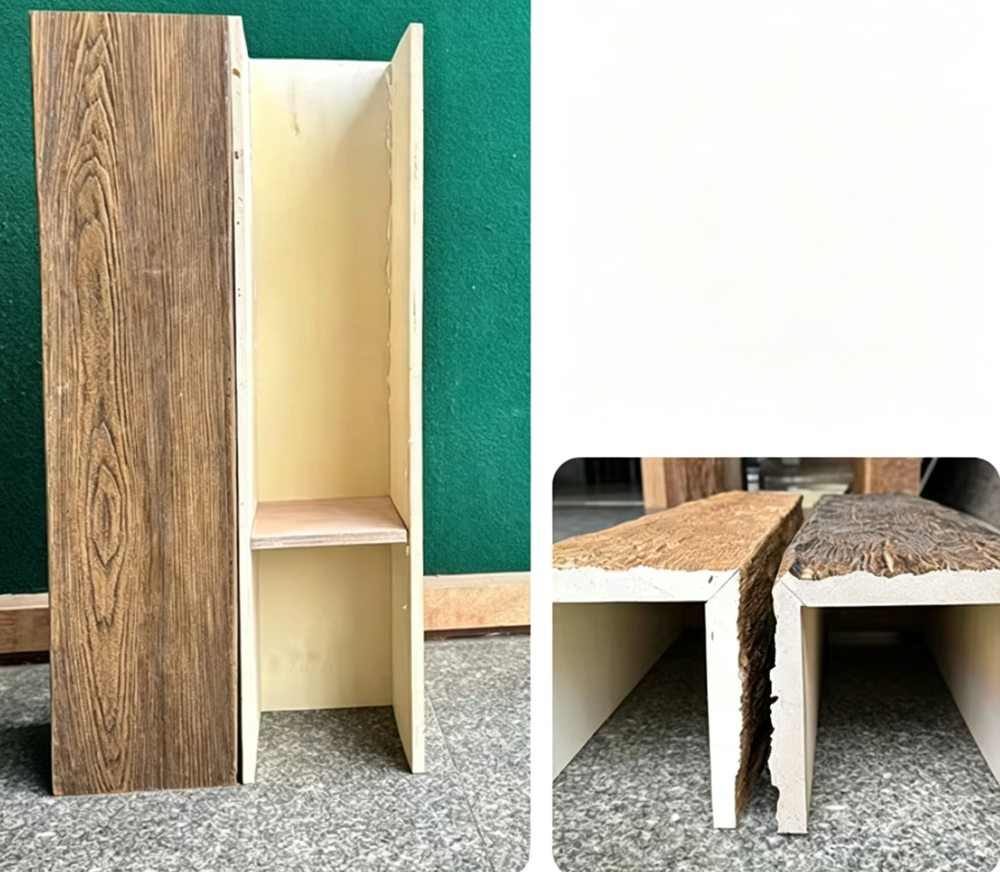
Installation complexity differs significantly between genuine and faux options. Timber beams require multiple installers, specialized equipment, and often custom fabrication. Polyurethane beams can often be handled by single installers using standard tools and hardware. This installation simplicity translates to cost savings and faster project completion.
Consistency and availability affect project planning. Timber beams depend on salvage availability—specific dimensions, profiles, and conditions may or may not be obtainable. Faux beams offer controlled consistency and ready availability, supporting more predictable project planning and timelines.
Achieving Authentic Industrial Character
The concern that faux beams will appear obviously artificial haunts some designers and homeowners. While this concern is understandable, modern manufacturing has largely addressed authenticity questions.
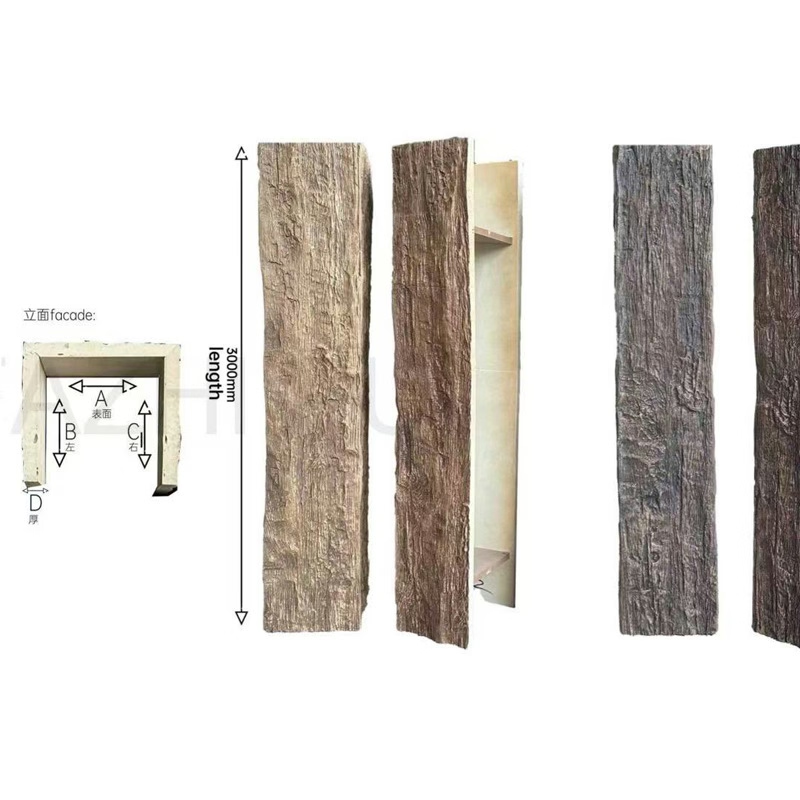
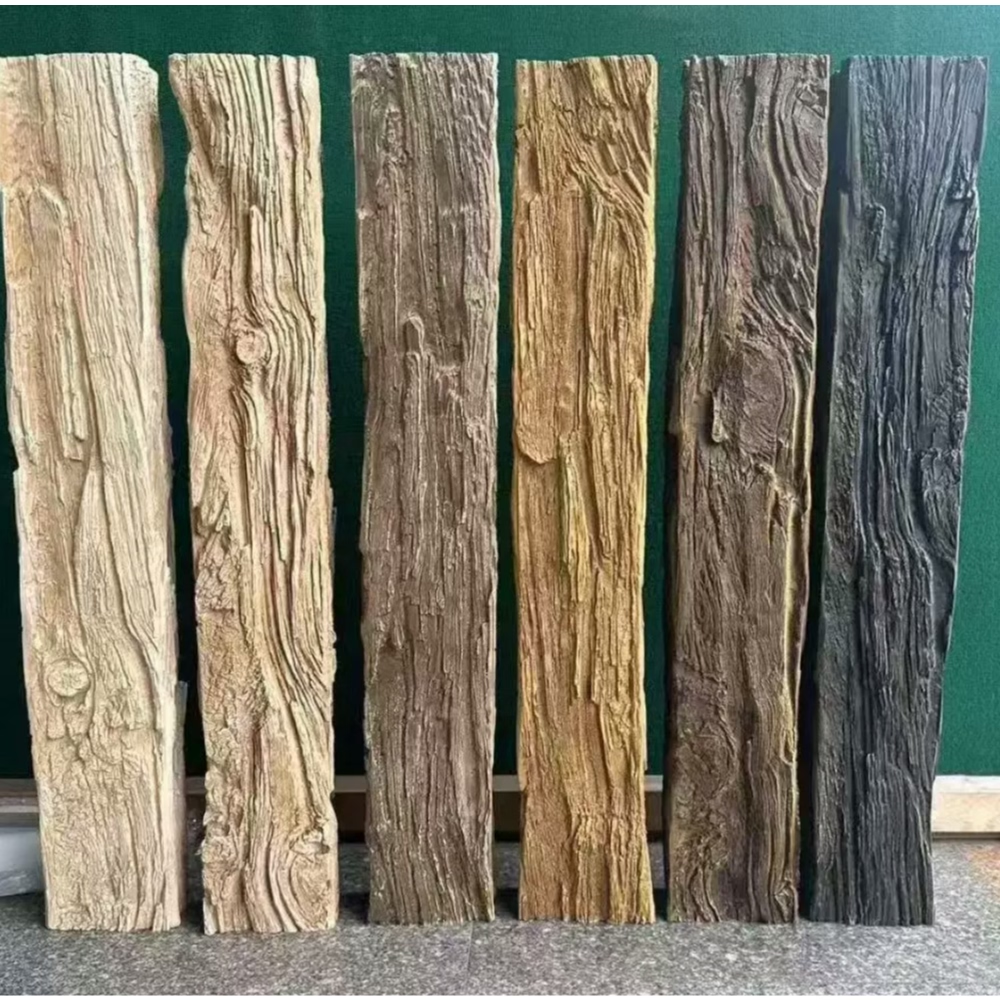
Surface detail reproduction captures the variations that make wood look genuine. Quality faux beams are molded from authentic timber, capturing knots, grain variations, checking, and weathering effects. The resulting surfaces show the same irregularity that characterizes real wood.
Color application processes build natural variation into finished beams. Rather than uniform single-color finishes, quality products use multi-stage processes that create the color gradations and tonal variations present in genuine timber.
Dimensional irregularity distinguishes quality products from cheap alternatives. Natural timber isn't perfectly straight or uniformly thick. Quality faux beams incorporate slight variations that echo this natural irregularity, avoiding the manufactured perfection that signals artificial origin.
The installation itself affects perceived authenticity. Beams that are too perfect in placement, too uniform in spacing, or too isolated from existing structure will appear as obvious additions. Beams that integrate with existing architecture—respecting irregularity, working with structure rather than against it—contribute to overall authenticity.
Living with Beam-Enhanced Lofts
The experience of living in beam-enhanced loft spaces differs meaningfully from untreated lofts. Understanding this lived experience helps set appropriate expectations.
The sense of warmth that beams introduce affects daily life in subtle ways. Morning light on warm wood tones, evening shadows from overhead beams, the visual weight that makes spaces feel grounded—all contribute to residential comfort that untreated lofts often lack.
Spatial organization benefits from beam treatment. The visual boundaries that beams create help organize furniture arrangements and define activity zones. This implicit structure supports daily living in ways that open, undivided lofts cannot match.
The durability of quality faux beams ensures that initial investment holds value over time. Unlike natural wood that may require maintenance or refinishing, polyurethane beams continue looking their best with minimal attention. This practical benefit supports the case for quality initial investment.
The lasting appeal of industrial residential aesthetics suggests that beam-enhanced lofts will continue appreciating in desirability. As long as urban dwellers value the distinctive character of loft living, ceiling treatment that enhances this character will remain valuable.
Technical References
ASTM standards cited in every specification
Test Data
Lab results from internal testing program
Updated 2026
Reviewed against current product specs