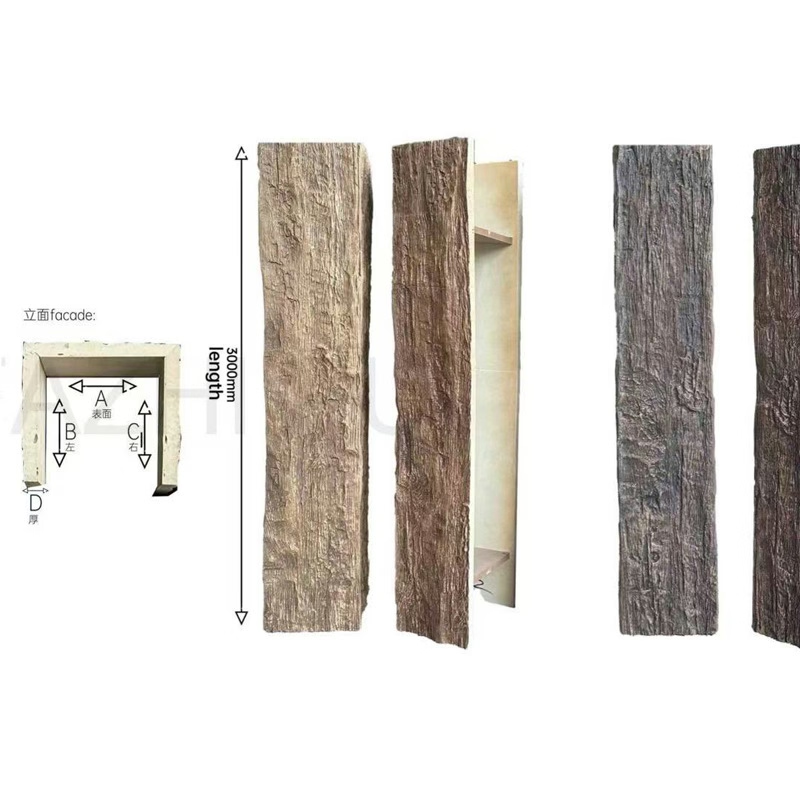
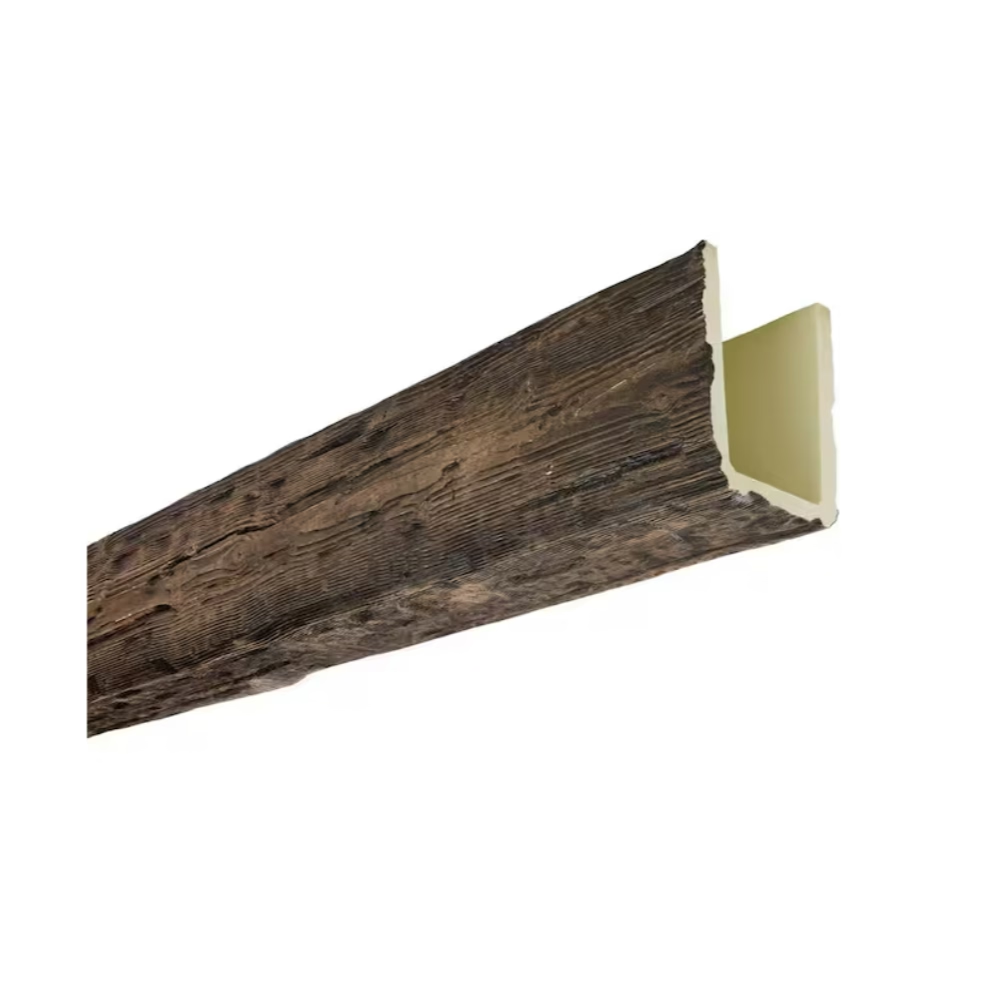
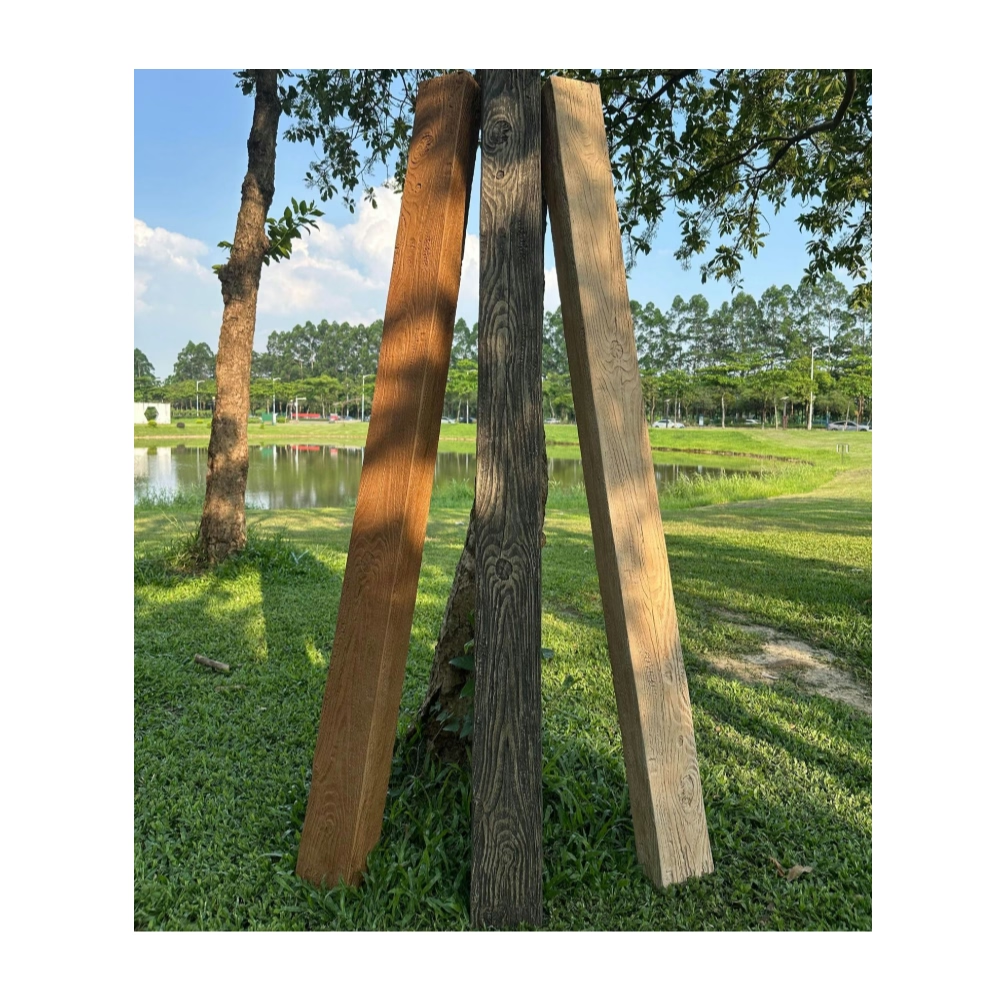
The United States residential market for decorative faux wood beams has entered a period of sustained expansion, driven by converging forces that include rising material costs for genuine timber, growing consumer sophistication about interior design options, and a fundamental cultural reorientation toward warmer, more textured living environments. Understanding these market dynamics is essential for manufacturers, distributors, and design professionals who operate in or serve this space.

Demand Drivers: Why Homeowners Choose Faux Over Real
The economic case for faux wood beams has strengthened considerably as lumber prices have experienced sustained volatility over the past several years. Random Length lumber composite prices, which serve as an industry benchmark, have fluctuated between four hundred and nine hundred dollars per thousand board feet over the past decade, creating budgeting uncertainty for contractors and homeowners who specify genuine timber. Polyurethane faux beams offer a stable, predictable cost structure that removes this variable from project planning.
Beyond price stability, the installation economics favor polyurethane. Real timber beams of architectural scale typically require structural engineering assessment, specialized lifting equipment, and sometimes modification of ceiling framing to accommodate the concentrated loads that heavy timber introduces. Faux beams of comparable visual impact can be installed by a two-person crew using hand tools and basic fastening hardware, eliminating the need for engineered drawings, special permits, and extended labor schedules.
The visual equivalence achieved by modern faux beam products has also reduced buyer hesitation. Early generations of polyurethane beams suffered from telltale signs of their artificial origin: excessively uniform grain patterns, suspiciously consistent color, and surfaces that lacked the tactile complexity of real wood. Current manufacturing techniques, including multi-layer molding, foam injection with controlled density variation, and advanced finishing processes, produce results that satisfy discerning homeowners and design professionals.
Regional Market Breakdown
Market demand for faux wood beams in the United States follows patterns that correlate with climate, housing stock characteristics, and regional design preferences. The South represents the fastest-growing region, driven by the explosion of new construction in states like Texas, Georgia, North Carolina, and Florida. Many of these new homes feature open-plan layouts with vaulted or raised ceilings that invite beam installation, and the prevailing design aesthetic—transitional farmhouse with coastal influences—favor the warm, natural textures that beams provide.
The Western market, while more mature, continues to exhibit strong demand particularly in the Pacific Northwest and Northern California. These regions feature a disproportionate share of architect-designed homes with dramatic ceiling treatments, where beams serve both aesthetic and functional roles in defining space and breaking up large ceiling planes. Western buyers tend to specify higher-end finishes and custom profiles, reflecting both the design sophistication of the market and the competitive pressure from visible installations in high-value properties.
The Midwest and Northeast markets are characterized by renovation-driven demand. Older housing stock in these regions—colonial homes, Cape Cods, and mid-century ranches—provides a natural retrofit opportunity for faux beams, as homeowners updating these properties seek to add architectural interest that was absent from original construction. The seasonal nature of renovation activity in colder climates creates predictable demand cycles, with peaks in spring and fall when weather permits painting and finish work.

Price Point Distribution and Market Segments
The US faux beam market divides roughly into three price segments with distinct customer profiles and competitive dynamics. The entry-level segment, comprising products priced below fifty dollars per linear foot in standard dimensions, serves DIY homeowners and small contractors performing budget renovations. These buyers prioritize price over premium aesthetics and often accept more basic finishes and limited profile options.
The mid-market segment, spanning roughly fifty to one hundred twenty-five dollars per linear foot, represents the largest share of total market volume. Products in this range offer genuine wood grain texture, multi-step finishing, and a reasonable selection of standard profiles and colors. This segment attracts both professional contractors seeking value for client projects and affluent homeowners pursuing high-quality results within defined budgets.
The premium segment, priced above one hundred twenty-five dollars per linear foot, serves luxury residential and select commercial applications. Products at this level feature custom-matched finishes, proprietary textures, extended warranties, and white-glove service including professional installation coordination. The competitive landscape in this segment emphasizes brand reputation, design consultation capability, and product exclusivity rather than price competition alone.
E-Commerce Influence and the Changing Purchase Journey
Digital commerce has reshaped how American consumers research and purchase faux wood beams. Unlike their predecessors who relied on showroom visits and contractor recommendations, today's buyers typically begin their journey online, comparing images on social media platforms, reading product reviews, and gathering pricing information from multiple suppliers before engaging with sales representatives or visiting showrooms.
This shift has significant implications for market participants. Search engine visibility, social media presence, and the quality of product imagery and description have become critical competitive factors. Manufacturers and distributors who invest in comprehensive digital content—detailed specifications, installation guides, finish comparison tools, and customer project galleries—capture a disproportionate share of early-stage buyer consideration. Those who rely solely on traditional sales channels find themselves increasingly excluded from the initial stages of the purchase decision.
The showroom experience itself has evolved in response. Physical showrooms now function primarily as confirmation and experience spaces rather than discovery venues. Customers arrive having already narrowed their options online and use showroom visits to confirm color accuracy, evaluate finish quality in person, and engage with product specialists about technical specifications and installation logistics. This behavioral shift rewards showrooms that provide exceptional tactile experiences and knowledgeable consultation while reducing the pressure to maintain extensive product inventories.
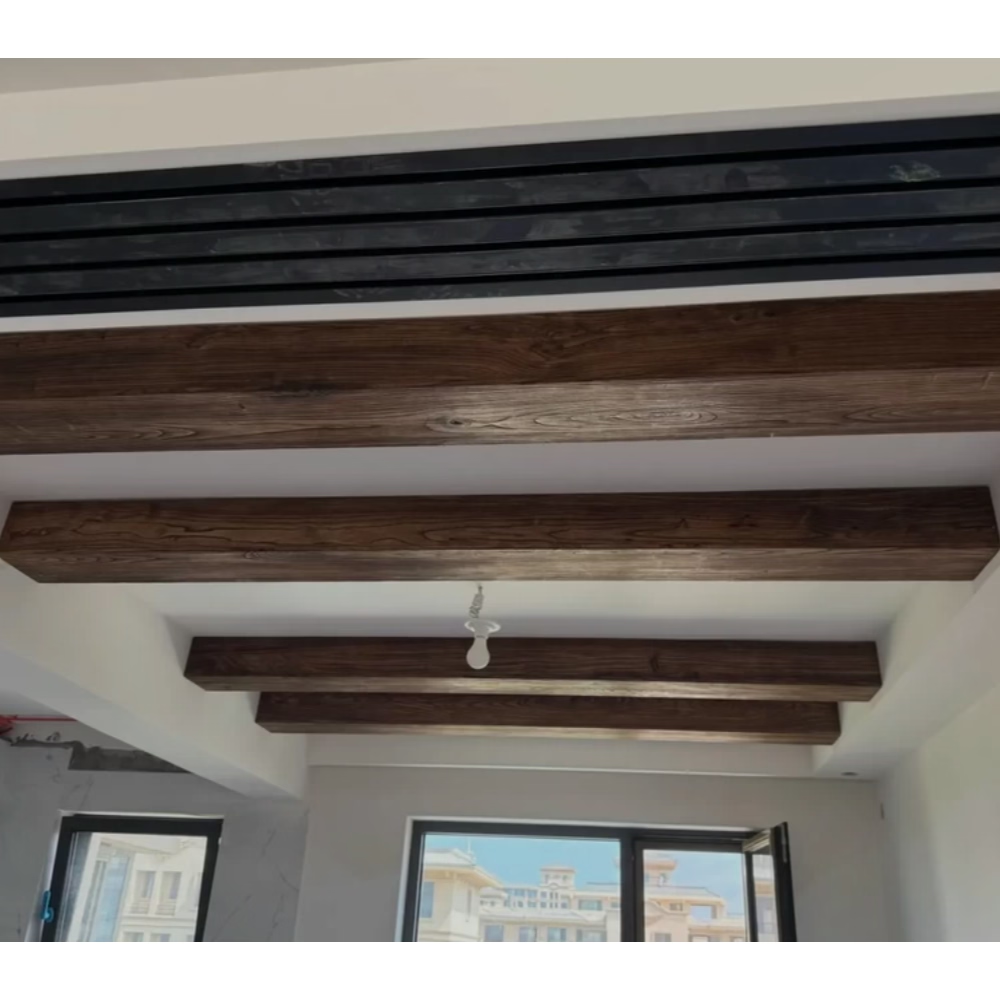
Consumer Awareness and Specification Sophistication
American consumers have become significantly more knowledgeable about faux wood beam products over the past five years, driven by the proliferation of home improvement media and the transparency of online product information. Where buyers previously accepted whatever products their contractors recommended, many now arrive at projects with specific finish names, profile dimensions, and installation expectations clearly articulated.
This sophistication creates both opportunities and challenges for market participants. On the positive side, informed buyers are better able to specify appropriate products for their applications and are less likely to be deterred by initial unfamiliarity with polyurethane as a substrate. However, they also raise the bar for product quality and information accuracy, expecting manufacturers to provide the level of technical detail and imagery that has become standard in adjacent product categories like flooring, cabinetry, and lighting.
The specification process itself has become more collaborative. Rather than selecting from a static catalog, buyers increasingly expect to work with manufacturers and distributors on custom finish matching, profile modification, and application-specific recommendations. This consultative approach aligns with premium pricing strategies and builds the customer relationships that drive repeat business and referrals.

Competitive Landscape and Market Concentration
The US faux wood beam market remains relatively fragmented, with dozens of domestic and international manufacturers competing for share across different segments and regions. Domestic manufacturers benefit from shorter lead times, easier communication with US customers, and familiarity with local building codes and construction practices. Importers, predominantly from China, offer cost advantages in raw materials and manufacturing scale while investing heavily in finishing quality and customer service to compete effectively.
Market consolidation has accelerated as larger players have acquired smaller competitors and invested in manufacturing capacity and brand development. Vertical integration—controlling everything from mold production through finishing and distribution—has emerged as a competitive advantage, enabling manufacturers to maintain quality control, respond quickly to design trends, and capture margin across multiple value chain stages.
The role of distributor networks is also evolving. Traditional building material distributors have expanded their faux beam inventories, while specialty retailers and design showrooms have deepened their technical and design support capabilities. Some manufacturers have bypassed distributors entirely, selling direct to contractors and homeowners through e-commerce platforms and company-operated showrooms. Each channel model carries distinct advantages in terms of margin structure, customer access, and service capability.
Outlook for the US Market
The structural drivers supporting faux beam demand in the United States show no signs of weakening. Continued growth in home renovation spending, driven by aging housing stock, rising home values that incentivize improvement over relocation, and the ongoing preference for open-plan living spaces with dramatic ceiling treatments, provides a favorable backdrop for market expansion.
Emerging opportunities include the commercial renovation sector, where hospitality brands, restaurant groups, and co-working companies are specifying decorative beams as part of property refreshment programs. The multi-family housing market, particularly luxury apartment and condominium developers, represents another growth vector as builders seek to differentiate units with features that evoke single-family home character in compact footprints.
Challenges to monitor include potential regulatory action on polyurethane composition and fire performance standards, which vary by jurisdiction and application. While current-generation PU beams meet most applicable building codes, evolving environmental and health regulations could increase compliance costs or restrict certain applications. Supply chain resilience—maintaining adequate inventory and delivery reliability in the face of shipping disruptions—remains an operational priority for distributors serving time-sensitive construction schedules.
Technical References
ASTM standards cited in every specification
Test Data
Lab results from internal testing program
Updated 2026
Reviewed against current product specs