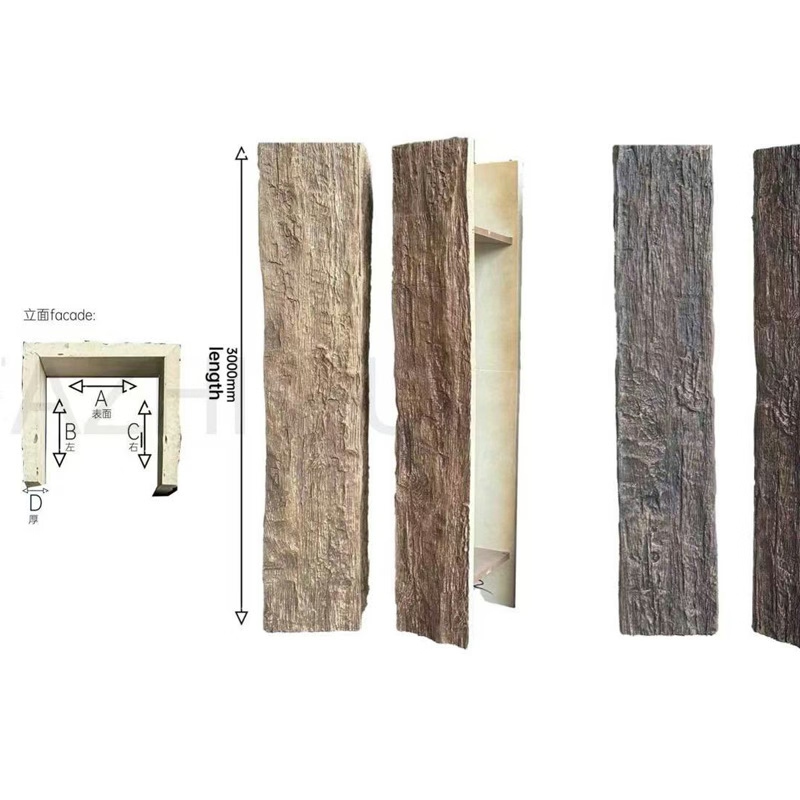
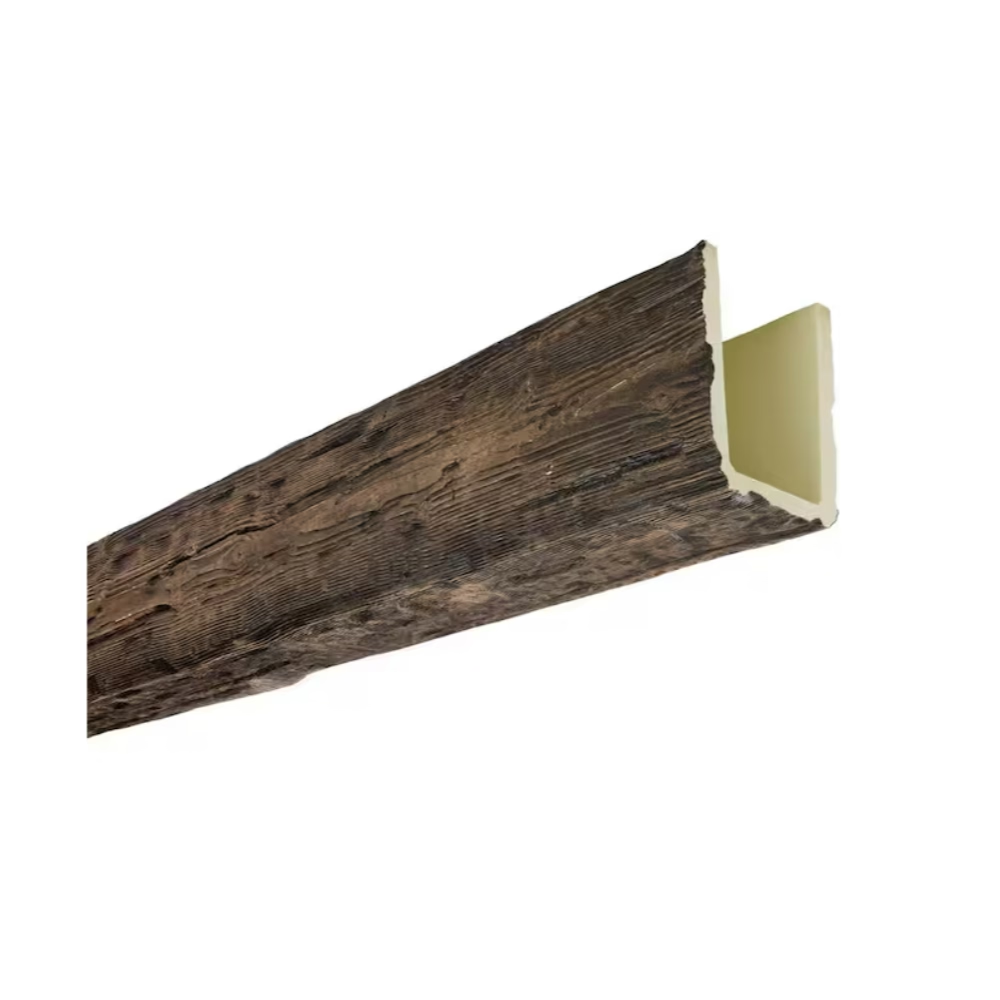
The modern home media room has evolved far beyond the concept of a simple television in a corner of a living room. Today, dedicated media rooms are carefully engineered spaces where architecture, acoustics, lighting, and interior design converge to create an immersive environment that rivals or exceeds the commercial cinema experience. Every surface in the room contributes to this experience, and the ceiling, often overlooked in conventional room design, plays a particularly critical role. A well-designed media room ceiling does more than simply enclose the space; it manages light reflections, contributes to acoustic performance, establishes the room's visual identity, and creates the sense of enclosure and intimacy that makes the viewing experience feel immersive rather than exposed.
Hollow faux wood beams have emerged as an increasingly popular ceiling treatment choice for media room applications, and their suitability for this context is not accidental. The material properties of high-density polyurethane — its lightweight character, its dimensional stability, its acoustic transparency, and its capacity for authentic timber-like finishes — align remarkably well with the specific requirements of home theater environments. Understanding how these properties translate into practical benefits for media room design reveals why hollow faux wood beams represent a thoughtfully considered choice rather than simply a visually appealing one.


The Ceiling's Role in Media Room Acoustics
Acoustic performance is arguably the single most important technical attribute of a well-designed media room, and the ceiling surface is one of the primary surfaces that acoustic consultants and home theater designers manipulate to achieve the desired sound environment. The ceiling's contribution to room acoustics operates on several distinct levels: managing early reflections that could interfere with the perceived clarity of the soundstage, controlling reverberation time to maintain appropriate sonic decay, and distributing bass frequencies evenly across the listening area without the development of acoustic nodes or nulls.
The introduction of beams into a media room ceiling introduces acoustic complexity that, when properly managed, becomes an asset rather than a liability. The voids between beams create an inherently more varied surface than a flat ceiling, and this variation disrupts the regular reflection patterns that flat surfaces can produce. In acoustic terms, the beam-and-void pattern acts as a partial diffuser, scattering mid and high-frequency sound energy in a way that reduces the intensity of discrete early reflections reaching the listening position. This scattering effect is particularly valuable in rooms where the seating position places the viewer equidistant from multiple reflective surfaces, a condition that can cause harshness or confusion in the perceived sound image.
The hollow interior of polyurethane beams adds a further dimension to their acoustic behavior. Unlike solid beams that transmit vibrations throughout their mass, hollow beams have a more decoupled relationship with the structural ceiling, tending to resonate less readily when sound pressure waves impinge on their surfaces. This resonance resistance means that beams contribute less to the room's low-frequency acoustic signature than solid timber alternatives of comparable visual mass, which can be advantageous in rooms where bass management is already challenging due to the room's dimensions or construction.
Designing the Media Room Ceiling for Visual Immersion
Beyond acoustics, the ceiling's contribution to the visual experience of a media room is fundamentally about creating a sense of enclosure and focused attention directed toward the screen. This is a psychological as much as an aesthetic objective: people perceive and respond to spaces that feel deliberately designed and contained, and a well-detailed ceiling contributes to this perception in ways that are felt even if they are not consciously analyzed. The beam treatment of a media room ceiling establishes the room's visual character and, in doing so, sets the emotional tone for every activity that takes place within the space.
The warmth of timber aesthetics is particularly valuable in media room applications because it counterbalances the inherently technological nature of the room's equipment and purpose. A room dominated by sleek black equipment, dark acoustic panels, and projector housings can feel cold and mechanical, and the introduction of warm-toned timber beams provides a material counterpoint that humanizes the space. Even when beams are finished in cooler tones such as driftwood grey or limed white, the textural richness of the timber-look surface adds a natural quality that improves the room's overall atmosphere. This warmth is not a luxury but a functional design consideration, because the most enjoyable media rooms are those that people feel comfortable spending time in, and material warmth is one of the key drivers of this comfort.
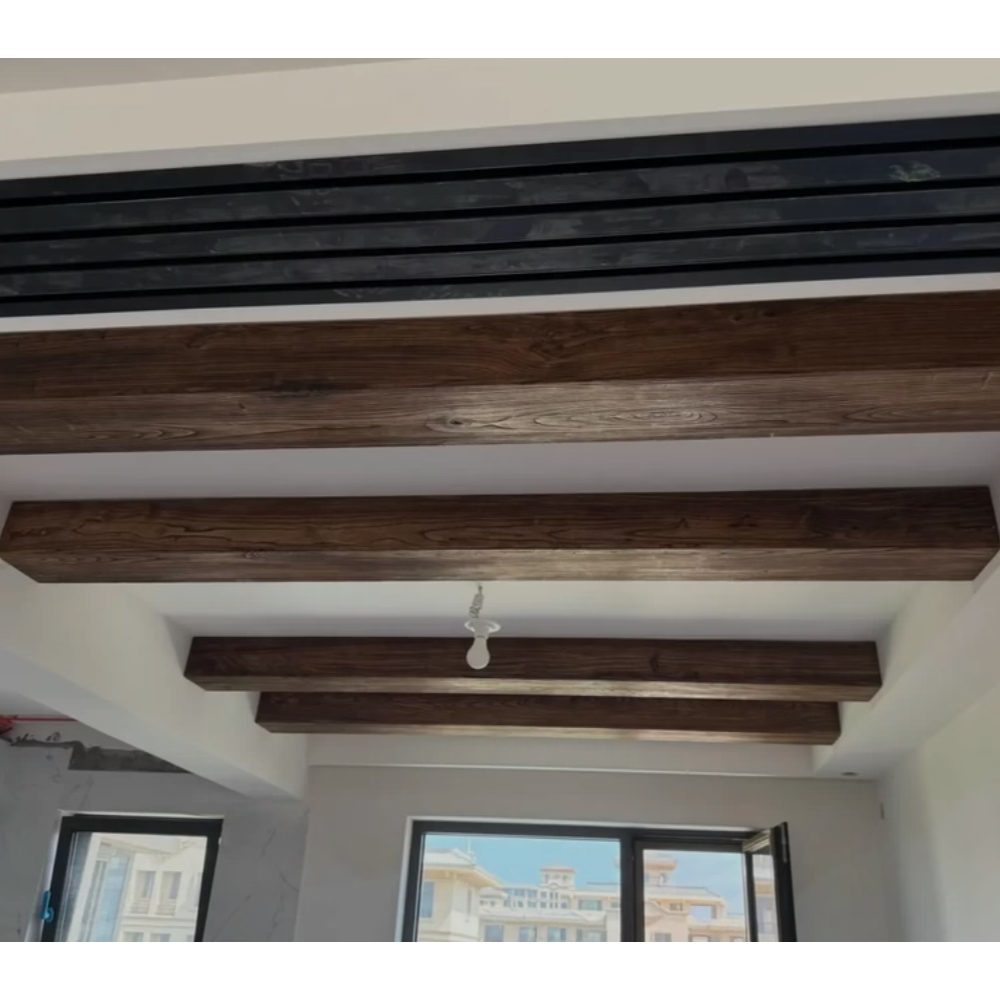
Beam configuration in a media room should be considered in relation to the screen position and the seating layout. Beams that run perpendicular to the screen axis can create a visual framing effect that draws the eye toward the screen and reinforces the sense of focused viewing. Conversely, beams that run parallel to the screen axis can extend the perceived length of the room and create a corridor-like intimacy that some media room designers find appealing. The spacing of beams also matters: beams spaced too closely together can create visual clutter that distracts from the screen, while beams spaced too widely apart fail to provide the visual texture that creates the sense of a deliberately designed ceiling rather than an afterthought.
Technical Integration and Service Accommodation
Modern media rooms incorporate extensive service infrastructure behind and within their ceilings: projection equipment, speakers, ventilation systems, lighting controls, and acoustic treatment. The installation of ceiling beams must accommodate these services while maintaining both the visual quality of the beam installation and the functional integrity of the room's technical systems. Hollow beam construction provides meaningful advantages in this respect, because the interior cavity of each beam offers a potential routing path for low-voltage cabling such as speaker wire, control wiring, and low-voltage lighting circuits.
The integration of recessed lighting within or adjacent to beam installations is a particularly common requirement in media rooms, where ambient lighting must be precisely controlled to optimize screen viewing conditions while still allowing the room to function for other activities. Many hollow beam profiles can be specified with integrated recessed lighting channels, allowing fixtures to be positioned within the beam structure itself rather than in the ceiling plane between beams. This approach produces a cleaner visual result and simplifies the maintenance of lighting fixtures, since access is available from within the beam cavity rather than requiring work on the ceiling surface.
Speaker placement in a media room ceiling — for height channels in immersive audio formats such as Dolby Atmos or DTS:X — requires careful coordination with beam positions to ensure that speaker locations are acoustically optimal and visually unobtrusive. In some configurations, beams can serve as mounting substrates for ceiling-mounted speakers, with the beam's hollow interior providing space for wiring and speaker brackets while the beam face itself conceals the mounting hardware. This integration requires advance coordination between the beam specification, the speaker selection, and the acoustic design of the room, but the result is an installation where the technical infrastructure is entirely invisible.
Choosing Beam Finishes for Light Control Requirements
Media room environments present specific challenges for surface finishes because of the need to control light reflections on the screen surface. Even modest amounts of reflected light from ceiling surfaces can reduce the contrast ratio of the projected image, diminishing the perceived image quality and undermining the investment in high-quality projection equipment. This light control requirement influences the choice of beam finish in ways that differ from the finish selection criteria in conventional interior applications.
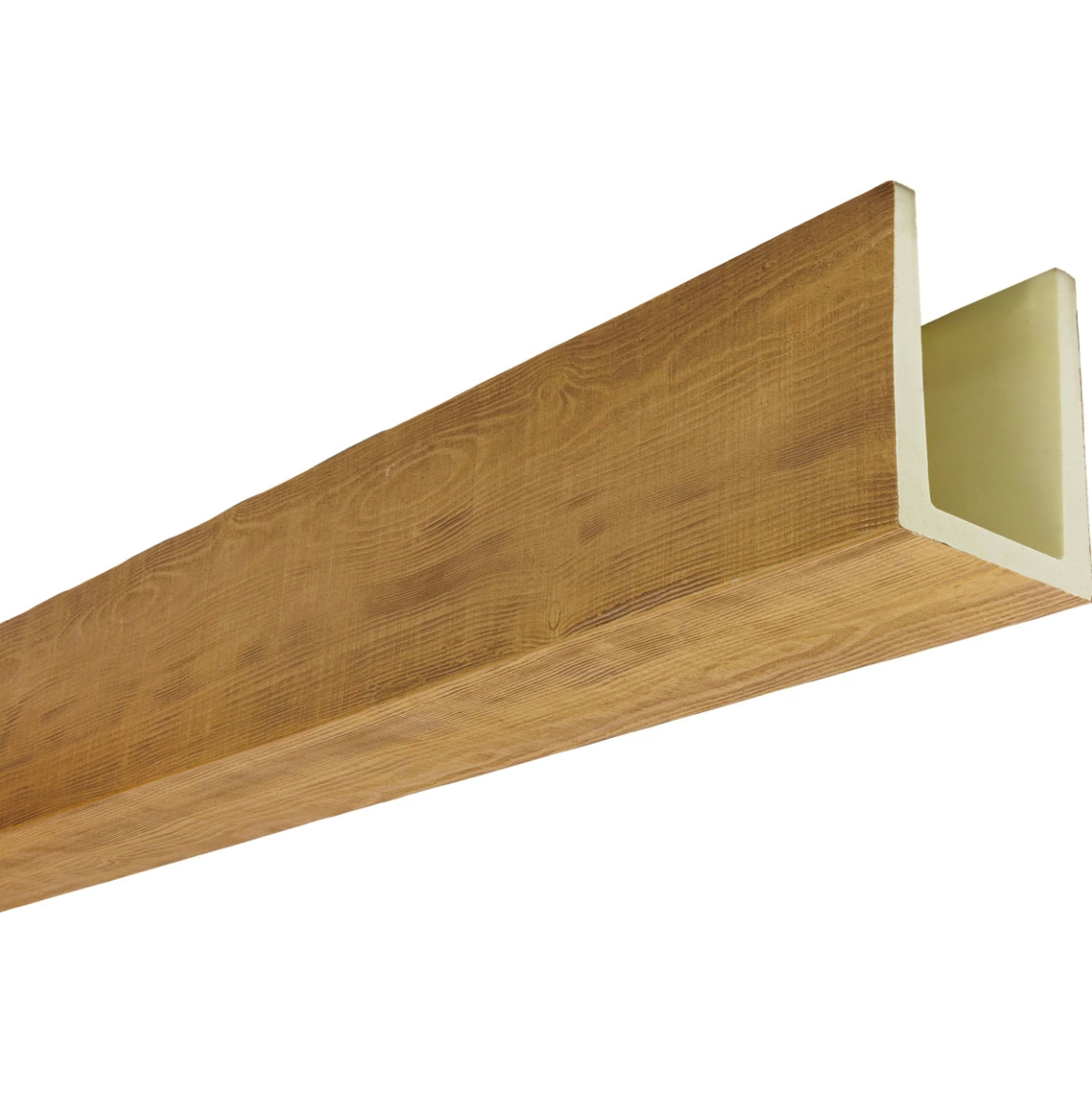
Matte finishes are generally preferred for media room beams because they minimize specular reflections that could reach the screen or viewing area. High-gloss or lacquered finishes, while visually striking in conventional interiors, can produce distracting reflections in media room contexts and are best avoided in this application. The surface texture of polyurethane beams in a matte timber-look finish provides the warmth and visual richness of timber without the reflective issues that plague polished timber or synthetic glossy surfaces. Many manufacturers offer specific media room-appropriate finishes in their standard ranges, with surface treatments that have been evaluated for their reflection characteristics.
The color temperature of the beam finish also affects the ambient light quality in the room. Warm-toned timber finishes contribute warm ambient light when the room's lighting is active, creating a cozy atmosphere suited to social viewing or pre-feature discussion. Lighter finishes such as limed oak or bleached timber reflect more light and produce a cooler, more neutral ambient quality that some room designers prefer for multi-purpose media rooms that must serve as home office or family living spaces during daylight hours. The choice between these alternatives is ultimately a matter of how the room is used and how the beam installation relates to the other design decisions in the space.
Maintenance and Long-Term Performance in Media Room Environments
Media rooms are climate-controlled environments where temperature and humidity are maintained within relatively narrow ranges to protect both the electronic equipment and the comfort of the occupants. This consistency is actually beneficial for hollow faux wood beams, because the stable conditions eliminate the environmental stresses — humidity fluctuation, thermal cycling, UV exposure — that represent the primary degradation mechanisms for materials used in less controlled spaces. A beam installed in a properly conditioned media room will maintain its appearance and structural integrity with essentially no maintenance beyond occasional dusting.
The non-porous surface of polyurethane also offers practical advantages in media room contexts where the room may be used for social gatherings involving food and drink. Accidental spills on beam surfaces can be wiped clean without leaving stains or requiring specialized cleaning products, which is a meaningful consideration in rooms where people are likely to relax and enjoy themselves without the constant vigilance required around genuine timber surfaces in premium condition. This practicality extends to the room's overall maintenance burden, reducing the care requirements that might otherwise distract from the enjoyment of the space.
Technical References
ASTM standards cited in every specification
Test Data
Lab results from internal testing program
Updated 2026
Reviewed against current product specs