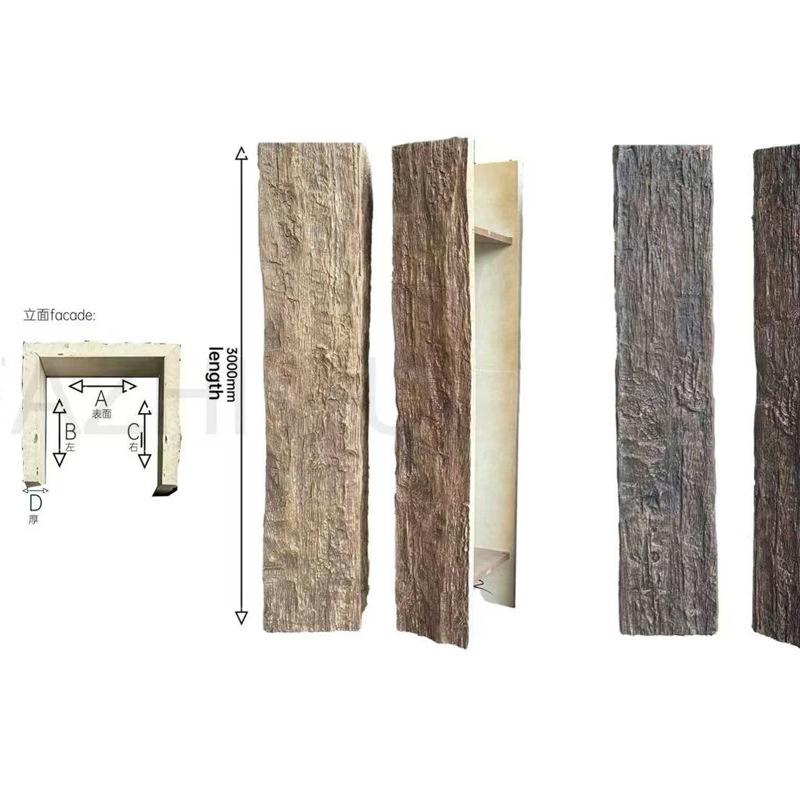
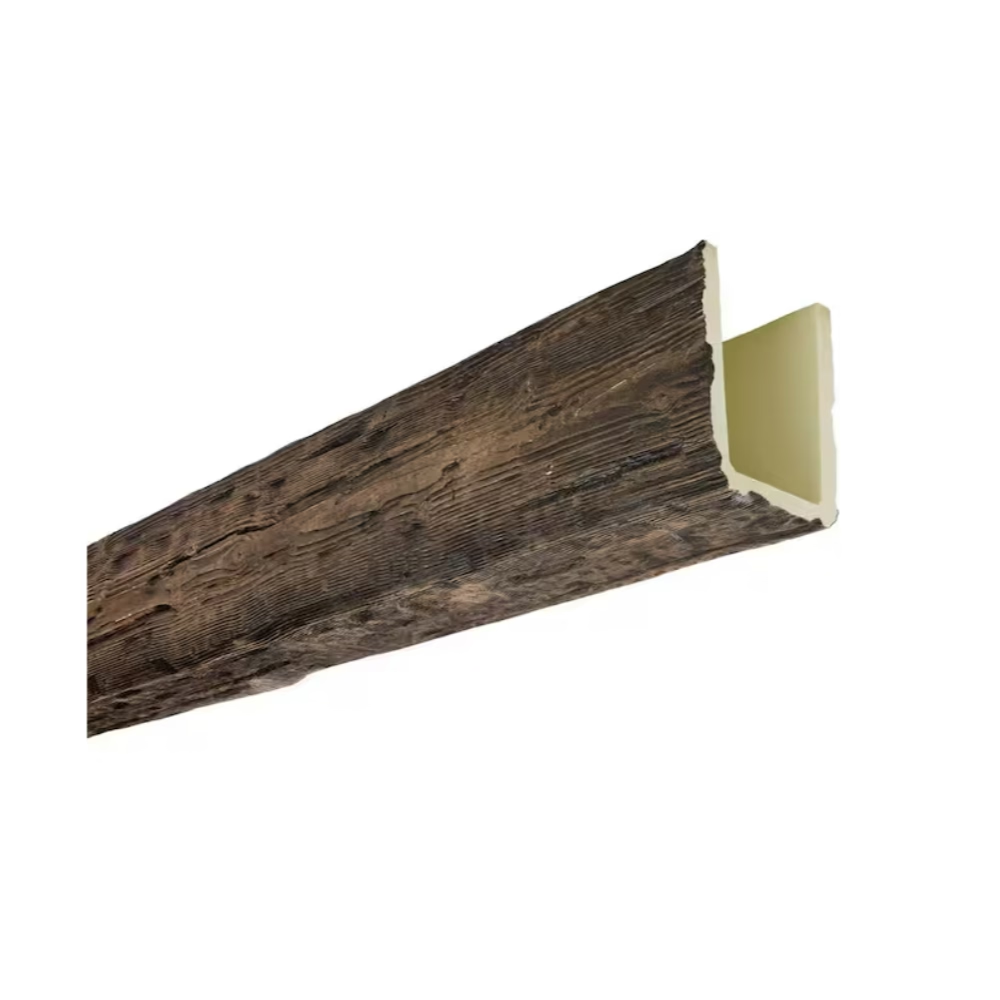
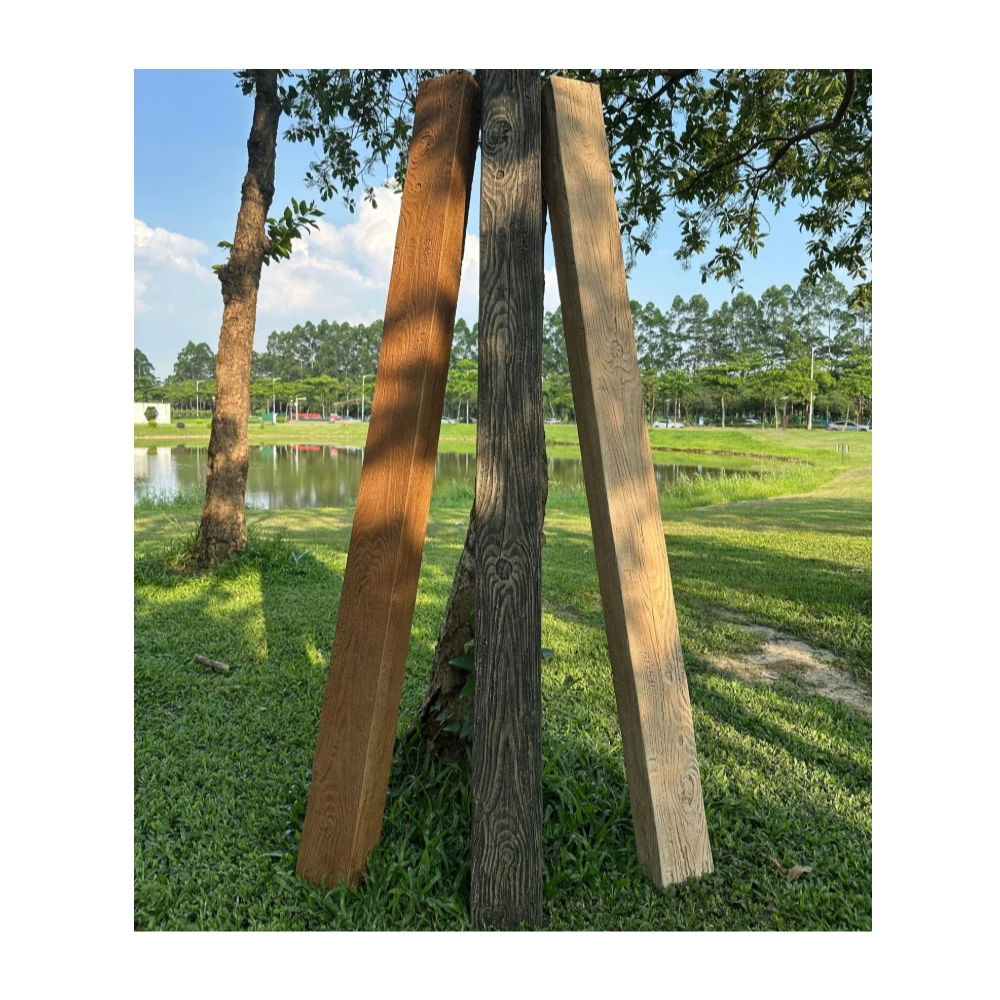
Renovation budgets rarely accommodate every desired improvement. Choices between competing priorities force tradeoffs that sometimes leave homeowners compromising on finishes they truly want. Poly foam faux wood beams flip this dynamic, delivering premium ceiling aesthetics at prices that accommodate nearly any budget. The visual transformation achievable with these materials rivals far more expensive alternatives while respecting financial realities that many households face.
The economics of poly foam beams extend beyond initial material costs. Traditional beam installation involves multiple expense categories that compound quickly: structural engineering if loads require assessment, permit fees where jurisdictions mandate them, specialized labor for heavy material handling, equipment rentals for lifting and positioning, and finishing work that wood surfaces typically require. Poly foam alternatives eliminate most of these auxiliary costs, creating gap between "affordable materials" and "affordable project" that makes comprehensive affordability achievable.
Understanding Poly Foam Construction
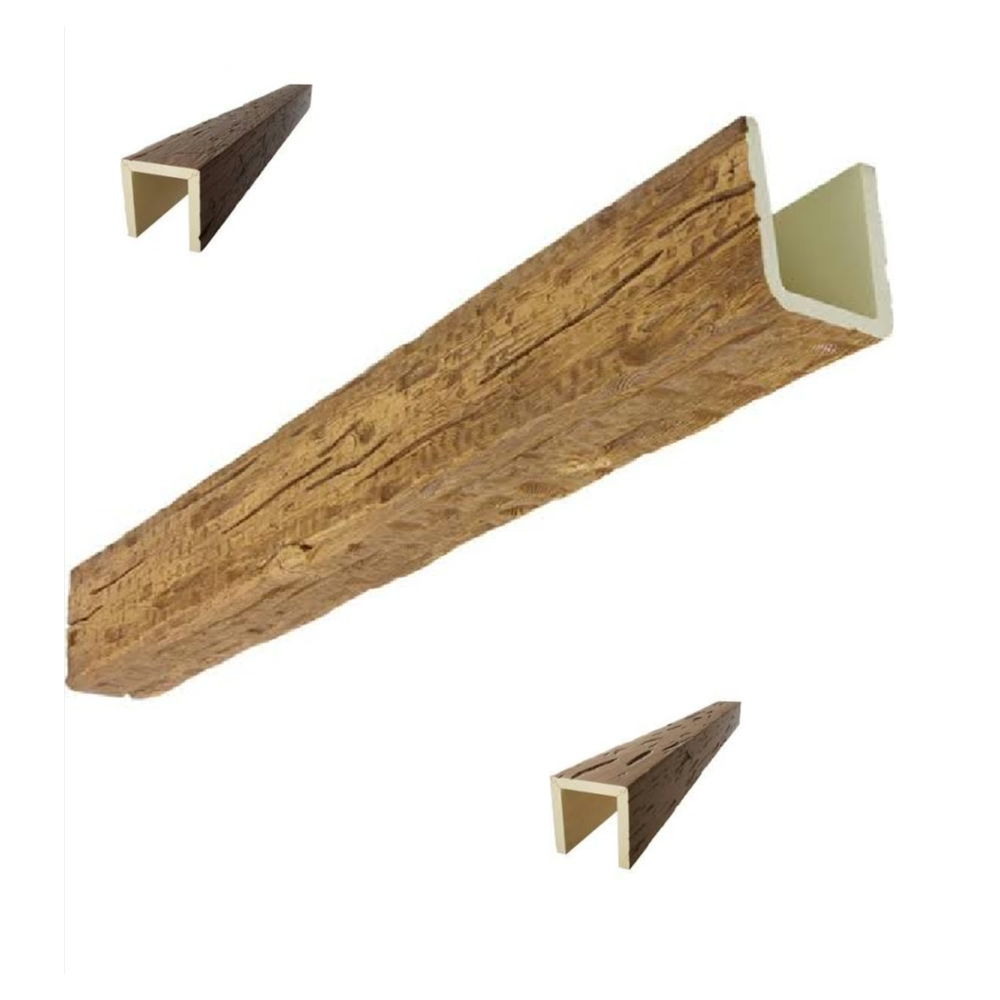
Poly foam beams use expanded foam cores surrounded by thin polyurethane skins. The foam core—typically polyurethane foam of various densities—provides bulk and rigidity while contributing minimal weight. The outer skin of higher-density material captures wood grain textures and accepts finishes convincingly.
This construction approach represents efficient material usage. The structural and visual requirements are concentrated in thin outer layers; interior volumes need only resist compression and maintain shape. The foam core satisfies these requirements while weighing a fraction of equivalent solid materials.
Density variations within foam cores allow manufacturers to optimize profiles for specific performance. Higher-density foam near surfaces provides better fastener holding; lower-density foam in middle areas reduces weight. The engineering sophistication in these profiles enables products that balance multiple requirements simultaneously.
Cost Breakdown Comparison
Understanding why poly foam beams are budget-friendly requires examining the complete cost picture:
Material costs for poly foam beams typically range from $15 to $35 per linear foot, depending on profile size, finish quality, and surface detail. Comparable solid wood beams might cost $30 to $80 per linear foot before finishing. The raw material savings alone are substantial.
Finishing costs favor poly foam significantly. Natural wood beams usually require staining, sealing, or painting after installation. These finishing processes involve materials, labor, and potentially equipment. Factory-finished poly foam beams arrive ready to install with no on-site finishing required.
Labor costs decrease because handling lightweight materials requires less time and fewer workers. A project that might require two installers for solid timber often proceeds with one person managing poly foam beams. Reduced labor time compounds savings across entire installation.
Equipment costs disappear when poly foam eliminates requirements for lifts, scaffolding designed for heavy loads, or specialized handling equipment. Basic ladders and common tools handle poly foam installation effectively.
Structural preparation costs simply don't exist for poly foam projects. No engineering reviews, no reinforcement construction, no permit fees related to structural concerns.
When Budget Constraints Are Primary
Poly foam beams make sense when budget considerations dominate project decisions:
Rental properties benefit from affordable improvements that increase property appeal without extensive capital investment. Landlords can install decorative beams that attract quality tenants without recovering costs through rent premiums.
Flip projects require budget discipline to maintain profitability. Poly foam beams deliver the aesthetic upgrades that make properties marketable while controlling costs to preserve margins.
First-time homeowners may lack budgets for premium materials everywhere. Using poly foam beams in less critical areas preserves budget for priority improvements elsewhere.
Gradual renovations proceed better when each phase remains affordable. Homeowners can complete ceiling transformation over multiple budget cycles rather than saving indefinitely for a single expensive project.
Quality Expectations at Budget Prices
Affordability doesn't require sacrificing quality, but expectations should be realistic:
Surface appearance in quality poly foam products convincingly mimics wood. Fine grain details, authentic textures, and natural color variations create convincing appearance. Budget products may show less detail, flatter colors, and less convincing overall appearance.
Durability in quality products suits typical residential applications. These beams handle normal wear, occasional bumps, and cleaning without significant damage. Aggressive use or impact might damage lower-quality products more readily.
Longevity in quality products extends to decades of service with minimal maintenance. Factory finishes may require refreshment eventually; physical integrity should remain sound throughout reasonable service life.
Installation satisfaction depends on managing expectations. Poly foam beams aren't solid wood—they won't feel exactly like timber or accept modification in exactly the same ways. Understanding these differences prevents disappointment with products that perform well for their intended purpose.
Installation Economy
The lightweight nature of poly foam contributes to installation economy:
Single-person installation is genuinely possible even for long spans. The physical requirements that exclude DIYers from heavy timber projects simply don't apply to poly foam alternatives. This labor savings is real and immediate.
Basic tools suffice without specialized equipment. Tape measures, levels, saws, drills, and adhesive applicators handle poly foam installation completely. The tool investment for DIY projects is minimal.
Reduced installation time translates directly to labor cost savings. Projects that might require days with traditional materials complete in hours with poly foam. Professional installers charge less when jobs are simpler and faster.
Minimal cleanup follows from the precision of factory manufacturing. No sawdust from on-site finishing, no stain overspray, no sealant odors—just installation with its inherent mess.

Financing the Transformation
Budget-friendly pricing enables various payment approaches:
Out-of-pocket purchases fit within discretionary spending for many households. The total project cost for poly foam ceiling transformation often falls within what might otherwise be spent on furnishings or less impactful improvements.
Credit card rewards accrue when purchasing through reward-earning cards. The manageable project cost makes this approach practical for those who pay balances promptly.
Home improvement loans become unnecessary for projects that cash-flow naturally. Avoiding interest charges preserves the budget advantage that poly foam products provide.
Savings accumulation proceeds faster when each improvement phase remains affordable. Homeowners can complete transformations incrementally rather than waiting to finance expensive single-phase projects.
Maximizing Impact Within Budget
Strategic approaches amplify the visual transformation poly foam beams provide:
Strategic placement concentrates impact where it matters most. Single beams over focal points—fireplaces, dining tables, kitchen islands—create meaningful transformation without requiring whole-ceiling coverage.
Partial coverage creates the suggestion of exposed beams without full installation costs. Beam runs that don't extend to walls, or patterns that cover only portions of ceiling planes, deliver substantial visual change while respecting budget constraints.
Accent contrasts make limited installations more impactful. Dark-stained beams against light ceilings create drama disproportionate to material costs. The contrast amplifies visual presence beyond what neutral selections might achieve.
Simple patterns reduce material quantities while maintaining visual interest. Parallel beams across narrow spans use fewer linear feet than complex grids while still achieving transformation goals.
Areas Where Budget Beams Excel
Poly foam beams perform particularly well in certain applications:
Living rooms benefit from ceiling warmth that makes spaces more inviting. Strategic placement over seating areas or fireplaces creates focal points without requiring complete ceiling coverage.
Bedrooms gain architectural interest that distinguishes master suites from basic construction. Coffered patterns or accent beams add sophistication without overwhelming the intimate scale appropriate for sleeping spaces.
Basements transform from utilitarian to comfortable with ceiling treatments that define entertainment zones. Poly foam durability in below-grade environments justifies investment where wood might struggle.
Garage workshops add personality to work spaces without significant expense. The industrial nature of workshops accommodates budget products that might be too obvious in more formal spaces.
Avoiding False Economy
The budget advantage of poly foam beams can disappear through poor choices:
Cheapest products aren't always most economical. Products that fail prematurely require replacement, negating initial savings. Quality products that perform for decades deliver better lifecycle economics.
Inadequate preparation leads to installation failures. Cutting corners on surface prep, adhesive selection, or fastening density creates problems that cost more to fix than proper initial installation.
Insufficient quantities force mid-project purchases that may not match original materials. Ordering complete material quantities initially ensures color and texture consistency across the installation.
Professional installation when unnecessary wastes money that budget approaches aim to preserve. DIY installation is genuinely feasible for poly foam products—paying for professional installation when not required defeats the purpose of choosing affordable materials.
The Big Picture Value
Poly foam faux wood beams represent democratization of ceiling aesthetics. The premium looks previously available only to those with substantial budgets become accessible to anyone willing to invest modestly. This accessibility doesn't diminish the transformation achieved—rooms with poly foam beam ceilings look dramatically different from rooms without them, regardless of how affordable the materials proved.
Budget renovation doesn't mean cheap renovation. It means efficient renovation—achieving maximum impact per dollar invested. Poly foam beams embody this principle, enabling transformations that respect both aesthetic aspirations and financial realities.
Technical References
ASTM standards cited in every specification
Test Data
Lab results from internal testing program
Updated 2026
Reviewed against current product specs