The word "villa" conjures specific imagery: sun-baked Mediterranean terraces, weathered stone walls, and timber ceilings that have witnessed centuries of gathered families. These associations carry emotional weight that transcends architectural accuracy—villas represent a lifestyle, a slower pace, a connection to building traditions that honored material honesty and craftsmanship. Homeowners pursuing villa aesthetics aren't merely decorating; they're attempting to transport themselves and their families to a particular world of comfortable elegance.
Achieving authentic villa character presents practical challenges in contemporary construction. Original villa buildings featured timber that grew locally, was harvested by local craftspeople, and was installed using techniques refined over generations. Modern homes rarely accommodate these traditional approaches: dimensional lumber differs from old-growth timber, construction schedules preclude the patience traditional methods demand, and structural engineering often eliminates the heavy ceiling elements that defined historic villa architecture.
Polyurethane faux beams bridge this gap with uncommon success. They deliver the visual weight and textural authenticity that villa aesthetics require while adapting to modern construction constraints that real timber cannot accommodate. The result honors traditional inspiration while respecting contemporary realities.
The Anatomy of Villa Beam Design
Authentic villa beam installations share certain characteristics that distinguish them from other architectural approaches. The beams themselves tend toward substantial dimension—ceiling heights in original structures permitted wide, deep members that made visual impact proportional to spatial volume. Today's homes, even those with generous ceiling heights, rarely achieve the cubic footage of historic great halls, requiring adjusted proportions that suggest grandeur without overwhelming smaller spaces.
Beam spacing in traditional villas often followed functional rather than aesthetic logic. Structural requirements, roof geometry, and the desire to create visual rhythm combined in ways that varied from room to room within the same building. Modern interpretations can honor this irregularity, varying spacing to create intentional asymmetry that feels discovered rather than designed.
The relationship between beams and supporting walls receives careful attention in villa architecture. Beams typically rest on corbels or capitals that mediate between horizontal beam and vertical wall surface, creating visual punctuation at regular intervals. These transitional elements provide opportunities for decorative elaboration—carved details, painted finishes, or metal strapwork that adds intricacy without overwhelming fundamental architectural clarity.
Material Selection for Authentic Character
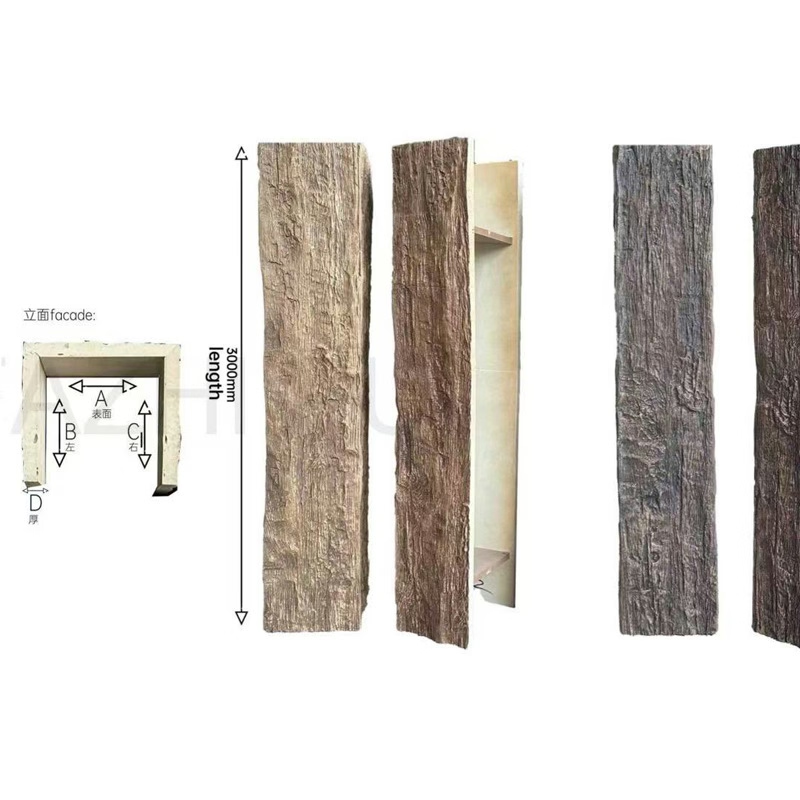
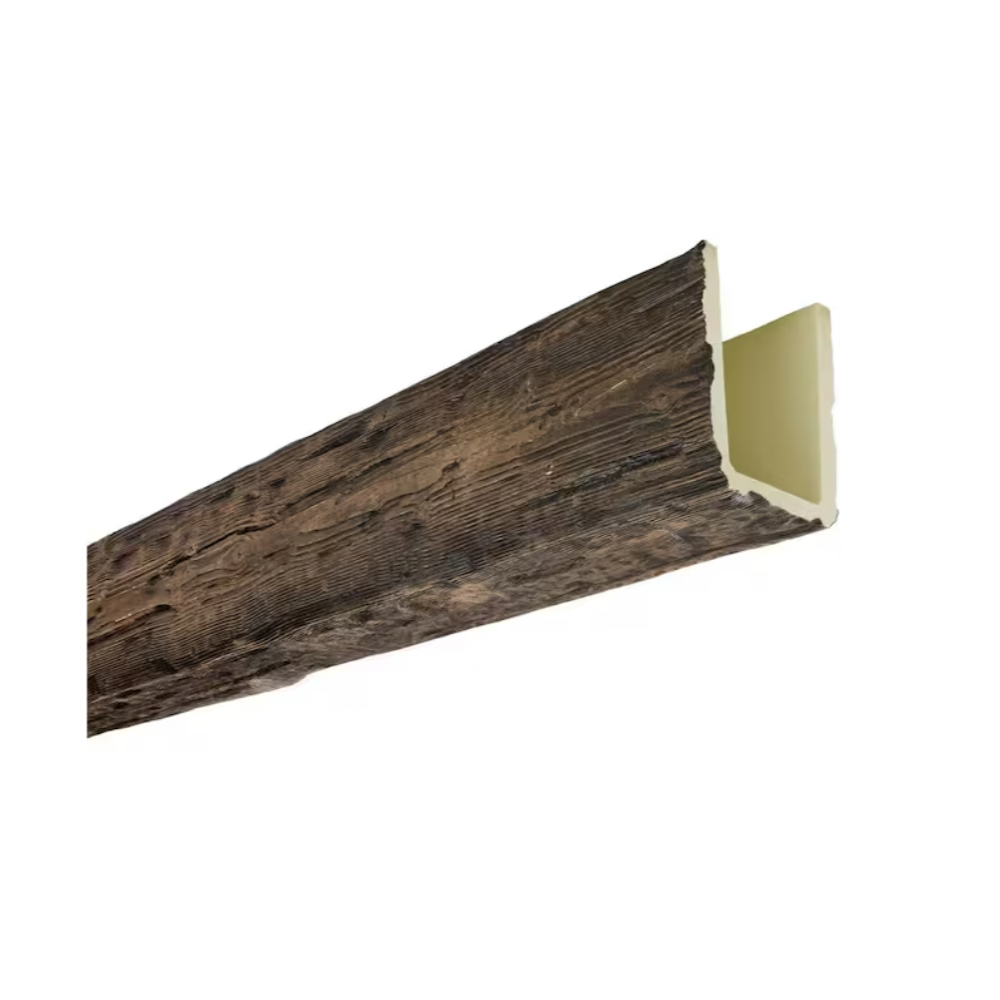
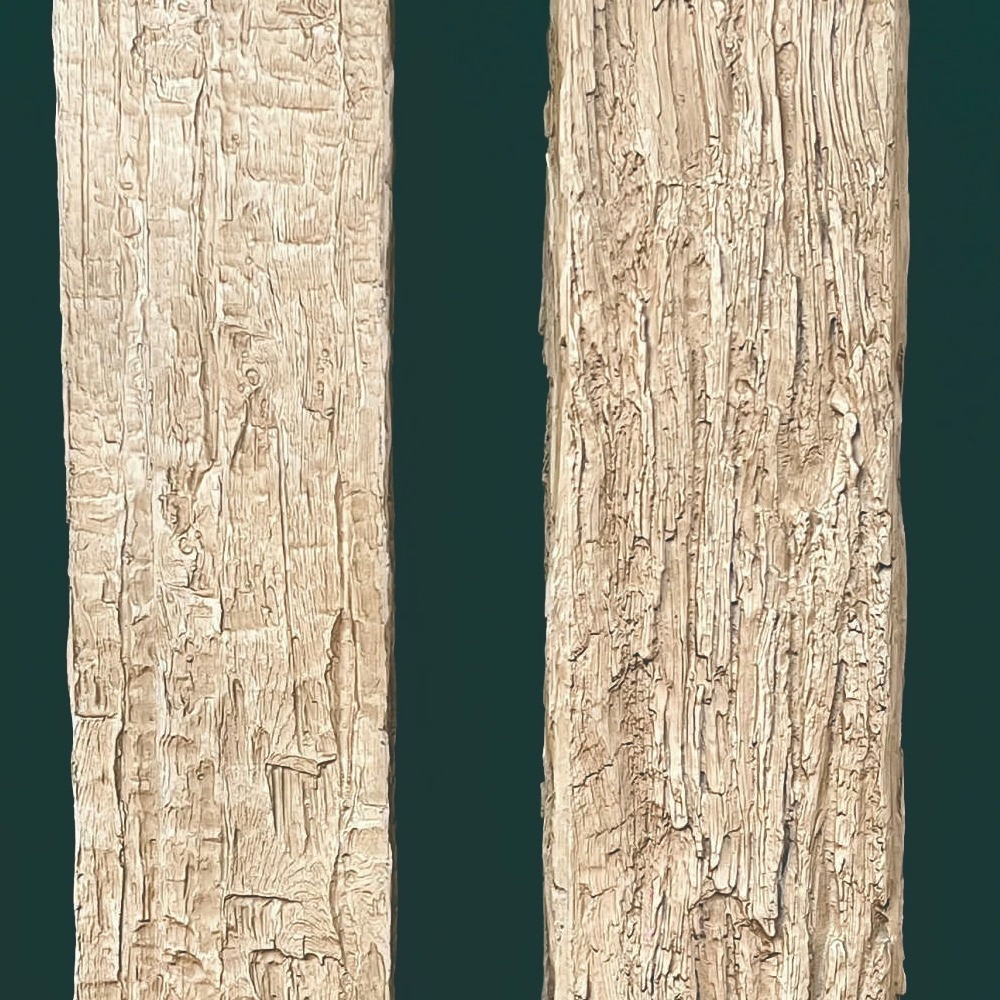
Polyurethane faux beams achieve realistic appearance through careful attention to surface texture and color application. For villa-inspired interiors, seek beams with pronounced grain patterns and natural variation—the uniform surfaces of lesser-quality reproductions read as obviously synthetic in close inspection. Premium manufacturers use multiple-step finishing processes that layer color and texture, creating depth that approaches natural wood's complexity.
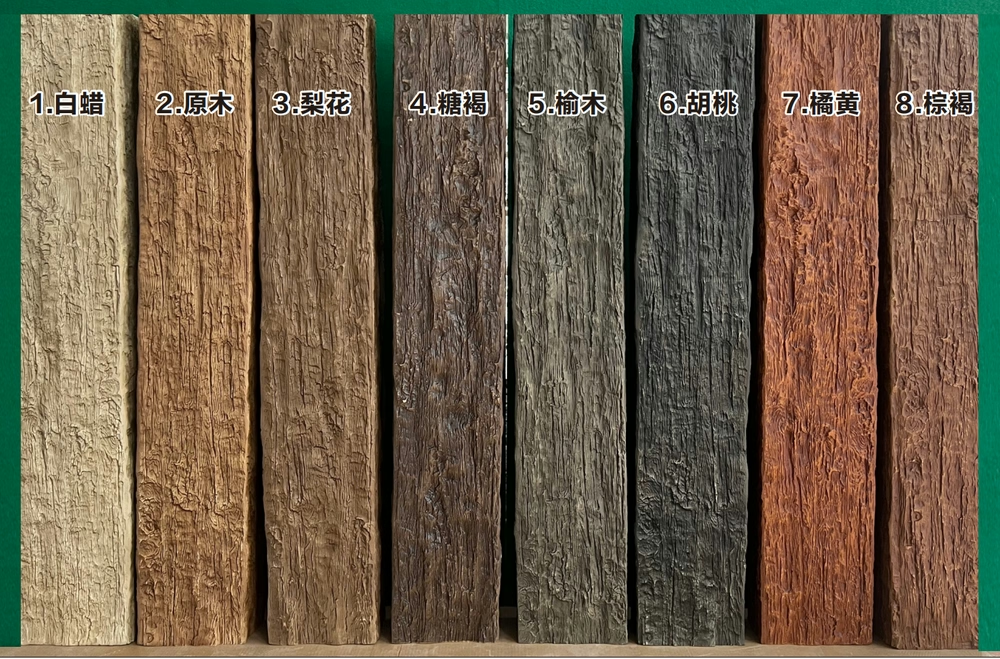
Consider the wood species implied by your villa vision. Tuscan interiors typically reference chestnut or reclaimed oak with warm honey tones and prominent grain. Andalusian and Moroccan influences favor darker woods with more dramatic figuring—deeper browns, more pronounced knots, heavier texturing. Greek island villas often feature lighter woods with simple profiles suited to whitewashed walls and blue accents.
Finish selection should anticipate aging and patina development. Villa character comes partly from evidence of time—surfaces that suggest centuries of gentle use rather than pristine newness. Some polyurethane manufacturers offer pre-weathered finishes that accelerate this appearance, while others provide options for custom finishing that can be treated to achieve specific aged qualities.
Structural Considerations in Modern Renovations
Contemporary renovation projects often reveal structural constraints that complicate traditional beam installation. Existing ceiling joists may lack the capacity for heavy timber loads. HVAC ductwork, electrical conduit, and plumbing pipes frequently occupy the spaces between joists where beams would traditionally be installed. Building codes may require fire-rated assemblies that real timber cannot achieve without expensive encapsulation.
Polyurethane beams resolve these constraints through their remarkable lightweight properties. A polyurethane beam of equivalent visual impact weighs one-fifth to one-tenth as much as a comparably sized natural wood member. This weight reduction eliminates most structural concerns, allowing installation on ceiling systems that could never support real timber.
Hollow beam profiles accommodate runs of electrical wiring, low-voltage cabling, and sometimes even small HVAC ducts. This integration capability simplifies building system installation while concealing infrastructure that would otherwise compromise ceiling appearance. Coordinate beam placement with mechanical and electrical subcontractors early in renovation planning to maximize integration opportunities.
Complementing Existing Architectural Elements
Villa renovation rarely occurs in isolation—existing architectural vocabulary shapes beam selection and placement. Wall materials, window proportions, door styles, and flooring choices all influence how beams should be treated to achieve coherent results.
Stone or plaster walls suggest heavier beam treatment with substantial corbels and deeper profiles. The visual weight of these wall materials requires proportional ceiling elements to achieve balance. Conversely, lighter wall finishes—smooth plaster, limewash, or pale paint—accommodate more delicate beam profiles without competing for attention.
Floor-to-ceiling height determines appropriate beam scale. In rooms with twelve-foot ceilings, substantial beams with deep shadows read appropriately. The same beams in eight-foot rooms would overwhelm the space, requiring reduced scale or simpler profiles. Proportion failures create discomfort that occupants feel without necessarily identifying the cause—spaces simply feel "wrong" when scale relationships are incorrect.
Ceiling Integration Strategies
The transition between beam and ceiling plane requires thoughtful treatment in villa interiors. Historic villas often featured flat plaster ceilings between beams, creating strong horizontal layering that defined spatial character. Alternatively, some regional variations left ceiling structure exposed, with beams forming an integral part of the overhead plane.
Contemporary interpretations might explore these approaches based on ceiling height and desired atmosphere. Lower ceilings benefit from continuous beam treatment that extends across the entire plane, minimizing visual seams. Higher ceilings can accommodate interruptions, with beams punctuating flat ceiling sections for variety and rhythm.
Consider how lighting interacts with beam installations. Recessed fixtures between beams create pools of light that define conversation zones without breaking beam continuity. Surface-mounted fixtures positioned on beams provide task illumination while emphasizing beam presence. The interplay between beam shadows and light placement creates the visual texture that distinguishes villa architecture from simpler ceiling treatments.
Finishing Techniques for Villa Authenticity
The finish applied to faux beams significantly impacts their contribution to villa atmosphere. Factory-finished beams offer convenience and consistency but may lack the character that distinguishes exceptional interiors. Site finishing allows custom color development and artistic treatment that responds to specific conditions.
Consider hand-rubbed finishes that develop color through multiple applications of contrasting stains, building depth through layering. This approach mimics the natural variation found in aged timber, where surface wear reveals lighter wood beneath darker finish. The technique requires skilled craftspeople but produces results impossible to achieve through mechanical application.
Distressing treatments add authenticity by simulating the minor damage that centuries of use would produce. Edge wear, localized dents, and subtle surface scratches read as evidence of history rather than damage. The key lies in restraint—overdone distressing appears theatrical rather than genuine. Experienced finishers understand where age marks would naturally accumulate and apply treatment accordingly.
Coordinating with Other Wood Elements
Villa interiors typically feature wood throughout—furniture, cabinetry, flooring, and architectural trim all contribute to the material palette. Beam selection should coordinate with these elements while maintaining visual hierarchy.
Exact wood species matching often produces monotony in villa interiors. Consider complementary relationships: beams finished to suggest aged chestnut paired with darker walnut cabinetry and lighter oak flooring creates material variety while maintaining tonal harmony. Each wood element reads distinctly while contributing to a cohesive composition.
Furniture scale should relate to beam dimensions. Substantial beams require proportional furniture—larger case pieces, thicker table tops, more substantial seating silhouettes. Attempting to furnish a beam-ceiling room with delicate contemporary pieces creates visual imbalance that no amount of styling can resolve.
Climate and Environmental Considerations
Villa-inspired homes in varied climates require materials that perform reliably across seasonal temperature and humidity fluctuations. Traditional solid wood responds to these changes through expansion and contraction, requiring expansion gaps and flexible fastening systems. Polyurethane's dimensional stability eliminates these concerns, maintaining tight joints and consistent appearance regardless of environmental conditions.
In humid climates, natural wood may swell, cup, or develop surface checking—imperfections that compromise appearance and require maintenance intervention. Polyurethane resists moisture absorption entirely, making it suitable for coastal locations, pool houses, and other high-humidity environments where timber would struggle.
Cold climate applications present different challenges, particularly in spaces with significant temperature differential between occupied and unoccupied periods. Vacation homes that experience extended vacancies face thermal cycling that stresses building materials. Polyurethane tolerates this cycling without distress, maintaining installation integrity through years of seasonal use.

Villa renovation represents a commitment to a particular quality of life—an aspiration toward spaces that feel established, authentic, and deeply satisfying. Polyurethane faux beams contribute to this vision by providing the architectural substance that defines villa character while respecting the practical constraints of modern construction and maintenance.
The resulting spaces honor their inspirational sources while acknowledging contemporary realities. They feel rooted in tradition without being bound by it, achieving the timeless quality that distinguishes truly successful interior design.
Investment Protection and Long-Term Value
Quality beam installations contribute to overall property value, particularly in markets where villa-inspired aesthetics command premium pricing. The architectural character that beams provide proves difficult to replicate in alternative approaches, making them valuable differentiators that distinguish properties in competitive real estate environments.
The maintenance-free nature of polyurethane protects this investment through decades of service without intervention. Unlike natural wood that requires periodic refinishing, sealing, or repair, faux beams maintain their appearance through normal household routines. This reliability appeals to buyers seeking quality construction that won't demand immediate attention upon purchase.
Consider the beam installation as part of comprehensive renovation value rather than an isolated expense. The contributions to daily living experience, aesthetic appeal, and eventual resale combine to justify the investment for homeowners who value their living environment.
Working with Design Professionals
Achieving authentic villa character requires expertise that extends beyond surface treatment to encompass spatial planning, material relationships, and historical awareness. Design professionals with experience in Mediterranean and traditional residential architecture can identify opportunities and pitfalls that general practitioners might overlook.
Engage specialists early in renovation planning, ideally before demolition or structural modification begins. Their input on beam placement, scale, and integration can inform decisions that become expensive to change once construction is underway. The investment in professional consultation typically returns through avoided mistakes and more cohesive final results.
Request portfolios demonstrating relevant experience, and ask specifically about material selection and finish approaches for projects similar to yours. Detailed conversations about how the designer would approach your specific challenges reveal competence more reliably than general credentials or impressive project photography.
Seasonal Living and Beam Performance
For homeowners in seasonal climates, villa properties may experience dramatic occupancy variations. Summer homes, winter retreats, and vacation properties stand empty for extended periods, experiencing temperature and humidity extremes that occupied homes would moderate. These conditions stress building materials in ways that constant occupancy would prevent.
Polyurethane's stability under vacant conditions proves particularly valuable in these applications. Without the humidity-moderating presence of occupants, seasonal properties experience greater environmental swings. Faux beams accommodate these variations without the seasonal movements that characterize natural wood, maintaining installation integrity and appearance regardless of occupancy status.
The low-maintenance character of polyurethane aligns well with infrequent property access. Homeowners who visit seasonally appreciate materials that require no preparatory attention before arrival and no special care during stay. The beams simply exist, maintaining their appearance without demanding consideration.
Integration with Modern Amenities
Contemporary living requires infrastructure that traditional villas never anticipated. Home automation systems, sophisticated entertainment equipment, climate control zones, and communication infrastructure all demand ceiling and wall integration that historic construction never needed to address.
Plan beam installations to accommodate these systems through thoughtful coordination. Low-voltage wiring can run through hollow beams, eliminating visible cable runs. Smart home sensors and wireless access points sometimes integrate into beam surfaces, concealing technology within architectural vocabulary. HVAC registers and returns may coordinate with beam placement, using the visual rhythm of beam spacing to organize mechanical distribution.
The goal is not to hide contemporary living but to integrate it gracefully with traditional aesthetic values. Homeowners need not choose between technological sophistication and visual authenticity—the two can coexist when properly designed.

Villa renovation with polyurethane faux beams represents more than surface decoration—it establishes a design framework that guides every subsequent decision while providing immediate architectural satisfaction. The beams create the spatial skeleton upon which all other design choices hang, providing the Old World foundation that makes contemporary furnishings feel appropriate rather than incongruous.
Your renovation deserves this level of thoughtful treatment. The beams will reward you daily through the atmosphere they create, the character they contribute, and the subtle sense of established elegance that distinguishes truly considered spaces.
Technical References
ASTM standards cited in every specification
Test Data
Lab results from internal testing program
Updated 2026
Reviewed against current product specs