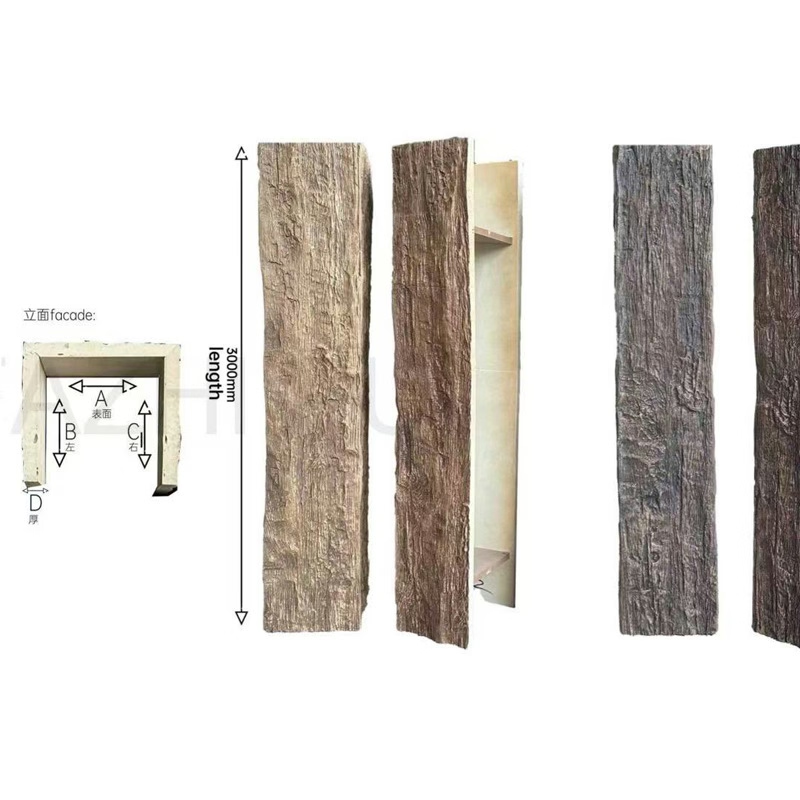
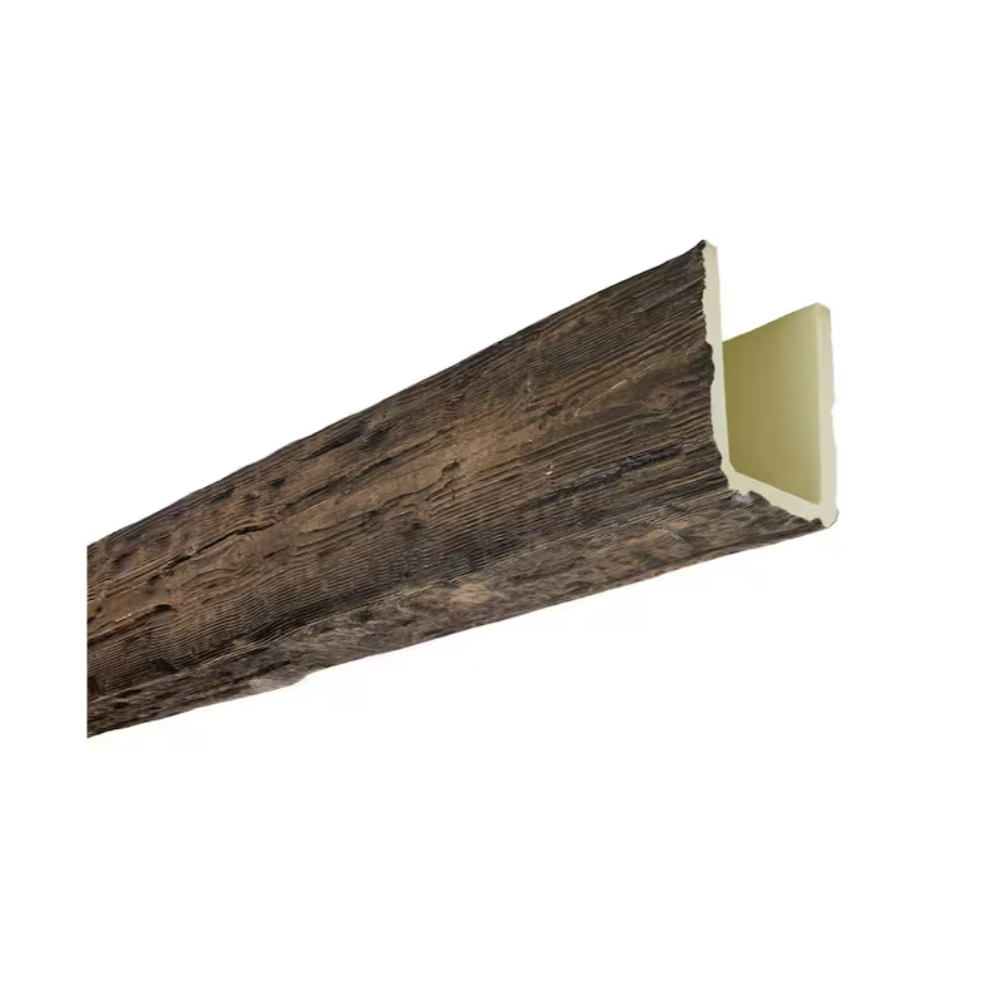
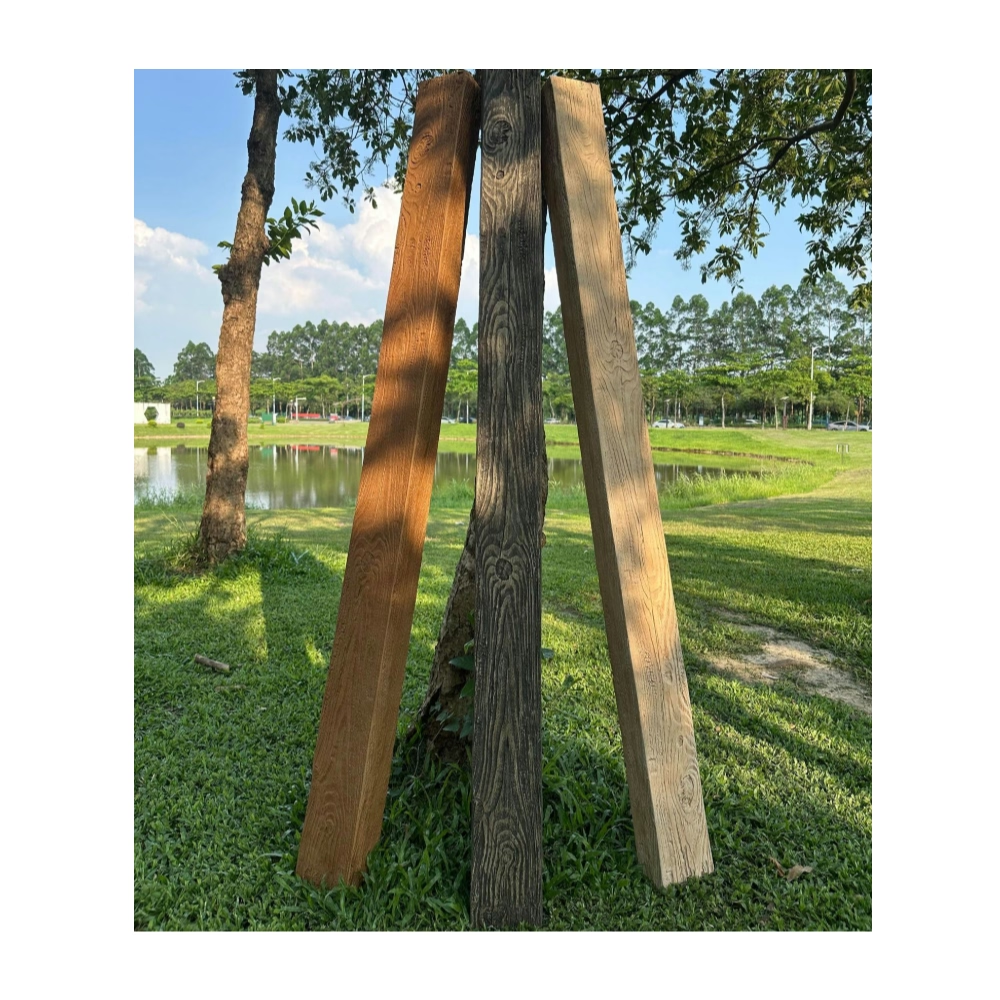
Contemporary home design has increasingly gravitated toward sophisticated neutral palettes that prioritize texture over color, restraint over excess, and quality over quantity. Within this aesthetic framework, grey tone PU faux wood beams have established themselves as essential architectural elements. These versatile components address the fundamental desire for organic warmth in modern interiors while respecting the clean, purposeful aesthetic that defines contemporary approaches.
The materials we select for our living spaces communicate values and priorities that extend beyond mere appearance. Grey tone beams specifically signal appreciation for sophisticated restraint, timeless design, and thoughtful material selection. Homeowners drawn to contemporary aesthetics recognize that authentic-feeling wood textures add life to minimal spaces without compromising the visual clarity these interiors require.
The Evolution of Contemporary Home Aesthetics
The trajectory of contemporary residential design over recent decades reveals progressive simplification and refinement. Earlier modernist movements celebrated stark minimalism, sometimes sacrificing warmth and livability for visual purity. Contemporary approaches have evolved beyond these extremes, seeking environments that balance aesthetic sophistication with genuine comfort and inhabitant wellbeing.
This evolution created space for materials like grey tone faux wood beams. These elements introduce natural material qualities that earlier minimalist philosophies might have rejected as unnecessary. Yet contemporary homes incorporating beams do not sacrifice visual clarity or succumb to clutter. Instead, beams enhance already thoughtful designs by adding architectural depth and organic warmth.
The grey tone specifically addresses concerns about traditional wood aesthetics appearing too rustic or country-influenced for contemporary settings. By desaturating wood tones toward neutral grey values, these beams achieve a sophisticated neutrality that reads as contemporary rather than traditional. This subtle distinction makes grey beams appropriate additions to interiors that might reject warmer wood tones.
Understanding PU Material Technology
Polyurethane faux wood beams represent sophisticated manufacturing technology that achieves remarkably convincing wood appearances. Modern production techniques create detailed surface textures that replicate authentic wood grain patterns, knots, and character marks. The resulting products offer wood aesthetics without the practical limitations that authentic timber presents.
Material properties of polyurethane suit residential applications exceptionally well. The lightweight construction simplifies handling and installation, allowing single-person installations in many scenarios. This weight advantage also eliminates structural concerns that might preclude authentic timber installations in homes with standard ceiling construction not designed for heavy loads.
Durability characteristics further distinguish polyurethane from authentic wood. The solid, non-porous surface resists moisture absorption, insect damage, and the dimensional instability that causes authentic timber to expand, contract, and warp with environmental changes. These properties ensure consistent appearance throughout product lifetimes while eliminating maintenance requirements that authentic wood demands.
Design Philosophy Behind Grey Tone Selection
Grey represents the midpoint in color perception, occupying neutral territory between warm and cool visual qualities. When applied to wood textures, grey values suppress warm orange and red undertones while preserving structural information about grain patterns and surface character. The result combines organic wood appearance with contemporary color sophistication.
The psychological effects of grey contribute to its appropriateness in living spaces. Grey environments convey calm, stability, and contemplation—qualities associated with mindful, intentional living. Homes featuring grey elements often feel more grounded and peaceful than those dominated by warmer, more energetic palettes. This psychological dimension makes grey particularly appropriate for spaces intended for relaxation and recharge.
Versatility extends grey tone practicality into diverse design contexts. Grey beams complement existing colour schemes across wide ranges, enabling integration into homes with existing furnishings and finishes without requiring comprehensive redecoration. This adaptability protects investments and simplifies design decisions for homeowners exploring architectural upgrades.

Practical Benefits for Homeowners
Residential applications demand materials that perform reliably under family living conditions. Grey tone PU beams address practical concerns that authentic wood or other ceiling treatments might not adequately satisfy. Understanding these practical dimensions helps homeowners make informed decisions about incorporating beams into their living environments.
Maintenance simplicity represents a significant advantage for busy households. Polyurethane beams require no periodic refinishing, sealing, or special cleaning protocols. The surface wipes clean with standard household products, and the durable finish resists scratches, dents, and impacts that might damage authentic wood in active family environments. Parents appreciate these practical qualities when selecting materials for children's areas.
Moisture resistance addresses concerns present in kitchens, bathrooms, and laundry rooms where humidity fluctuations challenge material performance. Grey tone beams handle these conditions without warping, cracking, or developing the mold issues that sometimes affect authentic wood in moist environments. This reliability simplifies climate control strategies while protecting aesthetic investments.
Installation Advantages for Residential Projects
Home renovation projects benefit from installation approaches that minimize disruption to household routines. Grey tone faux beams install relatively quickly compared to many alternative ceiling treatments, reducing periods when families experience construction inconvenience. Professional installers complete most residential projects within days rather than weeks.
The lightweight nature of polyurethane beams enables installation scenarios that would prove impossible with authentic timber. Beams can mount directly to existing ceiling structures without requiring additional support framing. This simplicity opens beam installation possibilities for homeowners who might have assumed their ceiling construction could not accommodate overhead treatments.
Versatile mounting options accommodate various ceiling configurations common in residential construction. Sloped ceilings, vaulted spaces, and irregular ceiling geometries all accommodate beam installations with appropriate planning. Professional installers assess specific conditions and recommend optimal mounting approaches that ensure secure, lasting results.
Design Integration Strategies
Successful beam integration requires thoughtful coordination with existing interior elements. Grey tone beams offer substantial flexibility in this regard, but intentional coordination ensures cohesive overall results rather than isolated architectural features that feel disconnected from surrounding design.
Furniture selection interacts significantly with beam color choices. Contemporary furniture featuring grey upholstery, metallic accents, or cool-toned fabrics creates natural harmonies with grey beams. Warmer furniture selections in leather, velvet, or earth-toned textiles may benefit from beams with stronger wood-tonalities. Evaluating furniture relationships prevents visual conflicts that might undermine overall design coherence.
Window treatments and textile layers provide additional coordination opportunities. Grey beams complement both sheer white linens and heavier patterned draperies, functioning as neutral backgrounds that allow textile colors to read clearly. This versatility simplifies decoration decisions while ensuring architectural elements remain visually subordinate to decorative choices.
Room-Specific Application Approaches
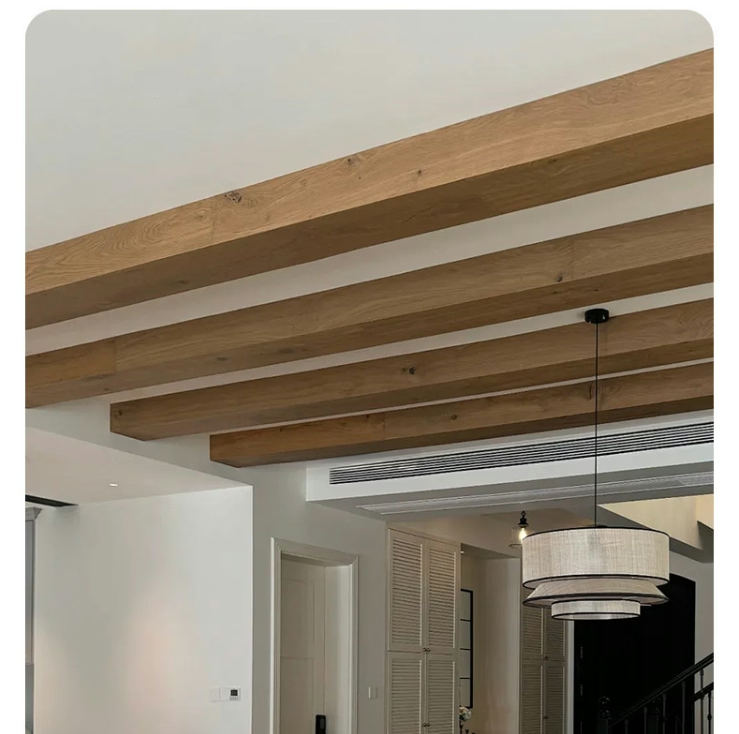
Living rooms accommodate grey beam installations particularly well, given these spaces typically feature higher ceilings and more substantial furnishing scales. Exposed beam arrangements create visual overhead interest that grounds furniture groupings while establishing clear spatial organization. The grey tone prevents overwhelming intimate conversation areas while adding necessary warmth.
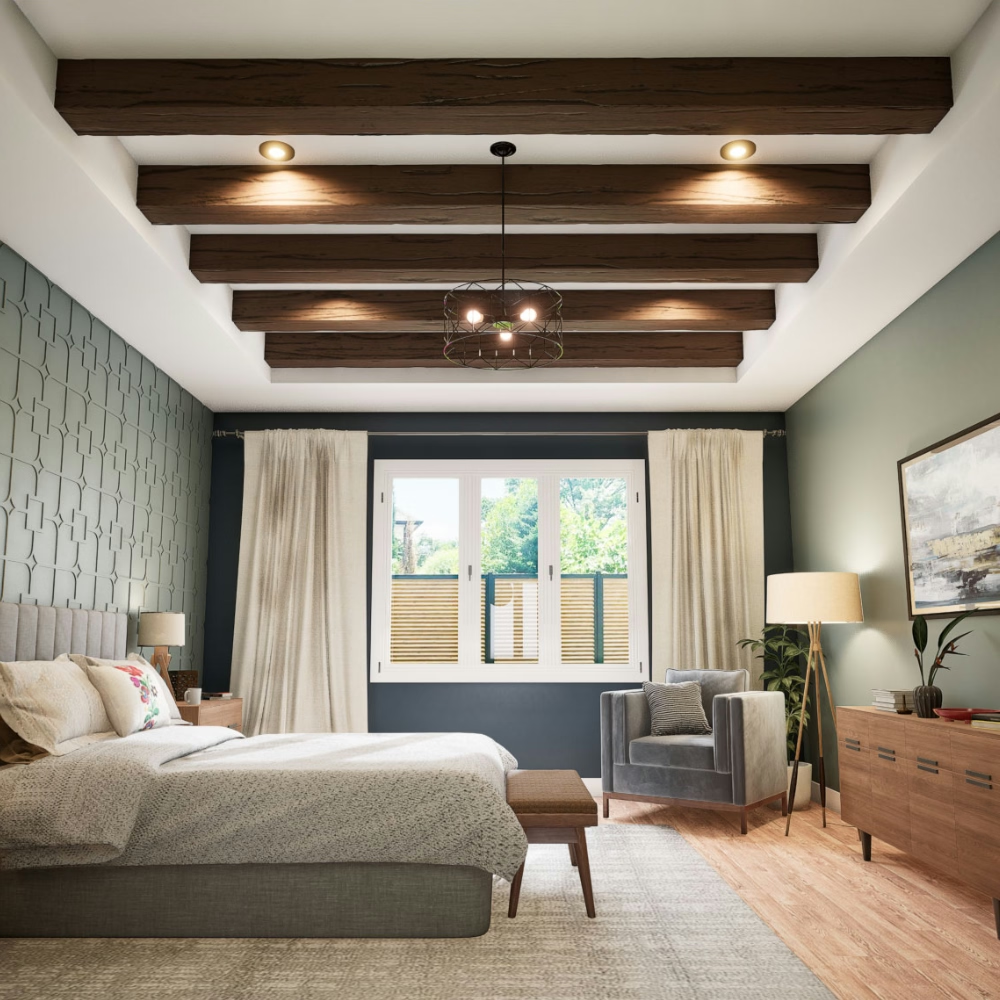
Bedroom applications require careful scale consideration given the close proximity at which occupants experience ceiling elements. More restrained beam treatments work better in private spaces, where subtle overhead interest enhances rather than dominates sleeping environments. The calming grey palette supports bedroom wellness objectives while the wood texture adds organic comfort.
Home office integration addresses the growing trend of residential workspace creation. Grey beams in书房 establish professional atmospheres that support focused work while adding visual interest that prevents sterile working conditions. The sophisticated palette proves appropriate for video conferencing backgrounds where architectural elements communicate professionalism.
Color Coordination Principles
Understanding grey's position within broader color schemes guides successful integration. Grey exists in relationship to surrounding colors, appearing cooler or warmer depending on adjacent hues. Recognizing these relationships enables intentional design choices that achieve specific visual effects.
Complementary color schemes incorporate grey beams alongside accent colors from across color wheels. Grey's neutrality allows bold accent choices in teal, coral, or yellow to dominate without competing for attention. This approach creates dynamic spaces where architectural restraint enables decorative expression.
Monochromatic grey schemes extend grey beams into comprehensive palette strategies. Walls, floors, and major furniture pieces in related grey values create environments of remarkable sophistication and visual unity. These challenging applications reward careful attention to subtle value and texture variations that prevent monotonous impressions.
Analogous approaches incorporate grey alongside adjacent color wheel positions. Greige (grey-beige), taupe (grey-brown), and blue-grey variations create harmonious relationships that feel more complex than pure grey alone. Grey beams provide anchors within these schemes, maintaining visual coherence while allowing subtle color movement.
Lighting Effects on Grey Beam Appearance
Natural daylight reveals grey beams most accurately, with full spectrum illumination showing true tone relationships. North-facing rooms with cool daylight make grey beams appear slightly blue-tinged, while south-facing spaces with warm sunlight add complementary warmth. These natural variations create dynamic environments that change appearance throughout days and seasons.
Artificial lighting dramatically influences grey beam perception. Warm incandescent sources create inviting evening atmospheres but can make cool grey beams appear slightly purple. LED options in various color temperatures enable precise control over grey beam appearance, with neutral white light providing most accurate grey representation.
Layered lighting approaches enhance grey beam installations through strategic fixture positioning. Uplighting beam surfaces from below creates dramatic shadows and emphasizes three-dimensional qualities. Downlighting provides functional illumination while maintaining beam visibility. Combining approaches creates balanced environments with both atmospheric impact and practical usability.
Investment Value and Longevity
Home improvement investments require careful evaluation against expected returns in both practical performance and property value enhancement. Grey tone PU beams deliver favorable economics across both dimensions, offering compelling value propositions for residential applications.
Initial cost advantages over authentic wood or custom treatments provide immediate budget relief. These savings become more significant as installation scale increases, making beams particularly economical for larger living spaces or whole-home renovation projects. The cost differential often covers additional design elements or upgraded specifications elsewhere.
Durability ensures favorable lifetime cost comparisons despite potentially higher initial investment than some alternatives. Polyurethane beams lasting decades without replacement or major maintenance deliver lifetime costs substantially below materials requiring periodic refinishing or earlier replacement. This longevity simplifies long-term home budgeting while ensuring consistent aesthetic quality.
Property Value Enhancement
Architectural features including faux wood beams increasingly influence buyer perceptions in residential real estate markets. Homes featuring distinctive ceiling treatments command attention among browsing buyers, potentially accelerating sales timelines and supporting premium pricing. Grey beams specifically communicate contemporary design sensibility that appeals to design-conscious buyer segments.
Design appeal extends beyond immediate aesthetics to broader lifestyle associations. Grey beam installations suggest thoughtful, intentional home improvement choices that signal responsible ownership. This perception influences how prospective buyers evaluate overall property condition and maintenance quality, potentially affecting perceived value across entire homes.
Renovation return on investment calculations favor faux beams when compared against purely decorative improvements. The architectural nature of beam installations delivers lasting value rather than temporary aesthetic updates. This durability protects renovation investments against obsolescence while providing ongoing enjoyment for current occupants.
Maintenance Best Practices
Quality grey tone beams require minimal ongoing maintenance to preserve appearance and performance. Understanding appropriate care approaches ensures lasting satisfaction with residential installations while preventing inadvertent damage from inappropriate cleaning methods.
Regular dusting prevents particle accumulation that might dull surface finishes over time. Soft microfiber tools work effectively without scratching durable polyurethane surfaces. The frequency of dusting depends on household conditions, with homes featuring open windows, pets, or active children benefiting from more frequent attention.
Cleaning protocols for occasional thorough maintenance should match manufacturer recommendations for specific finishes. Most grey beams clean effectively with mild soap solutions and soft cloths. Harsh chemicals, abrasive cleaners, or aggressive scrubbing can damage finish surfaces, so testing in inconspicuous locations before general application proves prudent.
Inspection protocols identify any developing issues before they become significant concerns. Checking mounting security, joint integrity, and finish condition during regular home maintenance routines ensures early identification of problems. Professional assessment for any observed concerns prevents escalation while maintaining installation integrity.
Future Considerations
Residential design will continue evolving as lifestyles, technologies, and cultural values change. Grey tone beams position homes to accommodate these shifts through versatile, timeless aesthetics that adapt to changing contexts. This flexibility represents significant long-term value for homeowners making enduring investments in their living environments.
Emerging technologies may enhance beam functionality beyond aesthetic contributions. Integrated lighting, acoustic treatment, and smart home sensor technologies can conceivably incorporate within beam configurations. These possibilities extend beam utility while maintaining aesthetic benefits, positioning faux beams as infrastructure supporting evolving home technology needs.
Sustainability considerations will increasingly influence material selections across residential applications. Polyurethane manufacturers continue developing more responsible formulations using recycled content, bio-based materials, and improved production efficiency. These advances address environmental concerns while maintaining the practical advantages that have established faux beams as preferred choices for contemporary homes.
The enduring appeal of grey tone aesthetics ensures continued relevance for grey beam products. As design trends cycle through various specific expressions, neutral grey palettes provide stable foundations that accommodate change without requiring replacement. Grey tone PU faux wood beams represent thoughtful, lasting investments in home quality and livability.
Technical References
ASTM standards cited in every specification
Test Data
Lab results from internal testing program
Updated 2026
Reviewed against current product specs