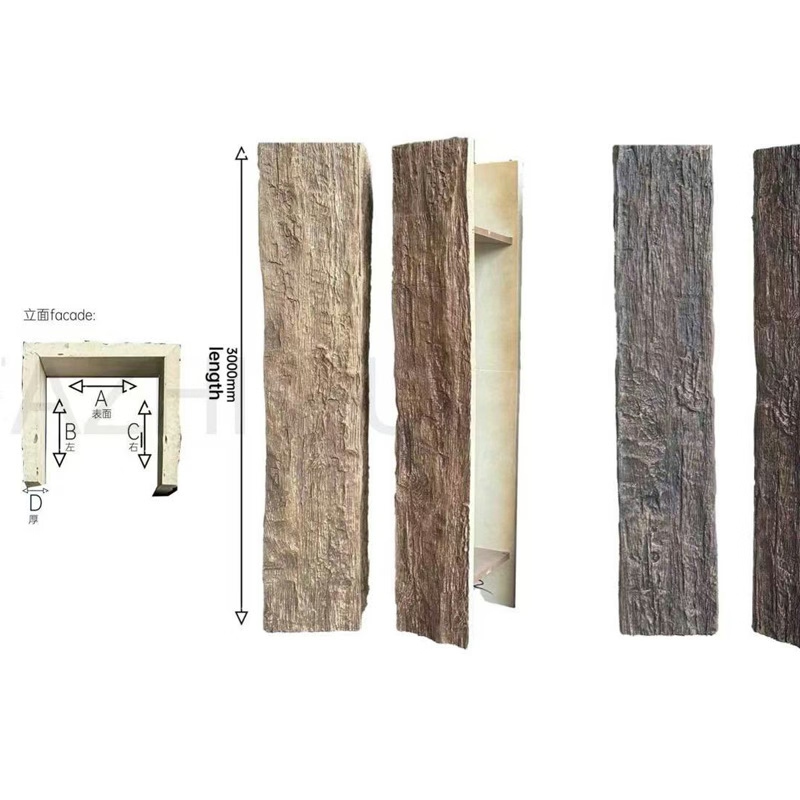
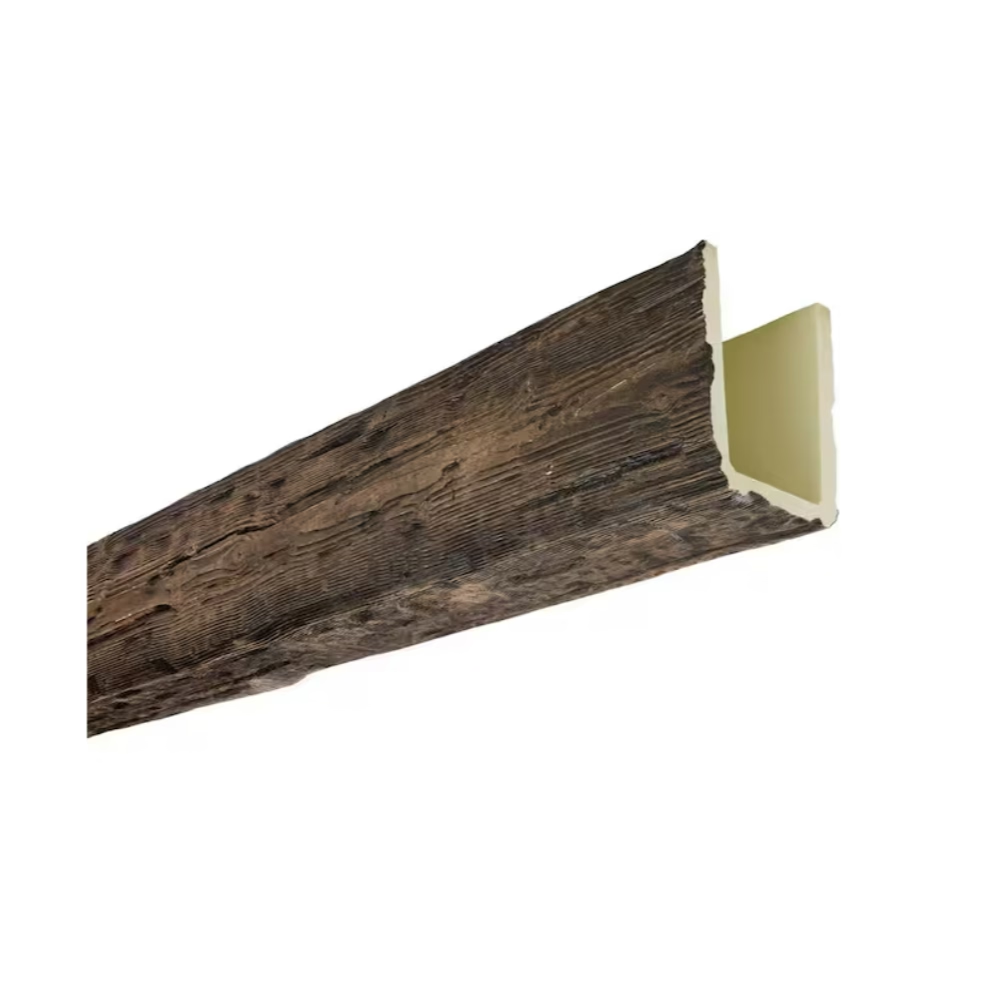
Every compelling interior requires a focal point—a visual anchor that draws the eye, establishes hierarchy, and provides the starting point from which the rest of the room's design unfolds. Living rooms, as primary gathering spaces where families spend substantial time together, particularly benefit from clear focal points that create identity and interest. Polyurethane faux ceiling beams offer exceptional opportunities for establishing these anchors, providing substantial visual presence that commands attention while contributing warmth and architectural authenticity.
The ceiling presents an underutilized canvas for focal point creation. While walls receive considerable design attention through artwork, architectural features, and furniture placement, ceilings often remain afterthoughts treated with uniform paint or simple molding. This neglect represents missed opportunity, as ceilings in many rooms offer substantial visual real estate that, when properly designed, transforms spatial experience fundamentally.
Understanding Focal Point Hierarchy
Effective room design establishes clear focal point hierarchy that guides visual attention through intentional sequences. Primary focal points—the fireplace, the large window grouping, the entertainment center—command initial attention and establish the room's character. Secondary elements support this hierarchy without competing, reinforcing the narrative that primary features establish. Ceiling beams can function at either level, depending on specification and placement.
When beams serve as primary focal points, they should command sufficient visual presence to earn this attention. Substantial dimensions, distinctive profiles, and strategic positioning that centers them within the room's composition all contribute to focal point effectiveness. Beams that appear too small, too subtle, or positioned peripherally fail to establish the anchor function that focal point designation requires.
Supporting beams reinforce rather than compete with other focal points in the room. Fireplace-centric living rooms might incorporate beams that frame this feature without overshadowing it, creating compositional harmony rather than visual confusion. The relationship between ceiling beams and other focal points should feel intentional, with clear design logic that occupants perceive even if they cannot articulate it.

Strategic Placement for Maximum Impact
The positioning of ceiling beams fundamentally influences their effectiveness as focal points. Beams that cross the center of visible ceiling space establish presence proportional to their prominence, while those confined to peripheral locations create background interest without focal point impact. Understanding this relationship guides placement decisions that maximize design benefit.
Cross-beam arrangements—two or more beams intersecting near the center of visible ceiling—create the kind of visual anchor that living room focal points require. The intersection point draws attention and provides a natural center around which other elements arrange. This compositional strategy proves particularly effective in rooms with furniture arrangements oriented toward the ceiling's center, establishing alignment that feels intentional and designed.
Single-beam installations can establish focal point presence through dramatic scale and positioning. A beam spanning the full length of the visible ceiling, centered within the room's width, commands attention without requiring multiple elements. This approach suits rooms with minimalist furnishing schemes where simplicity rather than complexity characterizes the design intent.
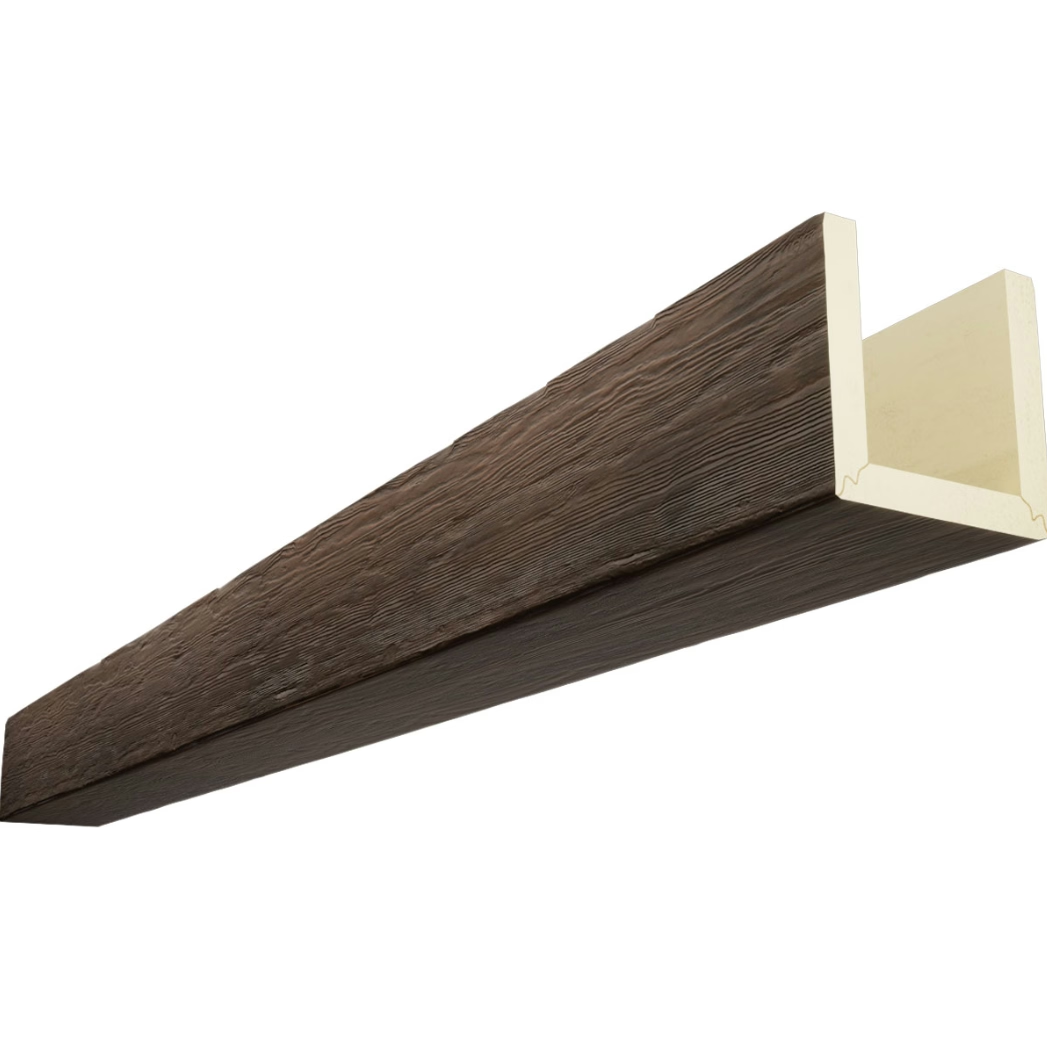
Scale and Proportion Guidelines
The dimensions of ceiling beams must relate appropriately to the rooms they occupy. Beams too small for their context disappear into the ceiling rather than announcing their presence; beams oversized create oppressive atmospheres that undermine the welcoming character living rooms should provide. Understanding the relationship between beam dimensions, ceiling height, and room area guides specifications that achieve intended effects.
Ceiling height provides the primary constraint for beam dimensioning. Standard eight-foot ceilings accommodate single beams with moderate dimensions comfortably, while higher ceilings permit larger profiles that match spatial scale. Cathedral ceilings and vaulted spaces require correspondingly substantial beam specifications to maintain proportional relationships, as diminished beams would read as inadequate rather than restrained.
Room area influences optimal beam spacing as well as dimensions. Large living rooms with substantial ceiling planes can accommodate multiple-beam arrangements without feeling cluttered, while smaller spaces may benefit from single-beam treatments that provide focal point impact without visual congestion. The goal always involves achieving visual balance between beams, ceiling, and room that creates comfortable rather than chaotic compositions.
Lighting as Focal Point Enhancement
Light and beam surfaces interact to create focal point drama that transforms living room atmosphere throughout the day and evening. Thoughtful lighting design amplifies the impact of ceiling beams, while poorly considered illumination undermines even the best beam specifications. Understanding this relationship enables lighting strategies that maximize focal point effectiveness.
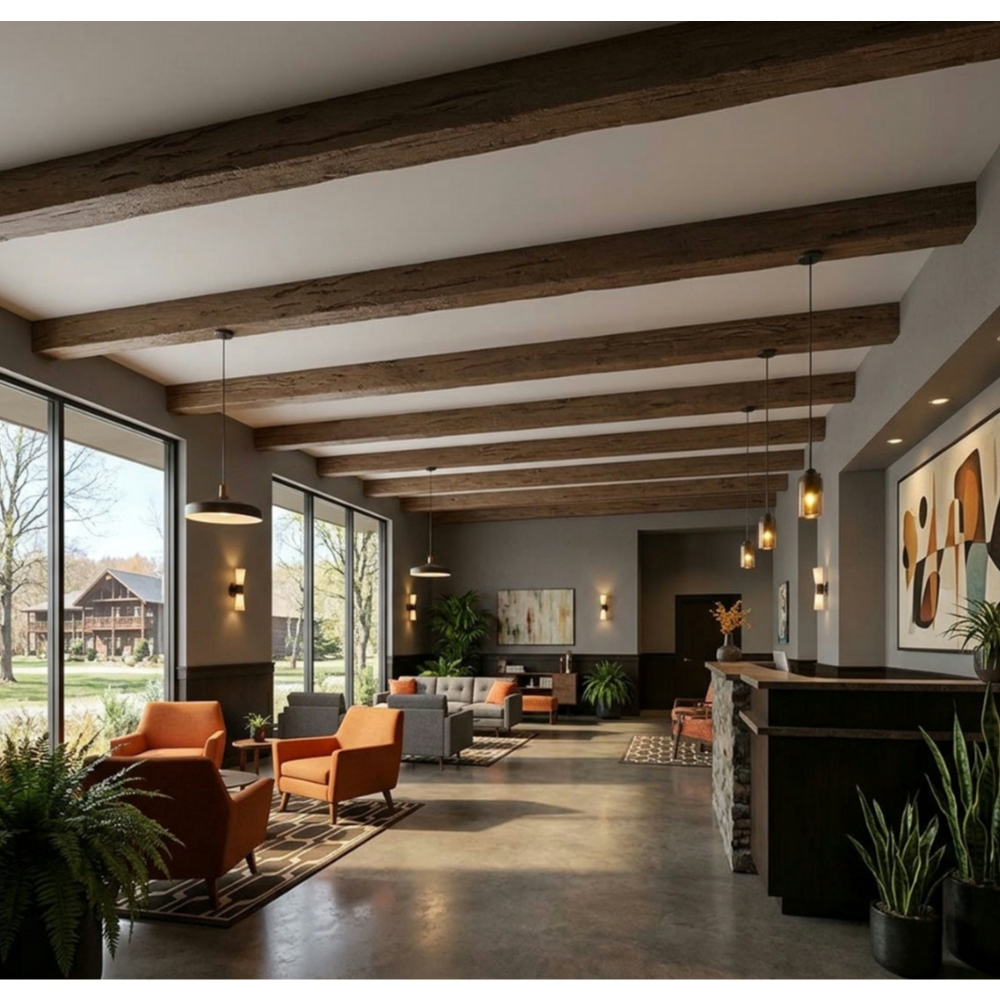
Pendant fixtures suspended from beams provide functional illumination while emphasizing beam presence through their association. The weight and substantial appearance of pendant fixtures reinforces the architectural significance that beams represent, creating visual connections between decorative and structural elements. Multiple pendants arranged along beam lengths provide even illumination while maintaining the beam's focal point status.
Directional fixtures aimed at beam surfaces create accent lighting that highlights grain patterns and finish details. This highlighting technique transforms beams from background architectural elements into starring features deserving attention. The warm glow reflected from wood-look surfaces creates the kind of layered illumination that distinguishes exceptional interior design from merely competent execution.
Material Coordination for Cohesive Design
Ceiling beams exist within complete room compositions that include flooring, walls, furniture, and accessories. Focal point effectiveness depends partially on how beams relate to these surrounding elements, creating visual harmony rather than isolated details that feel unrelated to overall design intent. Thoughtful material coordination ensures that beam specifications support rather than contradict the room's aesthetic direction.
Wood-look beams coordinate naturally with hardwood flooring, wooden furniture, and other organic materials common in living room settings. This material affinity creates environments that feel cohesive and intentional, with design elements reinforcing each other through shared material language. The warmth of wood grain prevents living rooms from feeling cold or institutional, establishing the comfortable atmosphere that these spaces require.
The transition between beams and adjacent ceiling surfaces merits consideration in focal point design. Without thoughtful treatment, this junction can appear abrupt and unresolved, undermining the compositional integration that effective focal points require. Moldings, trim details, or subtle color transitions at beam-perimeter junctions create the finished appearance that living room quality demands.
Long-Term Focal Point Satisfaction
Living room focal points should provide lasting satisfaction rather than initial impact that fades with familiarity. The substantial investment that quality beam installations represent deserves consideration of how these elements will perform through years of daily experience. Beams that create visual fatigue or prove impractical for daily living undermine the value they initially appeared to provide.
The timeless quality of wood-look beams serves long-term satisfaction objectives well. Unlike trendy finishes that appear dated after a few years, traditional wood aesthetics maintain relevance across changing design fashions. This enduring appeal protects the investment that beam installations represent, ensuring that focal points continue providing satisfaction as surrounding design elements evolve.
Practical considerations also influence long-term satisfaction. Beams positioned in ways that complicate furniture arrangement, obstruct light fixture placement, or interfere with activities that living rooms must support create ongoing frustration that diminishes initial enthusiasm. Thoughtful positioning that anticipates living room functionality ensures that focal point impact enhances rather than impedes daily life.
Technical References
ASTM standards cited in every specification
Test Data
Lab results from internal testing program
Updated 2026
Reviewed against current product specs