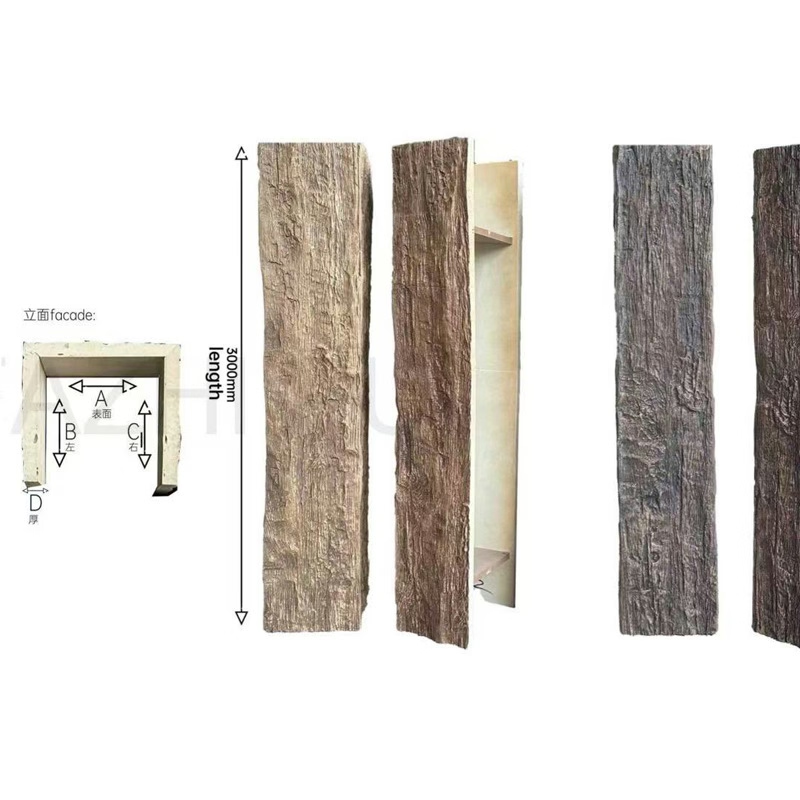
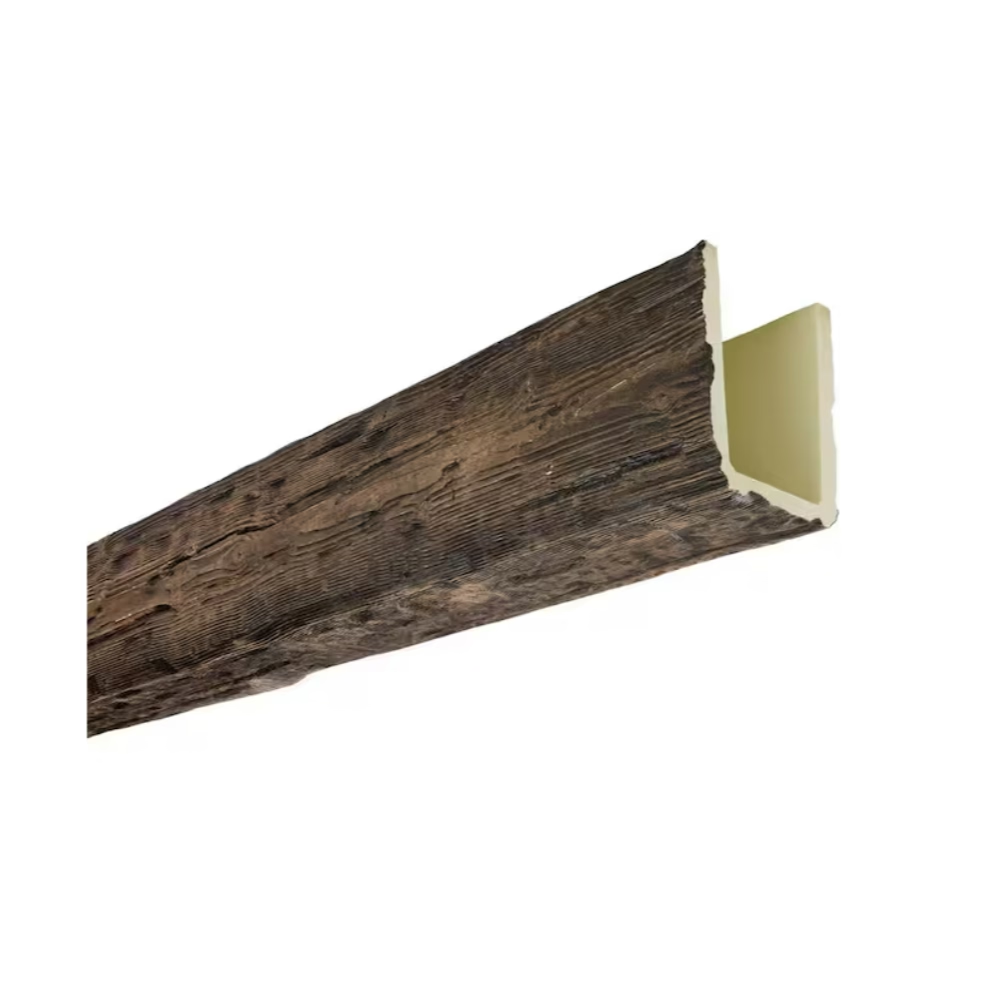
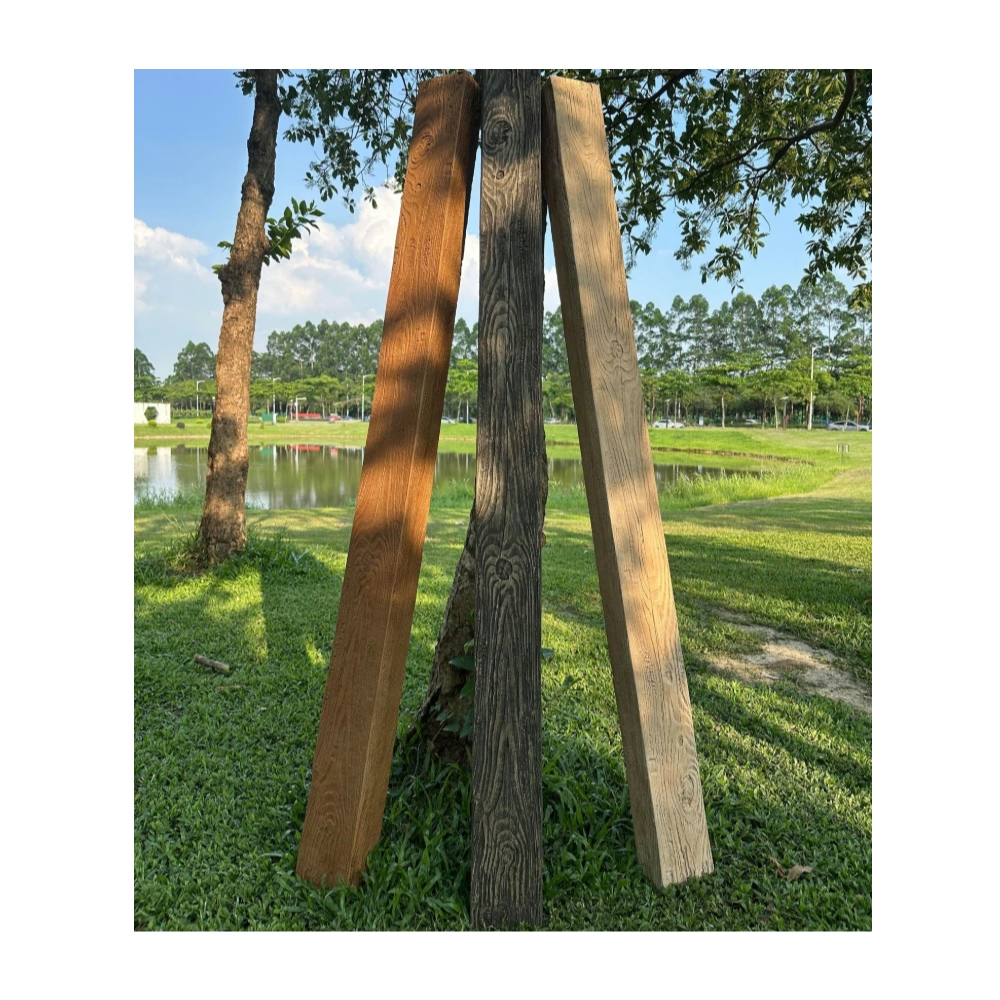
Below-grade spaces present renovation challenges that other areas of the home do not encounter. Moisture, whether from groundwater intrusion, humidity condensation, or plumbing leaks, affects building materials in ways that surface-level thinking might overlook. Homeowners who discover warped wood, peeling paint, or mold growth after basement finishing understand these challenges viscerally. The ceiling treatment, often an afterthought, can become a persistent problem when moisture conditions exceed the tolerance of selected materials. Moisture resistant faux beams address this reality directly, providing aesthetic goals with material performance matched to basement conditions.
Understanding Basement Moisture Dynamics
Moisture in basements originates from multiple sources, each requiring different management approaches. Groundwater pressure against foundation walls can force moisture through concrete micro-cracks, creating conditions that surface sealants cannot fully address. Interior humidity from daily activities—showering, cooking, laundry—accumulates in the cool basement environment where air circulation may be limited. Plumbing leaks, whether from visible pipes or hidden supply lines, create localized moisture problems that may not become apparent until significant damage has occurred.
These moisture sources create humidity levels that fluctuate significantly throughout the year. Summer months bring warm, humid air that condenses on cool basement surfaces; winter months may see the opposite effect as heated interior air dries to low humidity levels. Materials that cannot accommodate this cycling develop stress that manifests as warping, cracking, or separation.
The dew point phenomenon deserves particular attention in basement environments. When warm, humid air contacts cool surfaces—the common condition in below-grade spaces—moisture condenses directly on those surfaces. This condensation can occur on any cool material, including ceiling beams, regardless of that material's normal moisture resistance. Understanding this behavior informs both material selection and the climate control strategies that support material performance.
Why Natural Wood Fails in Basements
Genuine timber, despite its centuries of successful use in above-grade applications, struggles in basement environments. The organic composition that gives natural wood its warmth and workability also makes it vulnerable to moisture-related degradation. Understanding these failure modes explains why alternative materials often prove necessary below grade.
Warping occurs when wood absorbs moisture unevenly across its cross-section. One side of a beam swells while the other remains stable, creating internal stresses that eventually manifest as twisting, cupping, or bowing. Once warping begins, it typically progresses even if moisture conditions improve, because the dimensional changes become permanent.
Mold and mildew colonization affects wood surfaces exposed to sustained humidity. These biological growths not only create appearance problems but can trigger health concerns for household members, particularly those with respiratory conditions. Removing mold from porous wood surfaces proves difficult; prevention through moisture management remains the most effective approach.
Structural degradation represents the most serious moisture-related failure mode. Sustained moisture exposure can lead to wood rot, where fungal activity breaks down the cellulose structure that provides wood's strength. Unlike the visible surface problems that warn of earlier-stage moisture issues, structural degradation may not become apparent until failure occurs.
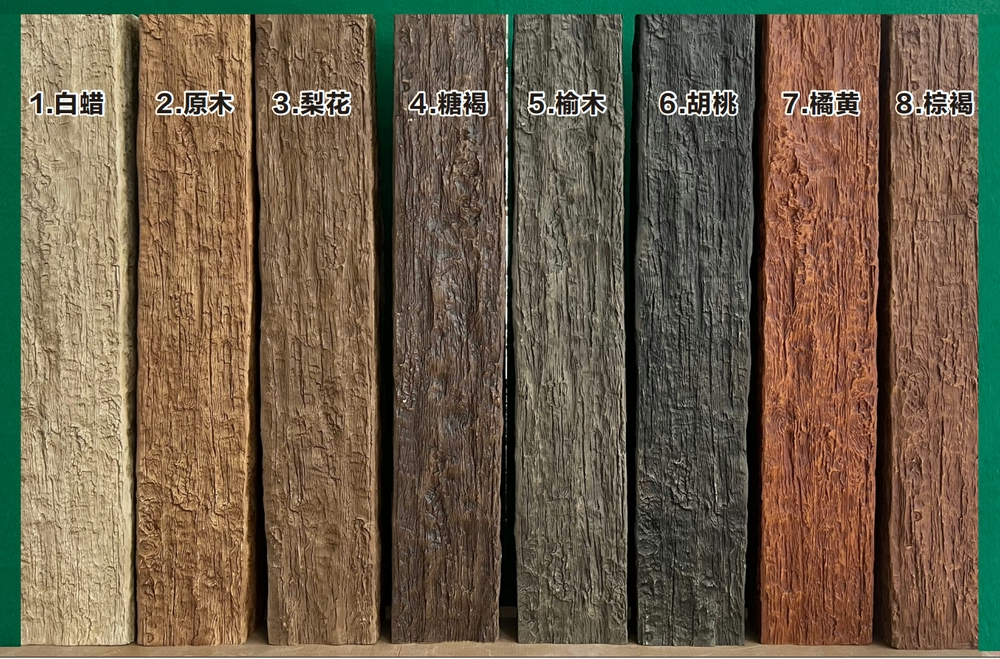
The Moisture Resistance Advantage of Polyurethane
Polyurethane's synthetic composition provides moisture resistance that natural materials cannot match. The closed-cell structure of quality polyurethane resists water absorption entirely, preventing the swelling, warping, and biological colonization that affect organic alternatives. This fundamental material difference enables polyurethane beams to perform reliably in conditions that would quickly degrade genuine timber.
The dimensional stability of polyurethane complements its moisture resistance. Unlike wood, which expands and contracts with moisture changes, polyurethane maintains consistent dimensions across normal humidity ranges. This stability prevents the stress cycles that eventually crack or distort wood beams, extending service life significantly.
Temperature tolerance adds another dimension to polyurethane's basement suitability. Basement environments experience temperature variations that affect building materials differently. Polyurethane handles these variations without the differential expansion that can stress joints between different materials, maintaining clean appearances that wood cannot preserve.
Quality considerations affect the degree of moisture resistance that polyurethane products provide. Not all polyurethane formulations offer equivalent performance; higher-density products with proper additives provide superior moisture resistance compared to lower-quality alternatives. Specifying products designed specifically for moisture-prone applications ensures that the material advantages translate into reliable performance.
Basement Design Applications
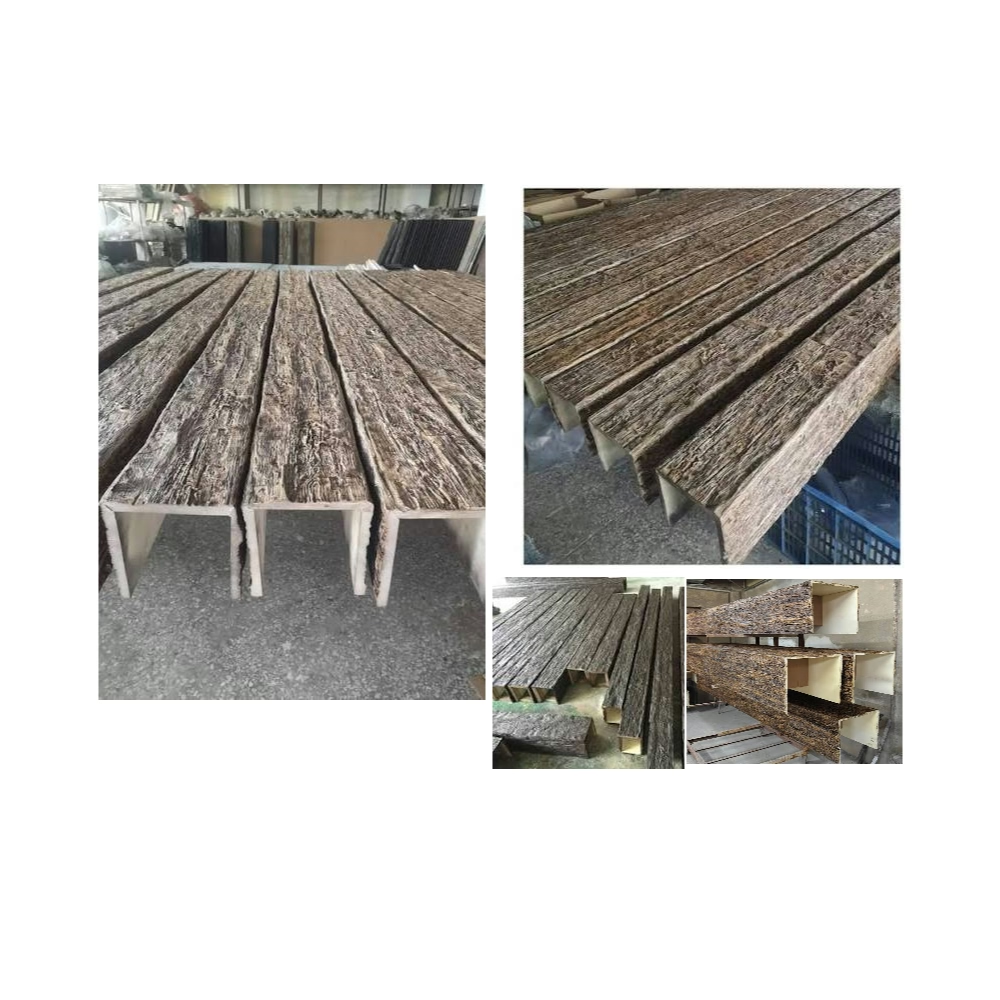
Moisture resistant faux beams serve basement design goals beyond simply surviving environmental conditions. These beams provide the aesthetic warmth that makes basement spaces feel like natural extensions of the home rather than afterthought storage areas. Understanding the design possibilities helps homeowners envision the transformation that quality ceiling treatment enables.
Recessed ceilings—where beams create visual depth below the structural ceiling plane—work particularly well in basement applications. This approach adds architectural interest while maintaining maximum ceiling height in spaces where height is often limited. The beam depth creates shadow effects that enhance visual depth without requiring additional headroom.
Coffered ceiling designs incorporating beams create formal spatial effects that elevate basement spaces above typical below-grade character. The geometric patterns that coffering establishes provide visual organization that complements furniture grouping and activity zoning, making large basement spaces feel more intimate and defined.
Partial beam installations—where beams span selected ceiling areas rather than covering the entire plane—provide targeted design impact without the cost of complete coverage. Beams over conversation areas, dining spaces, or entertainment zones establish design hierarchy that draws attention to key functional areas.

Beam placement should coordinate with basement lighting plans. Recessed fixtures, pendant lights, and surface-mounted luminaires all interact with beam positions in ways that affect both appearance and function. Planning these relationships before installation prevents conflicts that might require beam repositioning or fixture relocation.
Climate Control Strategies
Material moisture resistance works best when supported by appropriate climate control strategies. Even the most resistant materials perform better and last longer when humidity levels remain reasonable. Basement environments benefit from integrated approaches that combine material selection with environmental management.
Dehumidification provides the foundation for basement moisture control. Running dehumidifiers during humid months maintains humidity levels that prevent condensation and biological growth. Modern dehumidifiers with automatic humidistats require minimal attention once properly sized and positioned.
Air circulation ensures that humidity levels remain consistent throughout basement spaces. Stagnant air allows moisture to accumulate in low-circulation areas, creating localized conditions that may exceed the tolerance of even moisture-resistant materials. Ceiling fans, air returns, and strategic supply vents promote circulation that prevents these problem areas.
Vapor barriers at foundation walls and floors prevent ground moisture from entering basement air. While these barriers are typically installed during initial construction or major renovation, their presence or absence affects the humidity conditions that ceiling materials must withstand. Understanding existing barrier conditions helps calibrate expectations for material performance.
Installation Best Practices
Successful basement beam installation requires attention to conditions that above-grade installations might ignore. Substrate preparation, fastening selection, and finishing details all require basement-specific consideration to ensure long-term performance.
Substrate conditions in basements often differ from above-grade ceilings. Concrete surfaces may retain moisture longer than wood substrates; joist conditions may reflect past moisture exposure that has since been addressed. Inspecting substrate conditions before installation ensures that beams are mounted to stable, dry surfaces that will support their weight reliably.
Fastener selection affects long-term performance in moisture-prone environments. Corrosion-resistant fasteners—stainless steel, coated steel, or specialized moisture-resistant options—prevent the fastener failure that could compromise beam security. The small additional cost of quality fasteners prevents larger problems that fastener corrosion would create.
Sealing at beam ends and connections prevents moisture intrusion into beam cavities or behind beam surfaces. Even with moisture-resistant materials, water that enters hidden spaces can create problems that surface inspection cannot detect. Proper sealing closes these potential entry points during initial installation.
Protecting Your Investment
Basement ceiling beams represent a meaningful investment in home improvement. Protecting that investment requires attention to conditions that might affect beam performance over time. Regular inspection and maintenance, while less demanding than natural wood would require, ensures that beams continue performing as designed.
Visual inspection during routine home maintenance checks identifies potential problems before they become serious. Looking for gaps at joints, checking for surface abnormalities, and verifying secure attachment all take moments but provide assurance that beams remain properly installed.
Moisture monitoring in basement environments provides early warning of conditions that might stress materials. Inexpensive hygrometers placed near beam installations track humidity levels that could affect long-term performance. When levels exceed comfortable ranges, addressing the underlying moisture source prevents problems that might otherwise develop.
The combination of quality materials, proper installation, and appropriate climate control creates conditions for long-term success. Moisture resistant faux beams, specified for their intended application and installed with attention to basement realities, provide decades of service that enhances basement spaces without the maintenance burdens that natural materials would impose.
Technical References
ASTM standards cited in every specification
Test Data
Lab results from internal testing program
Updated 2026
Reviewed against current product specs