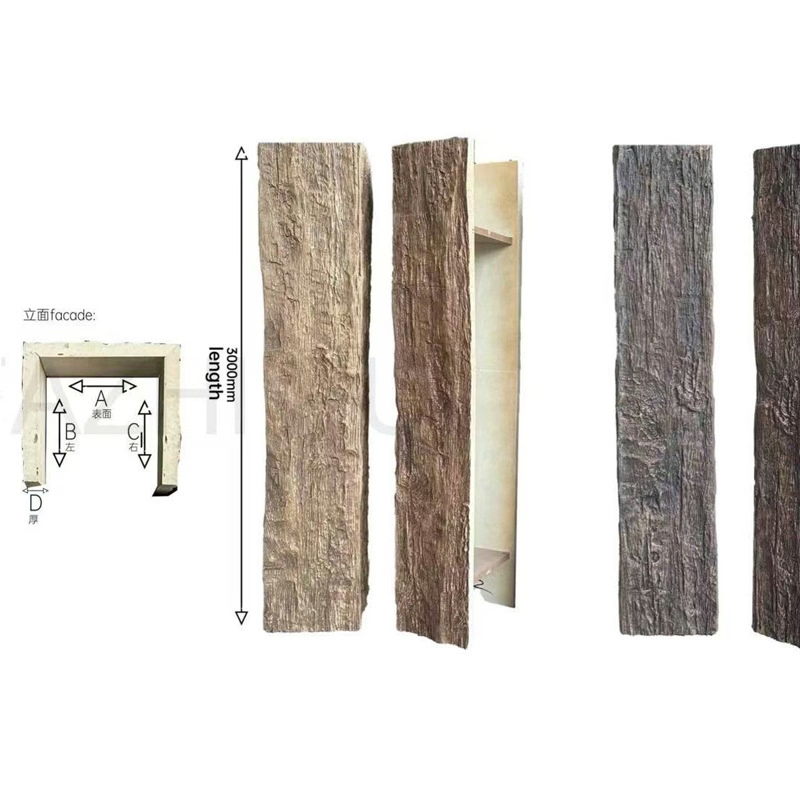
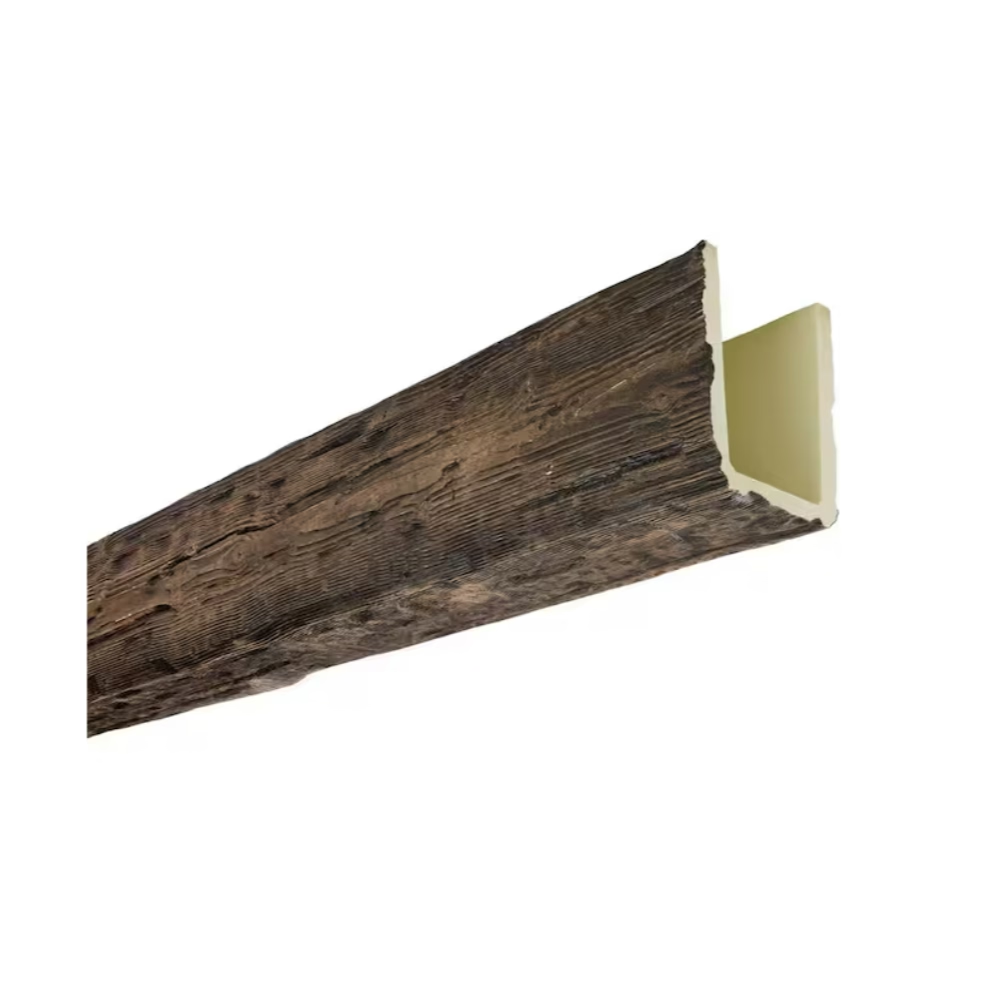
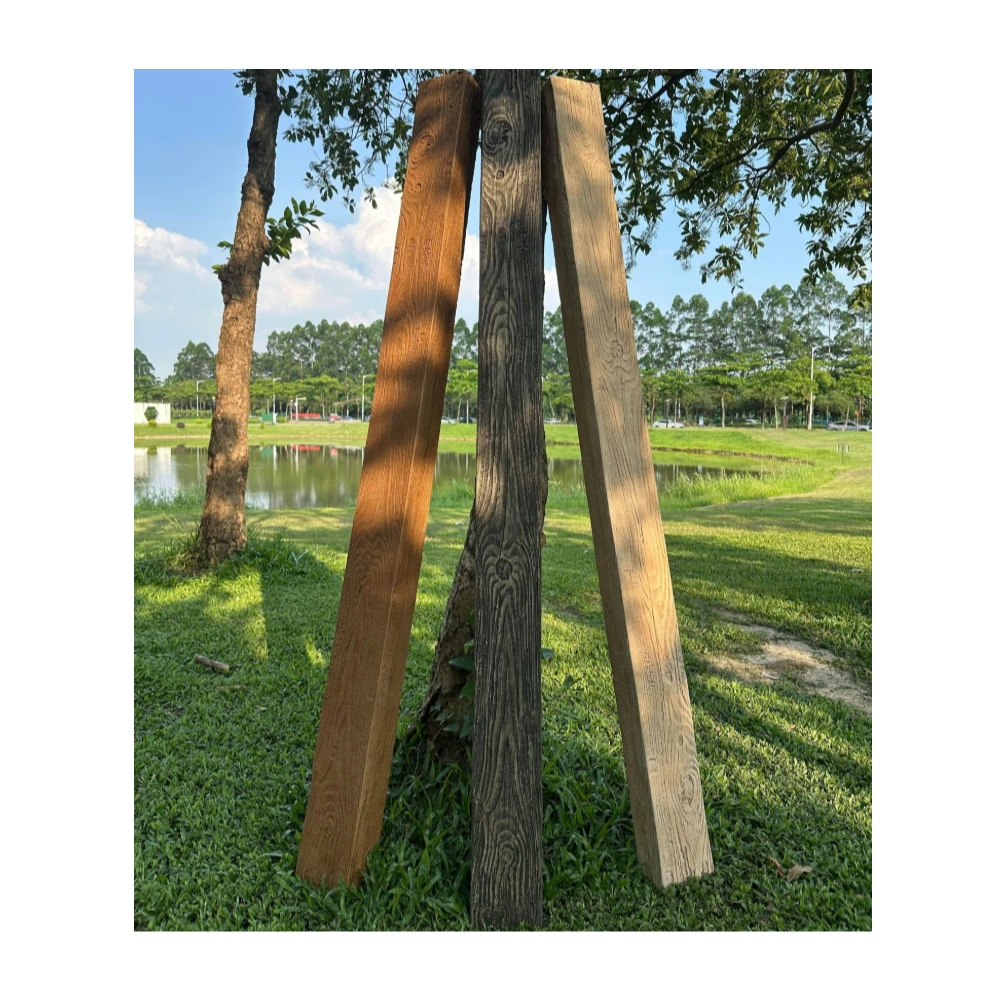
A finished basement ceiling does more than conceal the structural elements overhead. It establishes the visual boundary that makes a space feel enclosed, provides the surface that holds the room's light, and contributes the material quality that elevates a converted storage area into genuine living space. When this ceiling incorporates wood-look beams, it adds warmth and architectural interest that bare ceilings cannot provide. The specification of these beams determines whether the finished ceiling achieves its potential or becomes a source of ongoing maintenance concern.
Ceiling Performance in Below-Grade Contexts
Basement ceilings face performance requirements that above-grade ceilings do not encounter. The materials selected for basement applications must accommodate these requirements to provide satisfactory long-term performance.
Moisture cycling occurs in basements as humidity levels fluctuate with season, occupancy, and mechanical system operation. Summer months bring elevated humidity as warm, moisture-laden air penetrates foundations and condensation forms on cool surfaces. Winter months may see the opposite effect as heating systems dry interior air to low humidity levels. Materials that cannot accommodate these cycles without dimensional change, surface degradation, or joint failure will not perform acceptably in basement applications.
Thermal variation between conditioned basement air and the unconditioned spaces above—attics, floor voids, exterior decks—creates temperature differentials that affect ceiling materials differently than uniform conditions would. Beams that span between surfaces at different temperatures experience stress that uniform conditions would not create; materials must accommodate this stress without visible deterioration.
Condensation formation on ceiling surfaces occurs when humid air contacts cool beam surfaces. This condensation, invisible until droplets accumulate and fall, can stain some materials and initiate degradation in others. Moisture-resistant materials shed this condensation without absorption or damage, maintaining appearance despite the wetting events that basement conditions create.
Aesthetic Transformation Through Ceiling Treatment
The visual transformation that ceiling beams provide can fundamentally change how basement spaces are perceived. Understanding this transformation potential clarifies why ceiling treatment deserves serious design consideration.
Spatial perception shifts when ceilings receive treatment that establishes scale and proportion. The raw concrete, exposed joists, and visible utilities common in unfinished basements create visual noise that prevents spaces from feeling coherent. Beams that introduce material consistency and architectural order transform this visual chaos into spatial composition that reads as designed rather than improvised.
Visual warmth counters the cool character that concrete and masonry materials project. Basement spaces often feel inherently cold regardless of actual temperature, as the surfaces that surround occupants radiate coolness that affects perceived comfort. Wood-look beams introduce warmth that improves actual and perceived comfort, making spaces feel more inviting than bare ceiling alternatives would allow.
Human scale enters spaces through the detail that beams provide. Large, undivided ceiling planes can feel institutional and overwhelming; beams introduce vertical elements that break these planes into comprehensible scales. In basements where ceiling heights may be limited, this scale introduction can actually make spaces feel taller than measurements would suggest.
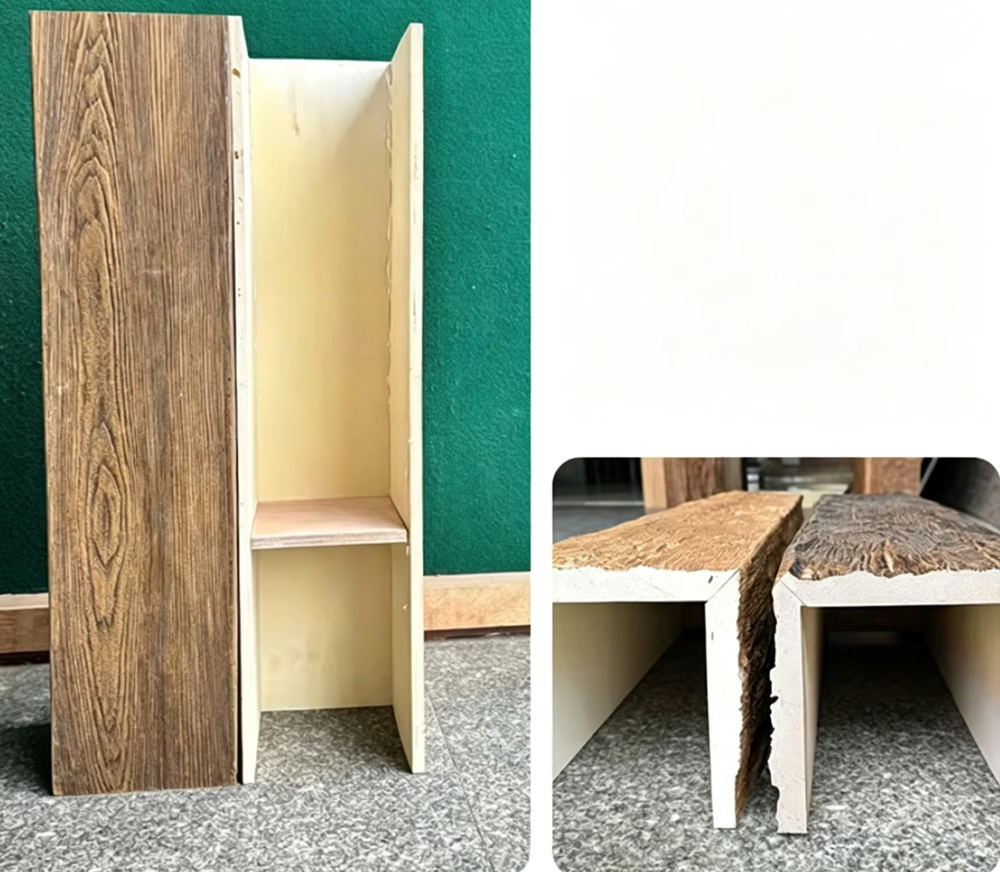
Material Selection Criteria
The criteria for basement ceiling beam selection should balance aesthetic goals against practical performance requirements. Both dimensions deserve consideration to ensure that selected materials serve their intended purposes.
Moisture resistance must be verified through appropriate documentation. Marketing claims about moisture resistance should be supported by test results, warranty coverage, or field performance history. Materials that cannot demonstrate moisture-resistant performance through objective evidence should not be specified for basement applications regardless of other attractive qualities.
Aesthetic quality must meet the standards that occupied spaces deserve. Beams that look obviously fake, that exhibit visible manufacturing artifacts, or that clash with surrounding design elements will undermine rather than enhance basement spaces. The investment in quality aesthetics returns value through spaces that occupants find attractive rather than merely tolerable.
Installation compatibility ensures that selected beams can be properly mounted in the specific basement context. Existing conditions—joist spacing, utility positions, access requirements—may affect which beam types and mounting approaches are practical. Understanding these constraints before specification prevents installation complications that might otherwise require redesign.
Design Integration Strategies
Beams that serve aesthetic goals must integrate with overall basement design rather than existing as isolated features. Integration strategies ensure that ceiling treatment contributes to unified spatial composition.
Wall coordination addresses how beam terminations relate to surrounding wall surfaces. Beams that extend to walls create strong boundary definition; beams that stop short allow more subtle integration. The choice depends on design goals and the wall treatments that surround the ceiling installation.
Lighting integration ensures that beam treatment works with rather than against the illumination systems that serve the space. Recessed fixtures can be positioned between beams to maintain clean ceiling planes; surface-mounted fixtures can become design features when positioned on beams; pendant fixtures can hang from beams to create focal points. Each approach serves different design objectives.
HVAC coordination addresses how beam treatment affects air distribution and temperature control. Beams that obstruct supply registers, return grilles, or thermostat sensors can compromise system performance. Planning beam positions relative to HVAC components ensures that ceiling aesthetics do not create comfort problems.
Maintenance Considerations for Basement Beams
The maintenance requirements that beams impose affect long-term satisfaction with basement ceiling treatment. Materials that demand ongoing attention create burdens that quality materials avoid.
Cleaning accessibility in basement spaces may be limited by ceiling height and furniture positioning. Beams that require frequent cleaning to maintain appearance create access challenges that homeowners may not anticipate during specification. Selecting materials that maintain appearance with minimal cleaning simplifies ongoing maintenance.
Inspection practicality affects how easily beam condition can be monitored over time. Beams that hide their condition behind surfaces that cannot be opened for inspection may conceal developing problems until failure occurs. Beams with accessible inspection points allow proactive maintenance that prevents unexpected problems.
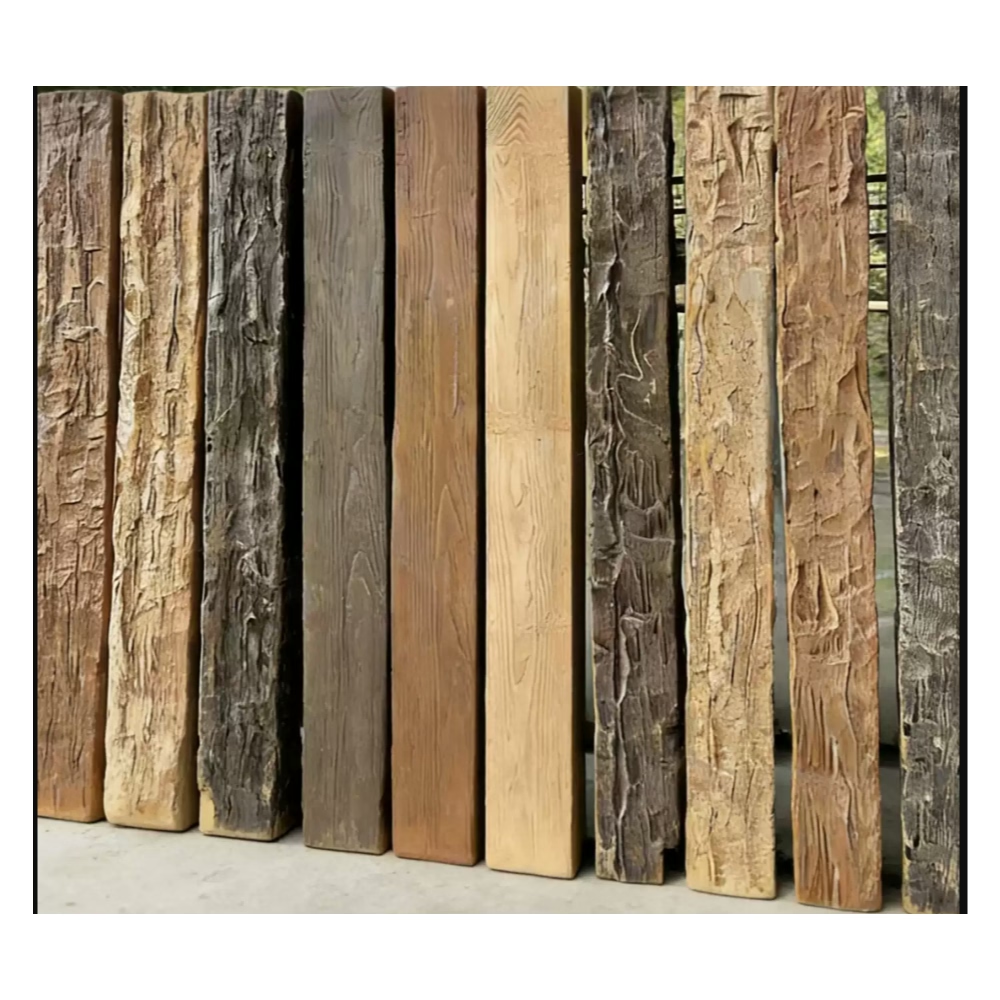
Repair capability determines what options exist if beams are damaged. Quality polyurethane beams can often be repaired with bonding compounds that restore appearance and structural integrity; natural wood may require complete section replacement that matches poorly with existing materials. Understanding repair options informs specification decisions that affect long-term maintenance possibilities.
Budget Considerations
The budget allocated for basement ceiling treatment affects what materials and design approaches are practical. Understanding how different choices affect total project cost enables informed decisions that balance aesthetic goals against financial constraints.
Material costs for quality moisture-resistant beams vary by specification, with larger beams, premium finishes, and specialized products commanding higher prices. The relationship between material cost and visual impact should guide specification decisions that maximize value within budget constraints.
Installation costs depend on the complexity of the beam arrangement and the conditions that the basement presents. Complex arrangements with many joints, cuts, and custom positioning cost more than simple, repetitive installations. The visual benefit that complex arrangements provide should justify their additional cost.
Lifecycle costs affect the true economics of different beam options. Materials that require ongoing maintenance, eventual replacement, or special care cost more over time than materials that perform indefinitely without attention. The initial cost premium that quality materials command often proves economical when lifecycle costs are considered.
Technical References
ASTM standards cited in every specification
Test Data
Lab results from internal testing program
Updated 2026
Reviewed against current product specs