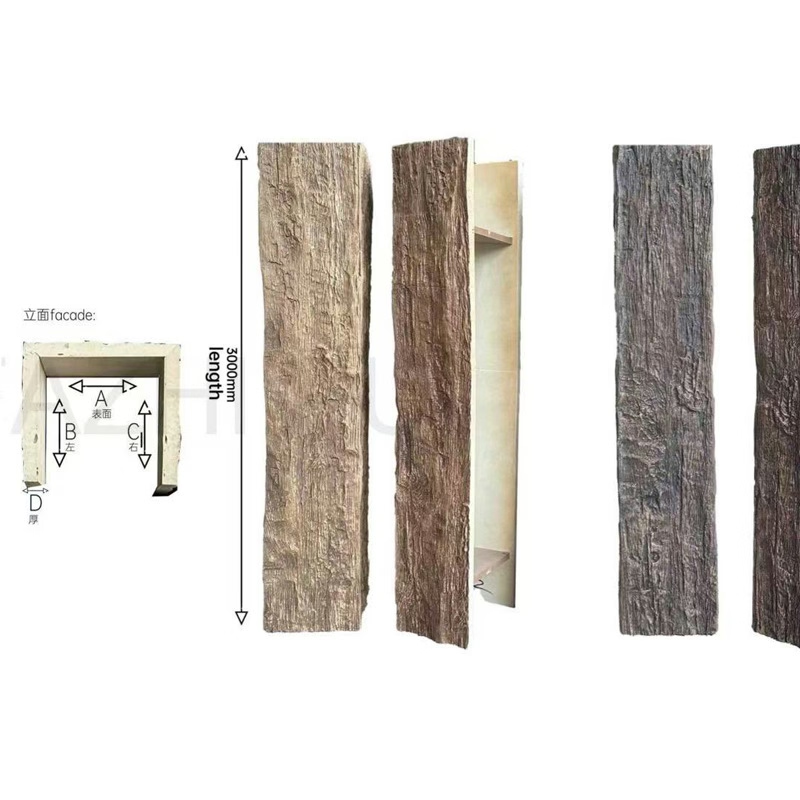
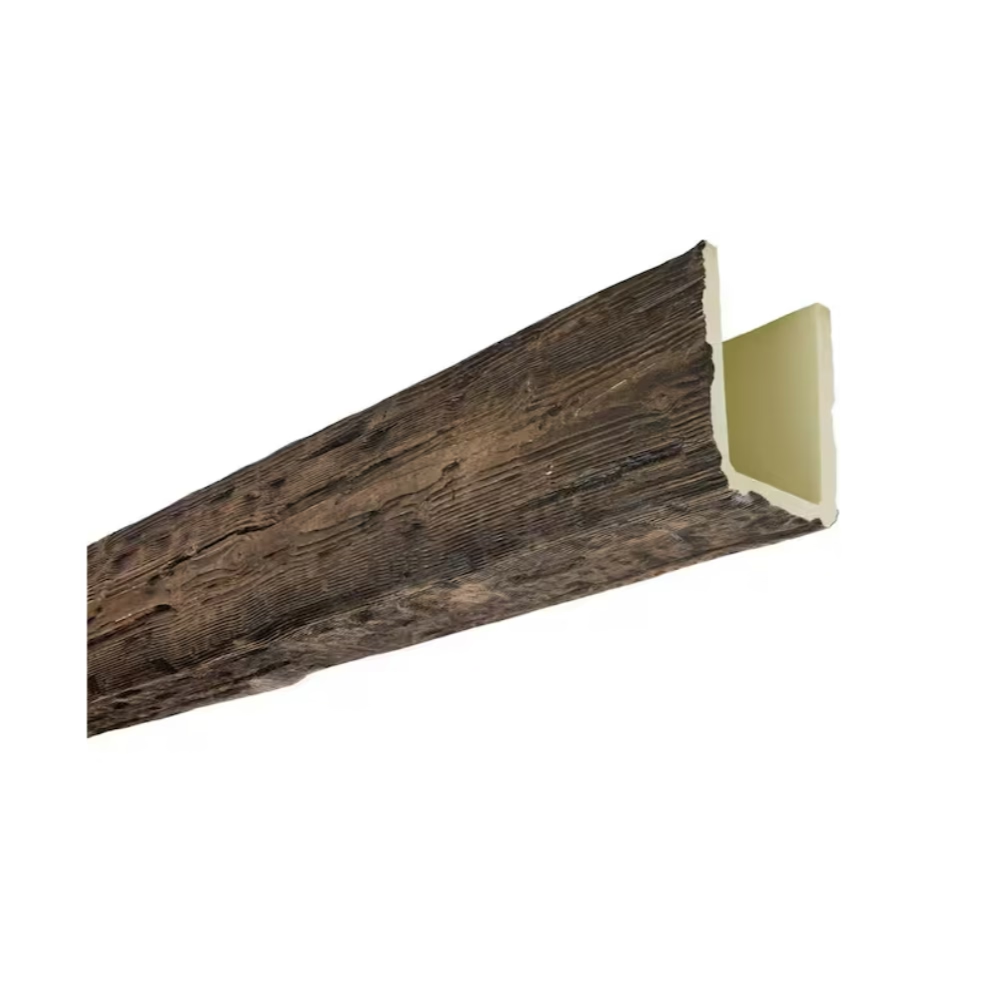
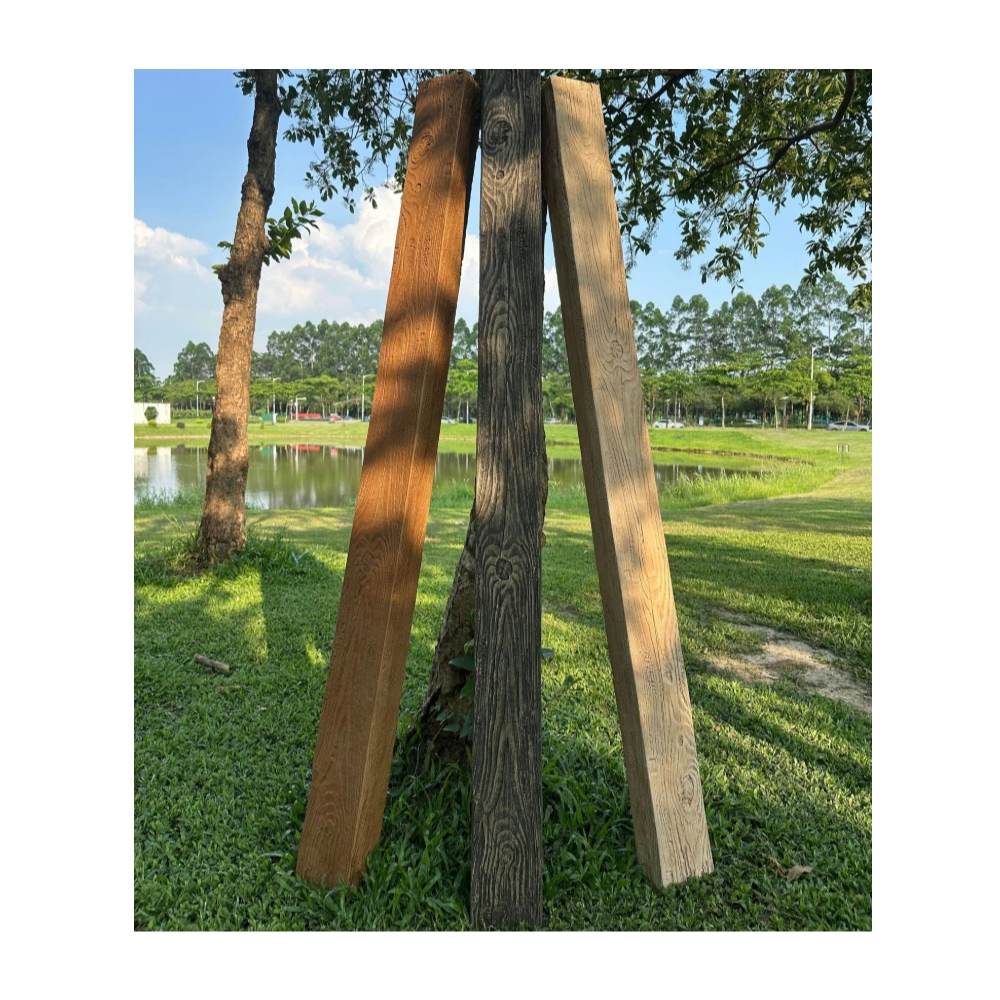
Home renovation projects frequently encounter the challenge of introducing architectural character where limited budgets and existing constraints prevent comprehensive reconstruction. The spaces people inhabit daily deserve the warmth and authenticity that natural materials provide, yet practical realities often preclude the investments that genuine timber would require. Natural wood-look PU faux timber beams address this dilemma directly, offering lifelike authenticity that satisfies design aspirations without demanding the structural commitments, specialized labor, or ongoing maintenance that authentic material specifications would impose.
The psychological impact of wood in residential settings operates at levels deeper than conscious aesthetic preference. Research in environmental psychology consistently demonstrates that natural materials reduce stress markers, improve mood, and enhance cognitive function in ways that synthetic alternatives cannot match. These effects, evolved responses to environments where natural materials indicated safety and resources, persist even in contemporary settings where survival no longer depends on accurate environmental assessment. Home renovations that incorporate wood-look elements, even synthetic reproductions, leverage these beneficial psychological responses, creating spaces that feel more comfortable and nurturing than equivalent environments with only manufactured surfaces.
The authenticity question that has traditionally challenged faux wood specifications has been substantially addressed by manufacturing advances over recent decades. Early synthetic alternatives often failed inspection from anyone who had spent time with genuine timber—the replication simply lacked the complexity and variation that authentic material presents. Current production techniques capture wood's essential characteristics with remarkable fidelity, producing beams that satisfy observers who specifically examine them for authenticity. This manufacturing evolution has transformed faux beams from honest-but-obvious imitations to convincing alternatives that require expert evaluation to distinguish from genuine material.
Consider a mid-century home renovation where original character had been obscured by decades of updating and renovation. The homeowners sought to restore the authentic mid-century atmosphere that the house had possessed when first constructed, recognizing that architectural details like exposed beams had contributed significantly to that period's distinctive character. However, engineering assessment revealed that genuine timber beams would exceed structural capacity, and budget constraints prevented the structural reinforcement that authentic installation would require. Faux timber beams provided the authentic appearance the renovation sought while respecting both structural limitations and budget realities.
The dimensional consistency that polyurethane manufacturing provides offers practical advantages that genuine timber cannot match. Natural timber exhibits variation between pieces—slight differences in width, depth, and length that accumulate across multi-beam installations. This variation, while natural and expected with genuine material, creates installation challenges that require skilled craftsmanship to address. Polyurethane beams emerge from molds with precise dimensions, allowing consistent installation across entire projects without the fitting and adjustment that timber typically requires.
Color consistency across beam installations represents another manufacturing advantage with practical implications. Genuine timber from the same tree can display substantial color variation between boards, with heartwood, sapwood, and different growth zones presenting distinct tones. Selecting and arranging boards to achieve acceptable color distribution requires experienced craftsmanship and often involves waste from pieces that cannot be integrated acceptably. Faux beams are manufactured to consistent color specifications, ensuring that every beam in an installation matches the intended appearance exactly.
The thermal and moisture stability of polyurethane provides performance benefits that matter particularly in residential contexts. Conventional heating and cooling systems create temperature and humidity cycles that cause genuine timber to expand and contract, potentially creating gaps, checking, or more serious structural issues over time. Polyurethane's manufactured stability resists these cycles entirely, maintaining dimensions and appearance regardless of HVAC operation or seasonal variation. This reliability proves especially valuable in vacation homes or rental properties where occupancy patterns create irregular environmental conditions.
Renovation scenarios frequently involve working around existing conditions that new construction would simply specify differently. Electrical runs, HVAC ducting, sprinkler systems, and structural elements may occupy spaces where beams would ideally be installed. The lightweight nature of polyurethane allows mounting approaches that genuine timber would preclude—adhesive bonding to smooth surfaces, bracket mounting in limited clearance situations, and installation sequences that work around rather than through existing building components. These installation flexibilities expand the range of renovation contexts where beams can be incorporated successfully.
The range of wood species and finishes available in faux timber beams allows specification that complements existing materials in renovated spaces. A home with original oak flooring might benefit from oak-look beams that establish material continuity across the space. A kitchen with walnut cabinetry might pair beautifully with walnut-appearance beams that tie cabinet and ceiling together. And spaces with mixed wood elements can be unified through beam selection that bridges different species and tones, creating cohesive material palettes from previously discordant collections.
Cost-benefit analysis for faux timber beams in renovation contexts typically favors synthetic specification even before aesthetic considerations enter the picture. Material costs for quality faux beams, while not trivial, fall well below genuine timber equivalents. Installation savings from reduced handling requirements, eliminated structural reinforcement, and simplified mounting multiply this advantage. And ongoing maintenance savings—nothing beyond occasional cleaning—provide continued value throughout the product's extended service life. When lifecycle costs are fully considered, faux beams often prove more economical than genuine timber despite higher initial costs for premium products.
The installation timeline advantage that faux beams provide matters substantially in renovation contexts where projects operate under time pressure. Genuine timber might require weeks of lead time for sourcing, possibly longer for custom milling or special species. Coordination with structural engineers, special lifting equipment, and tradespeople experienced in heavy timber work adds scheduling complexity. Faux beams, available from inventory or with modest production lead times, ship ready for installation, allowing projects to proceed on schedules that genuine timber would prevent.
Warranty coverage for quality faux beams provides protection that genuine timber cannot offer. Manufacturers of premium polyurethane products typically warrant their beams for extended periods, covering manufacturing defects, finish failures, and structural issues that might arise. This warranty protection reduces risk for renovation projects where budget contingencies may be limited, ensuring that beam specifications will perform as intended throughout their warranted service life.
Specifier confidence in faux beam specifications has grown substantially as manufacturing quality has improved and successful installations have accumulated. Design professionals who might once have hesitated to specify faux products now do so routinely, comfortable that the appearance will satisfy clients and that performance will meet expectations. This professional confidence has expanded applications from budget-conscious projects to high-end residential and commercial work where discerning clients would accept nothing less than convincing authenticity.
The environmental dimension of renovation decisions increasingly influences material selection. While genuine timber from sustainable sources carries legitimate environmental credentials, the full lifecycle impacts include transportation, installation complexity, and eventual replacement cycles. Polyurethane beams, with extended service lives, reduced transportation requirements, and eliminated replacement frequency, often demonstrate favorable lifecycle assessment despite their synthetic composition. For renovation projects where environmental impact is a specification consideration, faux beams merit serious evaluation.
Maintenance simplicity for faux beams provides operational benefits that matter in busy households. No periodic sealing or staining, no vigilance against moisture damage, no concern about insect activity—faux beams maintain their appearance through years of ordinary use without attention. This maintenance-free characteristic proves particularly valuable in rental properties, vacation homes, and other contexts where property managers cannot guarantee ongoing care that genuine timber would require.
The transformative potential of faux timber beams in home renovation deserves emphasis for homeowners uncertain about specification decisions. A single beam installation can fundamentally alter how a room feels, introducing warmth and character that plain ceilings lack entirely. Multiple beams can create architectural presence that rivals genuine timber construction. And the reliability of manufactured performance ensures that this transformation persists indefinitely without the gradual degradation that genuine timber might exhibit. For homeowners seeking maximum impact from renovation investments, faux timber beams merit serious consideration as high-value design elements.

Technical References
ASTM standards cited in every specification
Test Data
Lab results from internal testing program
Updated 2026
Reviewed against current product specs