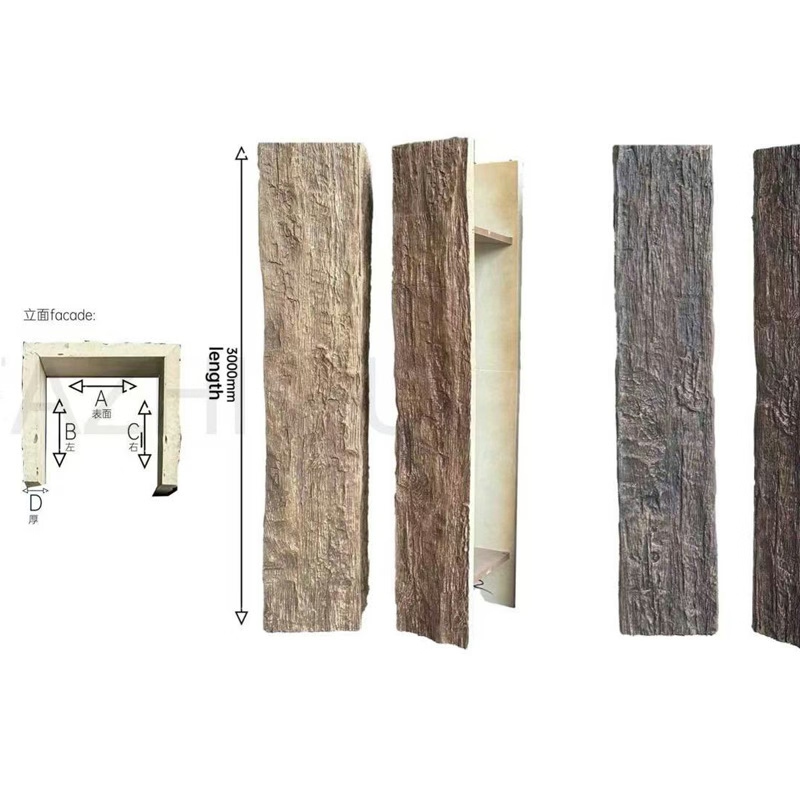
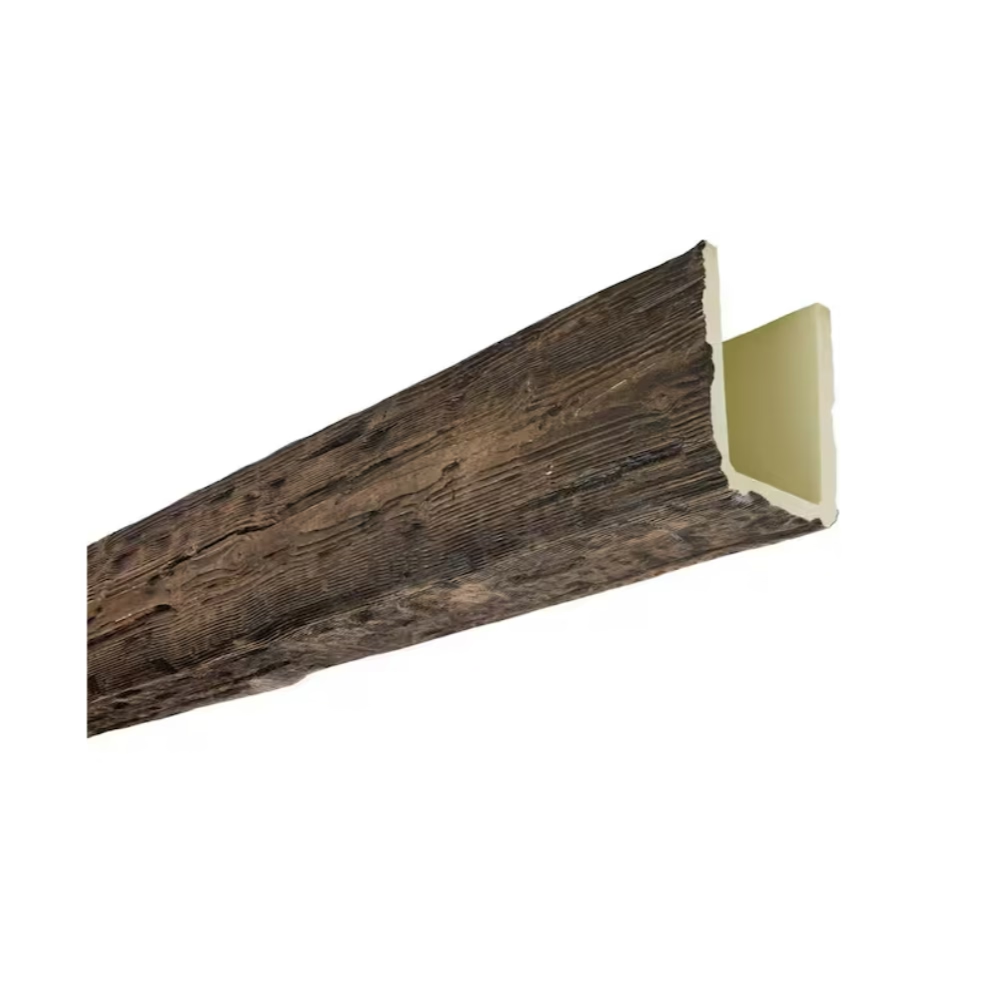
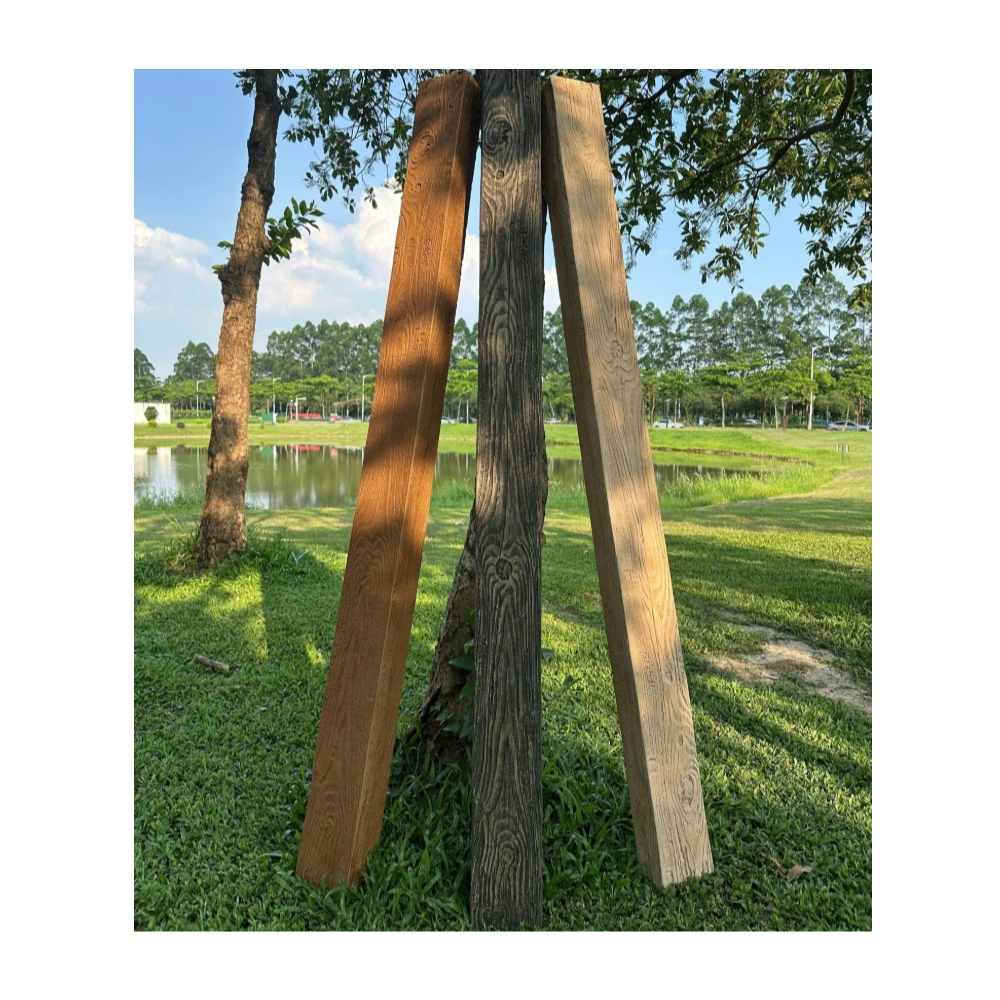
Interior design professionals face relentless pressure to deliver exceptional results that justify premium fees while navigating client expectations, budget constraints, and the practical limitations of construction. Every material selection carries implications for overall project success, making specification decisions consequential far beyond their individual cost. When designers choose materials for luxury villa projects, they evaluate not just immediate appearance but also installation practicality, consistency across large installations, long-term performance, and the support infrastructure that ensures smooth project execution. Non-structural PU faux wood beams satisfy this demanding checklist, explaining why design professionals increasingly specify them for projects where authentic timber might seem the obvious choice.
The designer's perspective differs fundamentally from the homeowner's approach to material selection. Professionals consider how products perform across multiple projects, how manufacturers support specification processes, and how installation proceeds with various contractor skill levels. This systematic evaluation reveals advantages that casual observation might miss, leading professionals toward products that perform reliably regardless of site conditions or installation variables.
Why Designers Choose Faux Over Authentic Timber
Consistency across extensive installations proves challenging with natural timber, where color variation, grain patterns, and dimensional differences create complexity that extensive sorting and selection can only partially address. Design professionals who specify hundreds of linear feet of beam material cannot accept the variability that natural products exhibit. PU beams deliver uniform appearance across entire projects, eliminating the sorting and selection burden while achieving design intent precisely.
Lead time predictability affects project scheduling in ways that design professionals must manage carefully. Natural timber availability fluctuates with market conditions, seasonal harvesting, and mill capacity. Custom profiles might require extended lead times that conflict with project timelines. PU beam production operates on reliable schedules that accommodate design timelines without the uncertainty that natural materials introduce.
Dimensional stability during installation and service prevents the callbacks and complaints that timber movement creates. Wood naturally expands and contracts with humidity changes, potentially opening joints and creating gaps that compromise finished appearance. PU beams maintain their as-installed dimensions regardless of environmental conditions, preserving perfect appearance indefinitely.
Waste reduction appeals to design professionals committed to sustainable practice. Timber cutting generates scrap that becomes landfill, while imperfect pieces might require replacement. PU beams cut cleanly with minimal waste, and any cutting errors can be addressed with patching compounds designed for the material. The efficiency reduces both cost and environmental impact.

Technical Advantages That Affect Specification
Fastener compatibility eliminates the specialized hardware that timber installations sometimes require. Standard construction fasteners engage PU material reliably without predrilling, splitting, or other complications. This simplicity reduces installation time while eliminating the hardware sourcing issues that specialized requirements create.
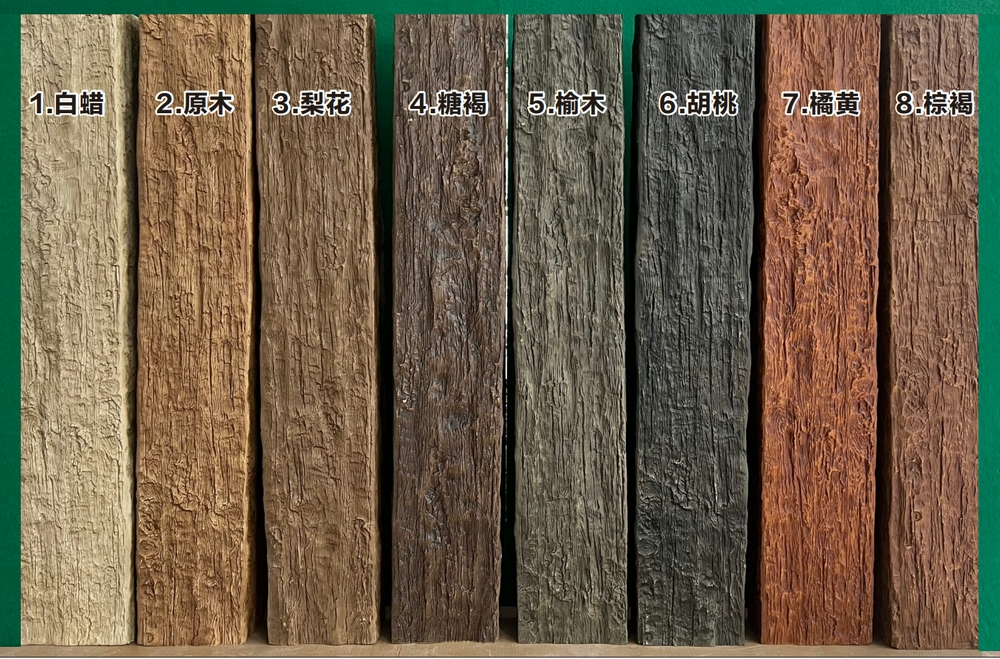
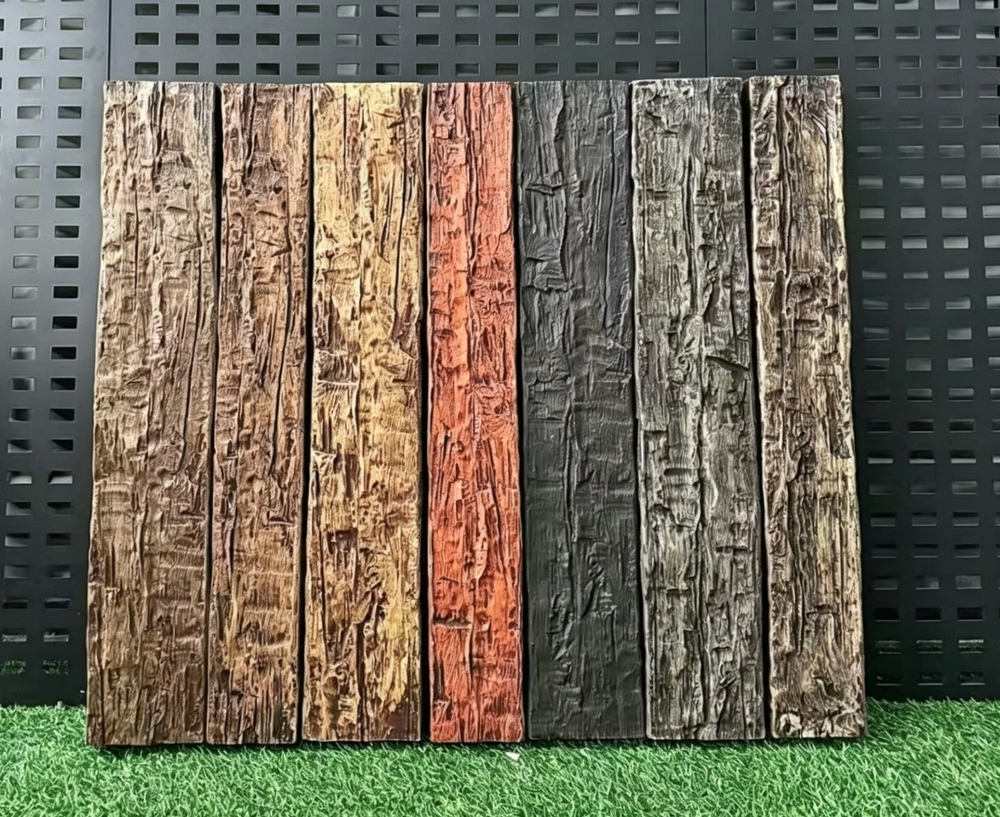
Finish acceptance means that beams can be painted or stained to match design specifications without the preparation complications that some materials present. The uniform surface accepts finishes consistently across entire installations, eliminating the variation that natural wood exhibits when accepting stain or paint. This predictability simplifies quality control during installation.
Weight considerations affect shipping costs, handling requirements, and structural implications that design professionals must coordinate. The lightweight nature of PU beams reduces freight expenses significantly while enabling one-person installation that heavier alternatives would not permit. These practical advantages translate directly into project cost savings.
Storage requirements for PU beams prove far less demanding than timber alternatives. Natural wood requires climate-controlled storage to prevent moisture absorption and subsequent movement. PU beams tolerate warehouse conditions without special handling, simplifying logistics and reducing inventory costs for projects with extended construction schedules.
Designer Support Services That Facilitate Specification
Technical consultation during design phases helps professionals develop specifications that achieve intended results. Manufacturers with design support staff can address questions about appropriate profiles, mounting approaches, and finish options before construction documents require completion. This early engagement prevents costly changes during installation.
CAD details and specification language accelerate documentation that design professionals must produce for client submission and contractor bidding. Standardized drawing details show proper installation methods while specification sections address quality requirements, warranty provisions, and performance criteria. These tools reduce production time while ensuring that projects include necessary requirements.
Sample libraries enable design professionals to evaluate products physically rather than relying solely on catalog representations. Access to actual samples supports color matching, texture evaluation, and hardware assessment that informed specification requires. Many manufacturers maintain programs that provide samples directly to design professionals.
Mockup development services create opportunities for client presentation and contractor training before full installation proceeds. Professional mockups reveal any issues that drawing review would not identify, enabling corrections while changes remain practical. The service investment prevents problems that would prove far more expensive to address after full installation.
Performance in Luxury Applications
Ceiling installations in luxury villas must withstand conditions that standard products might not accommodate. Direct sunlight through skylights, humidity from nearby pools and spas, and temperature fluctuations all affect beam performance. Quality PU products handle these conditions without the degradation that would require maintenance intervention.
High ceilings common in luxury villas amplify every visible detail, demanding flawless execution that lower ceilings would forgive. Joints, connections, and surface imperfections become obvious at twenty-foot ceiling heights where standard installations would hide them. The consistency that PU beams provide addresses this demanding requirement directly.
Lighting design in luxury spaces often incorporates dramatic fixtures that interact with beam surfaces. The coordination between fixture selection, beam profile, and lighting angles requires products that perform predictably regardless of illumination conditions. PU beams provide this predictability, accepting lighting without creating unexpected reflections or color shifts.
Client presentations and photography sessions require installations that look perfect from every angle under varied lighting. The quality that clients expect and photographers capture demands products and installation that exceed normal standards. Professional installation of quality beams satisfies these demanding requirements.
Long-Term Client Satisfaction
Warranty coverage provides design professionals with protection against callback claims that could otherwise damage reputations. Products backed by strong warranties demonstrate manufacturer confidence that translates into professional confidence. The assurance matters for projects where professional reputation depends on client satisfaction.
Maintenance requirements affect how design professionals evaluate long-term performance. Clients rarely maintain products as intended, making maintenance-free alternatives preferable for most applications. PU beams require only occasional dusting, satisfying the "install and forget" preference that most luxury clients exhibit.
Repairability ensures that any damage can be addressed without complete replacement. Minor dents, scratches, or surface damage can be filled and refinished by qualified contractors, restoring appearance without replacing components. This repairability protects both professional specifications and client investments.
Future modification flexibility accommodates changing client preferences that luxury villas inevitably experience. Beams can be removed, relocated, or refinished if client tastes evolve, preserving investment value that permanent construction would not provide. This flexibility serves both design professionals and their clients as circumstances change.

Technical References
ASTM standards cited in every specification
Test Data
Lab results from internal testing program
Updated 2026
Reviewed against current product specs