Timber beams that served previous design eras often persist despite aesthetic evolution. The rustic appearance that earlier generations valued reads as dated in contemporary contexts, while functional beams that cannot economically justify removal create design challenges that renovation budgets struggle to resolve. The desire to update these beams conflicts with the practical reality that removal would involve structural work, expense, and disruption that the aesthetic improvement would not justify.
Slip-on polyurethane covers resolve this renovation dilemma elegantly. Open-shell products slide over existing beams, providing fresh appearance instantly without the demolition that removal would require. The existing beam continues serving its structural purpose while the cover provides entirely new aesthetics. This transformation achieves renovation goals while respecting the structural reality that beams must remain.
Understanding Slip-On Cover Design
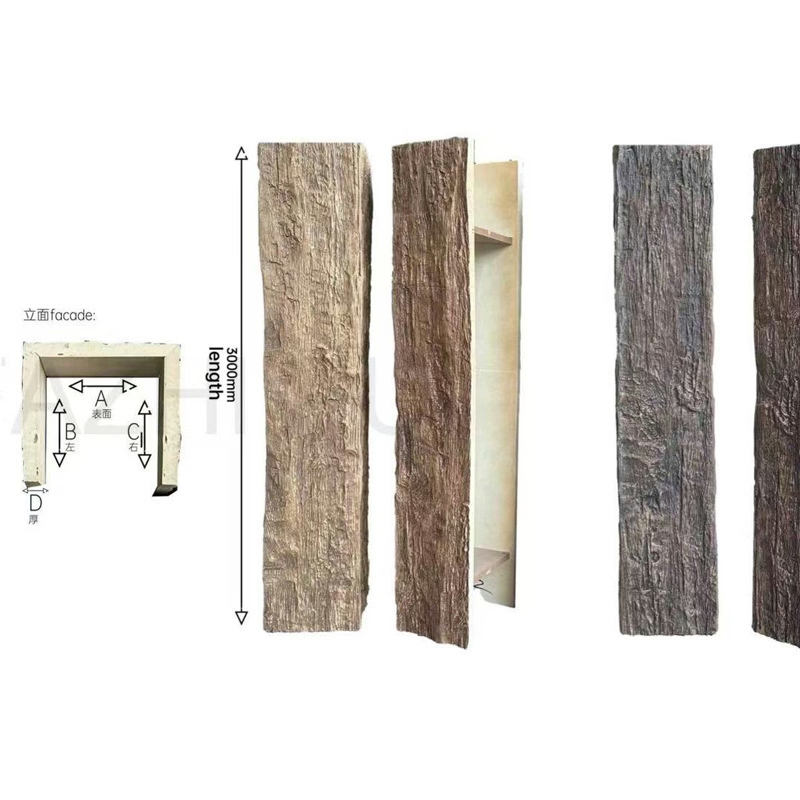
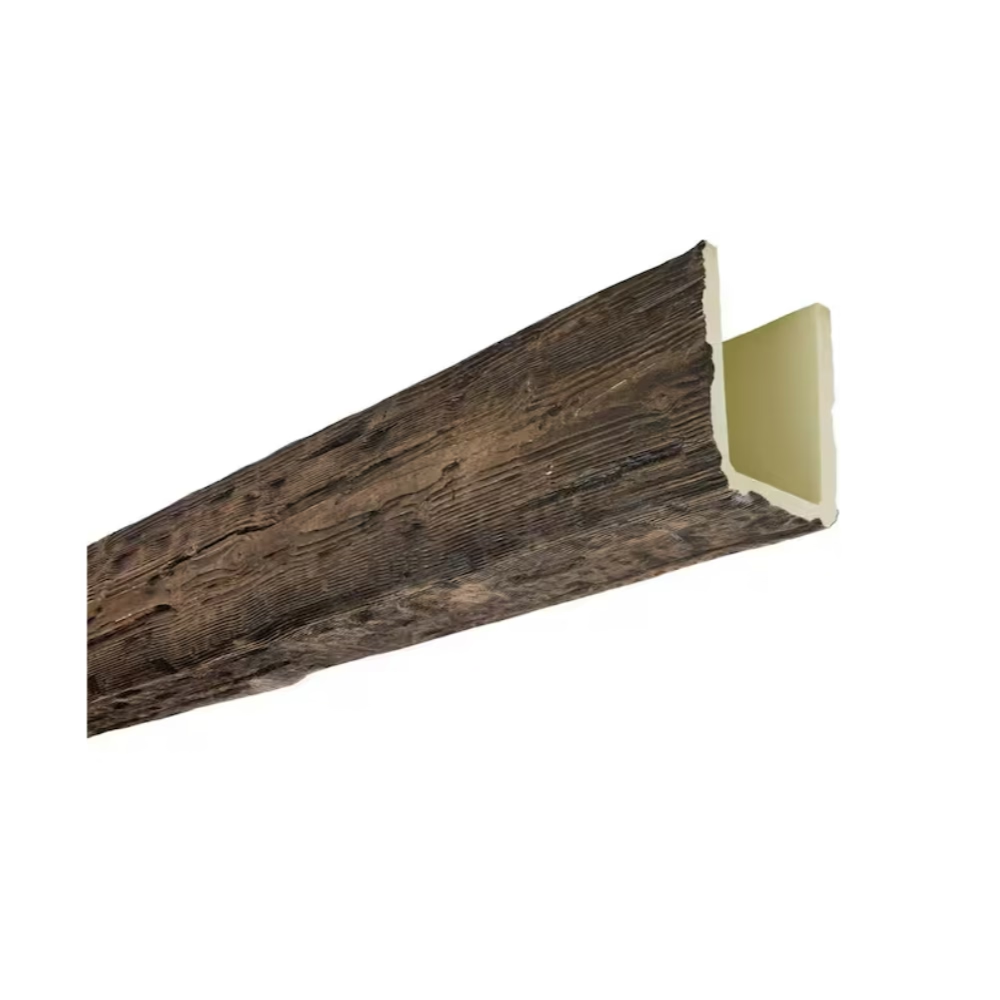
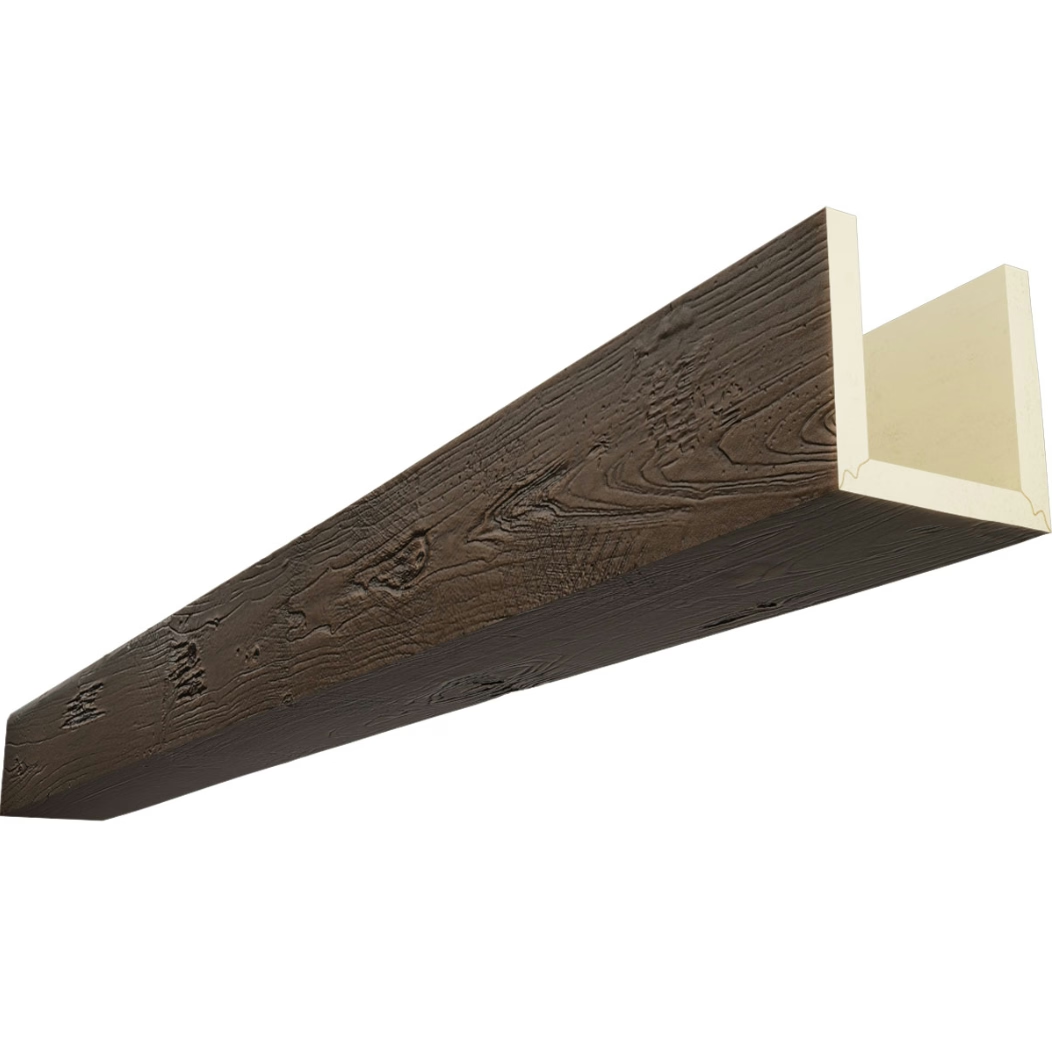
The slip-on concept involves products designed to encase existing beams without requiring disconnection or modification. Open-shell construction allows the cover to approach the existing beam from the side, sliding into position around the beam profile. Once positioned, the cover provides appearance on all visible surfaces while the structural beam remains hidden.
Interior dimensions must accommodate existing beam dimensions with adequate clearance for installation and any required movement accommodation. Measurement precision determines whether covers fit properly or create problems that installation would reveal. Careful measurement prevents frustration that imprecise ordering would generate.
The cover exterior presents entirely new appearance independent of the existing beam beneath. Color, texture, and profile all transform with cover installation, creating looks that the existing structure could never achieve. This transformation explains the dramatic before-and-after results that cover installations produce.
Common Renovation Scenarios
Water-stained timber beams benefit particularly from cover transformation. When moisture damage affects beam appearance without compromising structural integrity, covers provide remediation that expensive beam replacement would otherwise require. The damaged beam continues functioning structurally while appearance concerns disappear under fresh cover surfaces.
Dated finishes present similar opportunities. Beams finished in colors or styles that renovation aims to replace transform instantly through cover installation. The existing finish remains completely hidden, regardless of how dated or damaged it might be. This concealment proves more complete than refinishing could achieve.
Structural beams in mixed condition sometimes require cosmetic attention without structural intervention. Covers address appearance while the structural beam receives whatever attention its condition warrants. This compartmentalization of concerns enables targeted remediation rather than comprehensive renovation that cosmetic issues would otherwise mandate.

Installation Process and Requirements
Access determines whether slip-on installation proves feasible. End access allows covers to slide from beam ends; side access allows covers to approach from perpendicular directions. The existing structure's configuration determines which approach applies, and accessibility affects whether slip-on covers can install at all.
Beam dimensions must accommodate cover interior dimensions with adequate clearance. Clearance allows installation without forcing, while preventing excessive gap that would require shimming or adjustment. Measurement of existing beams guides cover selection, ensuring that purchased covers match the beams they will transform.
Securement prevents cover movement that thermal cycling or vibration might otherwise cause. Adhesive bonding, mechanical fastening, or combined approaches ensure permanent installation that performs reliably over time. The existing beam structure provides substrate for attachment, while the cover's interior surface receives whatever securement approach the situation requires.

Benefits Over Alternative Approaches
Demolition avoidance represents the primary benefit that slip-on covers provide. The expense, disruption, and structural implications of beam removal far exceed what cover installation requires. When cosmetic improvement is the goal, covers achieve that goal without the comprehensive renovation that removal would necessitate.
Timeline compression follows from installation simplicity. Where demolition and replacement might require weeks of work, cover installation completes in days. This speed matters for occupied renovation where residents cannot tolerate extended construction periods. The disruption difference between demolition and cover installation proves dramatic.
Waste elimination benefits sustainability-focused projects. Demolition generates debris requiring disposal, while cover installation produces no waste. The existing beam continues serving rather than entering landfill, reducing environmental impact that renovation would otherwise impose.
Limitations and Appropriate Application
Structural beams requiring replacement cannot receive cover treatment regardless of appearance improvement covers provide. Covers address cosmetic concerns only; they cannot remediate structural deficiency. Proper assessment must confirm that existing beams serve their structural purpose adequately before covers receive consideration.
Fire rating implications might affect cover specification in rated assemblies. Building codes address what materials can conceal within rated construction, and cover installation might trigger review requirements. This consideration proves particularly important in commercial applications where fire ratings govern occupancy classification.
Clearance requirements might prevent cover installation in space-constrained applications. Covers add dimension to beam profiles, potentially conflicting with adjacent elements that spacing renders sensitive. Measurement verification ensures that cover installation remains feasible before purchasing commits resources.
Slip-on covers transform what would otherwise require expensive renovation into achievable improvement. The transformation respects structural reality while addressing aesthetic concerns directly. This practical approach serves renovation projects where budget, timeline, and disruption constraints limit what comprehensive approaches could achieve.
Technical References
ASTM standards cited in every specification
Test Data
Lab results from internal testing program
Updated 2026
Reviewed against current product specs