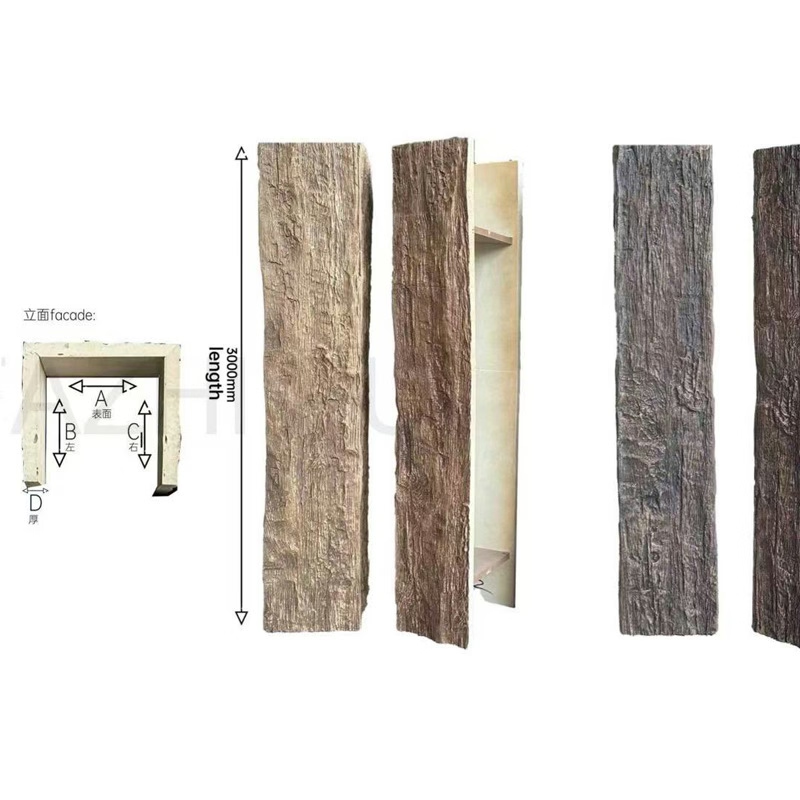
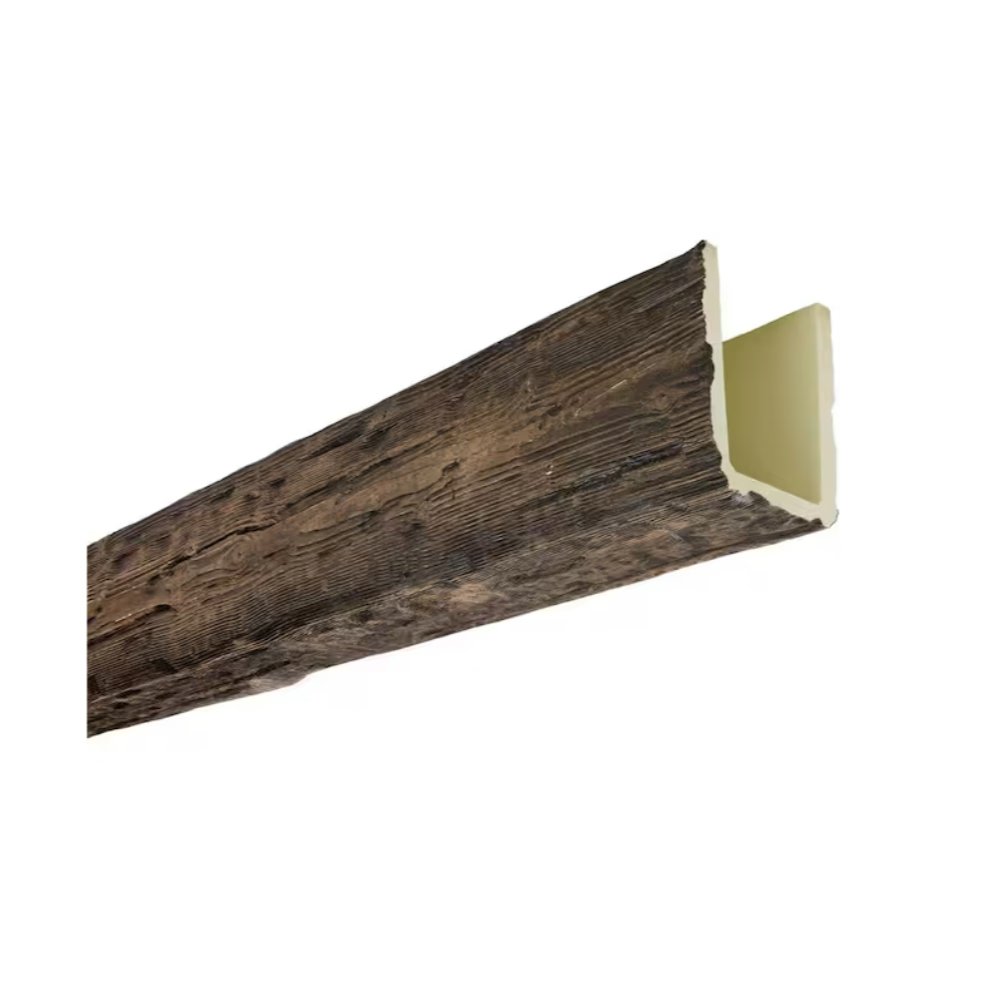
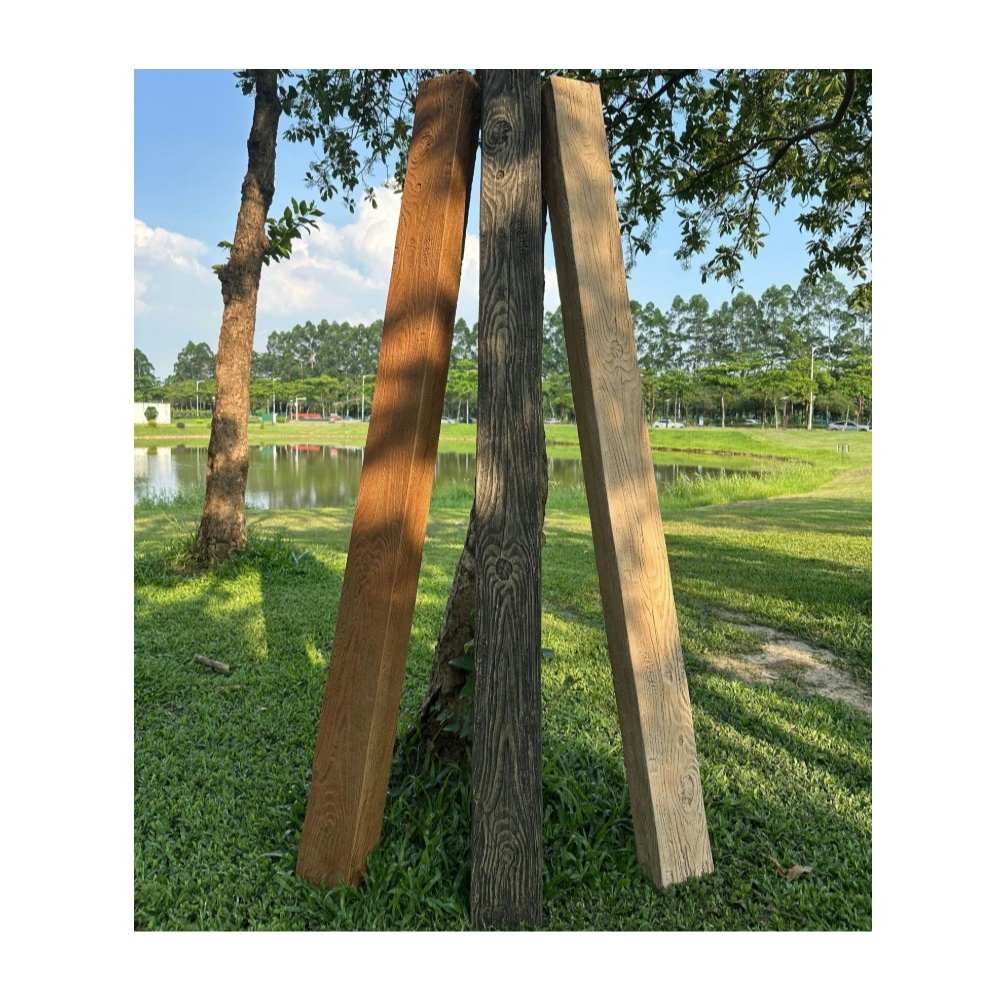
Australia's residential renovation market has experienced sustained growth as homeowners invest in improving existing properties rather than moving. This renovation activity spans climate zones from tropical Queensland through temperate Victoria, from coastal humidity to interior aridity, creating diverse contexts that challenge material selection. Premium faux beam materials constructed from polyurethane have emerged as solutions that address these varied conditions while delivering the authentic wood aesthetics that Australian interiors increasingly demand.
The Australian design community has embraced wood and wood-like materials as essential elements of contemporary residential design. The warmth, texture, and natural character that wood provides counterbalance the sleek, minimal aesthetics that have dominated new construction. Ceiling beams represent a particularly effective application of this wood aesthetic, introducing character and visual interest without consuming valuable floor space.
Climate Diversity Across the Australian Continent
Australia's geographical extent creates renovation contexts that span dramatically different climate conditions. Material performance that proves adequate in one region may fail completely in another, making climate-appropriate material selection essential for renovation success.
Queensland's tropical and subtropical climate features high humidity throughout much of the year, with rainfall patterns that create persistent moisture exposure. Timber products in this environment face ongoing challenges: moisture absorption leading to swelling and dimensional change, humidity cycling creating joint stress, and warm, moist conditions supporting mold and mildew growth. Renovation materials in Queensland must address these challenges directly.
Coastal New South Wales and Victoria experience temperate conditions with significant rainfall and humidity variation between seasons. The moisture challenges present in Queensland are reduced but not eliminated, with winter humidity creating conditions that affect timber performance even in southern states. Heating during cooler months creates interior humidity drops that drive seasonal movement cycles.
Interior regions—across South Australia, the Northern Territory, and western New South Wales—feature arid conditions with extremely low humidity. While moisture-related concerns diminish in these regions, timber still faces challenges: dryness leading to checking and splitting, UV exposure accelerating surface degradation, and thermal cycling creating stress that manifests over years of exposure.
Polyurethane faux beam materials perform consistently across this entire climate range. The material's dimensional stability eliminates humidity-related movement entirely; its moisture resistance addresses coastal and tropical conditions; its UV resistance handles sun exposure in interior regions. An installation in Darwin performs identically to one in Hobart—a consistency that timber products cannot match.
The Renovation Market Opportunity
Australian homeowners increasingly recognize that renovation delivers value that extends beyond immediate functionality. Distinctive architectural features contribute to daily living quality, support property value, and create homes that reflect their owners' personalities rather than following generic trends. Ceiling beams represent accessible architectural features that deliver significant visual impact without requiring fundamental structural work.
The renovation context favors faux beam materials in several ways. Existing homes already have ceiling structures in place—faux beams can be added to these structures without the foundation work that new construction requires. The lightweight nature of polyurethane means that ceiling structures designed for standard drywall can accommodate faux beams without structural modification. This simplicity transforms ceiling transformation from a major construction project into a straightforward finishing application.
Renovation budgets often include contingency provisions for unexpected conditions discovered during work. Faux beam installation minimizes the risk of budget overruns by eliminating variables that affect genuine timber: structural requirements, finishing work, and moisture-related complications. Premium materials arrive ready to install, with no surprises that require additional expenditure.
Timeline pressures in occupied homes favor quick-installation products. Australian families living in homes during renovation want disruption minimized. Polyurethane beams install in a single day, generating minimal dust and requiring no finishing work that extends project duration. The installation completes when the work crew leaves, with the space immediately ready for normal use.
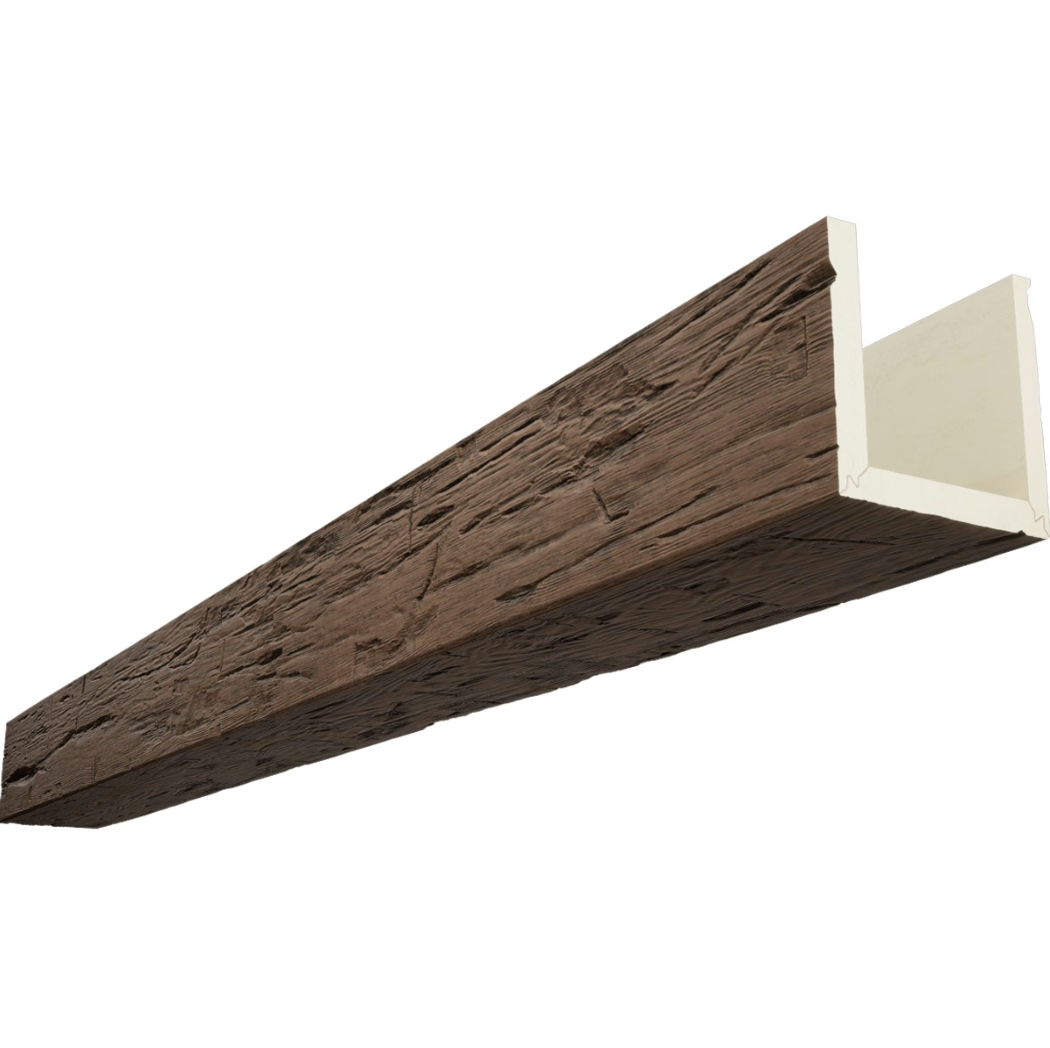
Design Applications Across Australian Styles
Australian residential architecture encompasses diverse styles that create different contexts for faux beam installation. Successful applications require attention to how beams relate to existing architectural character.
Contemporary Australian homes—particularly those in major cities—frequently feature open-plan layouts with generous ceiling heights and minimal architectural detail. Beams in these contexts serve as design anchors that organize space and introduce the warmth that contemporary interiors often lack. The beams might run continuously through multiple functional zones, creating visual connection between spaces that would otherwise feel disconnected.
The Hamptons influence that has affected Australian coastal homes creates specific opportunities for faux beams. This style—characterized by relaxed elegance, light finishes, and references to beachside luxury—often incorporates beams as prominent design elements. Faux beams in lighter finishes, perhaps with subtle texture suggesting reclaimed or weathered timber, complement this aesthetic effectively.
Heritage Queenslanders and Victorian-era homes throughout Australia create different contexts. These homes often feature original timber elements that new beams should complement rather than replicate. Faux beams in these contexts might reference original profiles and finishes while acknowledging their contemporary material composition through slightly different scale or proportion.
The bushland and rural properties that characterize Australian lifestyle create yet another context. Homes in these settings often embrace natural materials as deliberate contrast to urban environments. Faux beams in warm, natural finishes support this design approach while offering practical advantages in locations where genuine timber might face pest pressures or weather exposure.
Performance Advantages Over Timber
The practical advantages of polyurethane faux beam materials extend beyond climate resistance to address specific Australian renovation challenges.
Pest resistance addresses concerns that affect timber throughout Australia. Termites, carpenter ants, and wood-boring beetles pose threats to genuine timber throughout the continent. Chemical treatments provide protection but require ongoing maintenance and carry environmental concerns. Polyurethane provides complete pest resistance without chemical treatment, eliminating this renovation concern entirely.
Fire resistance has become increasingly important as Australian communities rebuild after devastating bushfire seasons. While no material is fireproof, polyurethane's performance in fire scenarios differs from timber's—less flame contribution, no smoldering, reduced smoke generation. Premium products offer fire-retardant formulations that provide additional protection in bushfire-prone regions.
Maintenance requirements favor polyurethane over genuine timber for busy Australian families. The material doesn't require periodic refinishing, doesn't develop the finish failures that affect timber in variable climates, and maintains its appearance without ongoing attention. This maintenance simplicity proves valuable for investment properties, holiday homes, and primary residences alike.
The long-term cost equation increasingly favors premium materials when all factors are considered. While initial pricing for quality polyurethane beams may exceed budget alternatives, the absence of maintenance costs, the elimination of replacement needs, and the avoidance of climate-related problems create lifecycle economics that often favor polyurethane over genuine timber.
Australian homeowners discovering premium faux beam materials are finding renovation solutions that address practical challenges while delivering the authentic aesthetics that contemporary interiors require. The combination of climate performance, installation simplicity, and design versatility creates compelling value for projects across the continent's diverse contexts.
Technical References
ASTM standards cited in every specification
Test Data
Lab results from internal testing program
Updated 2026
Reviewed against current product specs