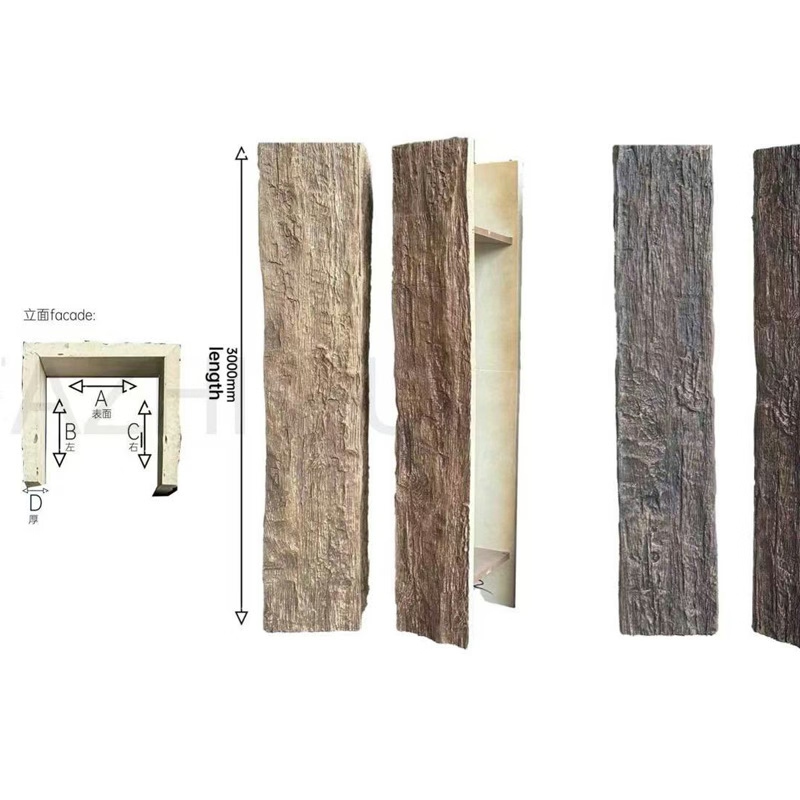
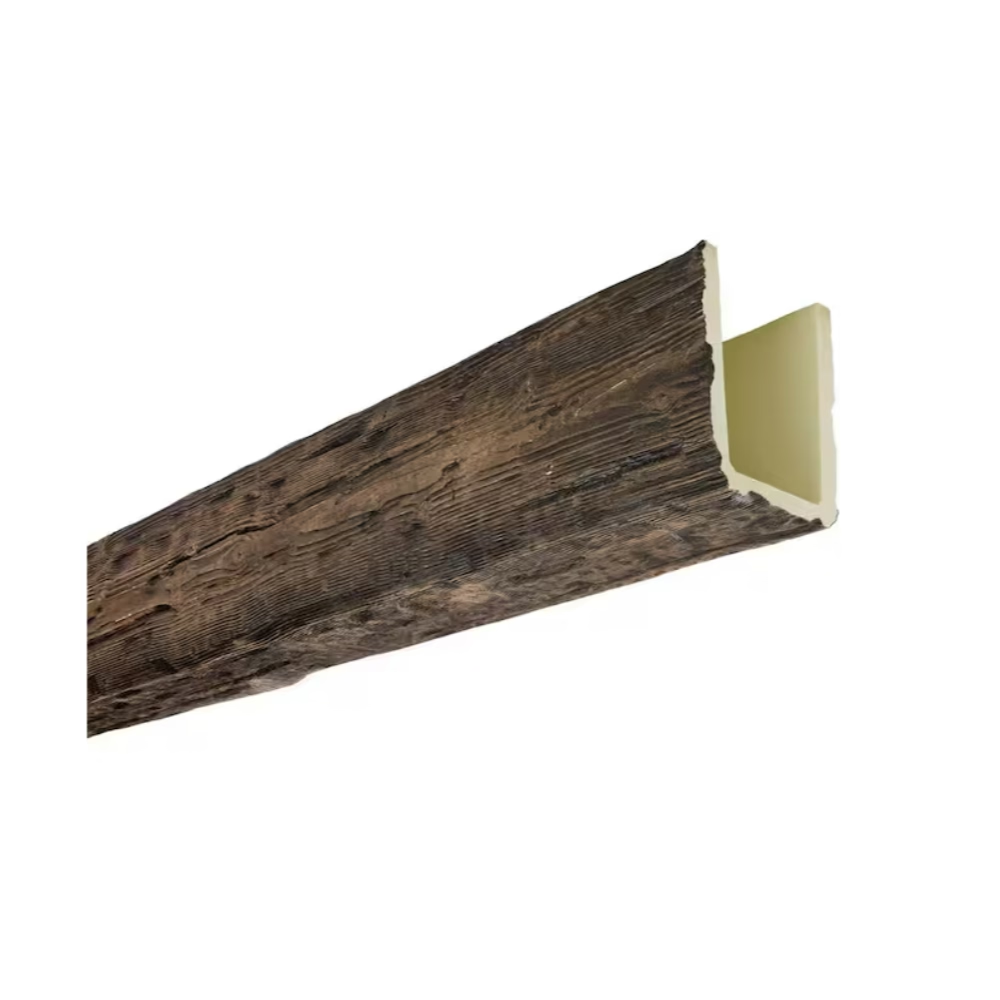
Full interior renovation represents one of the most significant investments a homeowner can make. These comprehensive projects—spanning multiple rooms, addressing systemic issues, and fundamentally reimagining how living spaces function—deserve materials that deliver lasting value rather than creating complications. Premium faux beam materials have emerged as ideal choices for whole-home renovation, offering versatility that spans applications, consistency that unifies diverse spaces, and practical characteristics that simplify the renovation process itself.
The decision to undertake full renovation typically follows years of accumulated frustration with existing conditions: rooms that don't flow together, finishes that have aged poorly, architectural features that no longer serve contemporary lifestyles. Addressing these concerns comprehensively requires materials that can perform across multiple applications while maintaining visual coherence throughout the project. Faux beam materials meet these requirements while adding distinctive architectural character that elevates the renovation outcome.
The Renovation Planning Advantage
Comprehensive renovation planning benefits from material decisions that simplify rather than complicate the process. Premium faux beam materials contribute to planning success through predictable performance, straightforward installation, and minimal variables that can affect project timelines and budgets.
Consistent material behavior across varying conditions eliminates adaptation requirements that complicate material selection in traditional renovation. Faux beams perform identically regardless of which room they're installed in, whether that space features high humidity, temperature variation, or standard residential conditions. This consistency simplifies specification—no need to select different products for different applications—and ensures that results remain uniform throughout the renovated home.
The lightweight nature of polyurethane simplifies structural planning for ceiling applications. Traditional renovation planning often requires engineering assessment for heavy materials, evaluation of ceiling structure capacity, and potentially structural reinforcement work. Faux beam materials eliminate these requirements in most residential applications, reducing planning complexity and removing potential complications that can extend timelines and increase costs.
Finish consistency across extended installations supports the visual coherence that comprehensive renovation seeks. Premium faux beams arrive with factory-finished surfaces that match precisely across all components. The consistency eliminates the variation that can affect site-finished materials, where application conditions, material batches, and operator technique create subtle differences that become visible across large installations.
Creating Architectural Cohesion
Whole-home renovation succeeds when completed spaces feel intentional rather than assembled from unrelated parts. Faux beam materials contribute to this cohesion through consistent appearance, versatile application, and the ability to establish design themes that flow through multiple rooms.
Beam placement can establish visual connections between adjacent spaces. A continuous beam running from living room through dining room creates an architectural throughline that unifies these separate functions. An accent beam in an entry that reappears in the family room establishes relationship between spaces that might otherwise feel disconnected. The design possibilities multiply when beams serve as intentional linking elements rather than isolated decorative additions.
Consistent beam specifications throughout a renovation create the unified aesthetic that distinguishes professional renovation from amateur work. When beams in different rooms share the same profile, finish, and proportion, the specification creates continuity that makes the entire home feel designed rather than accumulated. This consistency doesn't require identical application—the same beam specification can appear as a prominent ceiling treatment in one room and as a subtler architectural accent in another.
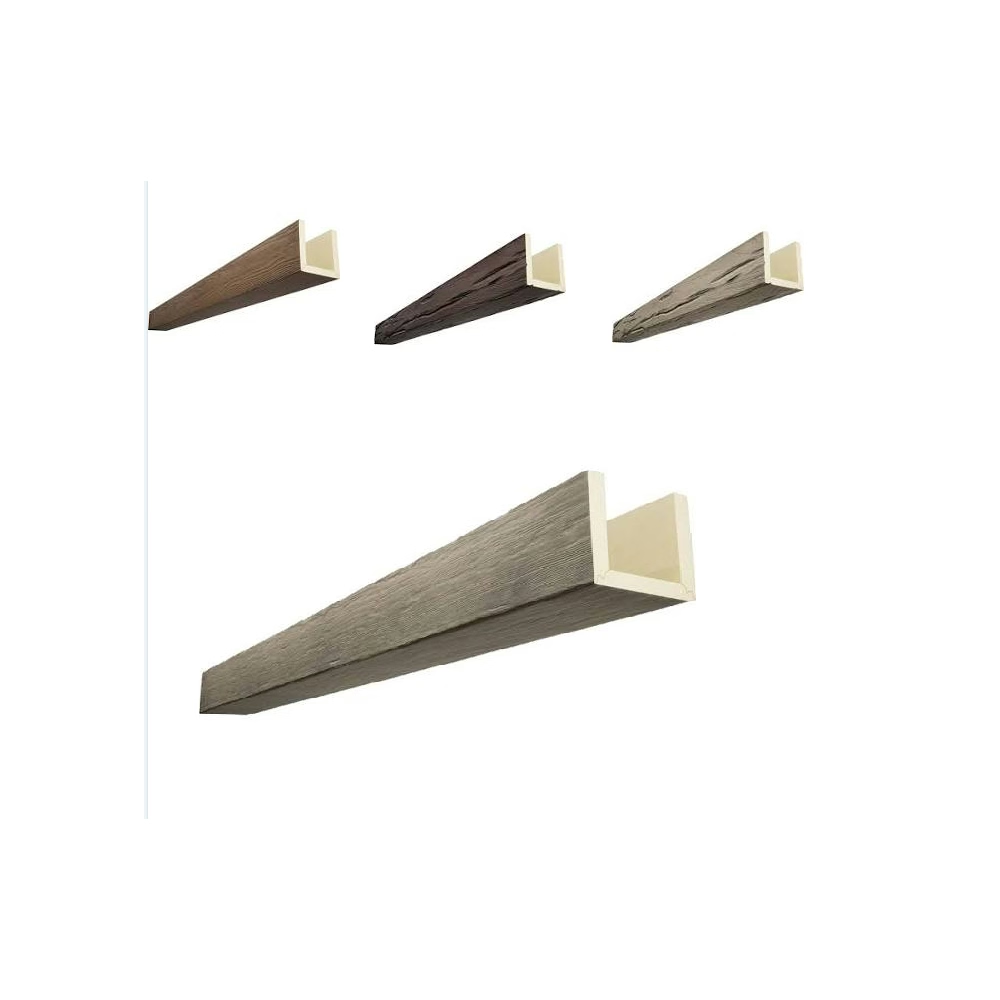
Material coordination extends beyond beams to encompass relationship with other finishes throughout the renovated home. Premium faux beam manufacturers offer finishes that coordinate with common flooring, furniture, and millwork options. This coordination potential simplifies the material selection process while ensuring that beams enhance rather than conflict with other design elements.
Room-by-Room Application Strategies
Different rooms create different contexts for faux beam application, each requiring consideration of function, existing architecture, and the specific role beams play in the room's transformation.
Living rooms and family rooms often serve as primary locations for beam installation. These spaces typically feature higher ceilings, more generous proportions, and greater willingness to embrace architectural detail. Beams in these rooms might span entire ceiling widths, create feature ceilings over conversation areas, or frame openings to adjacent spaces. The visual impact in these primary spaces justifies investment in premium specifications.
Kitchens present both opportunities and challenges for beam installation. High ceilings in kitchen expansions and great rooms create natural opportunities, while the functional demands of cooking create considerations around grease exposure, cleaning requirements, and moisture generation. Premium faux beams perform well in these environments when properly positioned—above food preparation areas but away from direct cooking heat, in dining areas but not directly above ranges.
Bedrooms and bathrooms typically feature subtler applications. Lower ceiling heights and more intimate proportions favor beams that provide warmth and character without overwhelming the space. In these rooms, beams might appear as accent elements—partial spans that add visual interest without spanning entire ceilings, or single beams that create focal points above beds or sitting areas.
Hallways and transitional spaces often receive minimal architectural attention, but comprehensive renovation can transform these forgotten areas into cohesive elements. Beams in hallways create continuity that connects major rooms, establish the renovation's design vocabulary early in the spatial sequence, and add character to spaces that might otherwise feel like wasted areas.
Budget Optimization Across Projects
Comprehensive renovation requires careful budget allocation that balances impact against cost. Faux beam materials contribute to budget optimization through competitive pricing, reduced installation costs, and long-term value that generates returns beyond the initial investment.
Initial material costs for premium faux beams typically fall below comparable genuine timber alternatives when all factors are considered. The elimination of structural requirements, reduced finishing labor, and faster installation combine to create total installed costs that favor polyurethane even when per-unit pricing appears comparable to timber options.
Installation efficiency translates directly to labor cost savings. Faster installation means fewer labor hours, reduced scheduling complexity, and shorter periods when the space cannot be used. For occupied homes undergoing renovation, these savings extend beyond direct costs to include reduced disruption and faster return to normal household routines.
Maintenance cost elimination over the product lifecycle creates ongoing savings that genuine timber cannot match. The absence of periodic refinishing, the elimination of repair needs caused by humidity-related movement, and the complete resistance to biological degradation combine to create lifecycle economics that favor premium faux materials.
Property value contribution completes the budget picture. Homes featuring distinctive architectural elements like ceiling beams command attention in competitive markets. The investment in faux beam materials generates returns both through daily enjoyment and through enhanced resale value—a combination that distinguishes smart renovation investment from cosmetic expense.
Comprehensive renovation demands materials that deliver on multiple levels simultaneously. Premium faux beam materials provide the aesthetic impact, installation simplicity, and long-term value that whole-home projects require. For homeowners planning extensive renovation, these materials deserve serious consideration as foundational elements of the transformed home.
Technical References
ASTM standards cited in every specification
Test Data
Lab results from internal testing program
Updated 2026
Reviewed against current product specs