When prospective buyers walk through a model home, they are not just evaluating square footage and floor plans. They are imagining their future lives within those walls, picturing family gatherings, quiet mornings, and the social gatherings that will fill those spaces with meaning. The interior design of a model home must therefore do more than simply fill rooms with furniture—it must tell a story of lifestyle and possibility. This is where premium faux ceiling beams prove their worth as strategic staging tools that transform empty or minimally furnished spaces into warm, inviting environments that buyers find impossible to resist.
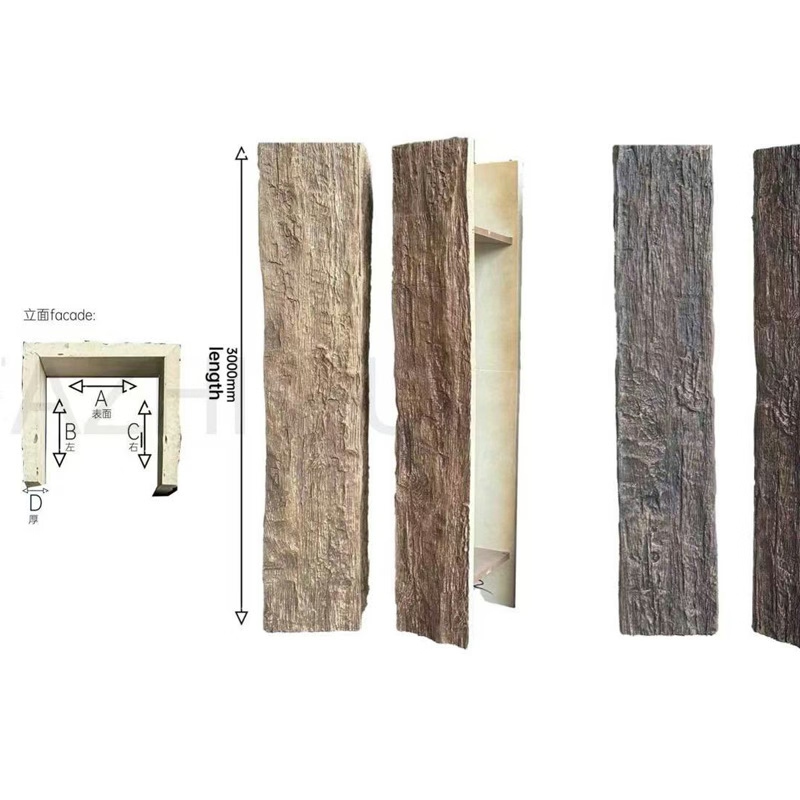
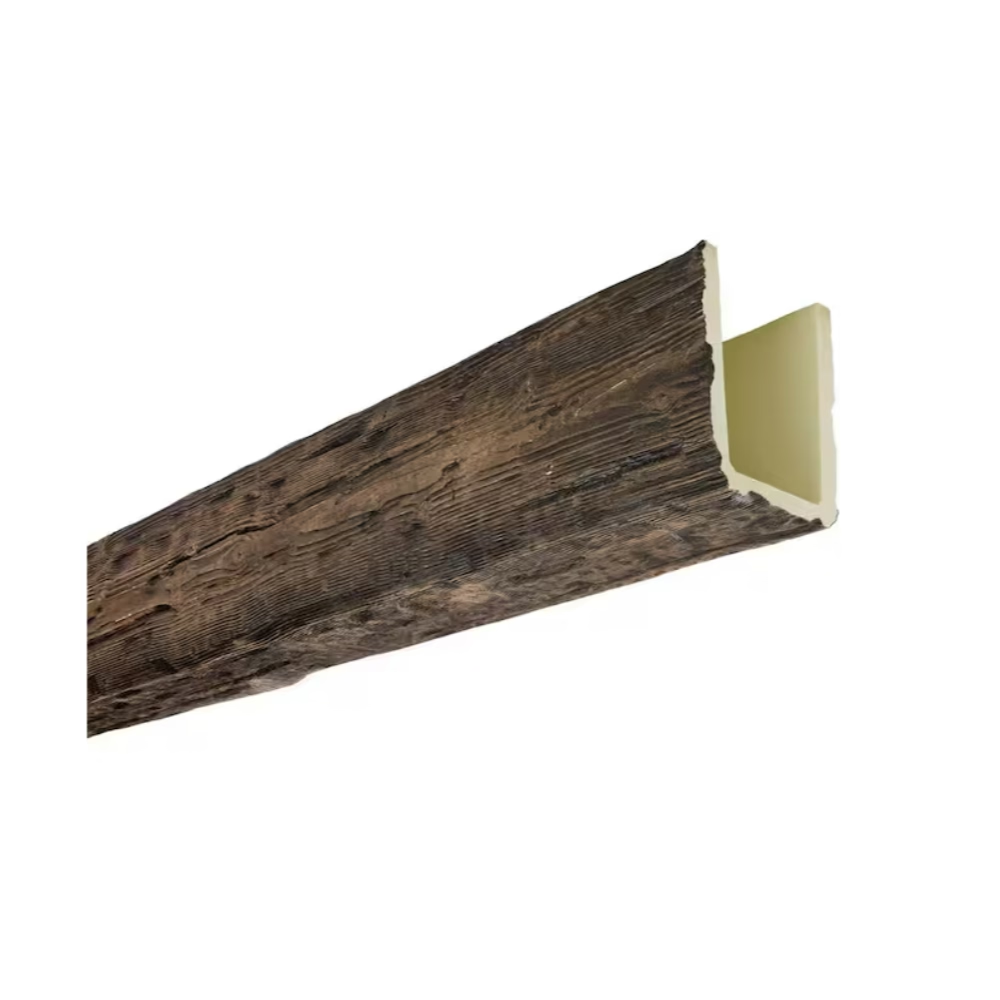
The challenge with authentic timber beams in model home applications has always been practical. Real wood beams carry significant weight, requiring structural engineers to calculate load-bearing requirements and contractors to install specialized support systems. For a temporary staging environment that may be reconfigured or dismantled within a few months, this level of commitment rarely makes financial sense. Premium faux ceiling beams solve this problem elegantly. Manufactured from high-density polyurethane, these replicas weigh a fraction of their natural counterparts while capturing the intricate grain patterns, natural color variations, and three-dimensional texture that make timber so visually appealing. A single installation crew can complete an entire ceiling treatment in a fraction of the time required for authentic beam installation, and no structural modifications are necessary.

Consider the impact of exposed beams in a great room setting. A vaulted ceiling with nothing more than drywall presents a cold, unfinished appearance that buyers struggle to connect with emotionally. Add carefully placed faux beams across the ceiling plane, and the space immediately gains architectural character and visual warmth. The beams create implied divisions that make vast open areas feel more intimate and human-scaled. They draw the eye upward, emphasizing ceiling height rather than allowing it to disappear into anonymity. In luxury staging scenarios, beams can be grouped to create coffered ceiling effects, or they can be installed in a more rustic configuration to suggest a mountain lodge aesthetic. The versatility of faux beam products means that staging companies can maintain different aesthetic packages for different market segments without incurring the storage and transport costs associated with genuine timber.
Real estate developers working with tight marketing timelines appreciate the installation efficiency that faux beams provide. Unlike natural wood, which must be acclimated to the building's humidity levels before installation, polyurethane beams remain dimensionally stable regardless of environmental conditions. They will not warp, crack, or cup as seasons change, ensuring that the model home maintains its showroom appearance throughout the entire sales period. The material also accepts paint and stain finishes with excellent adhesion, allowing staging teams to match beam finishes to existing millwork or to create deliberate contrasts that enhance the overall design palette. For developments in humid climates such as Florida, Texas, or coastal regions, this dimensional stability represents a significant advantage over real wood, which may develop cracks or surface checking as it releases moisture into heated interior air.
The cost-benefit analysis for faux beams in model home staging extends well beyond the initial purchase price. When calculating total project cost, developers must consider not only materials but also labor, hardware, and the potential for damage during installation or removal. Authentic timber beams require specialized handling equipment, and once installed, they become effectively permanent fixtures. Faux beams can be secured with adhesive systems and mechanical fasteners that allow removal without wall or ceiling damage, preserving the underlying structure for subsequent tenants or owners. This reversibility makes faux beams particularly valuable in build-to-rent communities or in model homes that will eventually be converted to leasing units after the development sells out.
Interior designers collaborating with real estate developers often specify faux beams as part of comprehensive staging packages that include furniture, artwork, lighting, and accessories. The beams serve as architectural anchors that unify disparate design elements and provide visual continuity across multiple rooms. In multi-story model homes, beams can be used to create thematic connections between levels—a timber-framed ceiling treatment in the great room can be echoed by smaller beam accents in the master bedroom or kitchen, creating a design narrative that buyers find sophisticated and intentional. This level of coordination elevates the staging from mere furniture placement to genuine interior design, and research consistently shows that buyers respond more positively to professionally designed spaces than to rooms that feel generic or hastily furnished.
The environmental implications of choosing faux over authentic timber have become increasingly relevant to contemporary buyers. Polyurethane beams eliminate the demand for old-growth timber or slow-growing hardwood species, contributing to forest conservation efforts even as they deliver the aesthetic benefits of wood. Many manufacturers now produce faux beams using recycled materials or recyclable compounds, further reducing their environmental footprint. For developments pursuing green building certifications or simply seeking to appeal to environmentally conscious buyers, faux beams offer a credible sustainability story without requiring extensive documentation or certification processes.
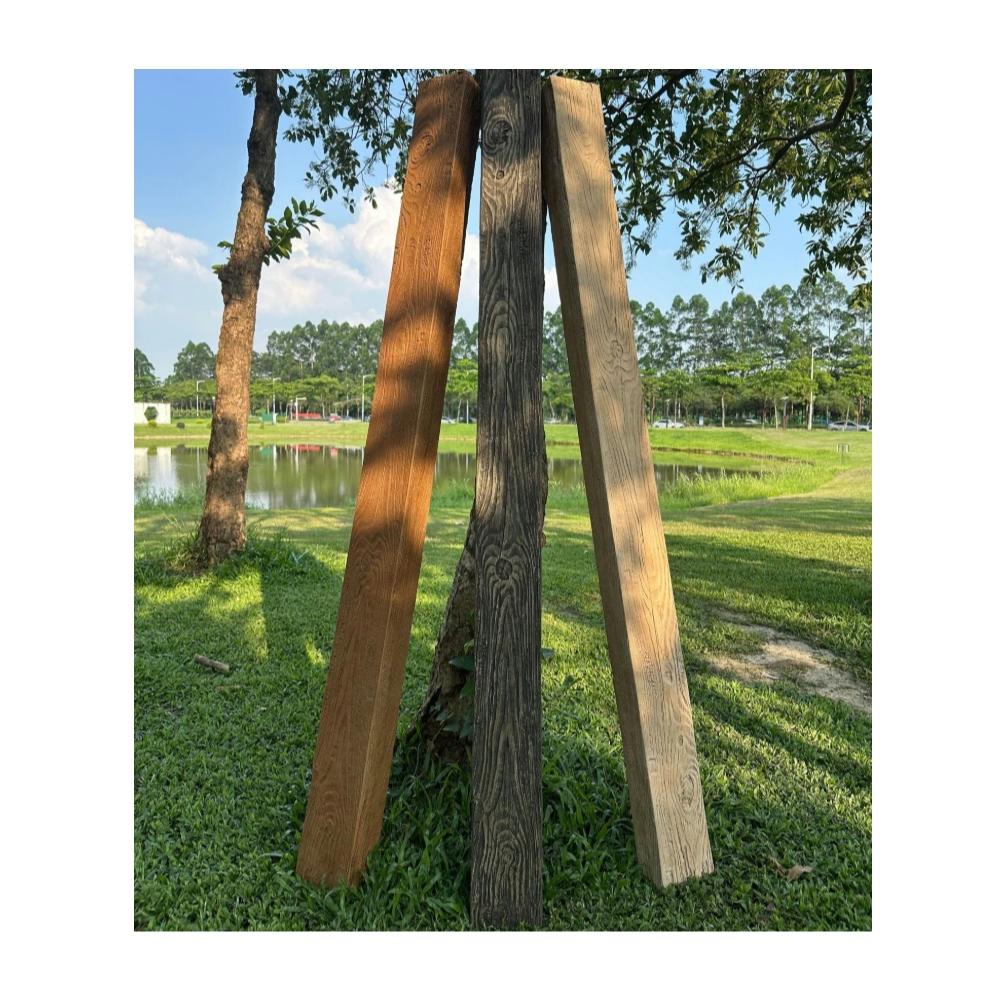
When selecting faux beams for model home staging, the quality of the product determines both the visual result and the practical experience of installation. Premium products feature deeply embossed grain textures that catch light realistically and create shadows that suggest genuine depth. Lower-quality alternatives often appear flat and two-dimensional, failing to achieve the authentic appearance that makes beams compelling as design elements. The best faux beams incorporate color variations and subtle imperfections that mimic natural wood's organic character, including knot patterns, mineral streaks, and the subtle color gradients that develop in aged timber. These details matter in close encounters—buyers walking through a model home will examine surfaces at close range, and inferior products will reveal themselves through their lack of visual complexity.
The logistics of beam installation in occupied model homes require thoughtful planning, but experienced staging companies have developed efficient workflows that minimize disruption to the sales process. Beams are typically installed after the final cleaning but before furniture placement, allowing crews to work without obstruction. Most installations can be completed in a single day for a typical single-family model home, and the process generates minimal dust or debris compared to traditional construction activities. Following the sales period, beam removal proceeds just as efficiently, and the ceiling surfaces require no repair beyond routine touch-up painting.
The psychology of model home design suggests that certain architectural features consistently influence buyer perception and purchase decisions. Vaulted and exposed beam ceilings rank among the most desirable features in residential real estate, often commanding premium prices and reducing time on market for comparable properties without these treatments. By incorporating faux beams into staging, developers can effectively demonstrate the potential value of these features without requiring buyers to imagine them. The beams make the abstract concrete—they show buyers exactly what life could look like with enhanced architectural character. This demonstrative quality makes faux beams an exceptionally effective staging investment, translating directly into faster sales and higher final prices for the properties they enhance.
Technical References
ASTM standards cited in every specification
Test Data
Lab results from internal testing program
Updated 2026
Reviewed against current product specs