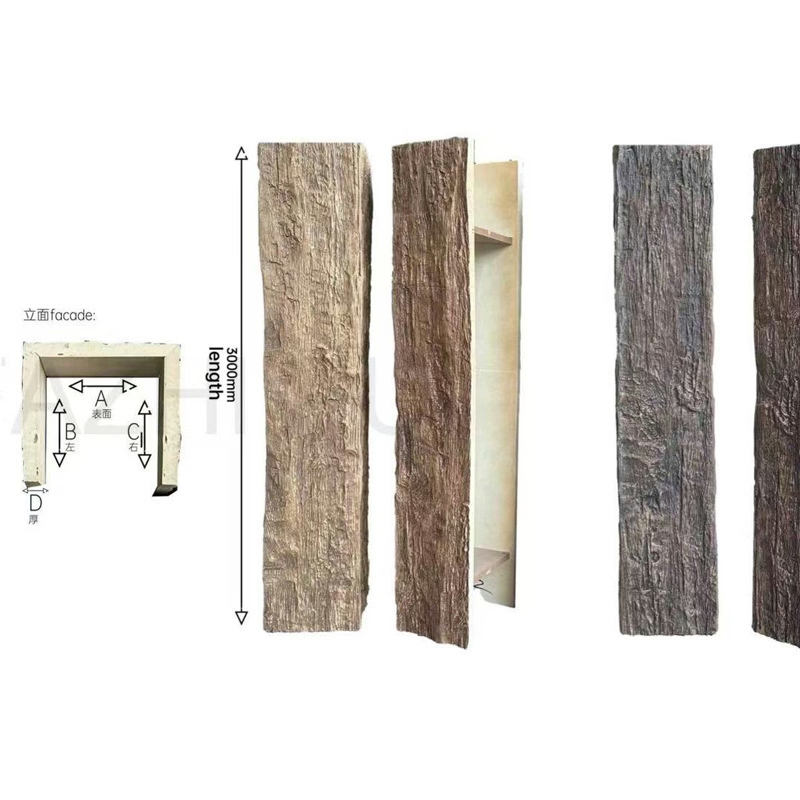
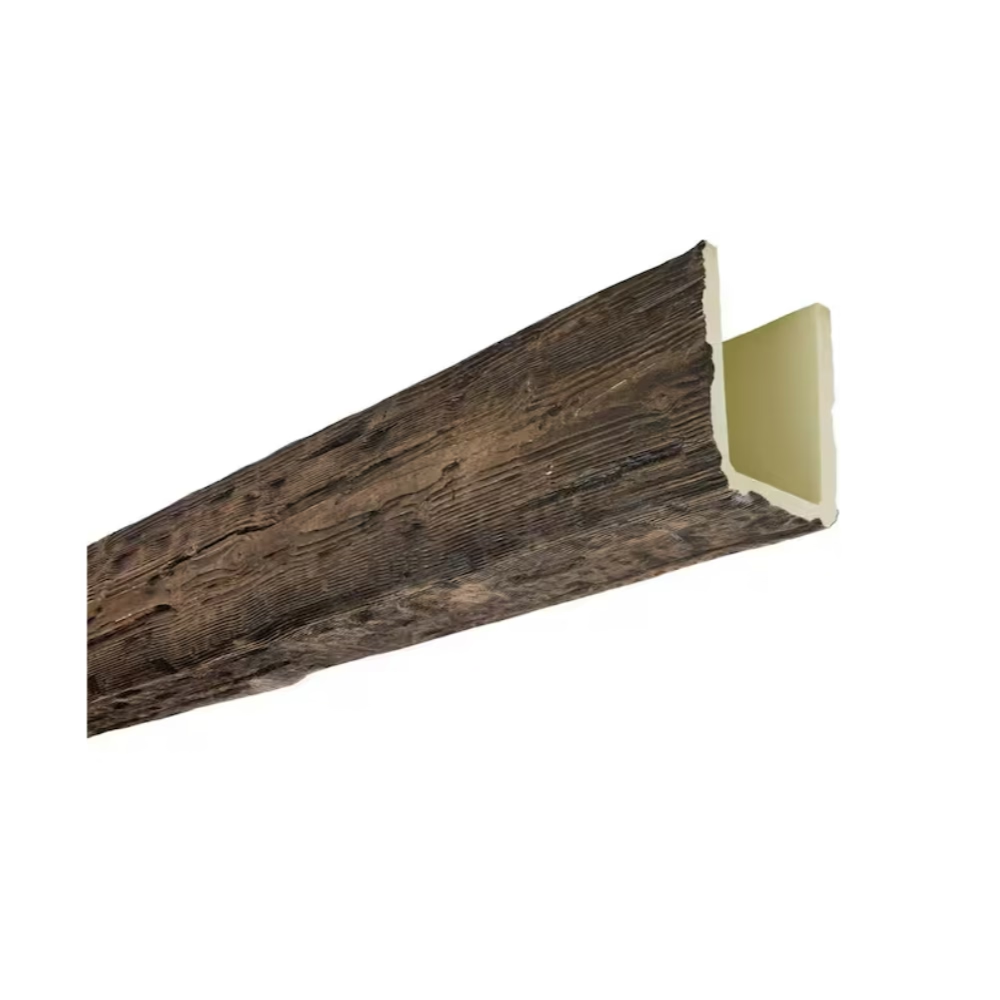
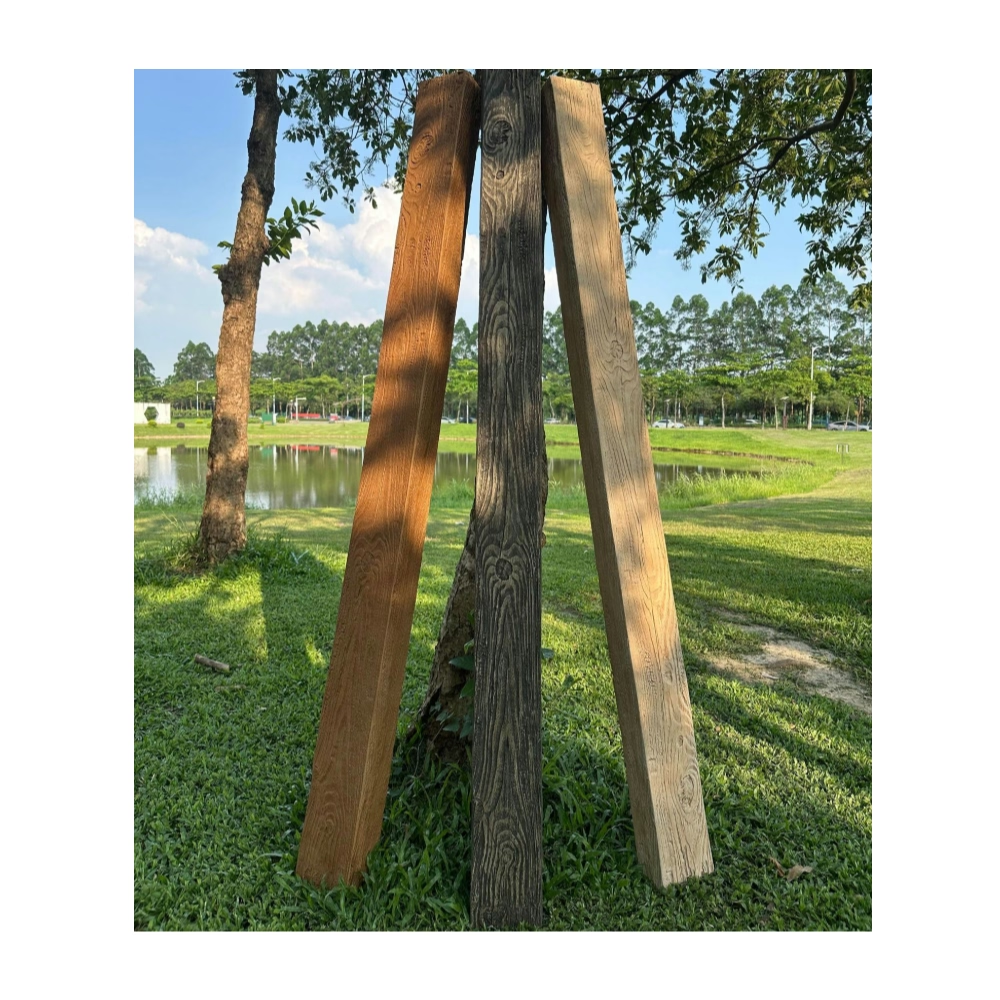
The ceiling plane presents one of the largest uninterrupted surfaces in any interior space, yet it receives some of the least attention in typical design discussions. Walls get paint colors and wallpaper treatments. Floors receive hardwood, tile, or carpet. Furniture populates the room and defines activity zones. But the ceiling often remains an afterthought, treated as little more than a neutral backdrop against which everything else happens. This oversight represents a significant missed opportunity, because ceiling treatments have the power to fundamentally transform how spaces feel and how people experience them. Premium faux timber beams provide an accessible, impactful way to correct this neglect and unlock the visual potential that ceilings represent.
The human visual system is naturally drawn upward, following vertical lines to their terminus at the ceiling before sweeping across to encounter the next architectural feature. This tendency makes the ceiling an ideal location for introducing elements that capture attention and establish the emotional character of a room. A ceiling populated with timber beams communicates warmth, craftsmanship, and timelessness. The beams create visual texture that prevents the ceiling from disappearing into flat monotony. They establish scale relationships that help occupants understand the proportions of the space. They introduce natural material associations that soften the manufactured feeling of drywall and paint. These benefits accrue whether the beams are installed in an ornate coffered configuration or a simpler exposed rafter arrangement.

The challenge with authentic timber beams in ceiling applications stems from the physics of overhead installation. Real wood beams are heavy, requiring ceiling structures capable of supporting significant additional load. The attachment methods for genuine beams must account for differential movement as the wood expands and contracts with humidity changes, creating complex engineering challenges at the junction between beam and ceiling plane. These constraints limit timber beams to new construction or substantial renovation projects where structural modifications can be accommodated. Faux timber beams resolve these constraints by reducing weight by eighty percent or more compared to authentic timber, eliminating the structural engineering requirements and simplifying attachment to straightforward mechanical and adhesive systems.
Different ceiling configurations benefit from different beam treatments, and understanding these relationships helps designers select the most effective approach for each space. Cathedral ceilings with dramatic pitch benefit from beams running perpendicular to the ridge, following the roof structure and reinforcing its geometry. The beams should be scaled appropriately to the ceiling height—too small and they disappear against the vast surface, too large and they overwhelm the space and draw attention away from other features. Flat or minimally sloped ceilings accommodate beams running in either direction, with orientation typically determined by the room's primary sightlines and the configuration of other ceiling elements such as light fixtures or soffits. Tighter spaces may benefit from beams running perpendicular to the room's long axis, creating visual narrowing that makes the space feel more intimate.
Color and finish selection for faux ceiling beams should account for both the ceiling treatment and the overall design palette of the space. Dark beams against light ceilings create dramatic contrast that emphasizes the beams as independent architectural elements. This approach works well in lofts, industrial-inspired designs, and spaces where the beams are meant to read as a deliberate addition rather than an original feature. Light or natural-finished beams blend more subtly with the ceiling plane, suggesting that the beams have always been present as part of the building's structure. This approach suits traditional, farmhouse, and craftsman-influenced designs where the goal is understated authenticity rather than dramatic intervention. Stained or painted beams can match existing millwork, reinforcing design continuity throughout the space.
The integration of beams with other ceiling elements requires careful coordination during design and installation. Recessed lighting fixtures can be installed between beams, with the fixture housing and trim finished to coordinate with the beam appearance. The relationship between beams and ceiling fans requires special attention, as the vibration and air movement generated by operating fans can stress beam attachments over time. Premium installers use vibration-dampening mounts and reinforced attachment points specifically designed for fan installations. HVAC supply and return grilles can be positioned to align with beam spacing, using beam-colored grilles that maintain visual continuity. The coordination of these elements determines whether the final installation reads as a cohesive design or a collection of unrelated components.
Maintenance considerations for faux ceiling beams favor their selection over authentic timber in many applications. Natural wood requires periodic inspection for evidence of moisture intrusion, pest damage, or structural deterioration. These concerns are eliminated with polyurethane beams, which resist moisture absorption and provide no food source for insects. Surface cleaning involves nothing more than dusting or occasional wiping with a damp cloth. Unlike real wood, faux beams do not require refinishing to maintain their appearance, as the color is integrated throughout the material rather than applied as a surface coating. This maintenance simplicity translates into lower lifetime ownership costs and greater peace of mind for building owners.
The acoustic properties of faux beams deserve consideration in spaces where sound quality matters. While polyurethane itself provides minimal acoustic absorption, the gaps and cavities created between beams and ceiling structure can accommodate acoustic insulation that improves the room's sound characteristics. In home theater applications, media rooms, or music practice spaces, this opportunity for enhanced acoustic treatment adds functional value to the visual improvement provided by the beams. Even in ordinary living spaces, the reduced echo and improved speech clarity that accompany proper acoustic treatment make the beam installation more comfortable for daily occupation.
Design trends continue to evolve, but the appeal of timber ceiling beams has proven remarkably durable across multiple decades of changing tastes. The aesthetic has survived minimalist periods that rejected ornament in favor of simplicity, only to re-emerge as a sought-after feature that differentiates contemporary homes from their minimalist predecessors. This staying power suggests that faux timber beams represent a sound investment in property value, providing aesthetic returns that remain desirable regardless of transient fashion trends.
Technical References
ASTM standards cited in every specification
Test Data
Lab results from internal testing program
Updated 2026
Reviewed against current product specs