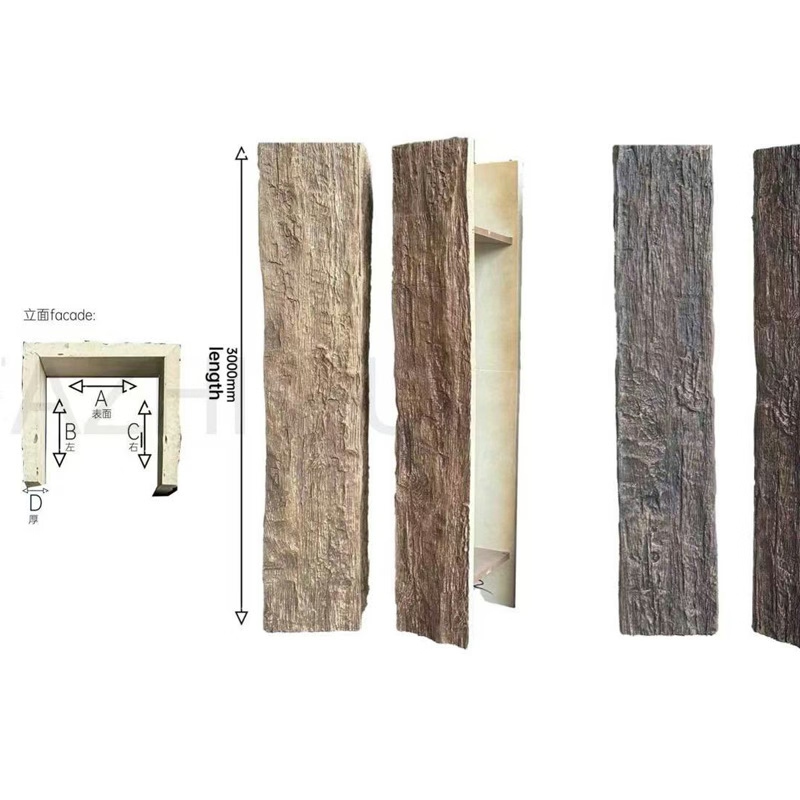
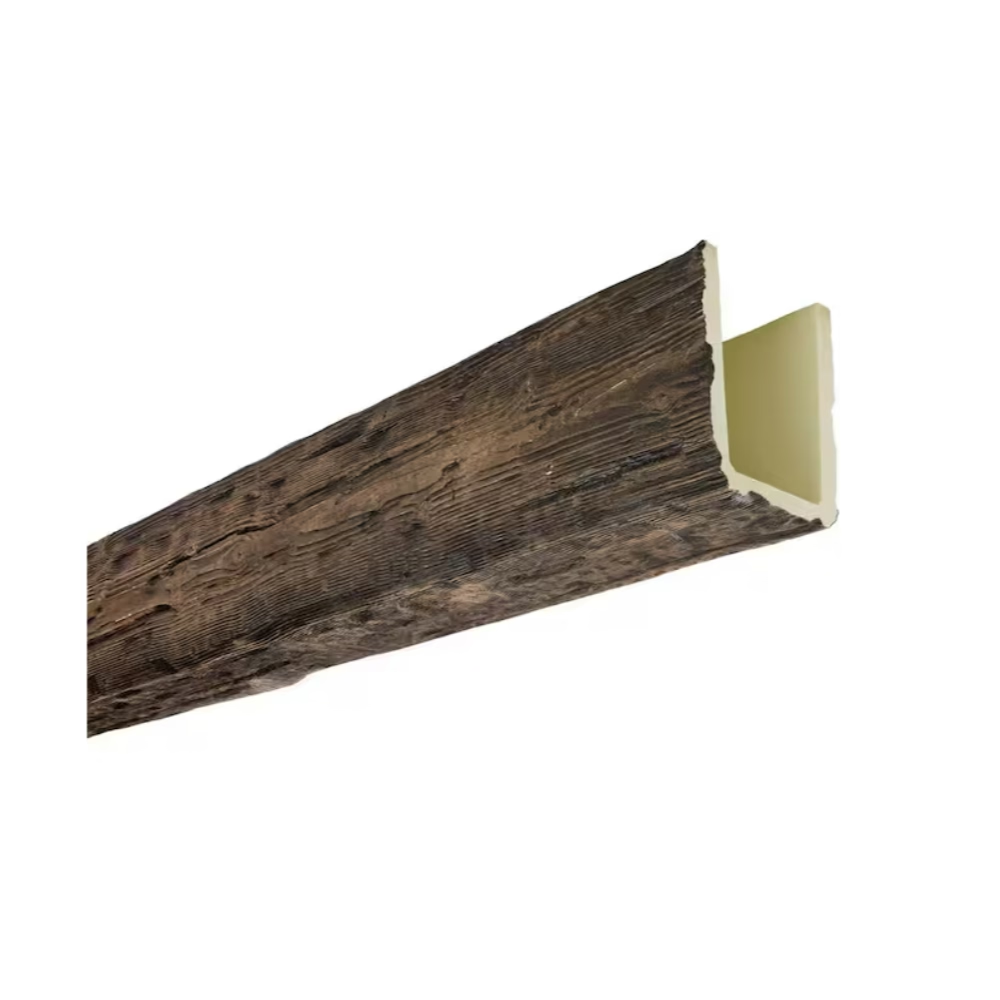
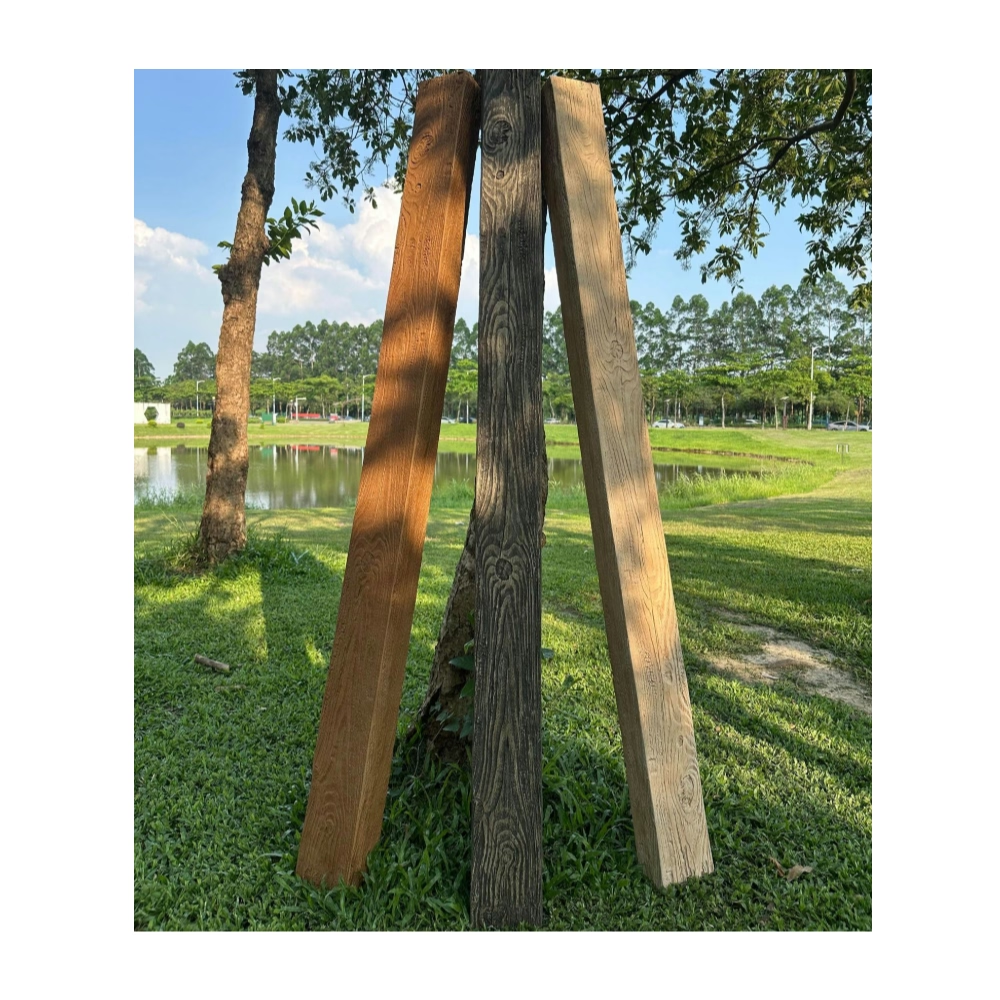
The luxury residential market in Saudi Arabia has experienced remarkable transformation over the past decade, driven by Vision 2030 initiatives that have modernized infrastructure, expanded entertainment options, and raised expectations for residential design. Affluent Saudi families increasingly seek homes that blend international sophistication with cultural authenticity, creating interior environments that honor traditional values while embracing contemporary comfort. This synthesis of influences creates distinctive design challenges that material selection must address. Premium faux timber beams have emerged as a preferred solution for ceiling treatments and architectural ornamentation, providing the warmth and character of natural wood while respecting the climatic realities and practical requirements that define construction in the region.
The climate of Saudi Arabia presents conditions that challenge conventional building materials, particularly those derived from natural wood. High ambient humidity in coastal regions, dramatic temperature fluctuations between day and night, and the widespread use of air conditioning that creates significant indoor-outdoor temperature differentials all stress materials in ways that authentic timber cannot reliably withstand. Natural wood absorbs moisture from humid air, expanding in ways that create gaps, cracks, and surface checking as cycles of absorption and drying repeat throughout the year. These dimensional instabilities compromise the appearance and structural integrity of timber beams over time, requiring ongoing maintenance and eventual replacement. Premium faux timber beams manufactured from closed-cell polyurethane are immune to these moisture-related problems, maintaining their dimensions and appearance regardless of environmental conditions.

Interior design in Saudi luxury villas typically combines multiple cultural influences in compositions that express the homeowners' sophistication and global awareness. Traditional Arabian elements such as geometric mashrabiya screens, intricate geometric tilework, and luxurious textile applications coexist with contemporary furniture, modern art, and cutting-edge technology. Timber beam aesthetics fit naturally into this eclectic vocabulary, providing warmth and organic texture that ground contemporary elements and bridge cultural references. The versatility of faux beam products allows designers to specify treatments ranging from rustic reclaimed-wood appearances appropriate to traditional Najd architecture to refined, light-toned profiles that complement modern minimalist interiors.
The logistics of supplying building materials to Saudi construction projects deserve careful consideration, and faux beams offer advantages in this area as well. Natural timber beams present significant challenges: they must be fumigated and certified to meet Saudi import regulations regarding pests and pathogens, documentation requirements add complexity and delay to the procurement process, and the dimensional instability of wood during shipping and storage creates quality risks. Premium faux beams arrive dimensionally stable and ready for installation, with no fumigation requirements and minimal storage concerns. The reduced shipping weight compared to authentic timber translates into lower freight costs and smaller carbon footprints, considerations that increasingly influence material selection decisions.
Client expectations in the Saudi luxury market are shaped by extensive international travel and exposure to the finest hospitality experiences worldwide. These discerning homeowners evaluate their residences against the standards established by five-star hotels, private yachts, and exclusive clubs, expecting their homes to meet or exceed the quality they encounter in their professional and leisure activities. Premium faux beams satisfy these expectations by providing appearance quality that withstands close inspection. The deeply embossed grain textures and authentic color variations that characterize the finest faux beam products create visual complexity that reveals itself under the dramatic lighting systems that illuminate Saudi luxury interiors. This attention to quality detail reinforces the perception that the residence has been built without compromise.
Installation practices for faux beams in Saudi villas must account for local construction methods and workforce characteristics. The availability of skilled finish carpenters varies across the region, and contractors accustomed to working with standard construction materials may require guidance on faux beam installation techniques. Premium manufacturers support international installations with detailed documentation, video tutorials, and technical support contacts who can provide real-time assistance for installation challenges. This support infrastructure proves essential in markets where construction practices and expectations differ from those in the product's country of origin.
The design vocabulary for faux beams in Saudi interiors often incorporates elements drawn from both traditional Arabian architecture and contemporary global design. Beams with decorative corbels and chamfered edges echo the carved wooden elements found in traditional Najdi and Hejazi architecture, translating historic forms into contemporary applications. Natural finish beams in honey and amber tones complement the warm color palettes that characterize traditional interiors, while whitewashed and gray-toned beams suit the cleaner aesthetics of modern villa designs. This range of options allows designers to specify beam treatments that resonate with specific regional traditions while serving contemporary functional requirements.
The investment case for premium faux beams in Saudi luxury villas strengthens when total ownership costs are evaluated. Natural wood beams in high-humidity environments require air conditioning systems to maintain stable indoor conditions, with associated energy costs that continue throughout the life of the residence. The humidity resistance of polyurethane eliminates this ongoing expense, as faux beams perform reliably regardless of HVAC operation. Combined with the elimination of refinishing, repair, and replacement costs that accompany authentic timber in challenging climates, faux beams represent the more economical choice over the lifecycle of the residence.
Technical References
ASTM standards cited in every specification
Test Data
Lab results from internal testing program
Updated 2026
Reviewed against current product specs