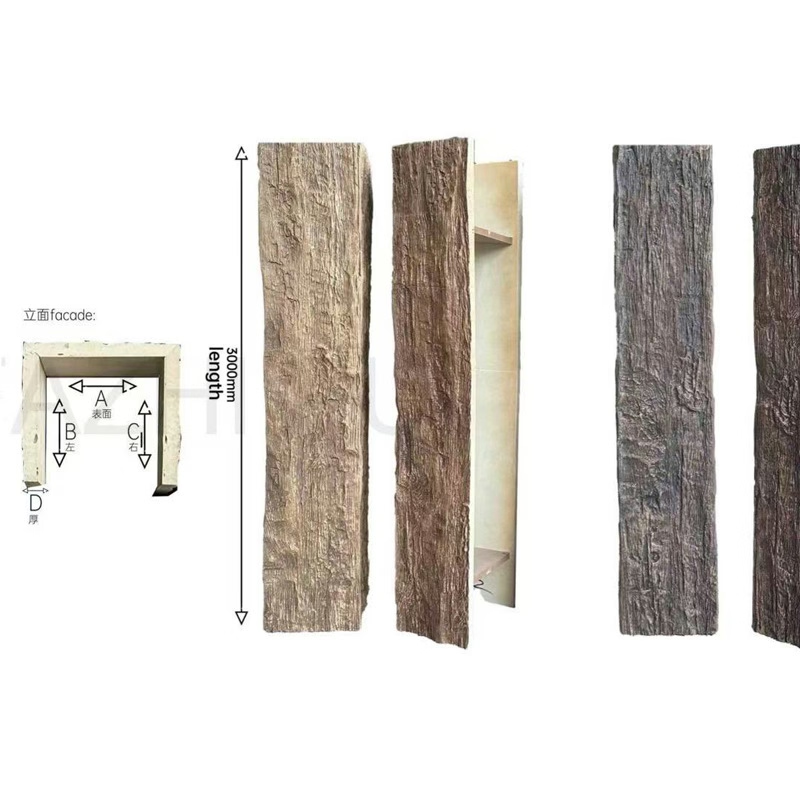
Luxury interior renovation occupies a distinct category within the broader renovation market. The clients who commission these projects bring expectations shaped by previous experience of high-quality environments — hotels they have admired, restaurants they have enjoyed, homes they have visited — and they expect their own renovation to meet or exceed these reference points. Every surface, every detail, and every material choice is evaluated against this mental catalogue of quality.
This expectation landscape creates both opportunity and pressure for the design professionals and contractors working on luxury renovation projects. Opportunity, because clients are willing to invest in quality solutions that justify the expenditure. Pressure, because the quality threshold they apply is unforgiving — a misjudged detail or a visibly inferior material choice undermines the entire project in ways that would not register in a standard renovation context.
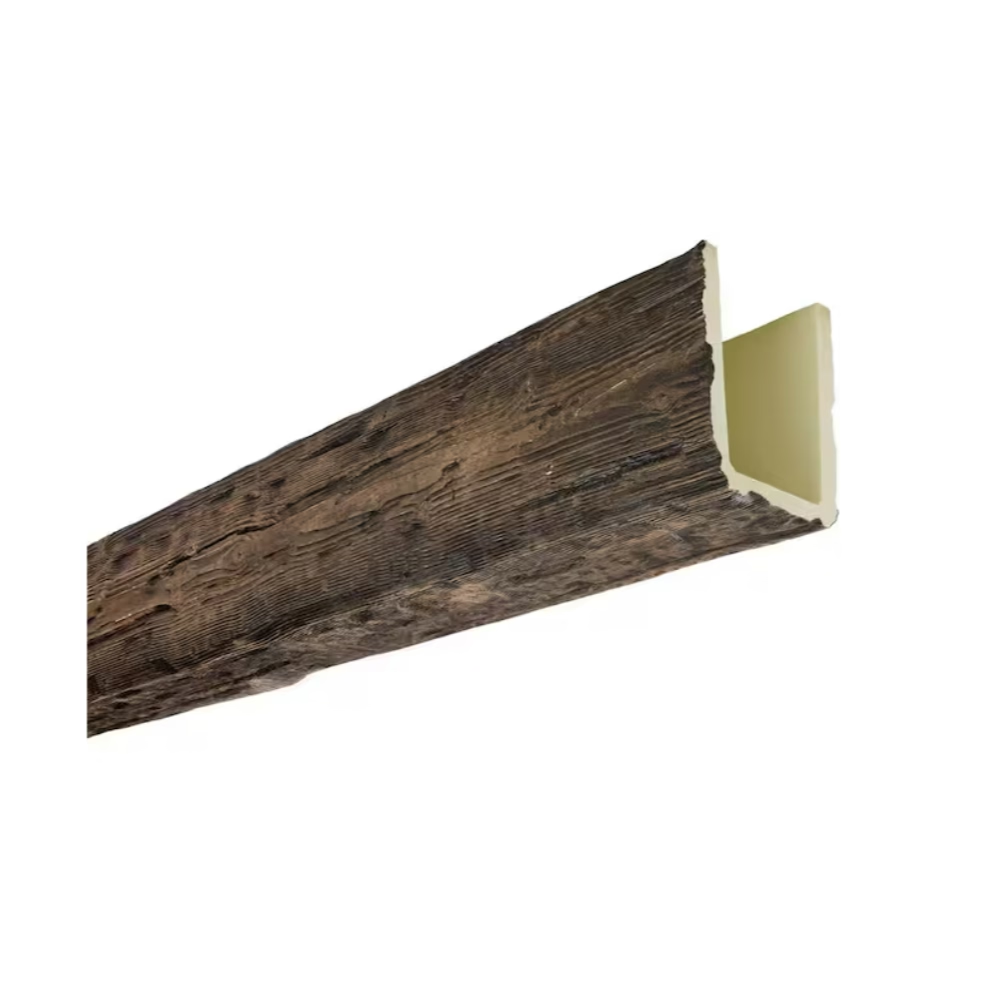
Ceiling treatments illustrate this dynamic with particular clarity. In a standard renovation, a plastered ceiling with a coat of paint represents a perfectly acceptable outcome. In a luxury renovation, the same ceiling reads as a failure of ambition — a missed opportunity that fails to deliver the level of designed environment the investment demands. The ceiling needs to work as hard as every other element in the project, and PU faux wood beams provide the means to achieve this standard.
The Luxury Renovation Context
Luxury renovations typically arise from one of several circumstances, each of which shapes the project in different ways. Understanding the project origin helps inform the approach to beam specification and the overall design strategy.
Period property restoration represents the most common context for luxury renovation work. Georgian and Victorian properties, in particular, offer spatial proportions and architectural details that cannot be replicated in new construction. The renovation of these properties involves restoring original features, reintroducing missing architectural elements, and updating building systems to contemporary performance standards. Beams in this context often serve a restoration function — replacing missing original beams or adding beams where they would have existed historically.
Contemporary luxury renovation addresses properties built to good standards but finished to a specification below the owners' expectations. These projects involve upgrading finishes, reconsidering spatial arrangements, and introducing architectural elements that transform the quality perception of the property. Beams in this context serve a transformation function — adding material richness and architectural character that the original specification lacked.
Architect-led comprehensive renovation represents the most ambitious category, where the renovation involves not merely upgrading existing conditions but fundamentally reimagining the spatial and architectural character of the property. These projects may involve structural alterations, extensions, and wholesale interior reconfiguration. Beam specification in these projects becomes part of a larger architectural statement rather than a standalone enhancement.
Quality Indicators in Beam Specification
The quality of beam installations in luxury renovation can be assessed across several dimensions that differentiate premium products from economy alternatives. Understanding these dimensions enables informed specification and protects against the disappointment that inferior products inevitably produce.
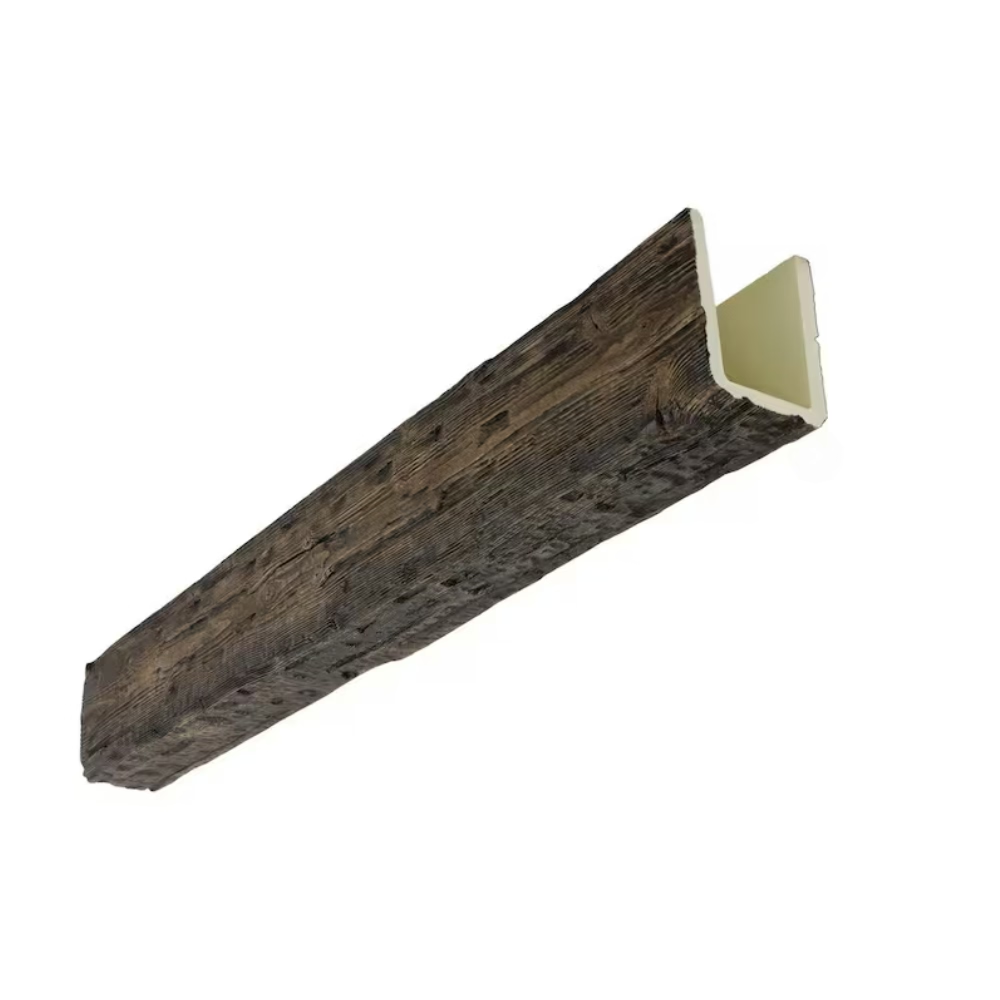
Surface detail resolution distinguishes premium beams from economy products in ways that are immediately apparent once you know what to look for. The mould surface quality determines how crisply the grain texture, knot details, and edge profiles are reproduced. Economy products show visible mould lines, fuzzy detail edges, and inconsistent texture depth. Premium products maintain sharp detail definition across the entire beam surface, including curved and complex profile sections.
Finish quality — whether the product is supplied pre-finished or requires site finishing — determines both the initial appearance and the long-term maintenance burden. Pre-finished products from quality manufacturers apply finishes under controlled factory conditions, achieving consistency and durability that site application cannot match. The finish should be uniform across all beam surfaces, with no runs, sags, or colour variation between adjacent pieces.
Dimensional accuracy affects both the visual quality and the installation practicality of beam products. Premium products maintain consistent cross-sectional dimensions within tight tolerances, enabling clean joint construction and predictable installation behaviour. Dimensional inconsistency — variation between nominally identical beams — creates joint gaps, alignment problems, and a final installation that reads as amateur rather than professional.
Integration with Existing Architecture
Luxury renovations frequently involve working with existing architectural features that the beam installation must respect and complement. These existing elements — original cornices, decorative plasterwork, stone detailing, exposed structural timbers — constrain and inform the beam specification in ways that new-build projects do not face.
Original cornice mouldings at the ceiling line represent a particularly sensitive junction point for beam installations. The cornice typically defines the boundary between wall and ceiling; introducing beams at or near this junction requires details that maintain the cornice's architectural integrity while accommodating the beam installation. In some cases, beams can be positioned below the cornice, preserving it as a distinct architectural element while adding the beam treatment below. In others, the cornice may be sympathetically modified or temporarily removed and reinstated above the beam installation.
Existing structural timbers in period properties create both opportunity and constraint for beam installations. Where original timber beams exist and are in sound condition, the renovation may involve restoring and highlighting them rather than concealing them. Where structural timbers have been removed or are missing, faux beams can reintroduce the architectural rhythm that the originals established. Matching the faux beam specification to the existing timber — in profile, depth, and finish — creates a unified result that is difficult to distinguish from a fully original installation.
Fireplaces and chimney breasts typically create focal points in period living rooms, and the relationship between the beam installation and these features requires careful design attention. Beams that terminate at the chimney breast should acknowledge rather than ignore the fireplace below. The beam direction might run perpendicular to the chimney breast, creating a visual frame that draws the eye to the hearth. Alternatively, a single dominant beam might cross directly above the fireplace, echoing its centrality in the room composition.
Client Communication and Expectation Management
Clients commissioning luxury renovations typically engage emotionally with the project in ways that go beyond straightforward property improvement. Their homes represent identity, aspiration, and family investment; the renovation process touches on these deep values in ways that require sensitive communication throughout.
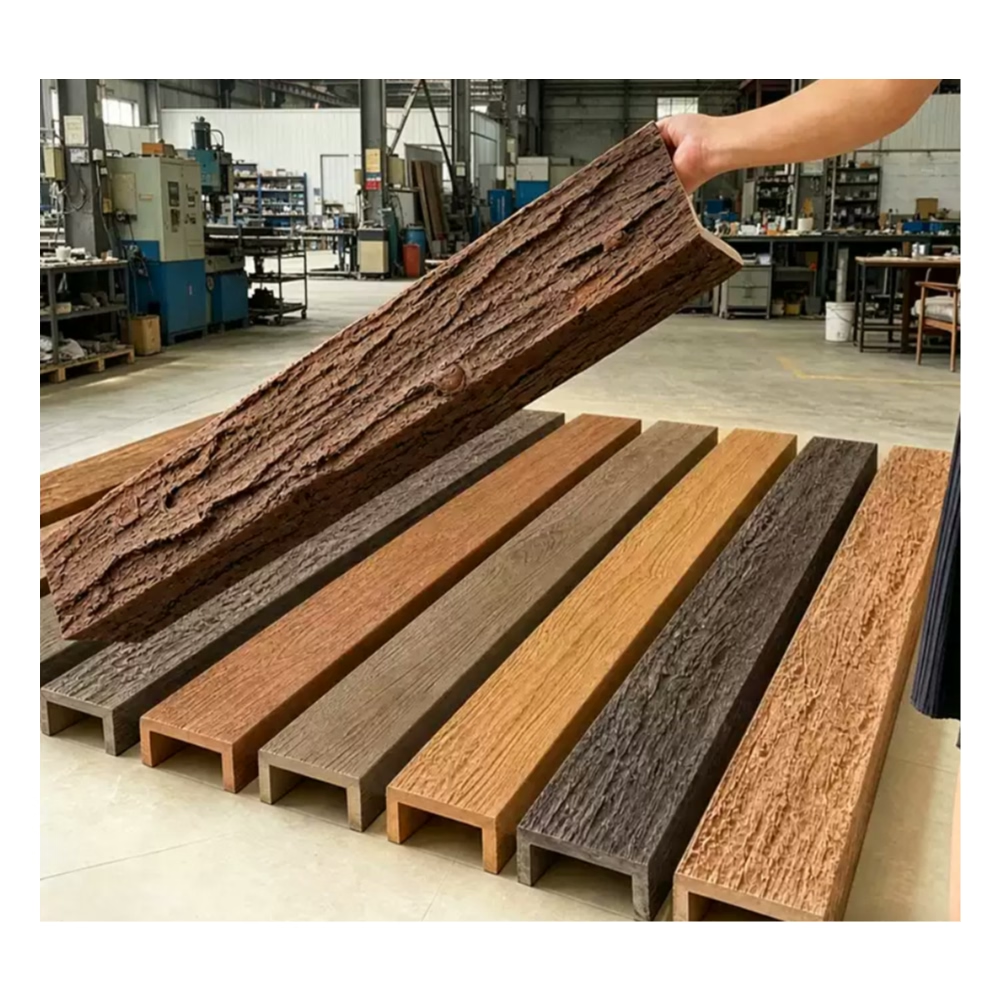
Design presentations for luxury renovation clients should include physical samples and mock-up details rather than relying solely on imagery and specification documents. The materiality of beams — the specific weight, texture, and surface quality — is not fully communicated through photographs or descriptions. A physical sample beam section, held and examined by the client, creates a shared reference point that eliminates ambiguity about what is being specified.
Expectation management regarding what is achievable with beam installations versus genuine timber deserves explicit attention. Most clients for luxury renovation projects will not know the technical distinctions between PU faux beams and solid timber; they care about the visual result and the quality perception. Explaining the practical advantages of PU beams — consistency, stability, lightness, maintenance-free quality — in terms of the client benefits rather than product mechanics helps them appreciate the specification decision without feeling that they have been offered an inferior product.
Managing Renovation Complexity
Luxury renovations are inherently complex projects that involve coordinating multiple workstreams, managing the interactions between trades, and navigating the inevitable surprises that uncovering existing building fabric reveals. Beam installation must be managed within this complex environment without compromising the quality of either the beam work or the other project elements.
Phasing the renovation to accommodate beam installation at the appropriate stage requires advance planning. Beams should typically be installed after structural work, rewiring, and plumbing modifications are complete but before final decoration and furnishing. This sequencing protects the beam surfaces from damage by other trades while ensuring that all service integration work is completed before the beams create an obstruction.
Site conditions during beam installation should be dry, warm, and well-ventilated. These conditions enable adhesive fixings to cure properly and ensure that the beam material achieves the dimensional stability it needs before the building is returned to normal occupancy. Installing beams in cold, damp, or poorly ventilated conditions risks fixing failures and dimensional problems that become apparent only after the building is in use.
Quality verification for luxury renovation beam installations should exceed standard practice. Every joint should be checked for alignment and gap-free construction. Every fixing should be verified for secure attachment. The overall visual impression should be assessed from multiple angles and at different distances before the installation is accepted. This thorough verification process protects both the quality of the result and the professional reputation of everyone involved in delivering it.
Technical References
ASTM standards cited in every specification
Test Data
Lab results from internal testing program
Updated 2026
Reviewed against current product specs