A luxury villa renovation is a project of a different magnitude from standard residential renovation. The properties in question are typically substantial — often listed or heritage-designated, frequently constructed with traditional materials and techniques, and possessed of an architectural quality that any renovation must honour and enhance rather than diminish. The financial stakes are commensurately high, and the reputational implications for all involved — architects, contractors, and suppliers — demand correspondingly elevated standards of care and craftsmanship.
The ceiling treatment in a villa renovation presents unique challenges that simpler properties do not pose. Villa ceiling heights are typically generous, often very generous — three metres or more — creating volumes that demand architectural treatment proportional to their scale. The existing ceiling construction may be fragile historic plasterwork that cannot accept fixings without specialist intervention. The building's listed status may constrain what interventions are permitted, requiring engagement with heritage authorities before any installation work can proceed.
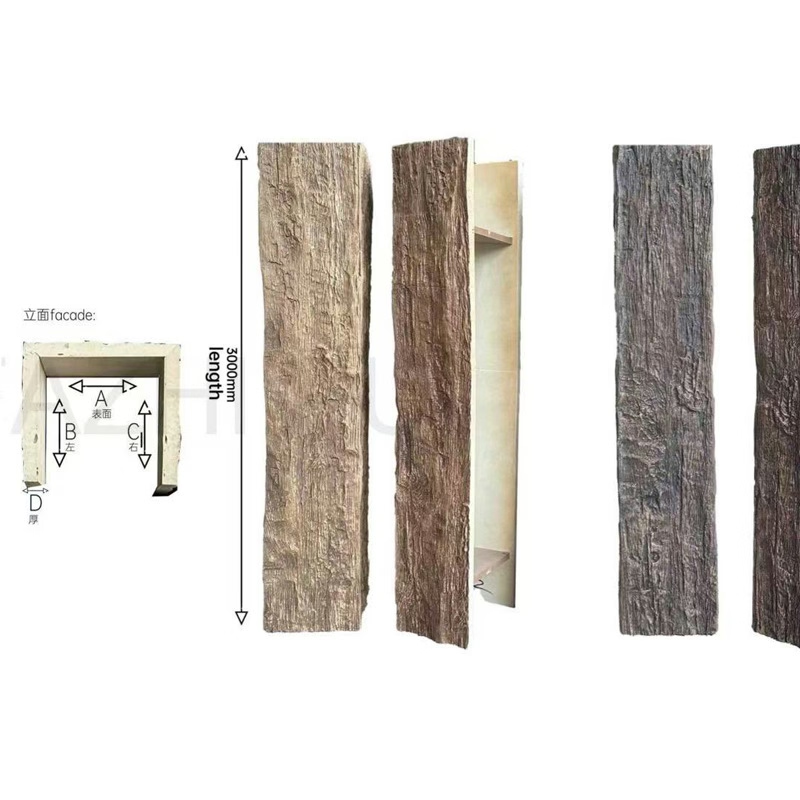
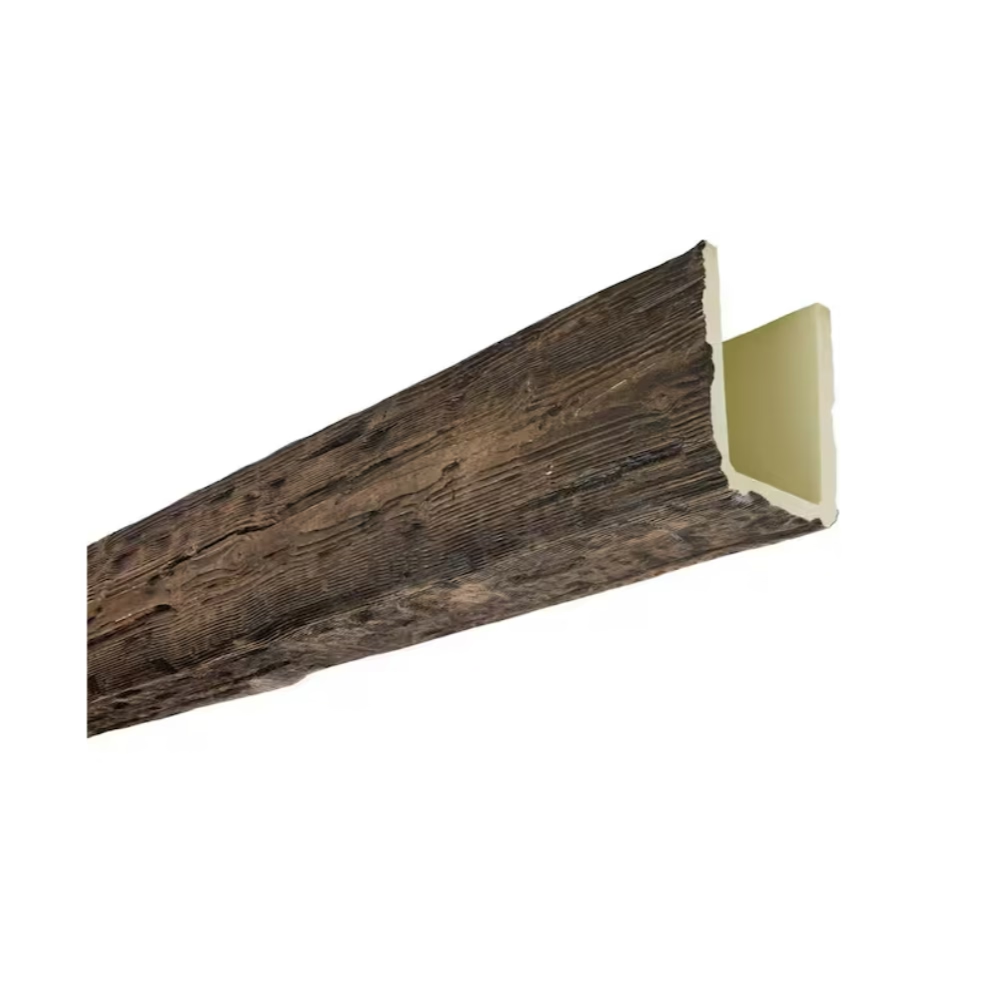
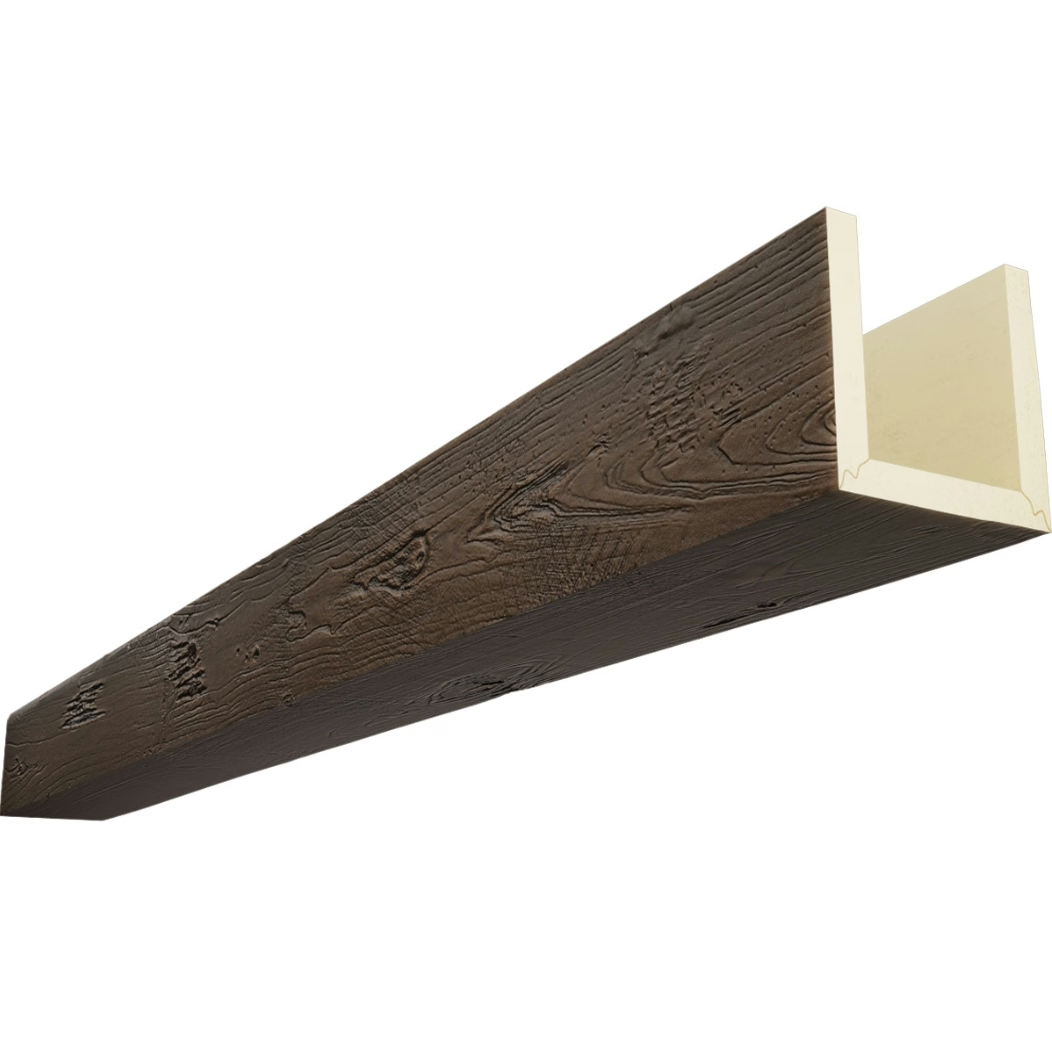
PU faux wood beams address these villa-specific challenges through their light weight, their compatibility with sensitive existing fabric, and their availability in configurations that satisfy heritage considerations while delivering contemporary performance. The renovation of a luxury villa with quality beam specification demonstrates what is possible when traditional spatial qualities are combined with modern material technology.
Working with Heritage and Listed Properties
A significant proportion of luxury villa renovation projects involve properties with some form of heritage designation — listed building status in the United Kingdom, historic register designation in North America, or equivalent protections in other jurisdictions. These designations exist to ensure that alterations respect the building's historic character and architectural significance.
Heritage considerations affect beam specification in several ways. The beam profile and configuration should relate to the period and style of the property. A Georgian villa renovation calls for beam treatments that reflect Georgian architectural principles — symmetry, proportion, and restraint — rather than the rustic farmhouse aesthetic that might be appropriate in a converted agricultural building. Matching the beam specification to the property's architectural heritage ensures that the installation enhances rather than contradicts the building's historic character.
Listing conditions may require consultation with heritage authorities before beam installation proceeds. This consultation should occur early in the design process, ideally before the beam specification is finalised. Presenting the proposed treatment in terms that acknowledge the heritage context — explaining how the beams relate to the property's original architecture and how the installation method respects the existing fabric — facilitates productive dialogue with heritage officers who may initially view the intervention with scepticism.
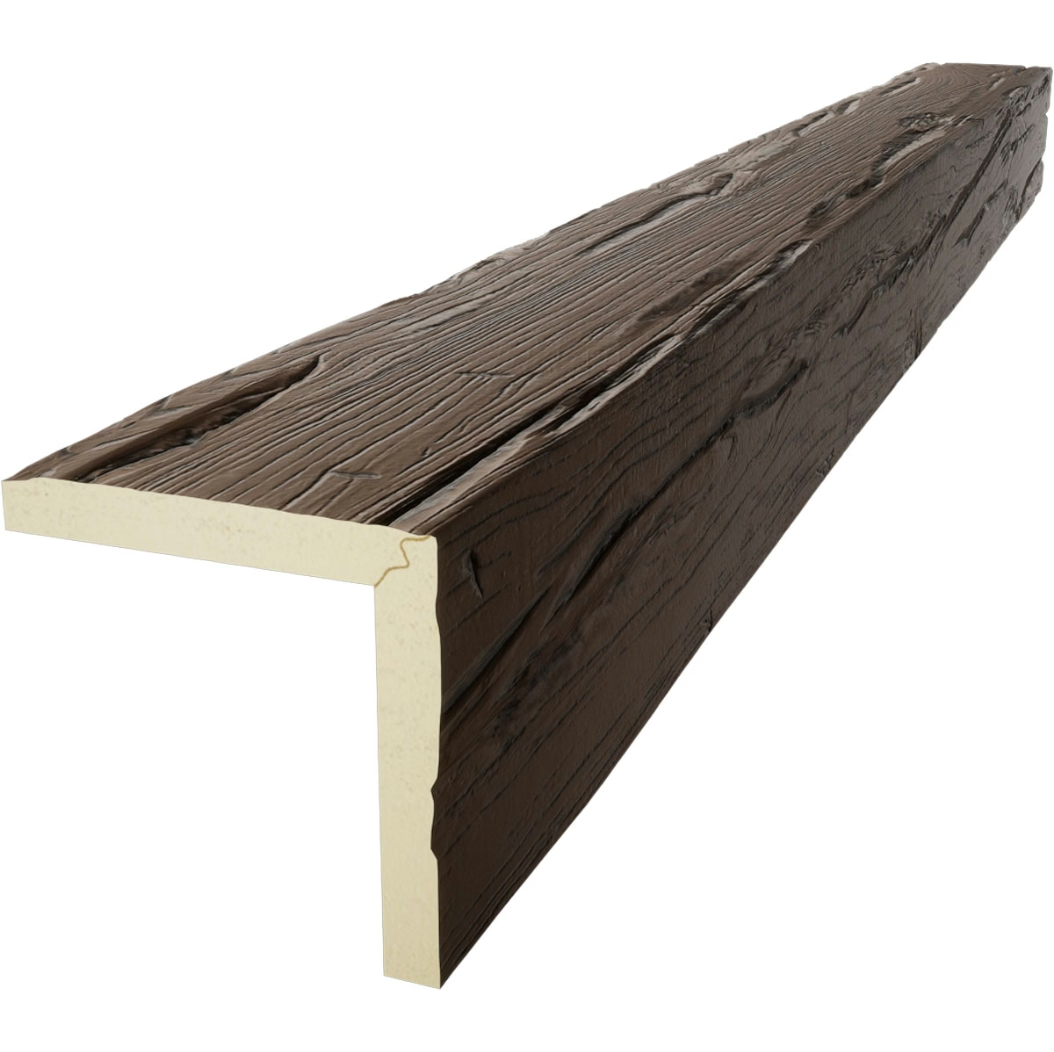
The fixing method for beams in heritage properties deserves particular care. The existing ceiling fabric — whether historic plaster, lath and plaster, or early concrete — must not be damaged by beam installation. Surface-mounted bracket systems that distribute load across the ceiling plane without penetrating the existing fabric are often preferred over direct fixing approaches that would require holes in the plaster. Where direct fixing is unavoidable, pilot holes and careful technique minimise the visual impact of the penetration.
Elevating Villa Living Spaces
The principal living spaces in a luxury villa — entrance halls, principal reception rooms, formal dining rooms — are designed to accommodate gatherings, to impress visitors, and to communicate the social position of the owners. These spatial ambitions require ceiling treatments of equivalent ambition; a grand entrance hall with a neutral plastered ceiling simply fails the property.
The entrance hall sets the tone for the entire villa. Visitors form their initial impression here, before they have entered the principal reception spaces or observed the quality of furnishing and decoration throughout. A beam installation in the entrance hall — whether a simple barrel vault treatment, a coffered arrangement, or dramatic cross beams — immediately signals that this is a property where quality has been considered at every level. The entrance hall beams establish the design vocabulary that subsequent spaces will elaborate and vary.
Principal reception rooms — formal living rooms, drawing rooms, music rooms — typically feature the highest ceilings, the finest proportions, and the most significant architectural detailing in a villa. The beam installation in these spaces should match this level of ambition, using the largest appropriate beam profiles, the most considered configuration, and the highest quality finish available. The investment in these rooms pays disproportionate dividends in the overall quality perception of the property.
The transition between grand public spaces and more intimate private zones deserves architectural attention. The corridor or gallery that connects the entrance hall to the private living quarters provides an opportunity to moderate the transition — perhaps using a more restrained beam treatment in the transition space that prepares the visitor for the different character of the private rooms. This graduated transition creates a more sophisticated spatial narrative than an abrupt change in ceiling character.
Coordinating with Other Renovation Trades
Villa renovation involves an unusually broad range of specialist trades, all of whose work must be coordinated around the beam installation. This coordination requires explicit planning and clear communication to prevent the interference and damage that can compromise the quality of all the work involved.
Stonemasons working on fireplace surrounds, cornice restorers addressing existing plasterwork, and joinery craftsmen fitting new skirting and architrave — each of these trades interacts with the beam installation in specific ways that require sequencing attention. The general principle is that the beam installation should occur after structural and service work is complete but before final finishing work by other trades. This sequencing ensures that beams can be installed without interference and that subsequent finishing work can be coordinated with the beam treatment.
The restoration of existing decorative plasterwork in a villa may involve replicating missing or damaged cornice mouldings that intersect with proposed beam positions. Specialist plasterwork contractors can reproduce historic cornice profiles in cast plaster or fibrous plaster, enabling the restoration of the ceiling line in a manner consistent with the original design. The beam installation should be detailed to complement rather than overwhelm this restored plasterwork — the two elements should read as a unified ceiling composition rather than competing interventions.
Long-Term Performance Requirements
Luxury villa owners typically expect their renovated property to perform flawlessly for decades with minimal maintenance intervention. This expectation shapes the specification requirements for all materials, including beam products.
The dimensional stability of polyurethane provides significant advantages in villa contexts where seasonal temperature and humidity fluctuations affect the building fabric. Unlike natural timber, which expands and contracts with changing conditions, polyurethane maintains its dimensions consistently regardless of environmental conditions. This stability protects adjacent plasterwork from the stress that seasonal timber movement would impose, reducing the incidence of crack formation and plaster damage that often troubles historic properties.
The maintenance-free quality of PU beams represents a genuine benefit for villa owners who may not reside in the property year-round. Properties that experience seasonal occupation face particular challenges with natural timber — the humidity fluctuations that occur as properties are heated and then left cold accelerate the deterioration of natural wood. PU beams tolerate these conditions without deterioration, maintaining their appearance across years of seasonal occupation without any maintenance intervention.
Investment Quality and Property Value
The specification of quality beam products in villa renovation reflects and reinforces the overall investment in the property. Villa owners undertaking significant renovation have typically made a considered decision to invest in their property rather than move, accepting the disruption and cost of renovation in exchange for a home that precisely matches their requirements.
Beam installation contributes to this investment by providing a ceiling treatment that matches the quality of other elements in the renovation — the stone floor, the bespoke joinery, the quality sanitaryware, the premium kitchen. A mismatched element — a mediocre ceiling treatment among otherwise excellent finishes — would undermine the overall quality perception disproportionately. Premium beam specification protects the quality narrative that the entire renovation has been designed to communicate.
The property value implications of quality renovation work are well documented. villa renovations completed to high standards typically achieve value uplift significantly exceeding the renovation cost, particularly in prime locations where the supply of quality properties is constrained. This value appreciation reflects the genuine quality of the renovation work, including the ceiling treatment that is often the element most visible and most commented upon by those experiencing the space.
Technical References
ASTM standards cited in every specification
Test Data
Lab results from internal testing program
Updated 2026
Reviewed against current product specs