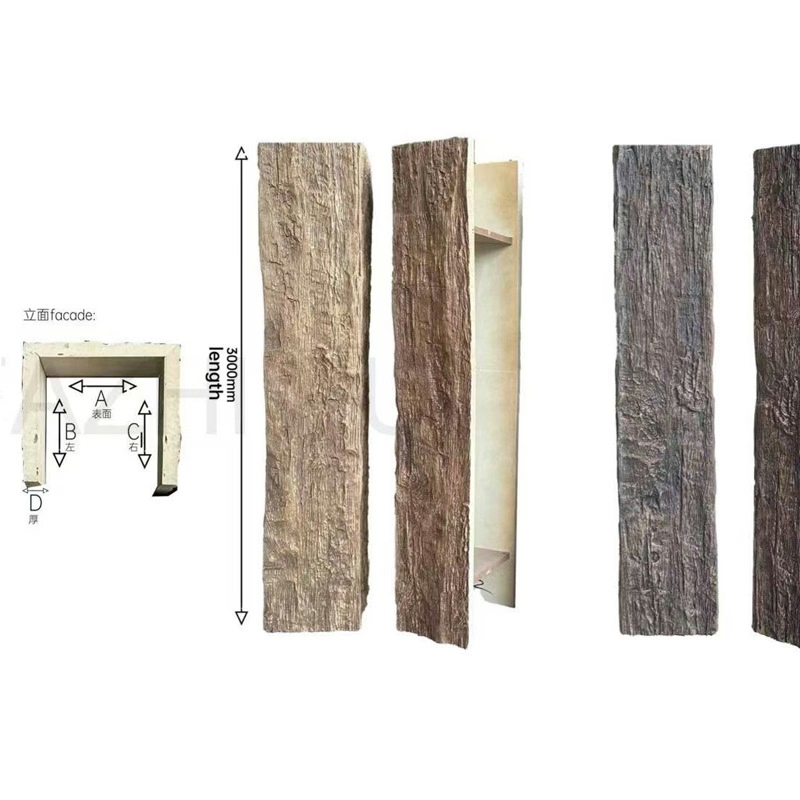
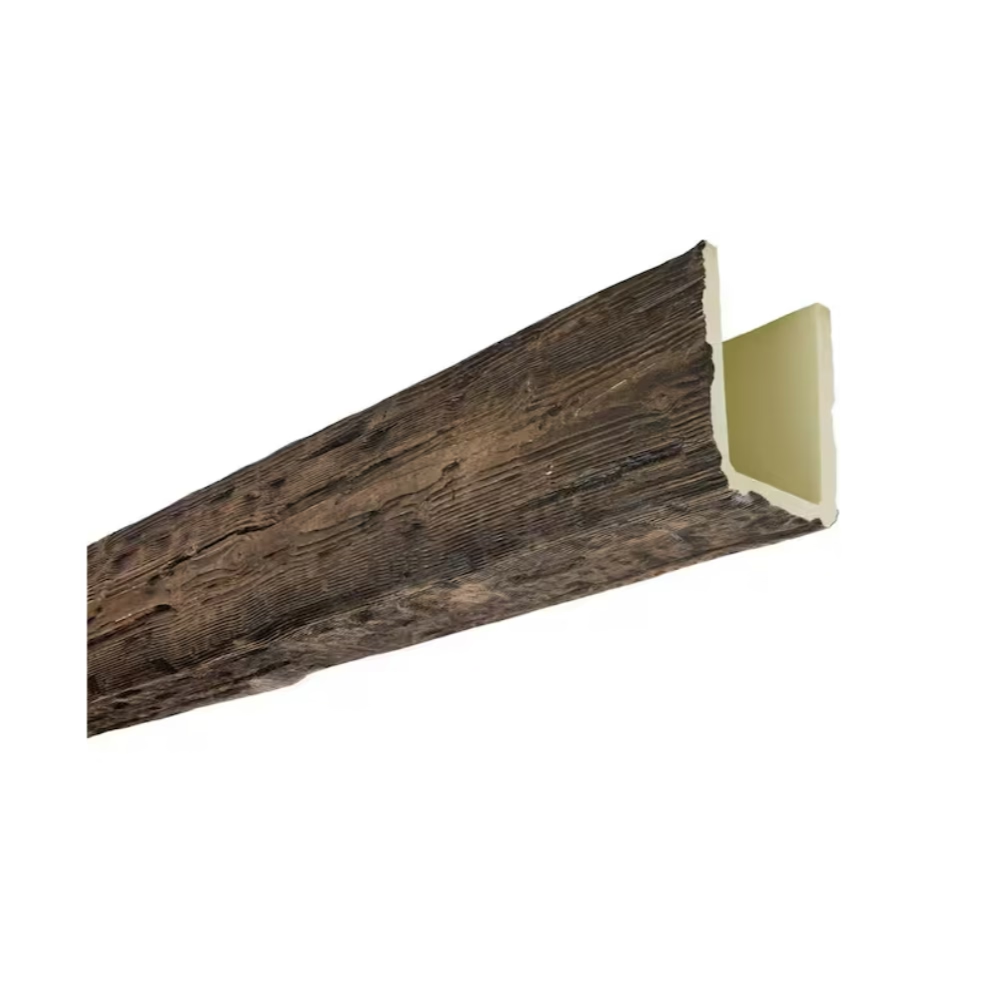
Walk into almost any model home from the past decade and you'll see exposed beams running across the ceiling. The interesting part isn't their popularity — it's that more and more of those beams aren't wood at all. They're polyurethane, high-density foam with a tough outer shell, molded to look like reclaimed oak, weathered barn timber, or rough-sawn pine. So when a homeowner is weighing the decision, the practical question always lands somewhere along these lines: does this upgrade actually come back to me at resale, or is it just a vanity project?
The honest answer is more nuanced than the marketing brochures make it sound. PU faux beams don't function like a new roof or a finished basement in terms of raw appraisal math. Appraisers don't have a line item for "decorative ceiling beams." What they do have, however, is a sense of how a property photographs, how it feels during a showing, and how it compares to other homes in the same price band. That's where these beams quietly earn their keep.
How the Real Estate Industry Sees Faux Beams
The way real estate professionals evaluate a beam installation runs through several overlapping lenses. Appraisers look at comparables. Buyers respond emotionally during showings. Listing agents care about photography. Each lens reveals something different about whether the upgrade is paying for itself.
What Appraisers Actually Look At
A licensed appraiser's job is to compare your home against recent sales of similar properties nearby. They pull comps, adjust for square footage, lot size, and condition, then reconcile a value. Most of the adjustments are quantifiable. Square footage has a per-foot cost in your submarket. A garage adds a known multiplier. A finished attic might add a calculated amount based on cost-per-square-foot to finish similar space.
Decorative beams fall into the "condition and appeal" bucket rather than the "gross living area" bucket. That means an appraiser won't add $8,000 to your value because you spent $4,000 on beams. But they may adjust your home upward within its condition tier when the beams are part of a cohesive interior that's noticeably more attractive than the comps. The flexibility an appraiser has in that range is meaningful, especially in markets where homes are slow to sell and "showing well" carries weight.
If your kitchen has quartz counters, the right backsplash, a farmhouse sink, and PU beams crossing the ceiling, and the comp down the street has laminate counters and a flat ceiling, your home reads as a step above. That's the appraiser's mental math, even if they never put "beams" on a line of their report.
How Buyers Respond During Showings
Real estate agents tend to be more candid about this than appraisers. A buyer who walks into a living room with vaulted ceilings and warm-toned faux beams overhead tends to slow down, look up, and say something out loud. That's a reaction worth a lot of money in a competitive listing environment.
Staging research has consistently shown that homes with strong architectural features spend fewer days on market than functionally equivalent homes without them. Beams are one of those rare features that add a sense of craftsmanship without overwhelming the buyer's sense of how they'd use the space. A bold accent wall might polarize buyers. A busy tile pattern might date the home quickly. Ceiling beams, by contrast, are nearly universal in their appeal because they read as warm, established, and intentional.
The interesting wrinkle is the reaction when buyers find out the beams aren't real wood. Some buyers feel a small drop in perceived value at that moment. That's the "is this fake?" reflex. The best PU beams are extremely difficult to identify as faux from any normal viewing distance, but a careful buyer might notice. What matters for resale value is how that moment is handled in the listing.
The Listing Photo Effect
Listing photos are where this discussion gets really interesting. The first thing a buyer does in 2026 is scroll past your exterior and pause on anything that looks architecturally distinctive. Beams photograph beautifully. They add vertical lines and shadow patterns that flat drywall ceilings simply can't match. A room with well-staged beams and good natural light often photographs as substantially more expensive than the same room with a plain ceiling.
We spoke with listing agents who describe beams as one of the cheapest ways to noticeably elevate listing photos. A living room with $3,000 worth of PU beams, properly installed, can photograph so well that it anchors a buyer's first impression and pushes them to schedule a walkthrough. That click-through is the entire game in modern real estate. The photo got them in the door.
When beams show up in the listing description, agents tend to describe them as a "designer ceiling feature" or an "architectural accent." That language positions them at the level of a window upgrade or a statement fireplace, not as a cosmetic knick-knack. Whether they're polyurethane or solid timber becomes a footnote rather than a deal-breaker.
Cost vs. Value: The Real Numbers
Solid timber beams are expensive, heavy, and slow to install. A real 6-inch-by-8-inch reclaimed oak beam running 14 feet can cost anywhere from $1,200 to $2,500, and most contractors will quote installation labor separately because the weight alone makes it a two- or three-person job. You also need to budget for structural review, mounting hardware, and often a finishing treatment on site.

A comparable PU faux beam at the same length usually lands between $180 and $400, installed. The cross-section looks identical from the floor. The weight is roughly 10 percent of what solid timber weighs, so installation is a one-person afternoon job in most cases. That difference in upfront cost changes the math considerably. A homeowner who spends $1,500 across several rooms on PU beams has spent less than a single solid beam and has transformed far more square footage.
For resale, this matters because buyers and appraisers both look at implied value. A buyer isn't paying you back for what you spent; they're paying you back for what the feature is worth to them in the broader market. PU beams that look indistinguishable from solid timber often appraise at the same perceived value, but you spent a fraction to get there. Your return percentage is high even if the absolute dollar return is modest.
When Beams Don't Add Value
There are real scenarios where PU beams don't move the dial at all. If your home is in a price range where buyers care more about utility than aesthetics — a starter condo, a small rental near a university, a property that's primarily cash-flow focused — decorative ceiling features rarely show up in the buyer's decision tree. The same is true for homes being sold to investors who plan to renovate for rental income; they'll often rip out anything custom.
Beams can also hurt rather than help if they're installed in a way that conflicts with the architectural style of the home. A Mediterranean villa with faux reclaimed barn beams can read as confused and dated within a few years. The best installations match the home's existing language. Craftsman bungalows look right with chunky, slightly rustic beams. Mid-century ranches look right with cleaner, straighter profiles. Farmhouse properties can support almost anything as long as the color palette is consistent.
If a buyer is going to look at the beams and think "this is going to date the home in five years," that buyer will mentally subtract something from their offer. The sophistication of the installation matters as much as the presence of beams.
Market-Specific Patterns
In regions where exposed timber has strong cultural resonance — mountain towns in Colorado, lake properties in the Carolinas, rural New England — buyers actively expect beams. PU beams that look authentic almost always outperform their cost in those markets. The buyers want them, they expect them, and they're willing to pay for the look. Appraisers in those regions tend to factor ceiling features into condition adjustments more readily because they see them in many comp sales.
In newer suburban developments, the picture is a little flatter. Buyers there are often shopping on square footage, school district, and commute time. Beams are appreciated but rarely decisive. They push a home from "fits our needs" to "feels like home," which is real but harder to put a dollar figure on.
In luxury markets, beams often blend into a broader architectural package. A $2 million home already has a designer ceiling, custom millwork, and high-end lighting. Beams are part of the conversation but they're not the headline feature. Their contribution to value at that price point is real but small relative to the overall package.
Quality, Craft, and the Decision Framework
Cost analysis and market context mean very little if the installation itself reads as careless. The most overlooked driver of perceived value isn't the product on the price tag — it's the way the beams look once they're up. That distinction often determines whether a buyer, an appraiser, or even a future homeowner forms a positive impression or a skeptical one.
Beyond the visual reading, the homeowner's own goals shape how all of this comes together. Someone renovating to enjoy versus someone renovating to flip arrives at the same product from entirely different directions.
What the Installation Quality Communicates
There's a subtler dimension to value that doesn't show up in spreadsheets. A homeowner who has invested in thoughtful ceiling architecture signals to a buyer that the rest of the home has likely been cared for in similar detail. It signals taste, intentionality, and willingness to invest in the property. That meta-signal is part of how buyers quickly sort "well-maintained" from "neglected" in the first five minutes of a walkthrough.
A sloppy beam installation tells the opposite story. Gaps at the seams, mismatched colors between beam runs, beams that look thin and hollow when viewed from below — these all create doubt. The buyer starts wondering what else was done carelessly. A high-quality PU beam installation, done by someone who understands the product, actually reads as a positive review of the rest of the home's maintenance.
A Practical Take for Homeowners
If you're a homeowner considering PU beams strictly on resale value, the short version is this: you're not going to see dollar-for-dollar returns in most markets. Don't expect the next appraisal to reflect the cost. What you can reasonably expect is that the beams make your home show better, photograph better, and feel more deliberate, and that combination tends to shorten time on market and reduce the kind of lowball offers homes with flat, plain interiors attract.
If you're renovating for your own enjoyment with a loose eye toward resale, PU beams are one of the highest-perceived-value upgrades you can install per dollar spent. They're cheaper than a kitchen refresh, faster than flooring, and they impact every room they touch without dominating the design. For homeowners who plan to stay five to ten years, the value question almost answers itself — you get to enjoy the upgrade daily, and the resale benefit becomes a quiet bonus when it eventually matters.
For investors and flippers, the math is more about speed of sale than dollar return. PU beams help listings stand out in photos and create the perception of a higher-end property, which usually translates to fewer days on market. In real estate, time is money in a very literal sense, and anything that meaningfully reduces days on market compounds in your favor across multiple deals.
The bottom line: PU faux beams don't behave like a structural renovation in your appraisal, but they behave like an excellent cosmetic upgrade in every part of the real estate transaction that isn't on the appraisal form.
Technical References
ASTM standards cited in every specification
Test Data
Lab results from internal testing program
Updated 2026
Reviewed against current product specs