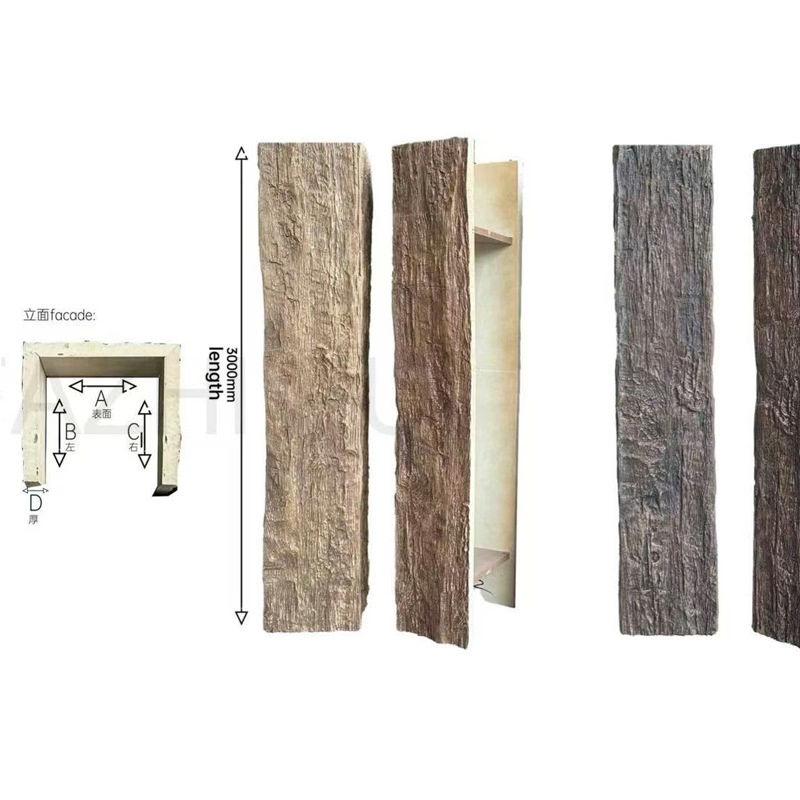
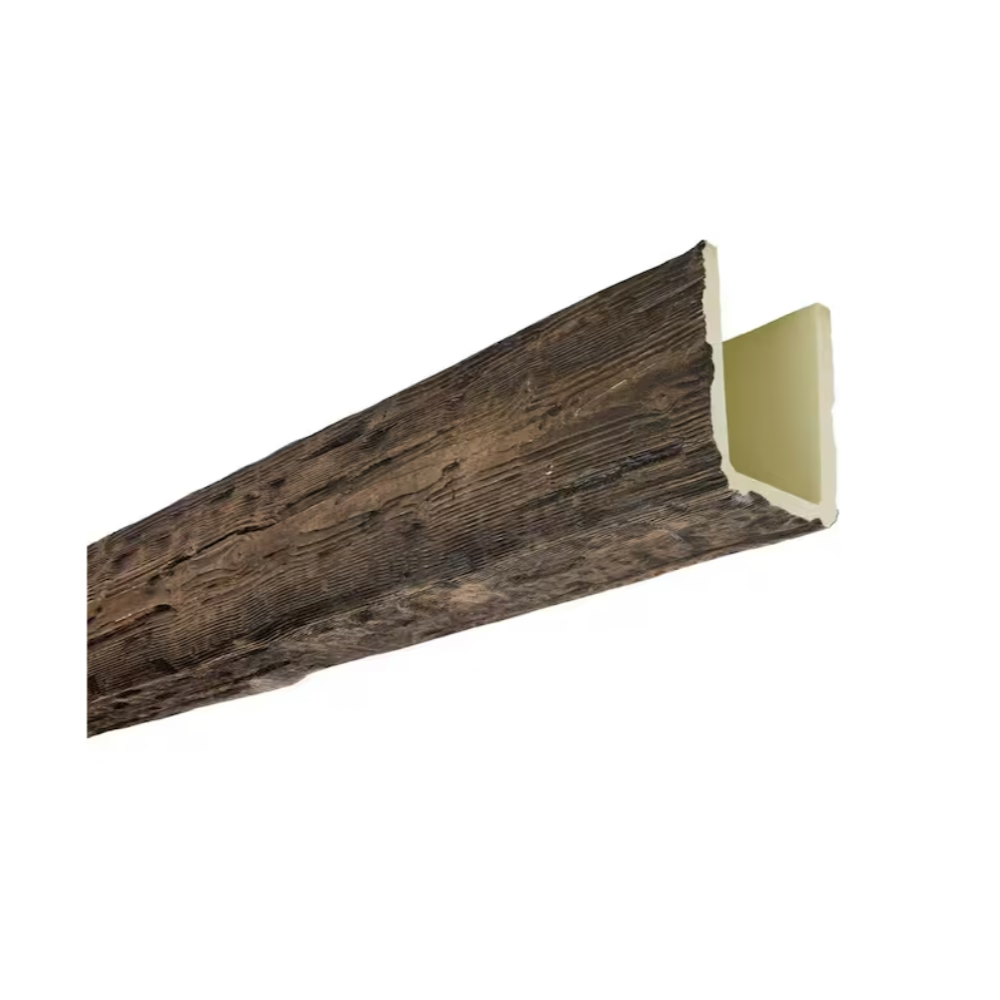
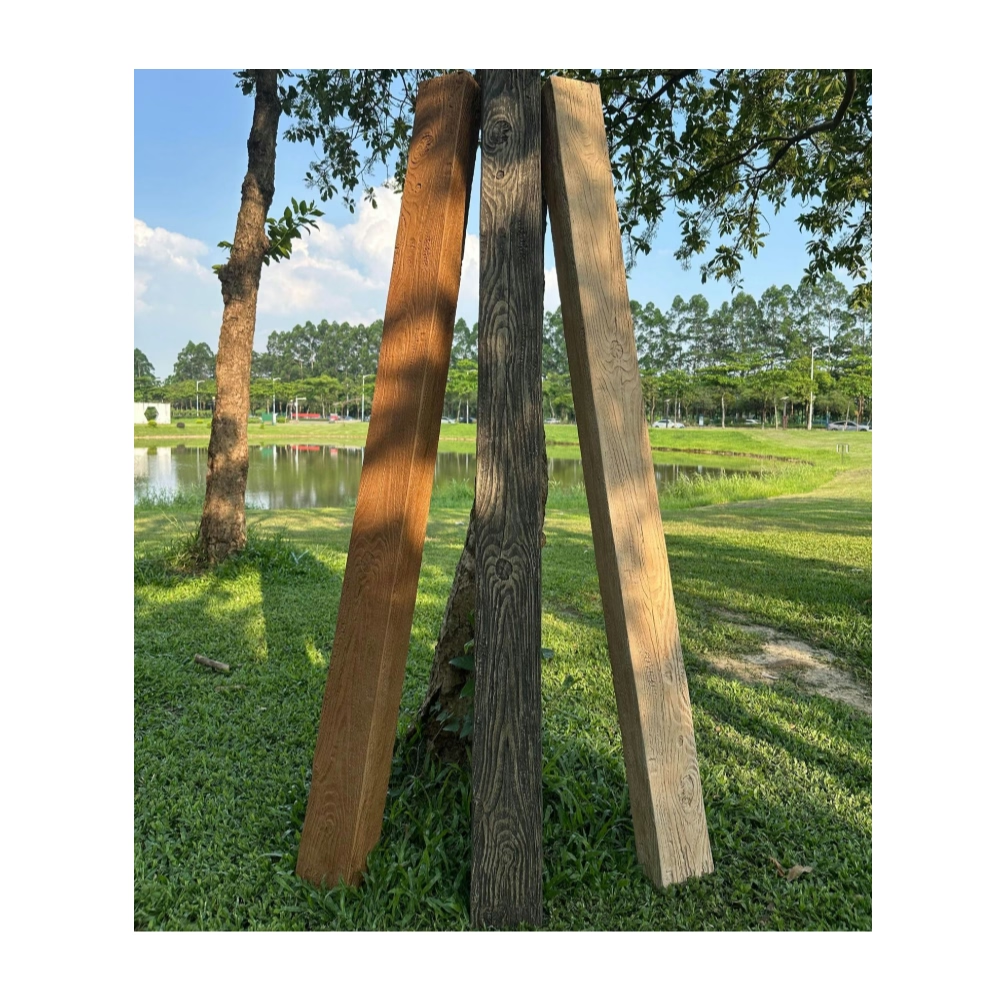
The question of whether any renovation investment translates into equivalent resale value is one that serious homeowners ask about nearly every improvement project, and the honest answer is that it depends on a remarkably complex set of factors: the local market, the current condition of the home, the quality of the installation, the buyer pool for the property, and the prevailing design aesthetics in the neighborhood. Faux wood beam installations are no different in this respect — the return on investment varies enough across contexts that a universal answer does not exist. What can be provided is a framework for thinking through the specific factors that drive value in each case.
The most straightforward contribution of exposed beam ceilings to home value is the aesthetic differentiation they provide. In markets where homes are frequently updated to similar standards — new paint, updated fixtures, refinished floors — a home with distinctive architectural character stands out in listing photographs and in person. Beam work, whether genuine or faux, creates exactly this kind of distinctive character. Real estate agents in markets with significant numbers of homes featuring exposed beam ceilings confirm that these homes tend to generate more initial interest and faster sales, though the causal relationship between beams and speed of sale is difficult to isolate from all the other factors that influence buyer decisions.

The buyer perception dimension deserves careful attention because it is the mechanism through which any aesthetic improvement translates into market value. Buyer responses to exposed beam ceilings are not uniform — they vary significantly by demographic, geographic, and cultural context. Younger first-time homebuyers often respond enthusiastically to exposed beam aesthetics as a marker of character and authenticity that distinguishes an older or custom home from the cookie-cutter new construction alternatives in their price range. buyers in mountain, cabin, and rustic resort markets have culturally established preferences for exposed timber aesthetics that make beam installations in these areas almost universally value-enhancing. Buyers in more formally decorated urban and suburban markets may respond with neutral to mildly positive sentiment, appreciating the craft without it being a primary decision driver.
The quality of the installation matters enormously to the value proposition. A sloppy installation — beams that are misaligned, improperly supported, or finished in a way that reads as obviously synthetic — will not add value and may actively detract from it by creating the impression of corner-cutting elsewhere in the home. Conversely, a well-executed beam installation that integrates seamlessly with the room's architecture and appears convincingly authentic creates the kind of architectural detail that sophisticated buyers recognize and value. The investment in quality material and competent installation is not merely an aesthetic preference — it is a prerequisite for any resale value benefit.
Geographic market context plays a significant role in determining beam value. In regions with established vernacular architecture that features exposed timber — the mountain West, parts of New England, California wine country, Texas hill country — the presence of exposed beams aligns with buyer expectations and enhances perceived quality. In these markets, the absence of beams in a home that would logically feature them might be perceived as a missed opportunity, while their presence is taken as confirmation that the home has been thoughtfully upgraded. In markets where exposed timber is not a traditional feature and buyers are not culturally primed to value it, the value contribution is less certain and may be limited to the general aesthetic enhancement rather than any category-specific premium.
The type of beam matters from a buyer perception standpoint. Genuine reclaimed timber beams carry an authenticity premium that faux beams do not — a premium that reflects both the material rarity of old-growth reclaimed timber and the cultural cachet of authenticity that attaches to genuine antique materials. Faux beams, however, provide the visual experience of beam work without the structural and maintenance drawbacks of genuine timber, and sophisticated buyers increasingly recognize this trade-off. The practical buyer understands that the aesthetic result of quality faux beams is essentially equivalent to genuine beams for most purposes, and that the absence of maintenance requirements is a genuine advantage rather than a compromise.
The ROI data on beam installations, while not extensive, suggests a middle-ground conclusion: beam installations typically recoup somewhere between 50 and 80 percent of their cost in increased resale value, with significant variation around this range. This places them in the company of mid-tier renovation projects — better than carpet replacement, comparable to bathroom upgrades, not as strong as kitchen renovation or deck construction. The value is most strongly realized when the beams address a specific deficiency in the home — creating architectural interest in a otherwise plain ceiling, for instance — rather than adding to already well-detailed spaces where the improvement may be less noticeable.
The comparative cost advantage of faux beams versus genuine timber influences the ROI calculation meaningfully in favor of the faux option. Because the material cost of PU beams is typically 40 to 60 percent lower than comparable genuine reclaimed timber, and installation costs are similarly reduced, the total project investment is lower. This means that the breakeven point for resale value recovery is lower — a smaller increase in home value is needed to recoup the investment. A homeowner who spends $5,000 on quality faux beam installation and recovers $3,500 in resale value has achieved a 70 percent ROI, while the same outcome with $12,000 in genuine timber beams would represent only a 29 percent recovery. The faux option allows more homeowners to access the aesthetic benefit within their renovation budgets.
Timing considerations also affect the value calculation. Homes that will be sold within two to three years of beam installation may not have sufficient time for the market to recognize and price the improvement. Real estate agents report that homes on the market for extended periods sometimes benefit from strategic improvements that refresh the listing, and beam installation in a stale property can serve this function by creating fresh visual interest. For homes expected to be held for longer periods, the ongoing enjoyment of the beams during occupancy is itself a meaningful return on investment that does not show up in resale calculations but represents genuine value to the homeowners.
The competition effect — how beam work compares to other possible renovations in terms of value creation — deserves consideration in the investment decision. A homeowner with limited renovation budget faces a choice between beams and alternative improvements. While beams offer distinctive aesthetic value, they do not address functional deficiencies the way that kitchen upgrades, bathroom remodels, or energy efficiency improvements do. For homes in markets where buyers prioritize function over form, the alternative renovations may generate stronger resale returns. For homes in markets where character and architectural interest are highly valued, beams may be the highest-return aesthetic investment available.
Technical References
ASTM standards cited in every specification
Test Data
Lab results from internal testing program
Updated 2026
Reviewed against current product specs