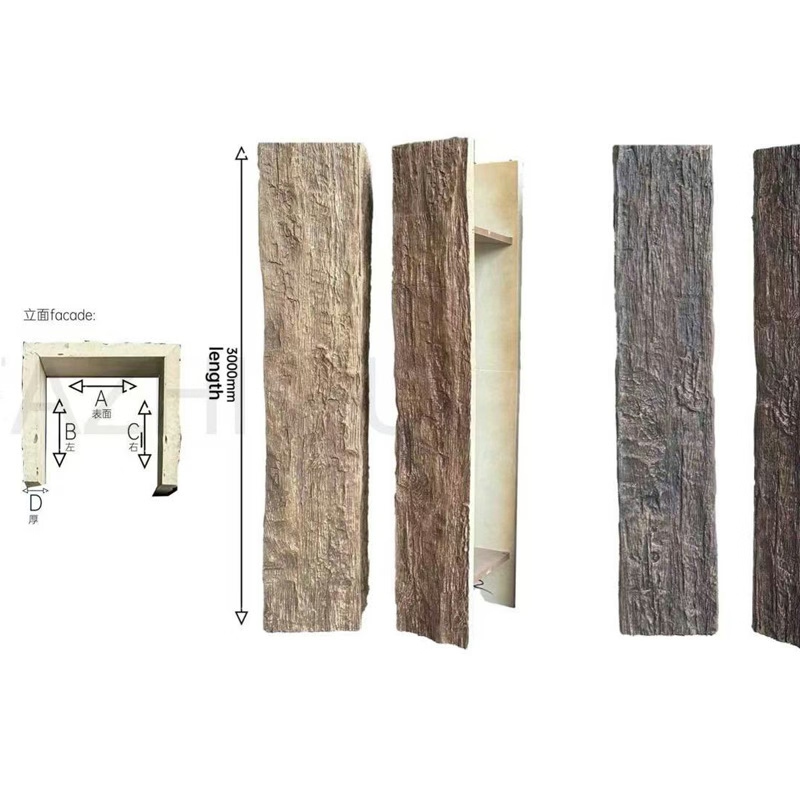
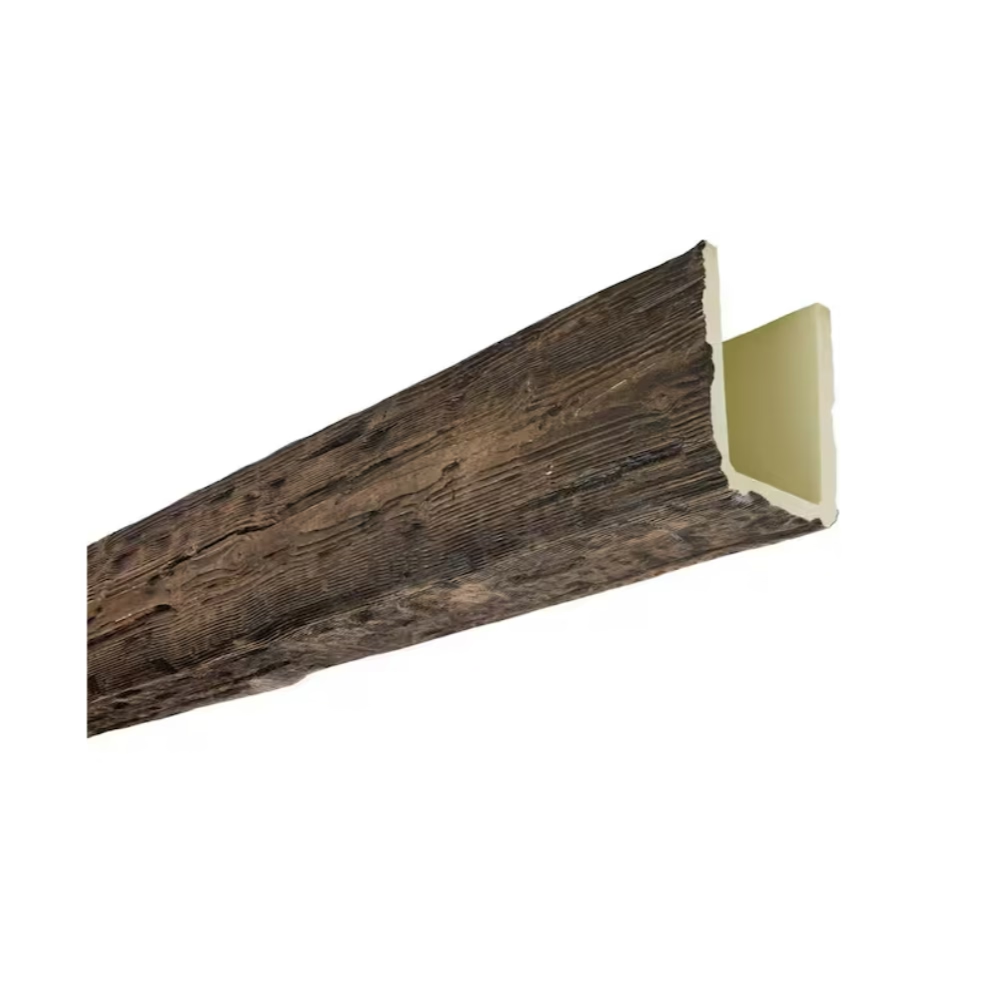
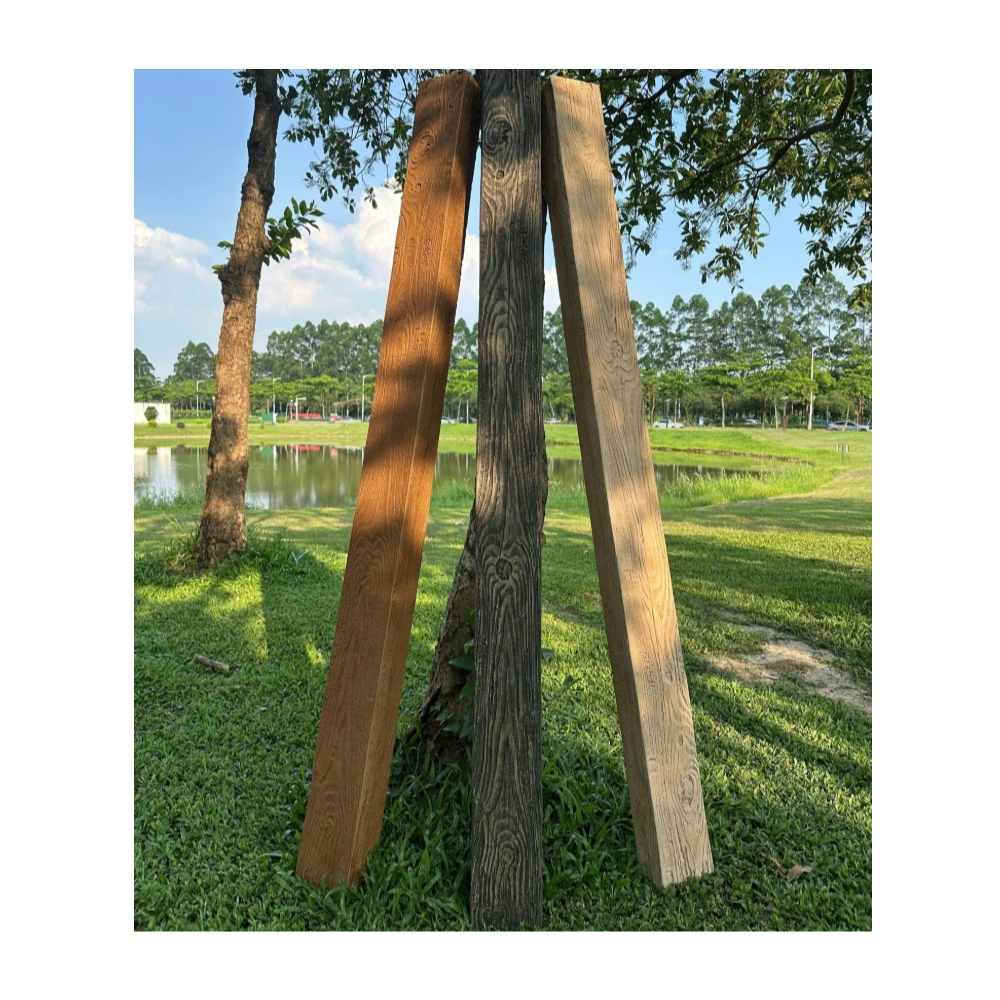
The transformation began with a question that seems simple but carries profound implications: what if you could have the timeless beauty of exposed timber ceilings without any of the drawbacks that make genuine wood impractical for most residential applications? For the Henderson family in Portland, this question led them down a path that would fundamentally alter how they experienced their 2,400-square-foot home, turning what had always felt like a workaday space into something that regularly drew compliments from visitors.
The answer, increasingly, lies in the remarkable advances made in polyurethane manufacturing over the past two decades. What was once a material associated primarily with industrial insulation and craft supplies has evolved into a medium capable of producing decorative elements indistinguishable from natural materials to all but the most trained observers. The beams that now crown the Henderson's great room bear the same visual characteristics as century-old reclaimed timber—knots, grain variation, color gradients, and surface textures that suggest decades of history—yet weigh so little that their teenage daughter helped install them.
Why Homeowners Choose Imitation Over Authentic Timber
The practical advantages of polyurethane imitation beams begin with installation logistics but extend far beyond mere convenience. Authentic timber beams require structural considerations that fundamentally impact construction approaches. A genuine 6x8 rough-cut beam might weigh between eight and twelve pounds per linear foot, meaning an eight-foot section could exceed ninety pounds. Supporting such weight demands ceiling joists rated for significant loads or, more commonly, dedicated structural beams that carry the weight to load-bearing walls.
Imitation beams of identical appearance typically weigh one to two pounds per linear foot, a reduction of eighty to ninety percent that eliminates structural concerns entirely. The same dimensional presence—the visual impact of substantial timber spanning across a room—achieves without any modification to the building's skeleton. Existing ceiling structures accommodate decorative beams without engineering assessment or reinforcement.
Moisture behavior distinguishes these materials even more dramatically over time. Natural wood breathes, absorbing humidity and releasing it as conditions change. This process, entirely natural and expected, leads inevitably to seasonal movement: gaps appearing and disappearing, occasional creaking sounds, slight dimensional changes that accumulate over years. In bathrooms, kitchens, or other humid environments, these effects intensify, sometimes leading to more serious problems like mold growth, rot, or pest infestation. Polyurethane responds to humidity with complete indifference, maintaining dimensions and appearance regardless of atmospheric conditions.
Design Philosophies for Residential Beam Installation
Successful residential beam installations rarely occur by accident. The most satisfying results emerge from thoughtful design approaches that consider the existing architectural context while establishing clear aesthetic goals. Understanding fundamental design principles helps homeowners and their contractors create installations that enhance rather than overwhelm living spaces.
Scale relationship between beams and rooms demands careful attention. Oversized beams in small rooms create visual compression, making spaces feel cramped rather than cozy. Conversely, undersized beams in large rooms disappear into the visual background, failing to establish the presence that justified the installation expense. Professional designers often recommend that beam dimensions relate to ceiling height, with taller ceilings supporting larger beam profiles and vice versa.
Pattern selection shapes the room's perceived geometry. Parallel beams running perpendicular to a room's shorter dimension create an illusion of expanded length, visually stretching the space. Crossing beams divide the ceiling into quadrants, establishing formal symmetry appropriate for more traditional interiors. Diagonal arrangements introduce dynamic energy, appropriate for contemporary spaces seeking visual movement rather than stability.
Material Selection Within the Imitation Category
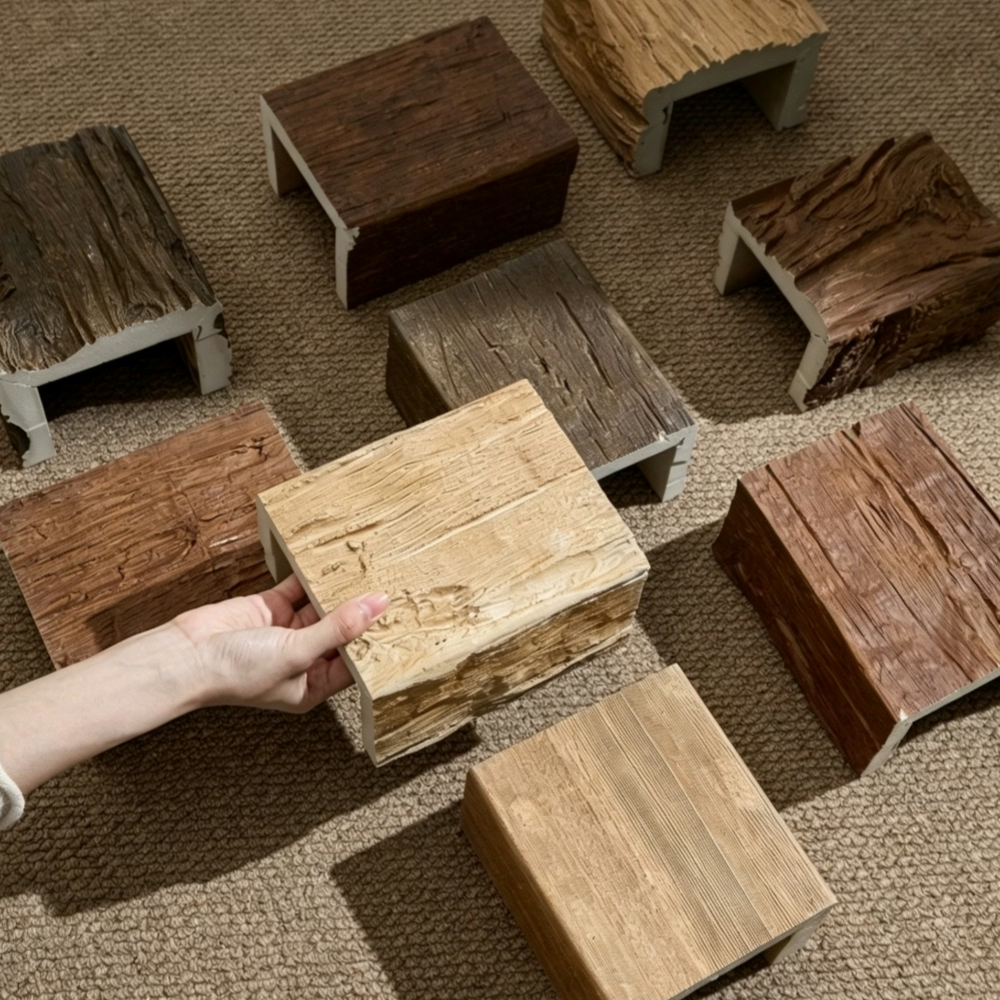
Not all imitation wood beams are created equal, and understanding the quality spectrum helps ensure satisfying purchases. Entry-level products often sacrifice realism for cost reduction, featuring shallow textures, uniform coloring, and simplified knot patterns that read as obviously artificial upon close inspection. These products may serve budget-conscious applications adequately but frequently disappoint when experienced from the distances typical of daily living.
Mid-range products balance realistic appearance with accessible pricing. These beams typically feature deeper texture gradients, color variation within individual pieces, and more sophisticated knot and grain reproduction. Installation reveals reveal construction quality, with better products showing consistent wall thickness and solid feel rather than cheap hollowness.
Premium products approach photorealistic quality, reproducing wood species characteristics with remarkable fidelity. Advanced manufacturing techniques capture subtleties like ray cells in oak, dramatic figure in quartersawn samples, or the distinctive spicy smell of cedar—well, perhaps not the smell, but the visual and tactile qualities that make each species recognizable. For homeowners seeking the most convincing results, premium products deliver the authentic experience promised in marketing materials.
Regional and Climatic Considerations
Geographic location significantly impacts beam selection and installation approaches. Homes in humid climates benefit most from moisture-resistant polyurethane, avoiding the mold and rot concerns that affect natural wood in these environments. Coastal properties with salt air exposure similarly benefit, as polyurethane resists the corrosion and degradation that affects metal hardware and some wood species.
Arid regions present different challenges, where natural wood's moisture-seeking properties cause more pronounced shrinkage and cracking. Imitation beams perform admirably here as well, maintaining consistent dimensions regardless of humidity levels. Properties at altitude, where UV exposure intensifies, also favor polyurethane, as the material resists sun damage that would eventually degrade painted wood surfaces.
Cold climate applications reveal another advantage of synthetic materials: resistance to freeze-thaw damage. Water trapped in natural wood cracks expands when frozen, progressively worsening damage with each seasonal cycle. Polyurethane contains no cellular structure to absorb water, eliminating this failure mode entirely. The material performs consistently from arctic conditions through tropical heat.

Professional Versus DIY Installation Approaches
The installation complexity of imitation wood beams falls well within capable DIY capabilities, yet professional installation offers advantages worth considering for larger projects. Professional installers bring experience with challenging situations—uneven ceilings, complicated fixture relocations, unusual configurations—that streamlines problem-solving and ensures clean results.
DIY installations succeed when homeowners invest time in proper planning and accept the patience required for careful work. The critical factors involve accurate measurements, proper mounting method selection for specific ceiling types, and attention to detail during finishing. Rush installations inevitably reveal shortcuts through visible gaps, misaligned joints, or insecure attachment.
For either approach, spending time with manufacturer installation guidelines pays dividends. These documents, often overlooked in the excitement of receiving long-awaited materials, contain specific recommendations for hardware, adhesive selection, and techniques particular to each product line. Following these guidelines ensures warranty validity while maximizing installation quality.
The Lasting Appeal of Transformed Spaces
The emotional impact of ceiling transformation extends beyond visual appreciation. Spaces we inhabit daily shape our moods, energy levels, and overall sense of well-being in ways that research consistently demonstrates. A ceiling adorned with warm wooden beams creates a fundamentally different atmosphere than the same room with bare drywall—more grounded, more crafted, more intentional.
This transformation appeals to buyers as well, making beam installations a renovation investment with documented returns. Real estate professionals report that distinctive ceiling treatments, including exposed beam effects, generate increased buyer interest and, in some markets, premium pricing. The aesthetic improvements align with practical advantages to create compelling value propositions for both current enjoyment and future resale.
Technical References
ASTM standards cited in every specification
Test Data
Lab results from internal testing program
Updated 2026
Reviewed against current product specs