The Victorian terrace house in Edinburgh had survived two world wars, countless tenants, and decades of deferred maintenance. When its current owners acquired the property, they faced strict heritage preservation requirements that prohibited modern materials throughout the public rooms. Yet installing genuine centuries-old timber beams would have drained their renovation budget entirely. The compromise they discovered satisfied conservation officers while preserving the building's soul.
Restoration-grade faux beams occupy a specialized niche within the decorative building materials market. These products differ from standard offerings in ways that matter profoundly for heritage properties where authenticity isn't optional but rather the fundamental design objective.
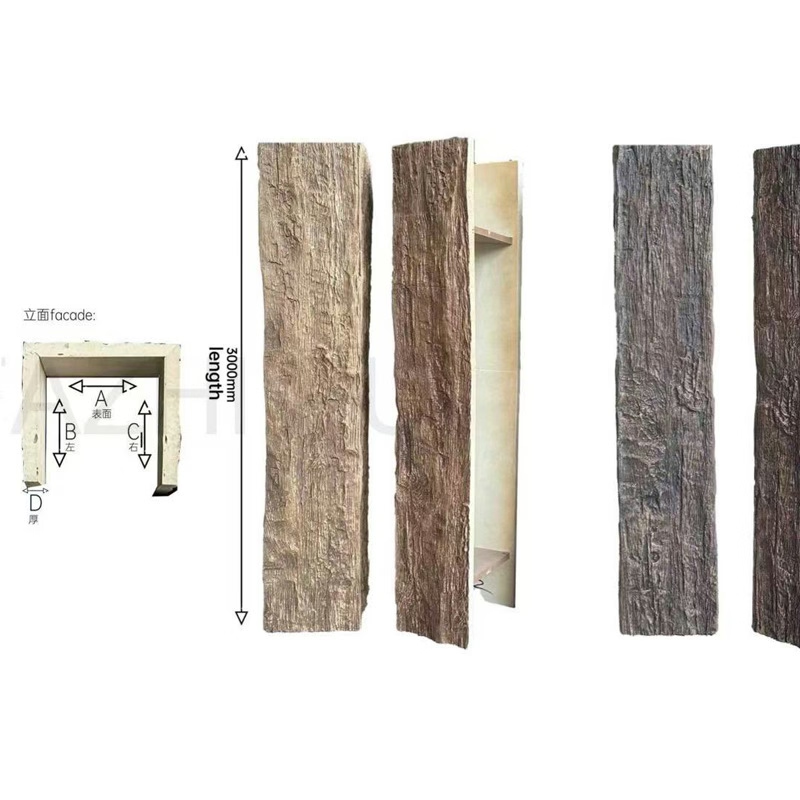
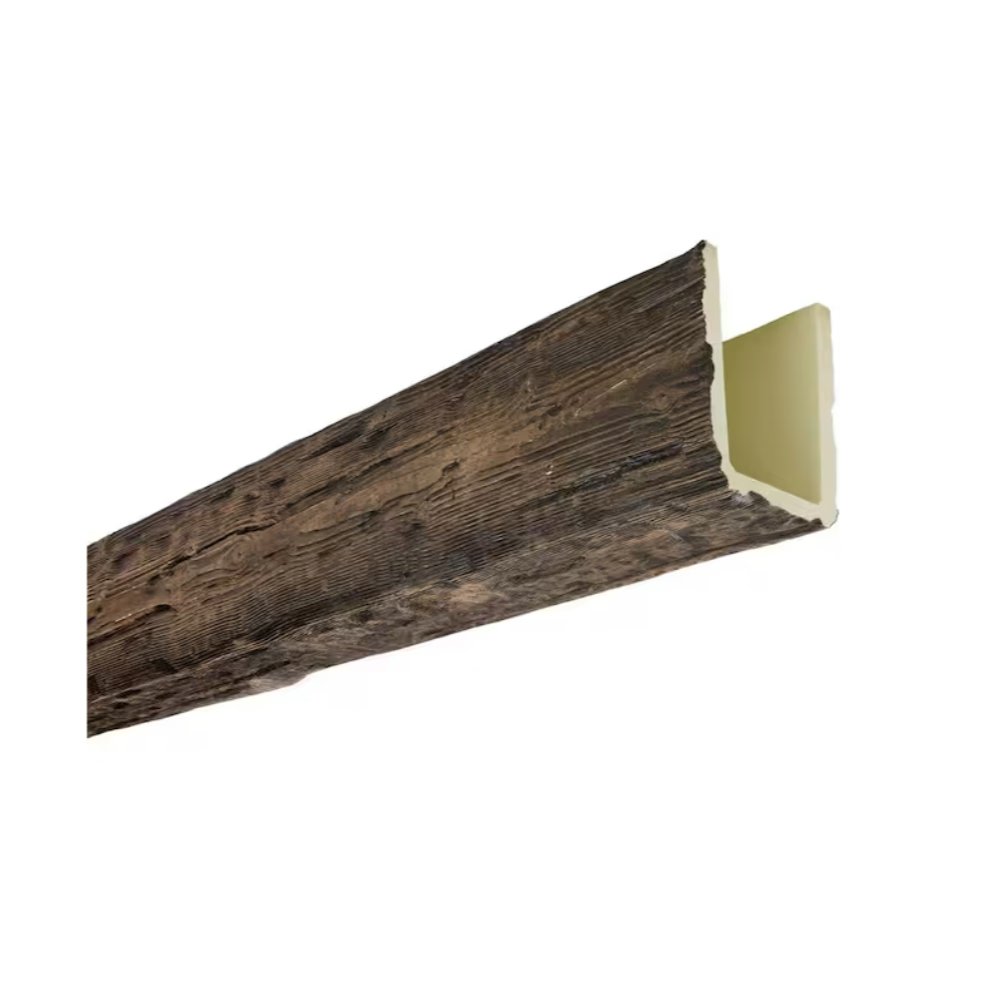
The texture work on restoration-grade beams receives particular attention during manufacturing. Rather than the simplified grain patterns common in mass-market products, these beams feature detailed surface character including weathering marks, tool marks consistent with period construction methods, and color variations that reflect natural timber aging. Manufacturers employ artisans who study archival photographs and physical examples of historic timber to inform their design work, ensuring that the finished products capture genuine period aesthetics.
Dimensional accuracy represents another critical distinction. Historic timber framing followed specific conventions based on available materials, construction techniques, and architectural traditions of different eras. A Jacobean manor house features different proportions than a Georgian townhouse, which differs again from Victorian railway villa construction. Restoration beams come in dimension profiles matched to these period-specific conventions, allowing installations that feel architecturally correct rather than generically rustic.
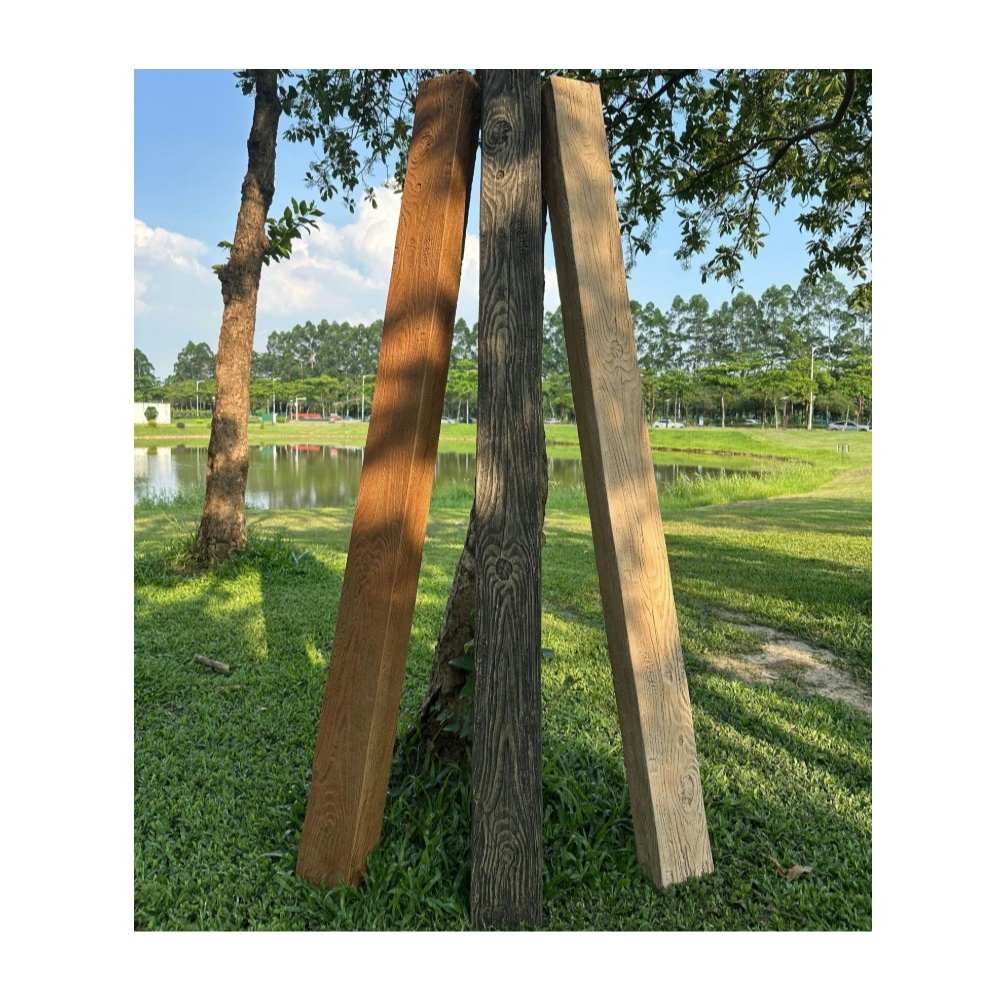
Species selection for visible grain and color further supports authenticity. Oak, chestnut, and Douglas fir dominated different regions and time periods based on local availability and construction fashion. The polyurethane formulations used in restoration beams can convincingly replicate these different timbers, with grain patterns, color tones, and even subtle species-specific characteristics like the distinctive ray flecks found in oak. This species-level attention matters in heritage contexts where knowledgeable observers might question obviously incorrect timber choices.
The engineering approach to restoration beams acknowledges the structural context of historic properties. Many heritage houses have settling foundations, aging framing members, and movement patterns that would stress rigidly mounted components. Restoration beam mounting systems accommodate this movement through flexible connection details that maintain appearance while allowing the building to breathe. This engineering consideration prevents the damage that rigid mounting would cause to both the beam and surrounding historic fabric.
Finish options range from raw material requiring site finishing to fully painted or stained surfaces matching specific color specifications. Heritage color research—examining paint analysis from the building or comparable structures—can inform finish selection for properties where color authenticity matters. Some restoration projects require laboratory analysis of existing paint layers to determine historically accurate color schemes, and finish manufacturers can match these specifications precisely.
Meeting preservation standards requires more than aesthetic accuracy. Fire performance, structural capability, and material composition face regulatory requirements that vary by jurisdiction and building classification. Restoration beams carrying appropriate certifications satisfy these requirements while maintaining visual authenticity. Heritage officers reviewing renovation plans appreciate the documentation supporting code compliance alongside traditional appearance.
The installation process for heritage properties deserves careful planning. Historic plasterwork, decorative moldings, and existing architectural features require protection during beam mounting. Experienced installers understand these sensitivities, using masking, careful tool handling, and techniques that minimize impact on surrounding surfaces. For listed buildings where any damage requires consent to repair, this care protects both the property and the owner's compliance position.
Maintenance considerations differ from standard applications in heritage contexts. Repainting or refinishing protocols must respect both the original appearance intent and any heritage designations affecting the property. Documentation of original appearance, including detailed photography before work begins, supports future maintenance decisions and provides valuable records for subsequent owners or conservation reviews.
Cost-benefit analysis consistently favors restoration beams over genuine period timber for most heritage applications. The material cost savings alone often exceed fifty percent compared to reclaimed timber of comparable visual quality. Installation labor costs decrease further because lightweight faux beams require less handling equipment and fewer workers. The combined savings make heritage-appropriate aesthetics achievable within renovation budgets that genuine materials would exceed.
Architects and interior designers working on heritage projects increasingly specify restoration-grade beams as standard practice. The combination of authentic appearance, modern performance characteristics, and reasonable pricing makes these products the sensible choice for projects where budget constraints exist alongside preservation requirements. This professional endorsement carries weight when heritage officers or building control authorities review proposed work.
Documentation supporting heritage applications benefits from using recognized manufacturers with established track records. References from comparable projects, manufacturer credentials related to historic preservation work, and specification sheets detailing material properties all strengthen applications for listed building consent or heritage area renovation approval. Procurement from established sources also supports consistency across larger projects where multiple beam installations must appear related rather than mismatched.
The emotional dimension of heritage restoration deserves acknowledgment. Buildings like Edinburgh's Victorian terrace connect present owners to centuries of human experience embedded in their walls. Choosing materials that respect this inheritance—whether required by regulation or simply desired by thoughtful owners—honors the accumulated meaning the structure carries. Restoration beams make this respect achievable without sacrificing visual integrity or requiring impractical budgets.
Modern manufacturing techniques serve heritage preservation rather than undermining it. What might seem paradoxical—using advanced polyurethane technology to recreate historic timber—actually represents thoughtful resource use that keeps heritage buildings viable for future generations. The authenticity achieved through careful manufacturing ensures that these structures retain their character while functioning for contemporary purposes.
Technical References
ASTM standards cited in every specification
Test Data
Lab results from internal testing program
Updated 2026
Reviewed against current product specs