The craftsman bungalow had witnessed a century of American history in its quiet Midwestern street. Built in 1923 for a factory foreman and his family, the house retained its original floor plan and much of its original character—except for the ceiling beams that had been removed during a misguided 1970s renovation. When the current owners decided to restore authenticity, they faced a challenge familiar to anyone undertaking historic renovation: finding materials that matched period aesthetics without requiring impossible budgets or structural compromises.
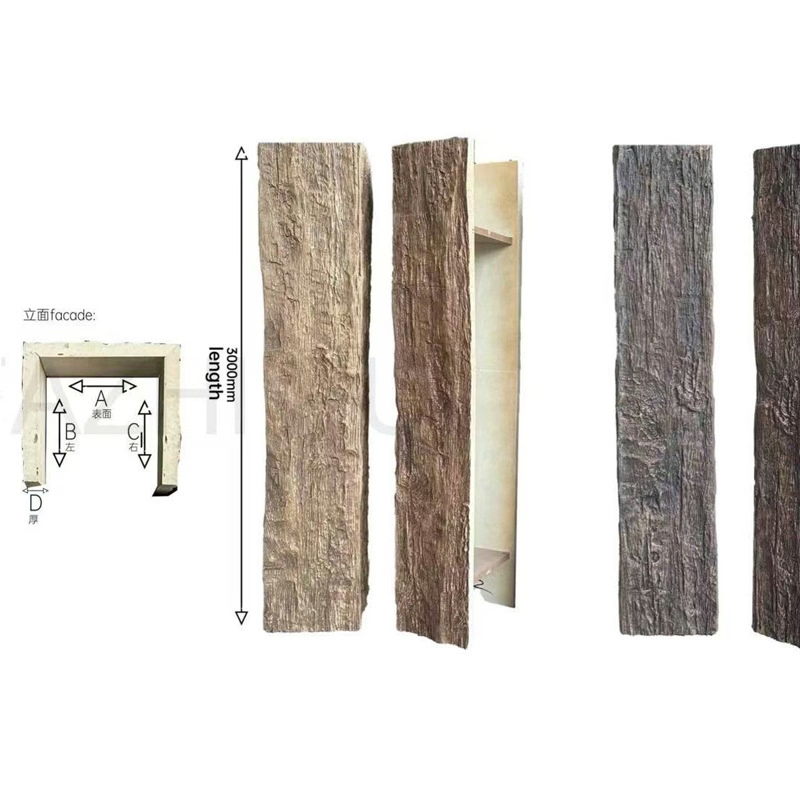
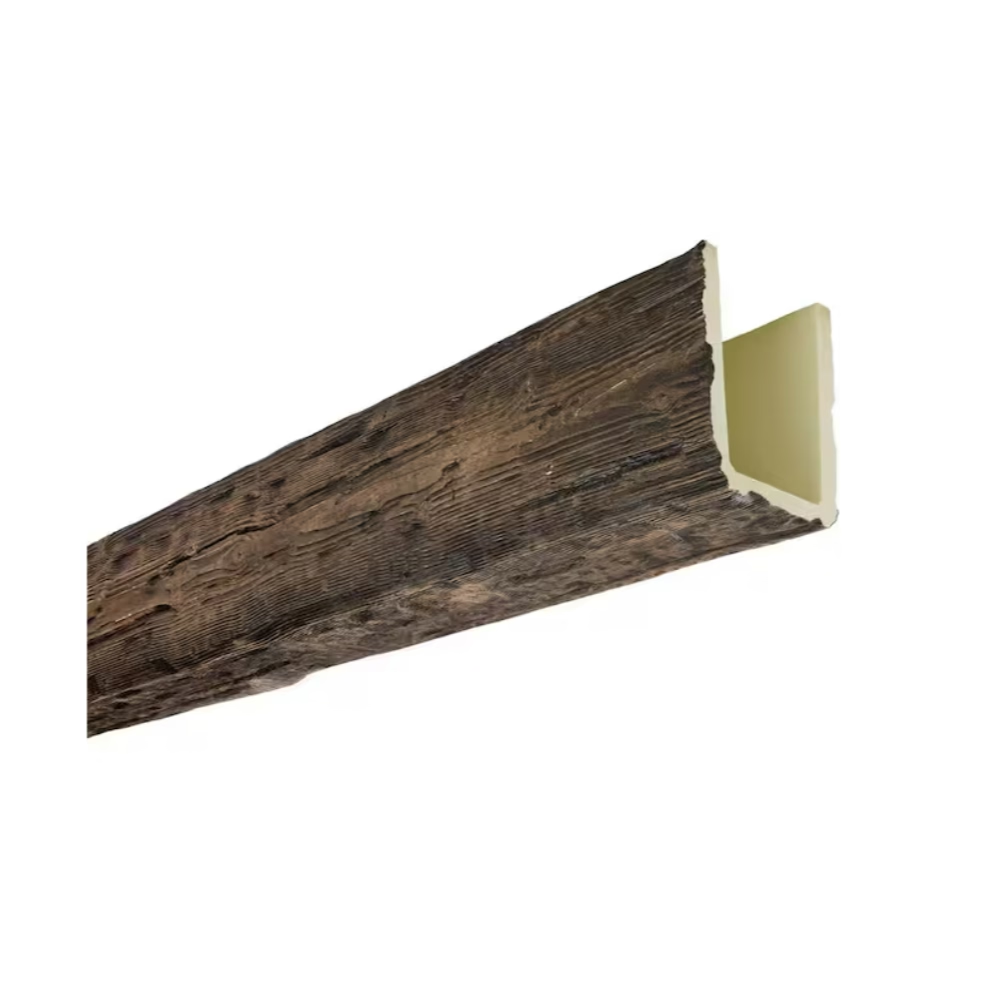
Restoration-grade faux beams answered that challenge comprehensively. Unlike the generic options available at home improvement centers, these beams carried the specificity required for historically sensitive work. The grain patterns, proportions, and surface textures had been developed through research into craftsman-era construction, ensuring that the restored ceilings would appear as though they'd always belonged to the house.
The renovation process began with documentation. The owners photographed similar bungalows in their region, examined archival photographs from the local historical society, and consulted with a preservation architect who specialized in craftsman-era residential architecture. This research revealed that the original beams had been exposed fir timber, approximately eight inches wide and extending from front to back across the living room ceiling. The grain had been left relatively natural, with a slight amber-toned finish that complemented the era's preference for warm wood tones.
Armed with these specifications, the restoration team sourced beams matching these exact characteristics. The polyurethane formulation replicated fir's distinctive straight grain and subtle color variation, while dimensional accuracy ensured proper proportion relative to the room's scale. Mounting brackets designed for historic applications provided secure attachment without penetrating original plasterwork more than necessary—a consideration that mattered for a house potentially eligible for historic register listing.
The installation itself required two days for a crew experienced with heritage work. Careful measurement ensured that beam spacing aligned with original construction logic—craftsman builders typically spaced beams at regular intervals that related to room dimensions and structural requirements. Matching this spacing created visual harmony that random placement would have disrupted.
Finish work completed the restoration. Rather than the uniform sheen of mass-produced beams, the craftsman bungalow beams received a hand-rubbed finish that approximated the original amber tone while allowing subtle variations visible in period-authentic woodwork. The result satisfied even the most detail-oriented preservation standards while delighting the homeowners who had dreamed of their house looking as its builders had intended.
Material choices for old house renovation merit careful consideration beyond aesthetics alone. Weight affects structural requirements, and many historic houses were not designed to support the substantial loads that genuine timber beams would add. Polyurethane beams weighing a fraction of equivalent timber reduce this concern substantially, often eliminating the need for structural reinforcement that would complicate renovation and increase costs.
Moisture behavior differs critically between genuine timber and modern alternatives. Historic houses often experience seasonal humidity fluctuations that cause real wood to expand and contract, potentially creating gaps, squeaks, or ceiling damage. Polyurethane's dimensional stability prevents these issues, maintaining tight joints and consistent appearance regardless of environmental conditions. This stability proves particularly valuable in houses where HVAC systems have been added to structures originally designed for natural ventilation.
Maintenance expectations for restored beams align with the broader philosophy of historic preservation. Unlike genuine timber that might require periodic refinishing, repair of splits, or treatment for insect damage, polyurethane restoration beams need only occasional cleaning to maintain their appearance. This low-maintenance profile suits homeowners who want to enjoy their renovated spaces without ongoing restoration commitments.
Compatibility with other historic materials matters in older house contexts. Polyurethane beams accept standard wood finishes, repair caulks, and paint systems, allowing integration with surrounding woodwork that may require periodic maintenance. This compatibility ensures cohesive appearance across the renovation while permitting normal care routines for the entire interior.
Energy considerations have evolved in historic renovation thinking. While previous generations often sealed old houses against air infiltration, current best practices balance energy efficiency with moisture management that protects historic fabric. Restoration beams contribute to this balance by providing visual weight without thermal mass that might affect heating and cooling dynamics. The appearance of substantial timber overhead satisfies design expectations while keeping actual structural behavior manageable.
Building code compliance requires attention in any renovation, including historic properties. Current codes often permit alternative materials that provide equivalent performance to traditional approaches, and polyurethane beams with appropriate fire ratings satisfy these requirements while preserving authentic appearance. Documentation supporting code compliance should accompany renovation plans, particularly for properties subject to historic review processes.
The broader movement toward thoughtful historic preservation has embraced modern materials that support authentic outcomes. What matters is the result—the appearance and behavior of the finished space—rather than ideological insistence on traditional materials regardless of practical considerations. Restoration-grade faux beams represent this pragmatic approach, achieving period-appropriate results through contemporary manufacturing while respecting the character that makes historic properties worth preserving.
Future renovations will likely see increased use of these materials as awareness grows and more manufacturers develop period-specific offerings. The craftsman bungalow's restored beams will endure for decades, giving future owners the same pleasure while requiring minimal attention beyond routine cleaning. That durability serves both practical and preservation interests, keeping historic houses beautiful and livable for generations yet to come.
Technical References
ASTM standards cited in every specification
Test Data
Lab results from internal testing program
Updated 2026
Reviewed against current product specs