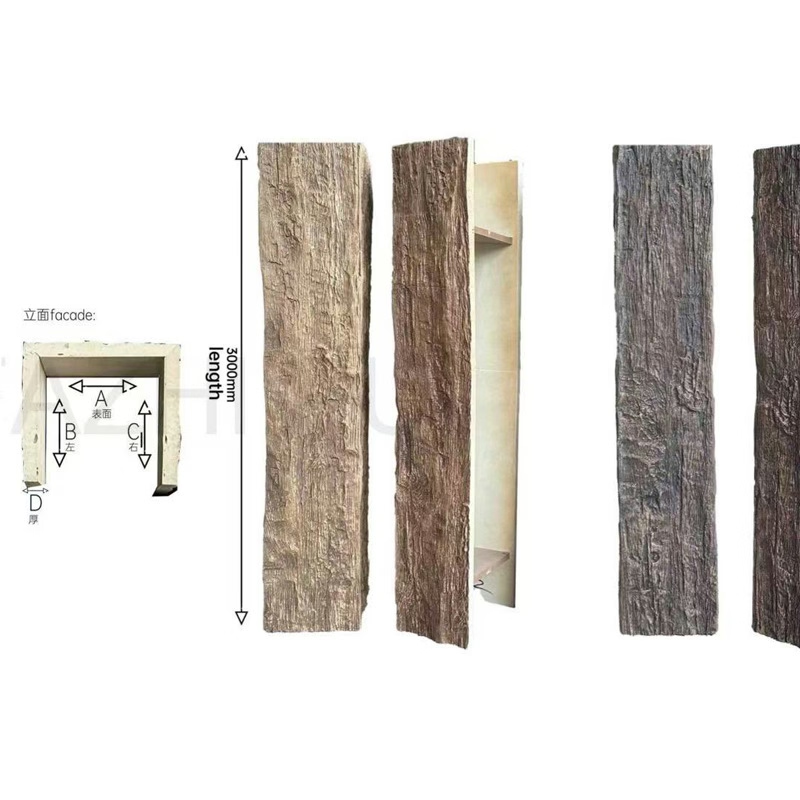
Custom interior decoration often requires elements that standard products cannot provide. Dimensional requirements, weight constraints, and design specificity may demand custom solutions that solid materials make impractical. Hollow construction transforms these challenges into opportunities, enabling decorative treatments that conventional approaches would preclude.
Understanding Hollow Beam Construction
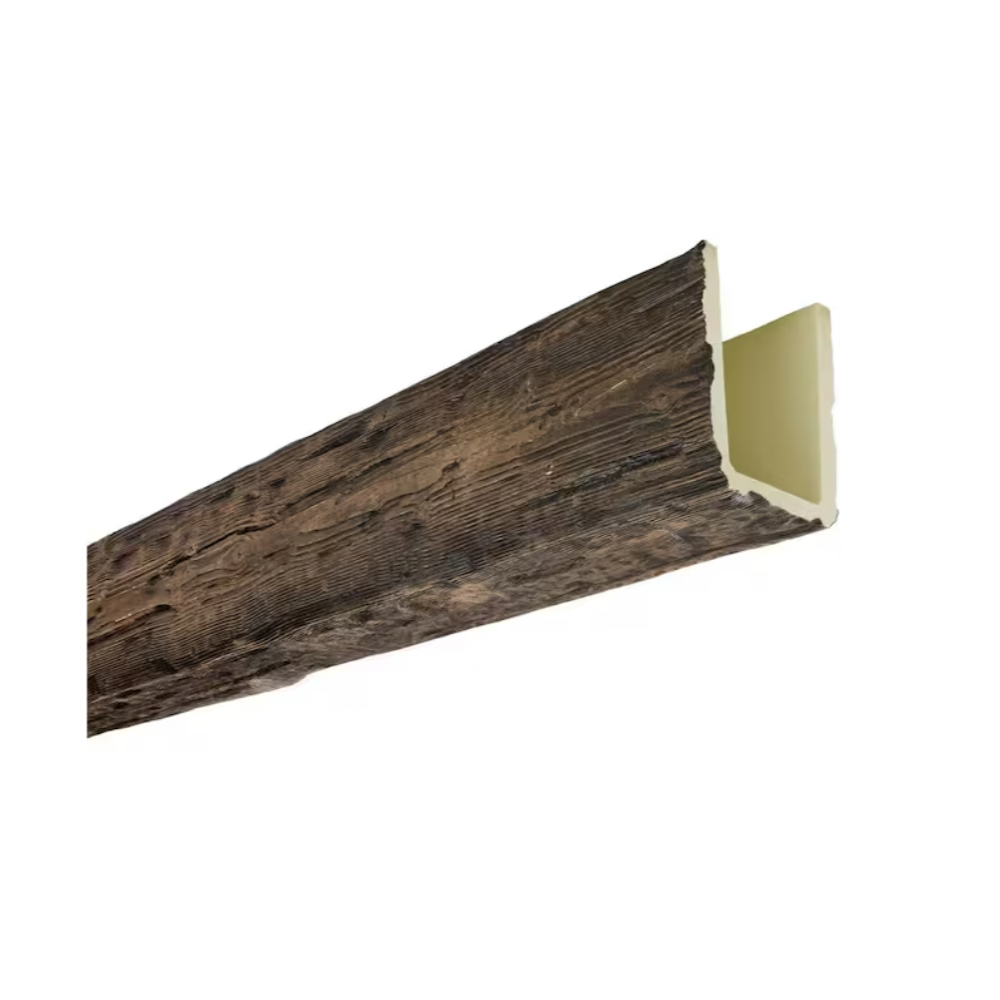
Hollow beams feature hollow cores that dramatically reduce weight while maintaining substantial external dimensions. This construction approach enables installation of visually impressive beams in locations where solid alternatives would be impractical or impossible. The weight reduction often exceeds 50% compared to solid polyurethane of equivalent external dimensions.
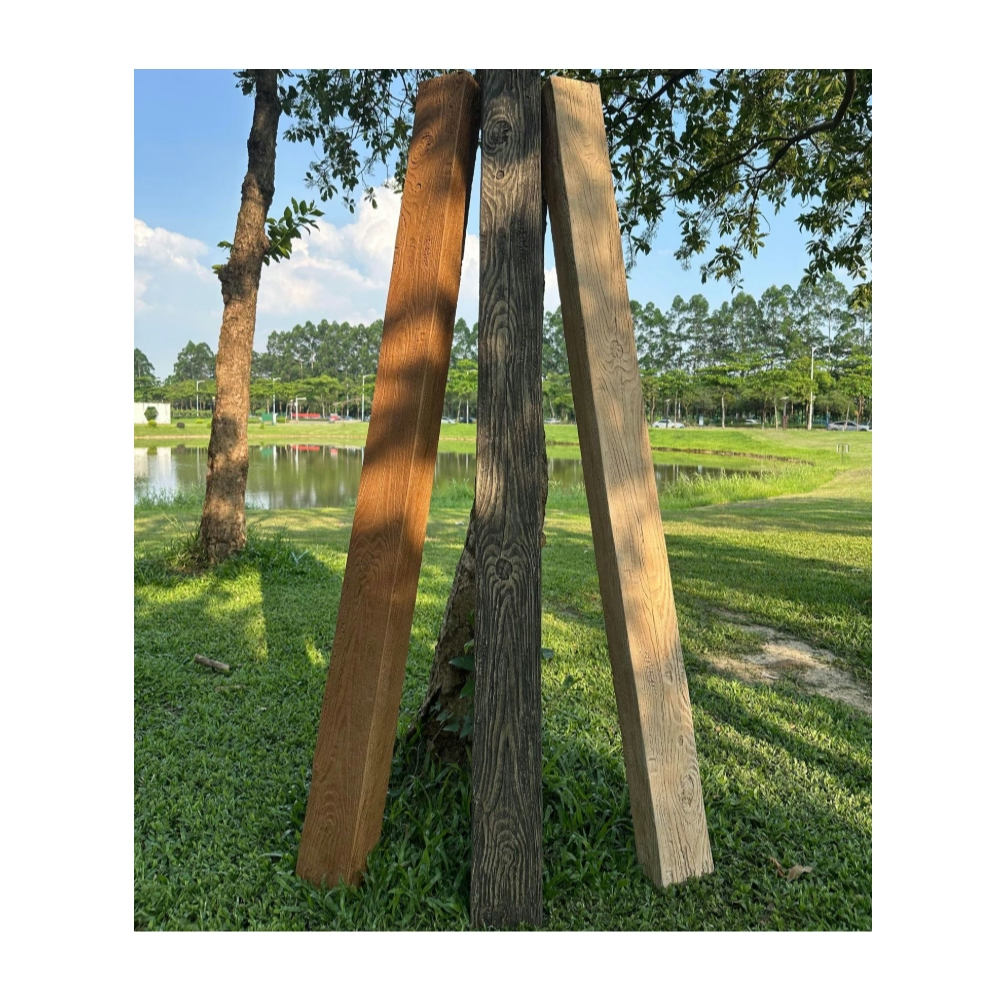
The hollow construction does not compromise visual appearance from normal viewing distances. External surfaces replicate solid beam aesthetics exactly, with authentic wood grain, color variations, and surface textures. Only close inspection or handling would reveal the hollow interior, and neither is typical in installed applications.
Structural requirements for hollow beams differ from solid alternatives. Wall or ceiling mounting must address cantilever forces that hollow sections create differently than solid beams. Quality manufacturers provide appropriate mounting guidelines that ensure reliable performance despite hollow construction.
Advantages for Custom Applications
Weight reduction enables applications that solid alternatives would preclude. Long beam spans become practical without structural reinforcement that solid materials would require. Elevated mounting positions that would challenge solid beam handling become feasible. The accessibility expands design possibilities substantially.
Dimensional flexibility supports custom requirements that standard products cannot meet. Hollow construction enables larger apparent dimensions without proportional weight increases. Custom lengths and profiles become practical when hollow construction reduces material requirements. These capabilities enable design visions that standard products would restrict.
Cost considerations favor hollow construction for many applications. Reduced material requirements translate to lower product costs. Shipping expenses decrease with lighter weight. Installation labor reduces correspondingly. These savings make hollow beams attractive for budget-conscious projects without compromising aesthetic impact.
Custom Length and Profile Options
Standard length availability may not meet specific project requirements. Hollow construction enables economical custom lengths that solid materials would make prohibitively expensive. Whether addressing non-standard ceiling dimensions or achieving specific visual proportions, custom length capability provides valuable flexibility.
Profile customization addresses aesthetic requirements that standard shapes cannot satisfy. Hollow construction enables complex profiles that solid materials would make difficult to manufacture. Traditional, contemporary, or entirely custom profiles become achievable at reasonable costs when hollow construction reduces material requirements.
Non-standard widths and depths enable visual impact proportional to specific spatial requirements. Spaces requiring unusual proportions benefit from custom manufacturing that hollow construction makes practical. Design intentions no longer need妥协 to available product dimensions.
Installation Considerations for Hollow Beams
Mounting requirements differ from solid beam installations due to hollow construction characteristics. Manufacturers specify appropriate hardware and spacing for their specific products. Following these guidelines ensures reliable performance that arbitrary mounting approaches cannot guarantee.
Support spacing may require closer intervals than solid beam installations. The hollow core creates different structural behavior than solid materials, affecting how beams respond to load and stress. Quality manufacturers provide load charts and spacing recommendations based on testing rather than estimation.
Attachment hardware selection should consider hollow beam characteristics. Standard fasteners designed for solid materials may not perform appropriately in hollow sections. Specified hardware ensures proper engagement with beam structure while avoiding damage that improper approaches might cause.

Applications and Use Cases
Ceiling beams spanning large distances benefit substantially from hollow construction. The length required for impressive spans would create weight impractical for solid alternatives. Hollow construction enables spans that transform spaces dramatically without requiring structural accommodation that would compromise design intentions.
Wall-mounted applications where beams serve as decorative panels rather than ceiling elements particularly benefit from hollow construction. Substantial appearance without corresponding weight simplifies mounting to wall surfaces that might not support solid alternatives. The visual impact of wall beams enhances rooms without challenging structural capabilities.
Canopy and shade structures benefit from hollow beam aesthetics without weight concerns that would affect structural engineering. The appearance of timber beams enhances outdoor living areas while hollow construction keeps weight manageable for supporting structure. This capability enables design approaches that solid materials would complicate.
Finish Options for Hollow Beams
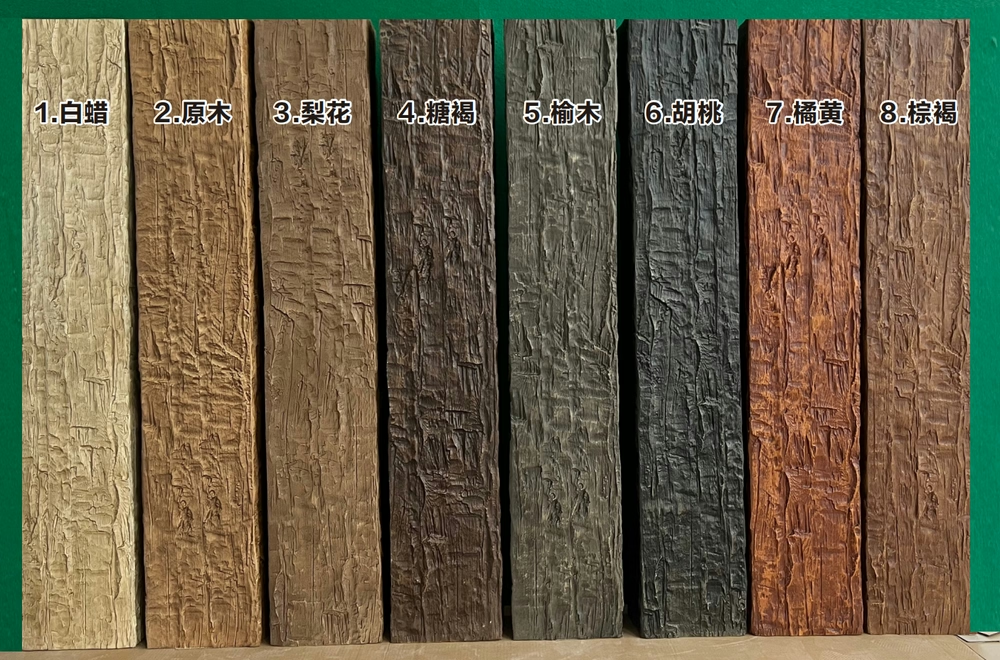
Factory finishing ensures consistent appearance without on-site finishing work. Pre-finished hollow beams arrive ready for installation with uniform color and texture. This approach suits projects with tight schedules or limited finishing capabilities.
Custom finishing on-site enables precise coordination with specific color requirements. Hollow beams accept stains, paints, and clear coats designed for polyurethane surfaces. Professional finishing contractors can achieve results comparable to factory finishing with appropriate materials and techniques.
Finish durability in hollow beam applications remains comparable to solid alternatives. External surfaces are identical regardless of interior construction. Quality finishes resist scratches, UV exposure, and environmental conditions equally well whether covering solid or hollow sections.
Quality Assessment and Selection
Wall thickness in hollow beams affects both appearance and performance. Thicker walls provide better impact resistance and mounting strength. Thinner walls reduce weight but may be more susceptible to damage. Quality products balance these factors appropriately for intended applications.
Material density varies between manufacturers and product lines. Higher-density formulations provide better durability and mounting performance. Lower-density options may be more economical but less robust. Understanding these tradeoffs enables appropriate specification for specific requirements.
Manufacturer reputation provides useful quality indication. Established producers with demonstrated commitment to quality control typically deliver more consistent results. References, samples, and warranty terms all provide useful quality assessment information.
Technical References
ASTM standards cited in every specification
Test Data
Lab results from internal testing program
Updated 2026
Reviewed against current product specs