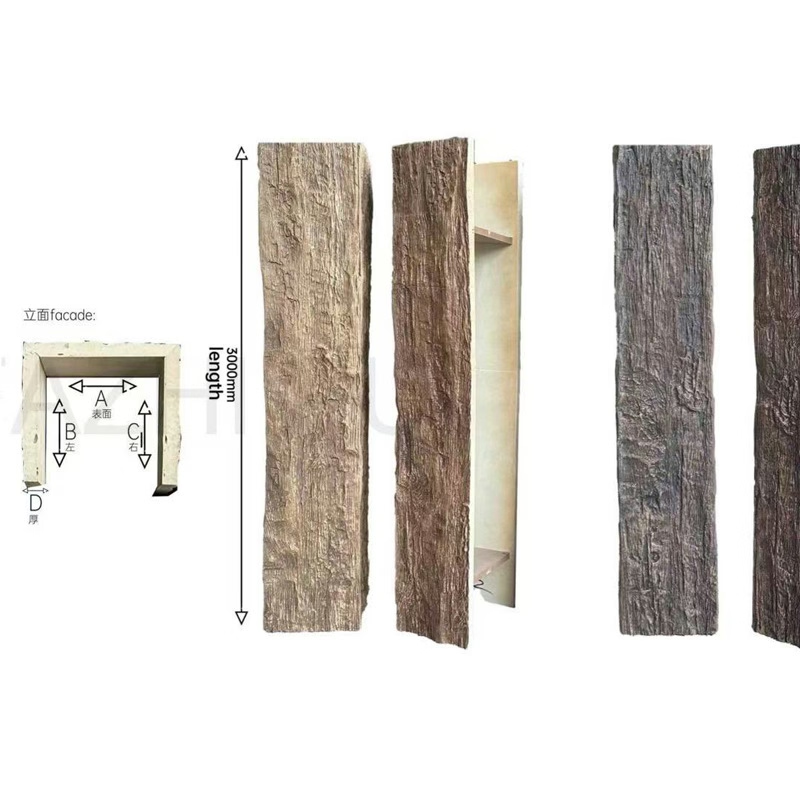
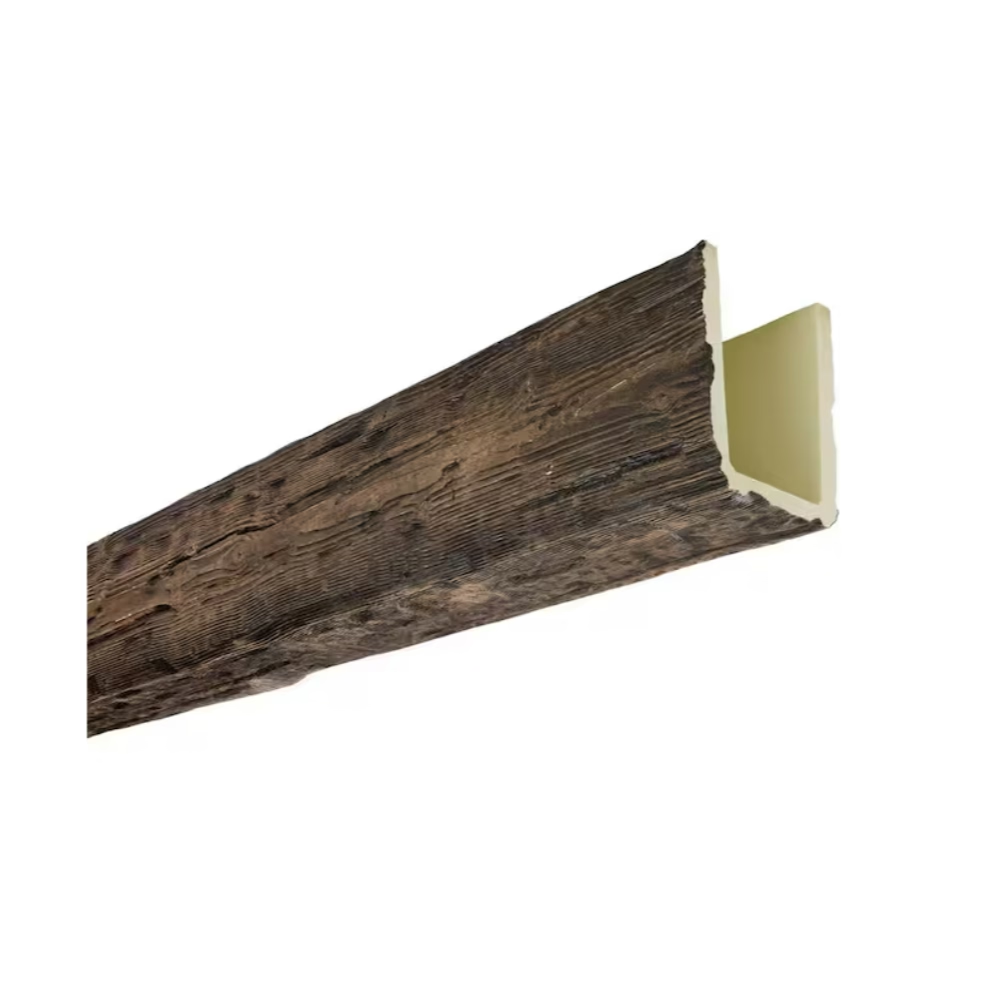
Comfort is not a style. It is a quality that permeates a space regardless of whether the aesthetic skews modern, traditional, coastal, or minimalist. In a guest room, comfort is the primary objective. The room must make whoever sleeps there feel attended to, rested, and valued. One of the most underutilized tools for achieving this in a guest room is the ceiling, and polyurethane faux beams finished in soft, warm tones offer one of the most accessible paths to a more comfortable-feeling space.
The psychology of ceiling height and warmth plays a real role in how people experience a room. High, bright ceilings feel expansive and energetic but can feel impersonal in a bedroom. Low ceilings feel intimate and safe but can feel claustrophobic. By introducing beams into the ceiling plane, you create visual structure that breaks the ceiling into smaller, more digestible sections. The wood texture adds warmth that makes the overhead space feel closer and more connected to the human scale of the room below.
The Case for Soft Tones in Beam Finishes
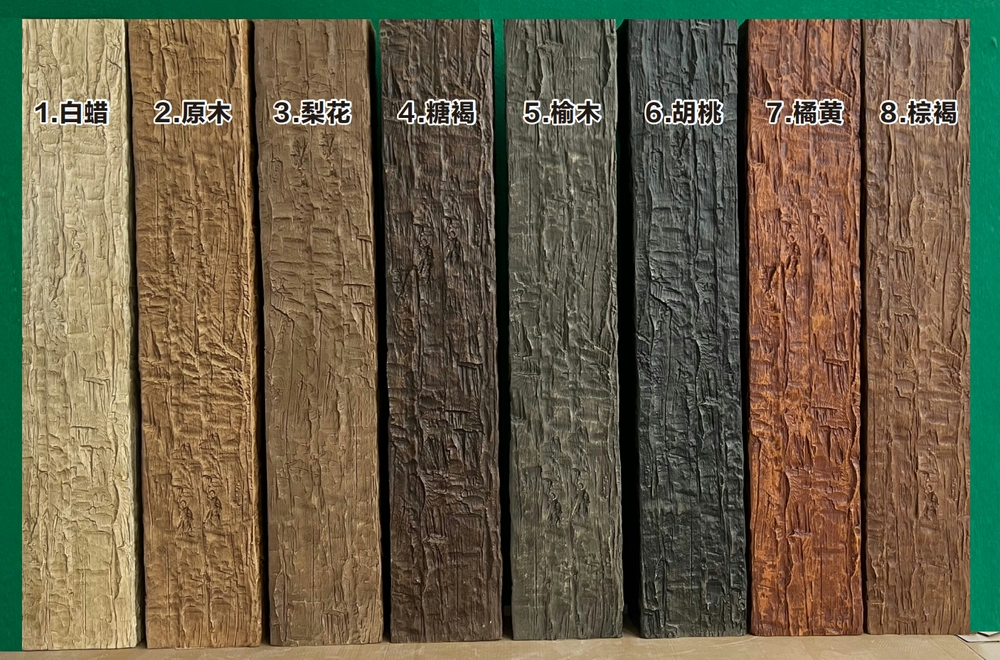
The term "soft tone" in the context of wood finishes refers to colors that are muted, warm, and moderate in saturation. Think of the difference between a deep mahogany and a honey maple, or between charcoal-stained timber and natural white oak. Soft tones do not shout. They invite. In a guest room, where the goal is relaxation, that invitational quality matters.
Soft-toned beam finishes include natural pine, butternut, honey maple, light oak, and wheat-finished polyurethane beams. These colors sit comfortably in rooms with neutral walls, soft lighting, and layered textiles. They photograph well in vacation rental listings and appeal to a broad range of aesthetic preferences without committing to any single one.
There is also a practical dimension to soft-toned beams in the context of guest room lighting. Warm wood tones reflect light differently than dark finishes, contributing to a brighter-feeling room overall. In guest rooms that may not receive abundant natural light, the reflective quality of a soft-toned beam ceiling can make a meaningful difference in the perceived brightness and cheerfulness of the space.
Installing Beams in a Guest Room: Practical Approaches
Centerline Single Beam
The simplest and most impactful installation approach is a single beam running down the center of the guest room ceiling, perpendicular to the direction of the ceiling joists. This approach works in rooms of virtually any size and requires minimal hardware. The beam becomes an immediate design feature without dominating the room.
For this installation, choose a beam width that feels proportional to the room. In a small guest room with an eight-foot ceiling, a six-inch-wide beam is usually the right choice. In a larger room or a room with nine-foot ceilings, an eight to ten-inch beam provides better visual balance. The finish should be selected to complement the dominant wall color and the floor finish.
Parallel Beam Pair
Two beams running parallel across the ceiling add a sense of framing and structure to the room. This approach is particularly effective above the bed, where the beams create a visual canopy that defines the sleeping area. The beams should be spaced far enough apart to leave adequate ceiling visible between them — approximately three to four feet on center in a standard room.
The parallel pair approach works especially well when the beams extend beyond the bed area to cover the full length of the room. This continuity creates a sense that the ceiling treatment is intentional and architectural rather than decorative, which elevates the perceived quality of the entire room.

Complementing the Beams with Wall and Floor Treatments
The beams will not exist in isolation. They will interact with the walls, floor, furniture, and lighting of the room, and the quality of those interactions determines whether the overall result feels comfortable or chaotic.
In a guest room with soft-toned beams, the safest wall color approach is a warm neutral. Soft greige, warm gray, gentle taupe, or a very light warm white all work well. These colors are far enough from the beam finish to provide contrast but close enough in temperature to feel harmonious. A cool blue-gray wall, by contrast, can feel dissonant next to warm-toned beams, creating a color clash that the eye notices even if it cannot immediately identify.
On the floor, a neutral rug in a natural fiber — seagrass, jute, or wool — anchors the furniture group and adds an additional layer of texture that complements the beams overhead. The rug should be large enough to extend at least eighteen inches beyond the sides and foot of the bed, creating a unified furniture zone that feels intentional.
Lighting the Soft-Toned Beam Ceiling
Lighting design for a guest room with beam ceilings requires some forethought, because the beams will affect how light travels across the ceiling and into the room. Downlights installed between beams create pools of light on the ceiling plane that highlight the beam texture and add depth. Uplighting from below, directed at the beam undersides, creates a warmer ambient glow that makes the room feel more intimate in the evening.
Bedside lamps are essential in any guest room and should be selected with the beams in mind. A lamp with a natural material shade — rattan, linen, or ceramic — reinforces the warm, organic aesthetic established by the beams. Avoid lamps with chrome or glass shades, as these introduce materials that feel out of place in a soft, natural palette.
If the room has a ceiling fan, it can be mounted between beams or in the center of a beam-free ceiling section. Modern flush-mount ceiling fan designs in matte black or white blend reasonably well with most beam treatments, though the mounting location should be planned before the beam installation to avoid conflicts.
Caring for Soft-Toned Faux Beams
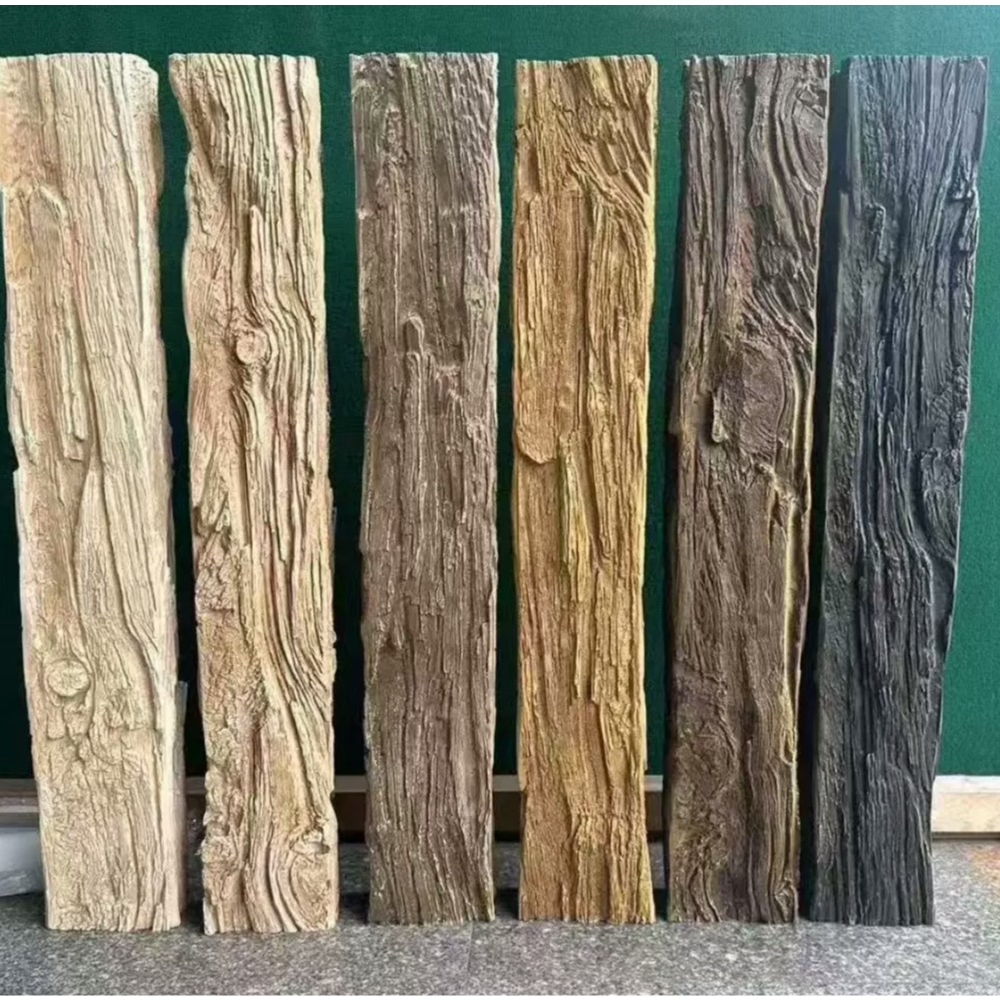
One of the practical benefits of polyurethane beams is their ease of maintenance, but soft-toned finishes require slightly more attention than dark finishes in rooms with high light exposure. The lighter the finish, the more visible any dust accumulation or surface discoloration becomes over time. Periodic cleaning with a soft cloth and mild cleaner keeps the beams looking fresh.
In vacation rental or commercial guest room applications, establish a cleaning protocol that includes dusting the beams during regular room turnovers. In a residential setting, a seasonal dusting is usually sufficient. The UV stability of quality PU beam finishes means that soft-toned beams will not yellow or fade noticeably over time, even in rooms with significant sun exposure, provided the finish is properly formulated and applied.
For trade buyers sourcing soft-toned PU beams, emphasizing the maintenance advantages is a strong selling point for property managers and vacation rental hosts who need finishes that look great with minimal upkeep. The combination of aesthetic warmth and practical durability is exactly what this market segment needs.
Technical References
ASTM standards cited in every specification
Test Data
Lab results from internal testing program
Updated 2026
Reviewed against current product specs