The great room represents the heart of contemporary residential design—a space where families gather, entertain, and spend their most meaningful domestic hours. These expansive, open-plan interiors present both extraordinary opportunities and significant design challenges. Statement faux wood ceiling beams address these challenges directly, providing the architectural interest that great rooms need while respecting the openness that makes them appealing in the first place.
The Great Room Design Challenge
Great rooms achieve their popularity through spatial generosity that traditional room divisions cannot match. The absence of walls creates flow between cooking, dining, and living functions that makes family life feel more connected. However, this openness creates a challenge: without architectural division, great rooms can feel like undifferentiated volumes rather than coherent living spaces. Ceiling beams solve this problem by creating visual boundaries that don't compromise physical openness.
The scale of great rooms amplifies design decisions in ways that smaller rooms don't. What might work perfectly in a modest living room can seem lost in a great room's expanded volume. Conversely, treatments scaled for great rooms overwhelm smaller spaces. This scaling challenge means that great room beam specifications must be generous to achieve intended impact—caution leads to undersized treatments that fail to perform.
Open great room plans often serve multiple functions simultaneously. Cooking, dining, and relaxation occur in shared space, requiring visual organization that helps occupants understand functional zones. Beams provide this organization through strategic placement that creates visual separation without physical barriers. The best great room beam installations guide movement and define activities while maintaining the spatial unity that makes great rooms attractive.
Defining Functions Within Open Plans
Strategic beam placement creates visual boundaries between functional zones within great rooms. A beam running above the kitchen island creates separation between cooking and living areas without interrupting sight lines or physical flow. This visual organization helps family members understand where activities occur without requiring walls that would fragment the open plan.
The number and placement of beams affects how many zones can be defined within a great room. Two or three beams can establish basic functional divisions; more beams create finer distinctions between activity areas. However, excessive beam placement risks creating visual clutter that undermines the clean aesthetic great rooms typically require. Finding the balance between adequate definition and excessive complexity requires understanding how beams interact visually.
Zone definition through beams works most effectively when it aligns with actual functional divisions. Beams placed above transition zones between kitchen and living areas address real boundaries in how families use space. Beams placed arbitrarily, without functional rationale, create confusion rather than organization. This functional alignment ensures that beam placement decisions make sense both visually and practically.


Architectural Character Through Beams
Beyond functional definition, great room beams establish the architectural character that distinguishes one interior from another. The style, scale, and detailing of beams communicate design intent before furniture, colors, or accessories enter the picture. This foundational role means that beam selection effectively determines the character that everything else must harmonize with or deliberately contrast.
Traditional great room designs might feature beams with details referencing historical craftsmanship—visible joinery, chamfered edges, or period-appropriate proportions. These treatments establish classic elegance that complements traditional furniture and finishes. The beams themselves become art objects that reward extended viewing, adding layers of interest beyond their functional role.
Contemporary great rooms benefit from beam treatments that align with modern aesthetic values. Clean profiles, minimal detailing, and precise installation create the refined appearance that contemporary interiors require. These beams establish structure through their geometry rather than through surface ornament, supporting modern design principles that favor simplicity and clarity.
Rustic great rooms find their character through beams that reference hand-hewn timber traditions. Deeply weathered textures, natural color variations, and substantial dimensions create warmth that invites gathering. These beams make modern great rooms feel established and rooted, providing the sense of accumulated character that newer homes sometimes lack.
Scale Considerations for Great Room Volume
Great room ceilings present scale challenges that smaller rooms don't encounter. The rule of generous sizing applies with particular force to these expansive spaces—beams that might seem large in a modest room often read appropriately in great room volumes. What would be overwhelming in a bedroom might be barely sufficient in a great room. Understanding this scaling dynamic prevents both undersized treatments and misallocated restraint.
Ceiling height provides the primary constraint for beam sizing, but room width and length also influence perception. A ten-foot ceiling in a narrow room requires different proportions than the same ceiling height in a wide room. The viewing angle from normal standing positions affects how beams will read, meaning that beams should be evaluated from the positions occupants will normally occupy rather than from below directly.
The spacing between beams affects how the ceiling reads as a composition. Closely spaced smaller beams create texture through repetition; widely spaced larger beams create individual statements. Both approaches can work successfully depending on desired effects. The key lies in choosing an approach and executing it consistently rather than wavering between approaches in ways that create visual inconsistency.

Integration with Great Room Functions
Great room beams must perform well across the diverse activities these spaces host. Family movie nights require darkened rooms where beams disappear into shadow. Bright daytime gatherings require beams that contribute warmth without competing with other elements. Evening entertaining requires dramatic lighting that makes beams part of the visual entertainment. Successful beam installations address all these modes through appropriate specification and lighting design.
Above seating areas, beams create psychological enclosure that enhances the sense of comfort and protection. This enclosure effect makes conversation areas feel intimate despite their openness to adjacent spaces. The size and spacing of beams affects how pronounced this enclosure feeling becomes—more substantial beams create stronger enclosure; subtler treatments create lighter touch boundaries.
Over dining areas, beams provide overhead interest that elevates the experience of shared meals. The visual weight of beams above dining tables creates destination quality that distinguishes eating together from routine feeding. This elevation of everyday experience represents one of the great room's primary purposes, and beams contribute significantly to achieving it.
Material Authenticity in High-Visibility Spaces
Great rooms receive constant use and correspondingly constant visual attention. Every family gathering, every casual evening at home, every hosted event puts great room elements on display. This visibility demands authenticity that withstands close inspection—the kind of detailed examination that casual glances don't involve but extended habitation certainly does.
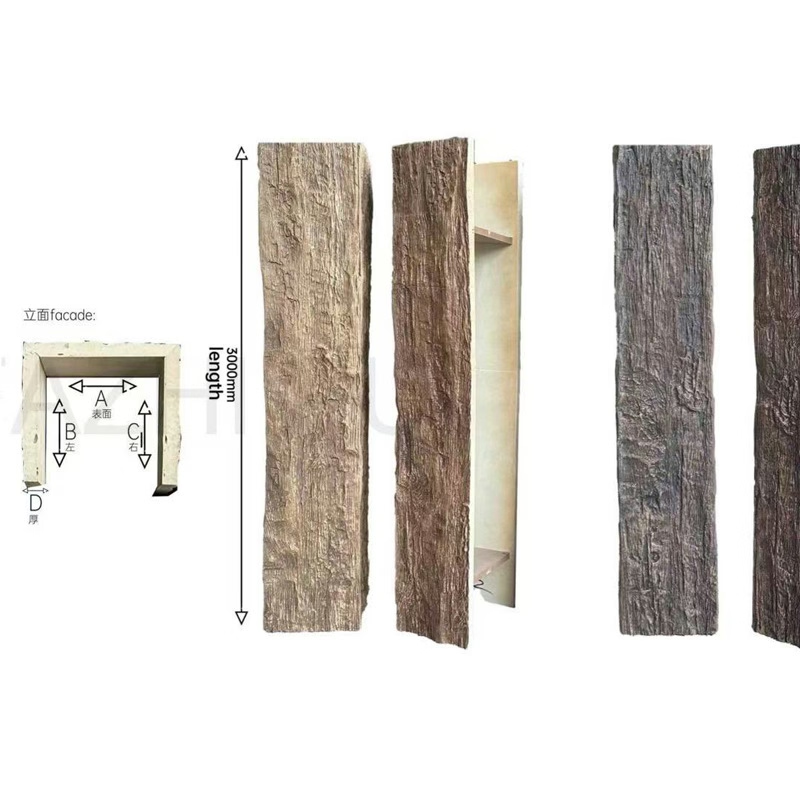
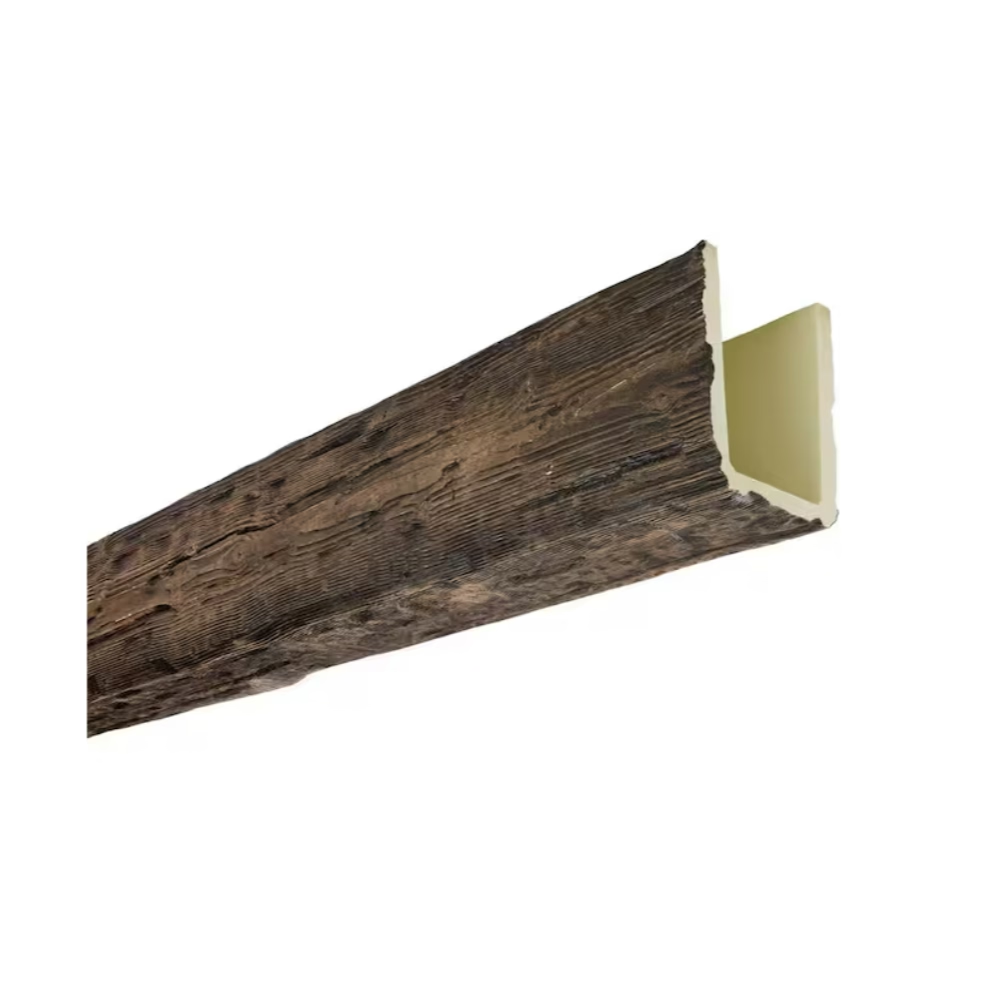
Polyurethane faux beams have achieved authenticity levels that satisfy demanding great room applications. Modern manufacturing techniques capture wood grain details with remarkable precision. Color variations that occur naturally in timber are simulated convincingly. Weathering effects, from subtle patina to dramatic distress, extend throughout the material rather than sitting on the surface. These authentic qualities allow faux beams to perform in high-visibility great room applications.
The hollow construction of most faux beams provides practical advantages that become particularly valuable in great room applications. The interior void can accommodate recessed lighting, wiring, or other utilities that great rooms typically require. This integration capability allows beams to contribute to room functionality as well as aesthetics, adding value beyond their visual contribution.
Lighting Design for Great Room Beams
Great room lighting must serve multiple purposes simultaneously, and beam integration plays crucial roles in achieving this multifunctionality. Ambient lighting should reveal beam form and texture without creating glare that interferes with room use. Task lighting for specific activities must coordinate with beam placement to avoid conflicts. Accent lighting can transform beams into dramatic features during evening hours.
Natural light from skylights and clerestory windows creates ever-changing relationships with ceiling beams throughout the day. These relationships affect how beams contribute to room character at different times. The best great room designs acknowledge these changes, specifying beams and beam placement that look appealing across the full range of lighting conditions the room will experience.
Artificial lighting systems can be designed to complement natural light cycles, shifting beam appearance as daylight changes. Warmer lighting during evening hours emphasizes beam warmth; cooler daytime lighting reveals different aspects of beam character. This lighting flexibility allows great room beams to contribute different qualities at different times, adding variety to daily experience.
Cost-Benefit Analysis for Great Rooms
Great room beam installations require significant investment that deserves careful evaluation against alternatives. When compared with genuine timber, faux beams provide substantial savings that can be allocated to other project elements. When compared with no beams at all, the enhancement that beams provide often justifies their cost by transforming adequate great rooms into exceptional ones.
The total value proposition for faux beams includes ongoing maintenance advantages that genuine timber cannot match. Great rooms are too important to their homes for maintenance disruptions—any sealing, staining, or repair work would interrupt family life in a central space. Faux beams that require no ongoing maintenance preserve the continuous enjoyment that great rooms should provide.
Investment in quality beams pays dividends through long-term performance and appearance retention. The best faux beams maintain their appearance indefinitely, protecting the initial investment through decades of service. This durability ensures that great room character remains consistent, avoiding the gradual decline that less durable materials would experience.
Professional Installation Excellence
Great room beams deserve professional installation that matches their importance to the home. The scale of great room installations amplifies any installation deficiencies—small errors that might go unnoticed in smaller rooms become obvious in great room volumes. Professional installers understand these dynamics and apply techniques appropriate for large-scale ceiling work.
Coordination with other great room elements—lighting, HVAC, ceiling fans—requires planning that begins before installation rather than improvisation during it. Professional installers work from coordinated plans that address all interface requirements. This planning prevents conflicts and ensures that beam installations integrate cleanly with other systems.
The finishing work that completes great room beam installations requires attention to details that distinguish excellent from merely adequate results. Joints, transitions, and attachment points all receive scrutiny that reveals any shortcuts taken during installation. Professional finishers understand what quality looks like and apply techniques that achieve it consistently.
Technical References
ASTM standards cited in every specification
Test Data
Lab results from internal testing program
Updated 2026
Reviewed against current product specs