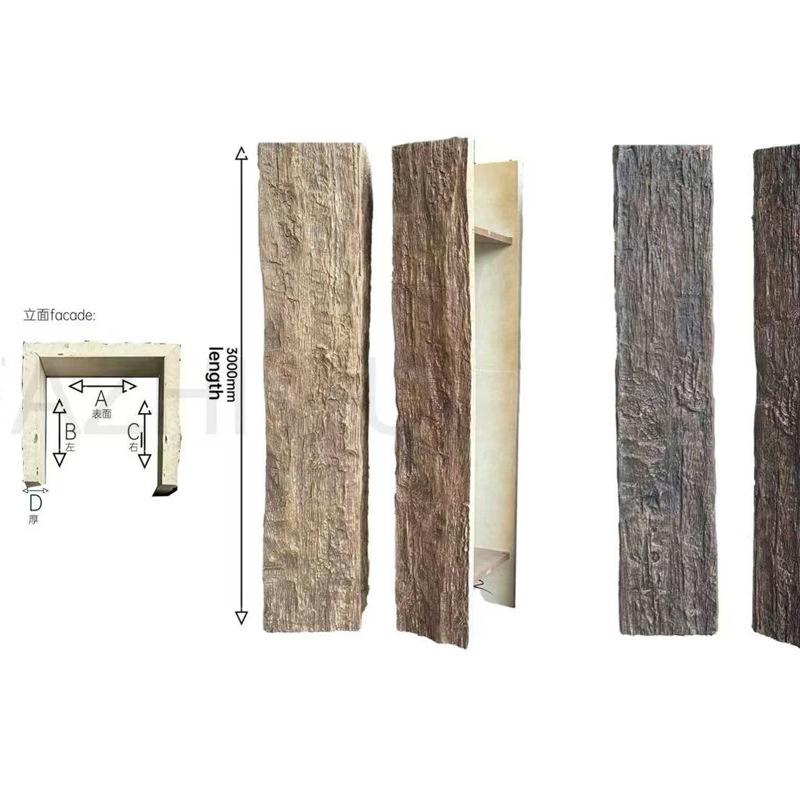
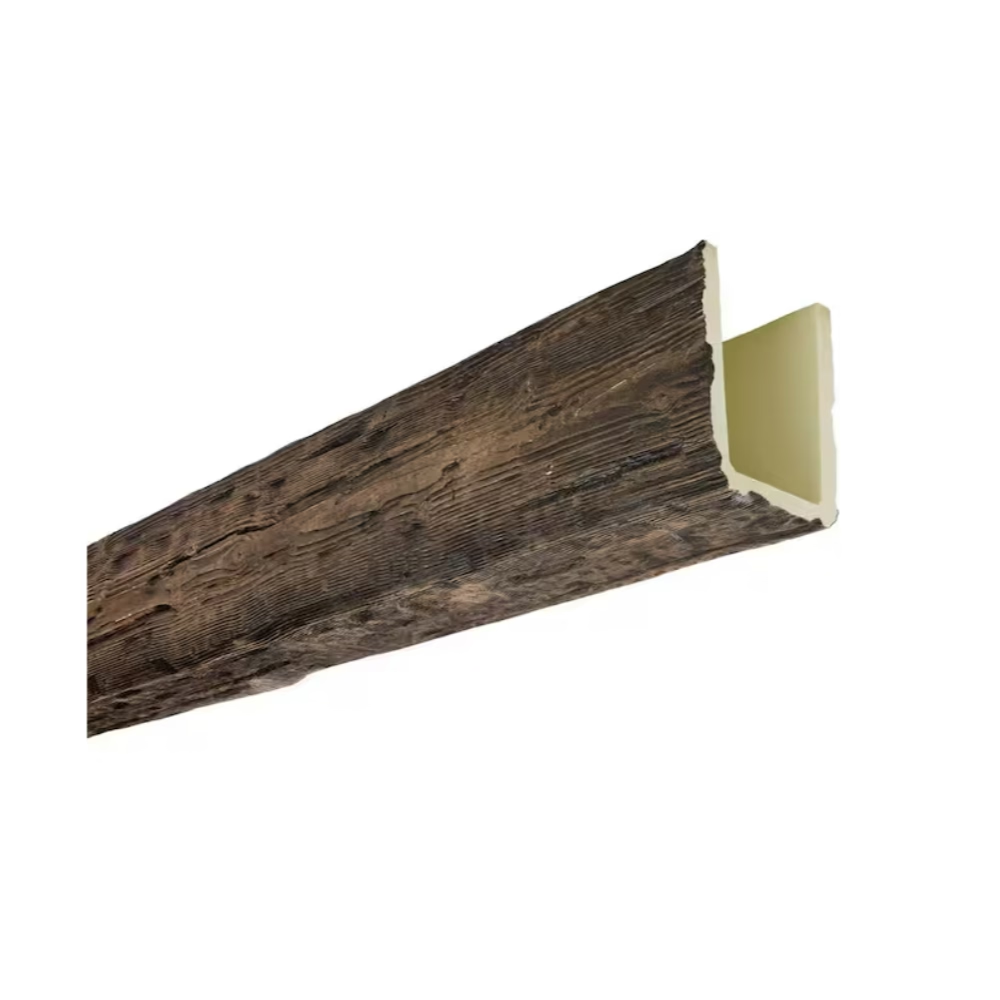
Entryways and foyers occupy a unique position in architectural experience—they serve as the first interior spaces visitors encounter and the last spaces occupants pass through when leaving. This threshold position places extraordinary importance on their design. Statement-making faux wood beams capitalize on natural upward attention to create focal points that welcome, impress, and establish expectations for everything that follows.
The Importance of Entry Design
Architects and designers have long recognized the significance of entries in shaping overall building experience. The entry sequence—from exterior approach through doorway transition to interior arrival—establishes perceptual frameworks that influence how subsequent spaces are understood. A grand entry creates anticipation of continued grandeur; a modest entry sets more restrained expectations. This sequencing makes entry design disproportionately impactful relative to the spaces' actual size.
Ceiling treatment plays a central role in entry experience because visitors naturally look up upon entering unfamiliar spaces. This instinctive behavior, rooted in ancestral vigilance, creates an automatic engagement with overhead elements that walls and floors cannot match. Entries with impressive ceiling treatments create immediate positive impact; entries with plain ceilings miss this opportunity entirely.
The psychology of welcome affects how entries are perceived. Spaces that feel enclosed by attractive elements create feelings of shelter and invitation. Spaces that feel exposed or bare create corresponding feelings of vulnerability or dismissal. Entry beams create this enclosure through visual mass that frames arrival experiences, making visitors feel welcomed rather than merely accommodated.
Creating Welcoming Atmosphere Through Beams
Warmth communicates welcome in ways that cool precision cannot match. Wood, whether genuine or convincingly simulated, carries inherent warmth that establishes inviting atmospheres. Faux wood beams bring this warmth to entry ceilings, creating conditions for welcoming experiences that generic ceiling treatments fail to achieve. The emotional resonance of wood appearance triggers associations with hearth and home that support welcome intentions.
Scale affects how beams contribute to welcoming atmosphere. Appropriately sized beams create enclosure that feels protective; undersized beams provide inadequate framing; oversized beams risk creating压迫 rather than welcome. Finding the scale that achieves protective enclosure without oppressive weight requires understanding both the specific space and the emotional effects that different scales produce.
Detail richness contributes to welcoming quality through the message it conveys. Generous detailing suggests care and investment, communicating that this space matters enough to receive careful attention. Beams with authentic textures, convincing weathering, and thoughtful profiles communicate respect for visitors that transcends mere functionality. This communication supports the welcome that entries should provide.


Focal Point Selection for Entries
Entries typically have natural focal points—locations where attention naturally settles upon entry. Above the entry threshold, the center of the entry ceiling, or the most prominent visible wall all represent positions where beams can achieve focal point status most easily. Aligning beam placement with these natural focal positions amplifies their impact through positioning that leverages established visual habits.
Single dominant beams work well in entries where one clear statement makes more sense than distributed elements. A single substantial beam crossing the entry ceiling creates immediate focal impact that visitors cannot miss. This approach suits entries with straightforward geometry where simplicity serves better than complexity.
Multiple beams create different effects that suit different entry types. Parallel beams across a wide foyer distribute visual interest while maintaining unified composition. Perpendicular beams crossing at the entry center create a more complex focal point that rewards extended viewing. These multiple-beam approaches require more sophisticated design thinking but can achieve results that single-beam installations cannot match.
Scale Considerations for Entry Spaces
Entry spaces vary enormously in scale—from modest residential mudrooms to grand hotel lobbies. Beam specifications must match this variation, providing appropriate impact across the full range of entry sizes. What works in a grand foyer would overwhelm a small entry; what works in a modest entry would disappear in a grand space. Understanding this scaling relationship prevents mismatches that undermine entry design.
Small entries benefit from beams scaled to create maximum impact within constrained dimensions. Even modest beams can serve as effective focal points when positioned strategically and lit effectively. The goal is appropriate presence rather than unnecessary mass—small entries don't need massive beams to achieve impressive results.
Large entries require generously scaled beams that match their volume. Small beams in vast spaces read as insignificant, failing to achieve any meaningful presence. The scaling principle here is that larger spaces need larger elements—the same rule that governs all aspects of architectural composition. Generous beam dimensions ensure that large entries receive appropriately dramatic treatment.
Style Coordination with Entry Architecture
Entry beam style should align with the building's overall architectural character. Traditional buildings need beams that reference period precedents; contemporary buildings need beams with current aesthetic sensibilities. This alignment creates coherence that reinforces architectural intention; mismatches create confusion that undermines both beam and building.
Residential entry beams should relate to interior styles established throughout the home. The entry represents a transition point between exterior and interior worlds—its beams should acknowledge both while clearly belonging to the interior. This dual acknowledgment might involve exterior-compatible finishes with interior-appropriate styling, or beams that bridge exterior and interior through transitional character.
Commercial entry beams face different coordination requirements. Building identity, brand positioning, and customer expectations all influence appropriate beam styling. A boutique hotel needs entry beams that communicate its unique character; a corporate office needs beams that establish professional credibility. Understanding these requirements helps specify beams that support rather than conflict with broader objectives.
Material Authenticity for High-Traffic Areas
Entries experience more traffic than almost any other interior space. Constant movement through entries means that every detail receives ongoing scrutiny from passing occupants and visitors. This traffic intensity demands authenticity that withstands close examination—the kind of detailed looking that authentic materials receive when people have time to examine them.
Modern polyurethane faux beams achieve authenticity levels that satisfy demanding entry applications. Surface textures capture wood characteristics with remarkable precision. Color formulations extend throughout the material, ensuring that any damage reveals matching rather than contrasting material. This authenticity protects entry investments by ensuring that initial impressions survive extended experience.
The durability of quality faux beams addresses the traffic intensity that entries experience. Unlike genuine wood that might show wear over time, polyurethane maintains its appearance indefinitely with minimal care. This durability ensures that entry focal points remain effective year after year, protecting the welcome that beams are meant to provide.
Integration with Entry Functions
Entries serve practical functions beyond their symbolic welcome role. Storage, traffic circulation, and seasonal transitions all occur in entry spaces. Beam installations should accommodate these functions rather than interfering with them. Successful entry design balances symbolic and practical requirements, ensuring that beams enhance rather than compromise entry utility.
Lighting integration affects entry functionality significantly. Adequate illumination for tasks like finding keys, checking appearance, and managing bags requires coordination between beam installations and lighting design. Beams can accommodate recessed fixtures, surface-mounted fixtures, or integrated lighting systems—each approach with different implications for appearance and function.
The relationship between beams and entry storage affects both aesthetics and practicality. Beams positioned over coat areas or near storage units should frame these elements appropriately. Beams that conflict with storage placement create daily frustrations that undermine the welcome that focal points are meant to provide.
Long-Term Performance Requirements
Entry materials face environmental challenges that less trafficked spaces don't encounter. Temperature fluctuations as doors open and close, tracking of moisture and debris, and ongoing physical proximity all stress entry materials. Faux beams handle these challenges without the maintenance requirements that genuine wood would demand in similar conditions.
The maintenance-free nature of quality faux beams proves particularly valuable in entry applications. No sealing, staining, or repair work disturbs the entry experience periodically. This continuous readiness ensures that entries always present their best faces, welcoming visitors without the interruptions that maintenance would create.
Style longevity affects entry beam selection because these elements establish first impressions repeatedly over their service lives. Trends that seem fresh can feel dated within years; timeless qualities endure indefinitely. Selecting beams with classic proportions and enduring textures rather than trend-driven styling protects entry investments against changing fashion.
Professional Entry Design
Entry beam installations benefit from professional design guidance that addresses the unique requirements these spaces present. The importance of entries relative to their size justifies design investment that might seem excessive for less significant spaces. Professional designers bring experience with entry proportion, style, and integration that helps ensure successful outcomes.
The coordination requirements between beams and other entry elements—lighting, storage, door frames, flooring transitions—benefit from professional oversight. This coordination prevents conflicts and ensures that beams integrate cleanly with everything else the entry contains. Professional installation ensures that design intentions translate into actual results that justify the investment entries represent.
Technical References
ASTM standards cited in every specification
Test Data
Lab results from internal testing program
Updated 2026
Reviewed against current product specs