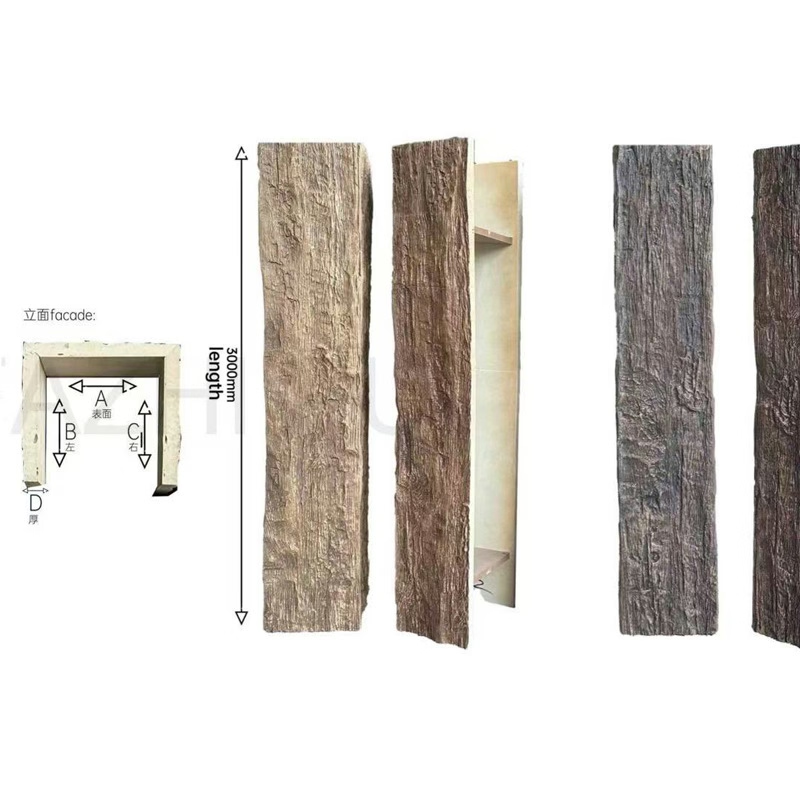
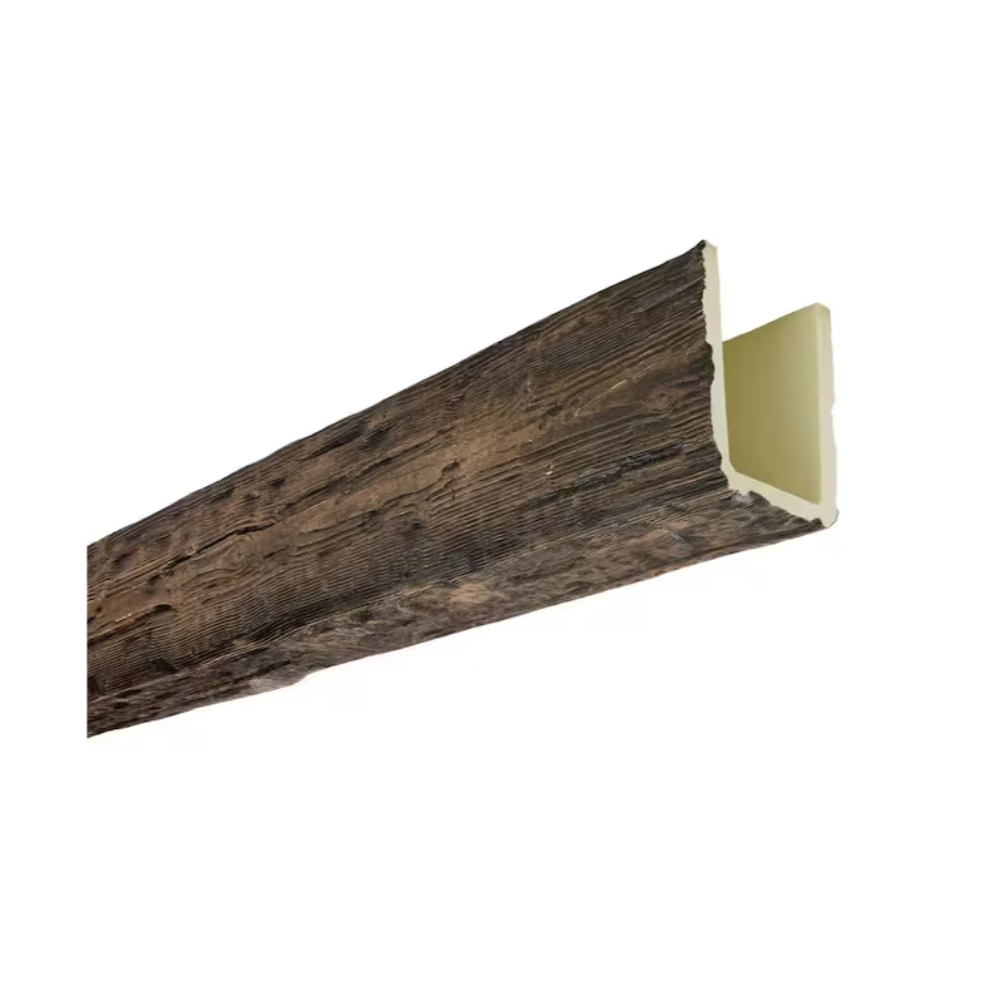
Home renovation projects operate under constraints that commercial construction never faces. Families must continue living in spaces under renovation, tolerating dust, disruption, and displacement while work proceeds. Every additional day of renovation extends this disruption period, creating pressure to complete quickly regardless of other considerations. Time-saving quick install PU faux beams address this residential reality directly, enabling ceiling transformation that fits within the time constraints that occupied renovation imposes.
The weekend renovation has become a fixture of home improvement culture, with projects designed to complete between Friday evening and Monday morning. This compressed timeline requires products that can be installed efficiently without sacrificing results. Quick install PU faux beams serve this requirement, delivering finished appearance from installation that weekend timelines can accommodate. The practical accessibility of these products has democratized ceiling improvement, enabling homeowners to achieve results that previously required professional expertise.
DIY Accessibility and Skill Requirements
Quick install PU faux beams reduce skill requirements that have traditionally excluded homeowners from ceiling beam projects. The lightweight construction eliminates strength requirements that would demand multiple workers; the precision manufacturing eliminates fitting skills that timber installation requires; the pre-finished surfaces eliminate finishing expertise that many homeowners lack. The combination enables successful installation by homeowners with basic tool competence but no specialized construction skills.
Tool requirements for installation fit within typical homeowner inventories. Tape measure, level, drill or driver, saw for cutting to length, and standard adhesive comprise the essential toolkit. Specialty tools that professional contractors might employ—powder-actuated fasteners, industrial adhesive equipment, precision cutting jigs—accelerate work but aren't required for quality results. Homeowners can achieve professional-quality outcomes with tools already in their garages.
Online resources supplement installation guidance that quality suppliers provide. Video tutorials, detailed installation guides, and technical support lines help homeowners navigate challenges that arise during installation. The combination of clear documentation and accessible support enables confident execution even for first-time installers. This support infrastructure has made ceiling beam installation accessible to a much broader audience than traditional methods would allow.
Weekend Project Planning
Successful weekend beam installation requires planning that begins before the weekend itself. Material ordering with adequate lead time ensures that products arrive before installation begins; waiting for deliveries during the project window wastes precious weekend hours. Measuring and documenting conditions enables accurate ordering while verifying that ordered products will suit existing conditions.
Preparation work that can occur before installation weekend reduces on-site work during the critical timeframe. Cutting beams to length, pre-drilling fastener holes if required, and pre-applying adhesive in controlled conditions all accelerate the actual installation process. This front-loaded approach treats weekend time as sacred for installation activities while using available weekday evenings for preparation.
Realistic scheduling prevents the frustration that over-commitment creates. Estimating installation time conservatively—then building in contingency—ensures that projects complete within available time. A room estimated at six hours of work might realistically require eight; scheduling six hours plus two hours of contingency provides realistic time allocation. Rushing to meet optimistic schedules typically produces inferior results; conservative scheduling enables completion without pressure.
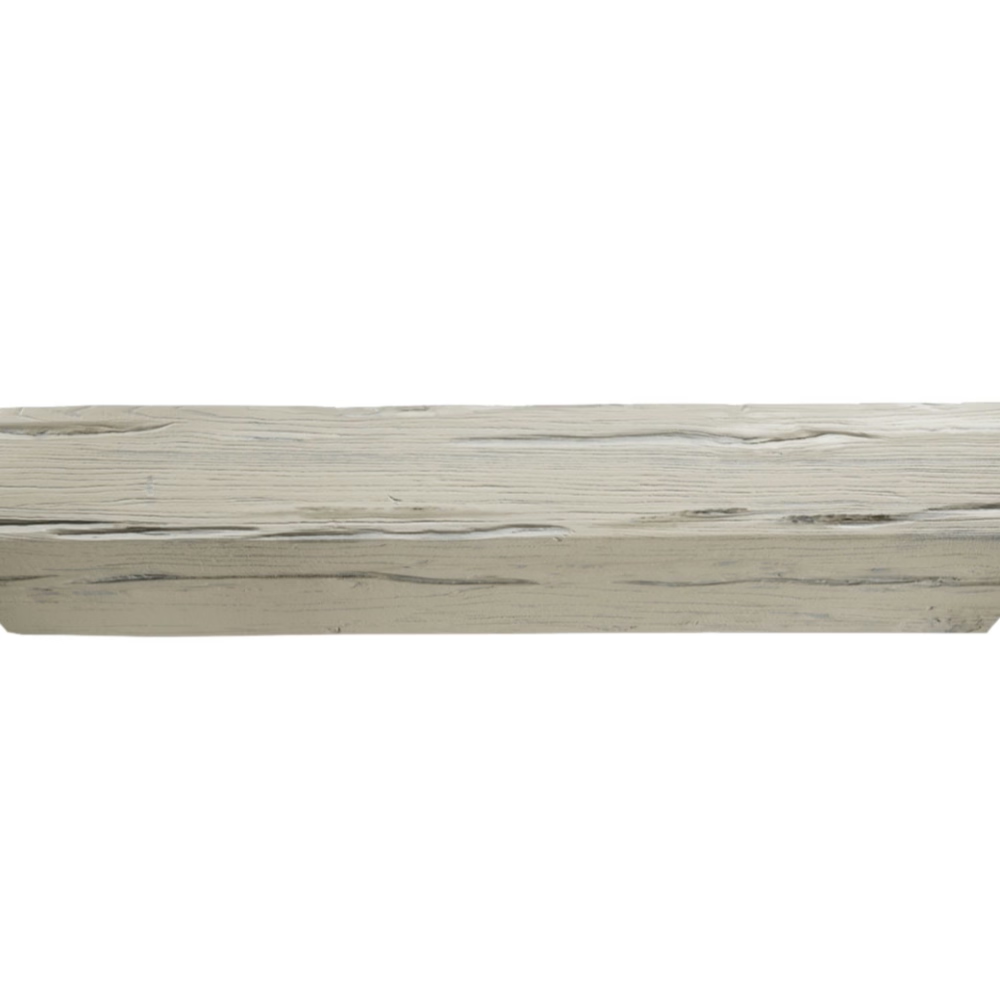
Installation Process for Homeowners
The installation process follows logical sequence regardless of installer experience level. Beginning with measurement verification ensures that ordered materials match actual conditions; discovering mismatches after adhesive application creates significant problems. Spending time on initial verification prevents problems that would otherwise require remediation.
Adhesive application requires attention to coverage and application rate. The goal is continuous coverage that provides bond across entire contact surfaces without excessive material that might squeeze out during positioning. A zigzag application pattern ensures coverage while controlling material quantity; following manufacturer guidance about specific adhesive products optimizes results.
Positioning and alignment during installation requires attention and patience that hurried work cannot provide. Taking time to verify alignment before adhesive sets prevents problems that would require reinstallation to correct. Temporary support mechanisms—adjustable props, tape, or helper assistance—maintain alignment during cure time that adhesive requires. The brief additional time that careful alignment requires prevents much longer remediation that careless positioning would necessitate.
Common DIY Mistakes and Prevention
Insufficient surface preparation represents the most common source of installation problems. Existing ceiling surfaces must be clean, dry, and sound before adhesive application; any contamination reduces bond strength that might eventually cause beam failure. Taking time for proper preparation prevents callbacks and repairs that rushed work creates.
Rushing adhesive cure causes problems that become apparent only months later. Loads applied before full cure stress adhesive bonds, potentially causing gradual separation that becomes visible later. Following manufacturer cure time recommendations ensures that bonds develop their full rated strength. The patience that cure time requires pays dividends in long-term performance.
Alignment errors compound through installations, making reference marks essential. A quarter-inch error at the starting point becomes increasingly visible over long runs, potentially creating obviously misaligned results at far walls. Using reference lines—chalk lines or laser levels—to establish alignment prevents cumulative errors that casual alignment techniques cannot avoid.
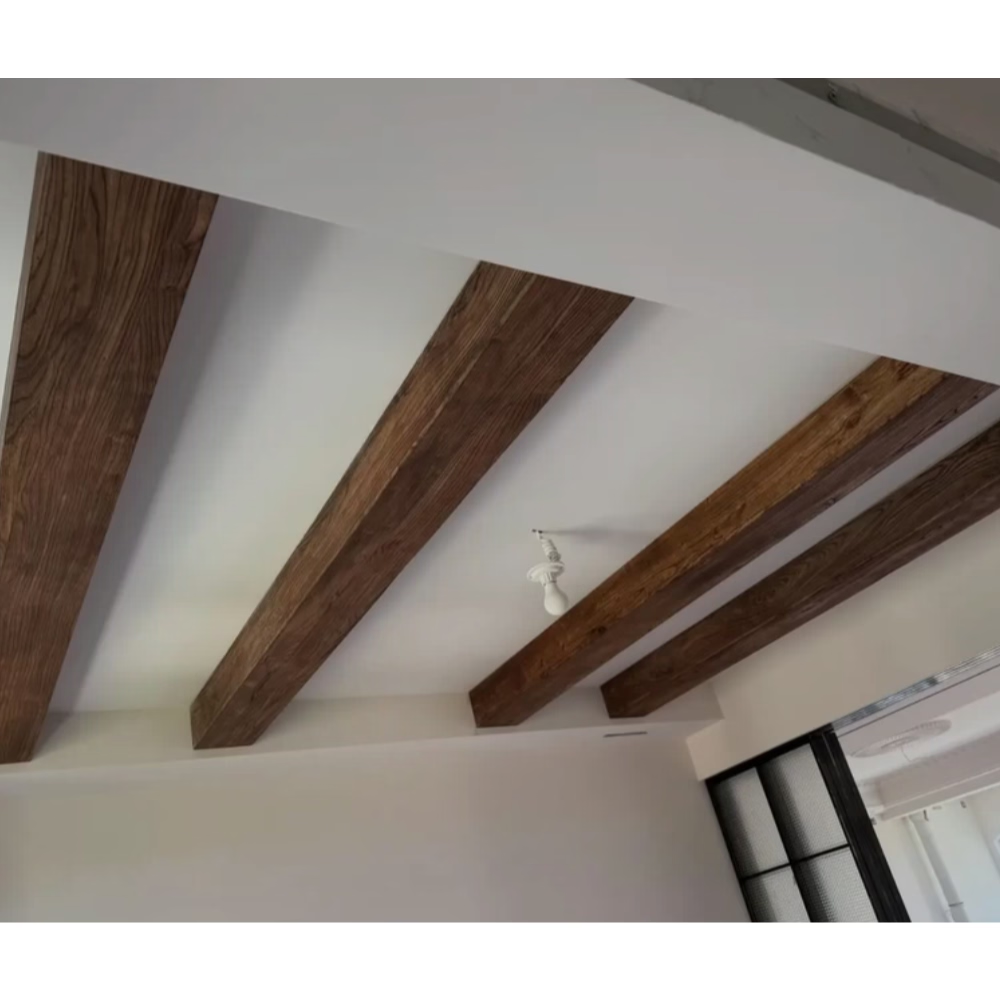
Professional Installation for Complex Projects
Complex residential projects may warrant professional installation despite the DIY accessibility of simpler applications. Vaulted ceilings, extensive beam networks, or challenging access conditions benefit from contractor expertise that homeowners may lack. The additional cost of professional installation often proves worthwhile when complexity would otherwise compromise results.
Contractor selection for beam installation should verify relevant experience. Not all contractors have installed faux beams; those with specific experience understand challenges and solutions that unfamiliar installers might miss. Requesting references and viewing previous installations helps identify contractors with proven faux beam competence rather than assuming general construction skill transfers automatically.
Coordination between homeowners and contractors ensures that installation serves homeowner objectives. Communicating preferences about appearance, alignment, and detail treatment before work begins prevents misunderstandings that might require remediation after completion. The investment in clear communication pays returns through results that meet expectations rather than requiring adjustment.
Technical References
ASTM standards cited in every specification
Test Data
Lab results from internal testing program
Updated 2026
Reviewed against current product specs