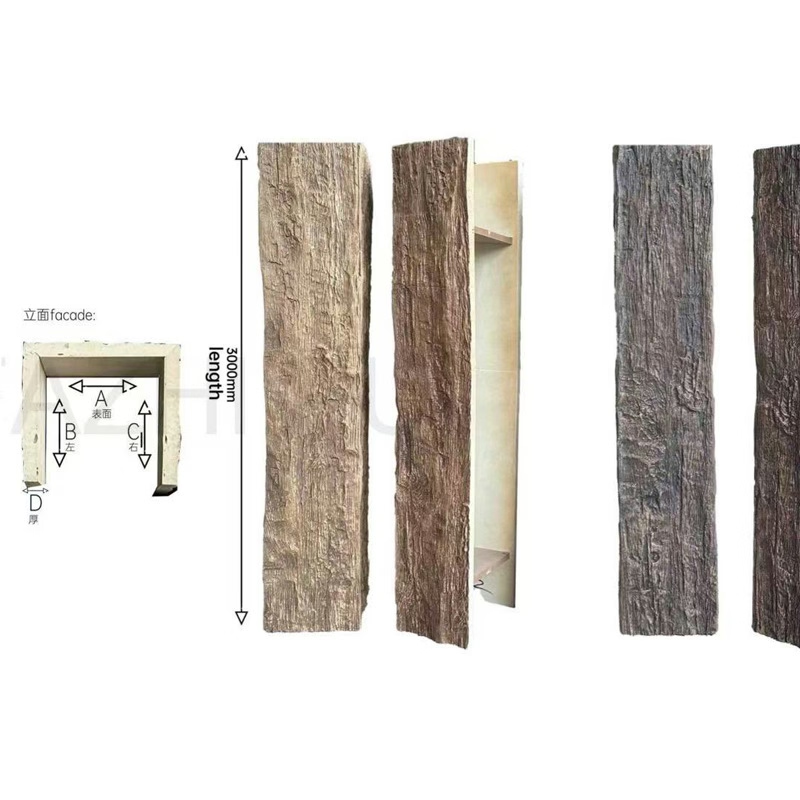
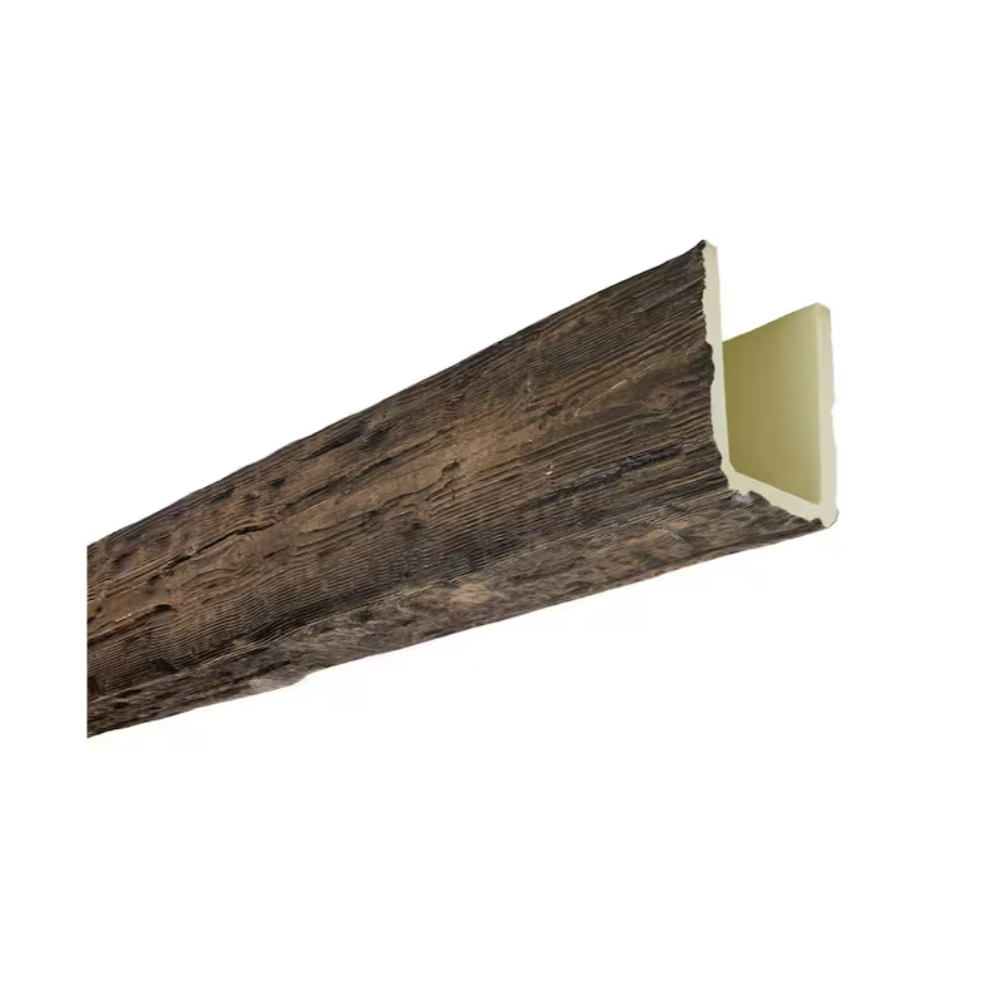
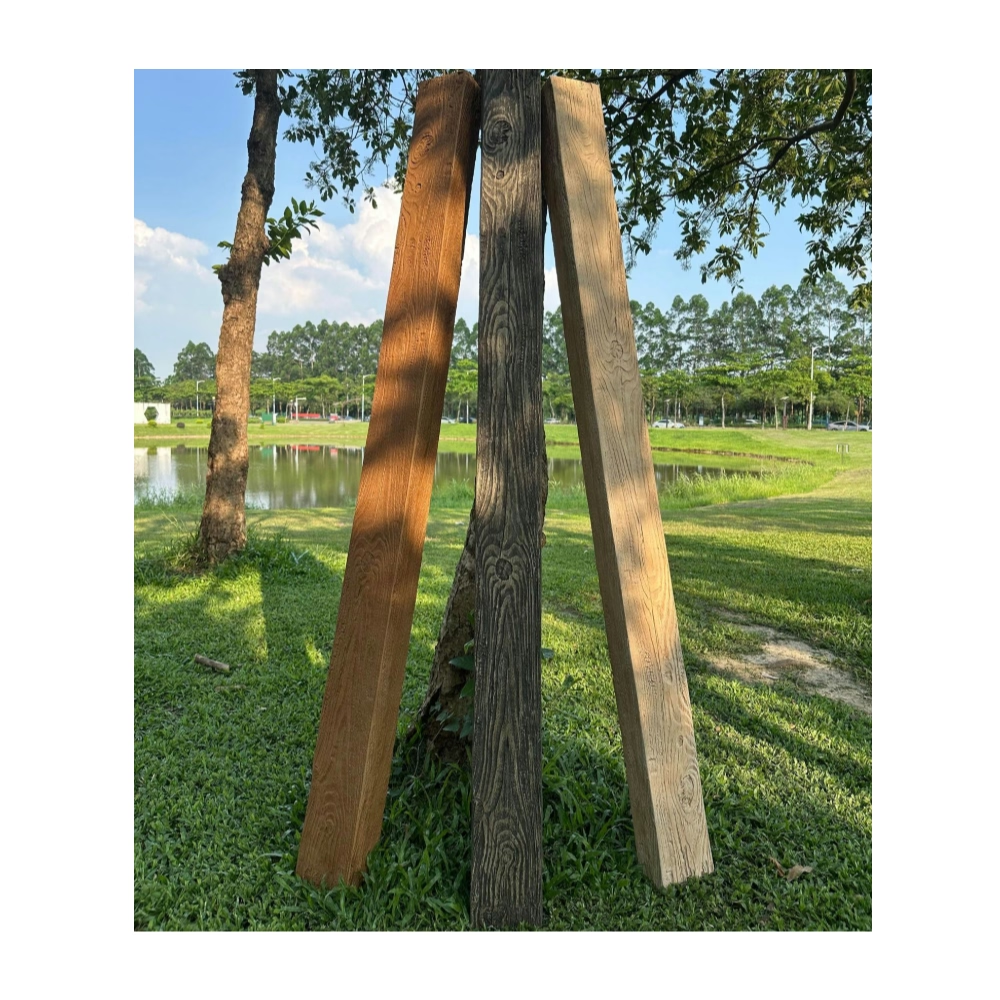
Classic home interiors derive their character from accumulated design wisdom refined across generations of building. These spaces feel established rather than constructed, with architectural elements that support rather than compete with furnishings and activities. Timeless traditional style faux wood beams contribute to this established feeling, adding warmth and architectural interest through forms that have proven their worth across centuries. The beams don't shout for attention; they quietly provide the context that makes everything else feel appropriate.
The relationship between traditional beams and contemporary building methods creates interesting design opportunities. Older homes featuring traditional interiors often lack the structural beams that their appearances suggest, having been built with concealed joists rather than exposed timber. Adding traditional beams to these spaces creates the appearance of original construction while actually being improvement rather than restoration. The effect satisfies both aesthetic desires and historical sensibilities, adding authentic character without falsifying history.
Traditional Proportions and Scale Relationships
Traditional architecture developed proportional systems through trial and error over centuries, with successful proportions being copied and refined until they became conventions. These conventions—including relationships between beam dimensions, ceiling heights, and room volumes—work because they have been tested across countless applications. Ignoring these proportions risks creating spaces that feel wrong even if viewers cannot explain why.
The rule of thumb for traditional beam sizing relates beam width to the scale of the space being treated. A beam that would feel appropriately substantial in a grand foyer might overwhelm a modest study. The key lies in matching beam presence to room significance, with more important spaces receiving more substantial treatment. This hierarchy guides selection rather than mathematical formulas that cannot account for the qualitative factors that determine appropriateness.
Depth-to-width ratios in traditional design typically fall between one-to-one and three-to-two, depending on specific style period. Georgian and Adam-style interiors often feature relatively shallow beams, while Gothic-influenced spaces might employ deeper profiles. Understanding these style variations enables appropriate selection for interiors with specific historical references, while more generalized traditional spaces can draw from multiple periods without obvious conflict.
Integration with Traditional Trim and Molding
Traditional interiors typically feature substantial trim work: crown moldings, cornices, wainscoting, and door surrounds that establish architectural character. Beams in these contexts should feel related to this trim work, participating in a coherent design vocabulary rather than appearing as unrelated additions. This integration might involve matching profile curves, coordinating reveal depths, or relating ornament placement to other architectural elements.
The cornice-beam relationship deserves particular attention. In traditional construction, beams often emerged from or terminated at cornice planes, with various approaches to managing this intersection. Modern faux beam installation can reference these traditional details, creating junctions that feel architecturally considered rather than merely convenient. This attention to detail distinguishes thoughtful traditional interiors from those that merely layer decorative elements without integration.
Base and ceiling moldings should feel proportional to beam treatment. A heavy beam in a room with thin trim creates visual inconsistency; conversely, substantial molding alongside minimal beams appears imbalanced. Achieving appropriate proportionality sometimes requires updating trim to match beam treatment, or selecting beam sizes that complement existing trim without requiring its replacement.

Traditional Styles and Their Characteristics
Colonial Revival style beams reference late nineteenth and early twentieth century American architecture, featuring relatively simple profiles with modest ornamentation. These beams suit traditionally decorated homes without extensive historical pretension, providing warmth through wood character rather than elaborate detailing. The style's restraint makes it particularly versatile across different traditional decorating approaches.
Craftsman style beams draw from Arts and Crafts movement aesthetics, with horizontal emphasis and exposed joinery details. These beams often feature slightly darker finishes and more substantial hardware elements than Colonial Revival alternatives. The style suits bungalows and related house types particularly well, where beam installation can enhance the architectural character that these designs already possess.
Farmhouse style beams emphasize rustic character and casual placement rather than formal precision. The aesthetic accepts—and often celebrates—irregularity that other styles would consider flaws. Beams in farmhouse contexts might feature more pronounced distressing, varied spacing, and casual rather than formal termination details. This flexibility enables interesting design solutions that formal styles would not permit.
Material Selection for Traditional Applications
Traditional beam appearance requires appropriate material selection beyond mere dimensional accuracy. The surface character—grain pattern, texture, and color variation—carries much of the traditional aesthetic meaning. Selecting beams with appropriate surface treatment requires understanding what specific traditional styles demanded and how these characteristics translate into modern faux beam options.
Grain patterns should reflect the wood species that traditional builders would have used. Oak and chestnut dominated in Colonial contexts; pine was common in more modest vernacular construction; Douglas fir characterized western American traditional building. Each species carries distinct grain characteristics that inform appropriate faux beam selection. Matching grain style to historical precedent creates more convincing results than generic wood appearance.
Finish sheen in traditional applications typically falls between matte and low luster, reflecting natural weathering of timber in original installations. High-gloss traditional beams would appear obviously fake regardless of how convincing other aspects might be. Quality faux beam manufacturers understand this relationship and specify appropriate sheen levels for traditional products, avoiding the shiny appearance that betrays manufactured origin.
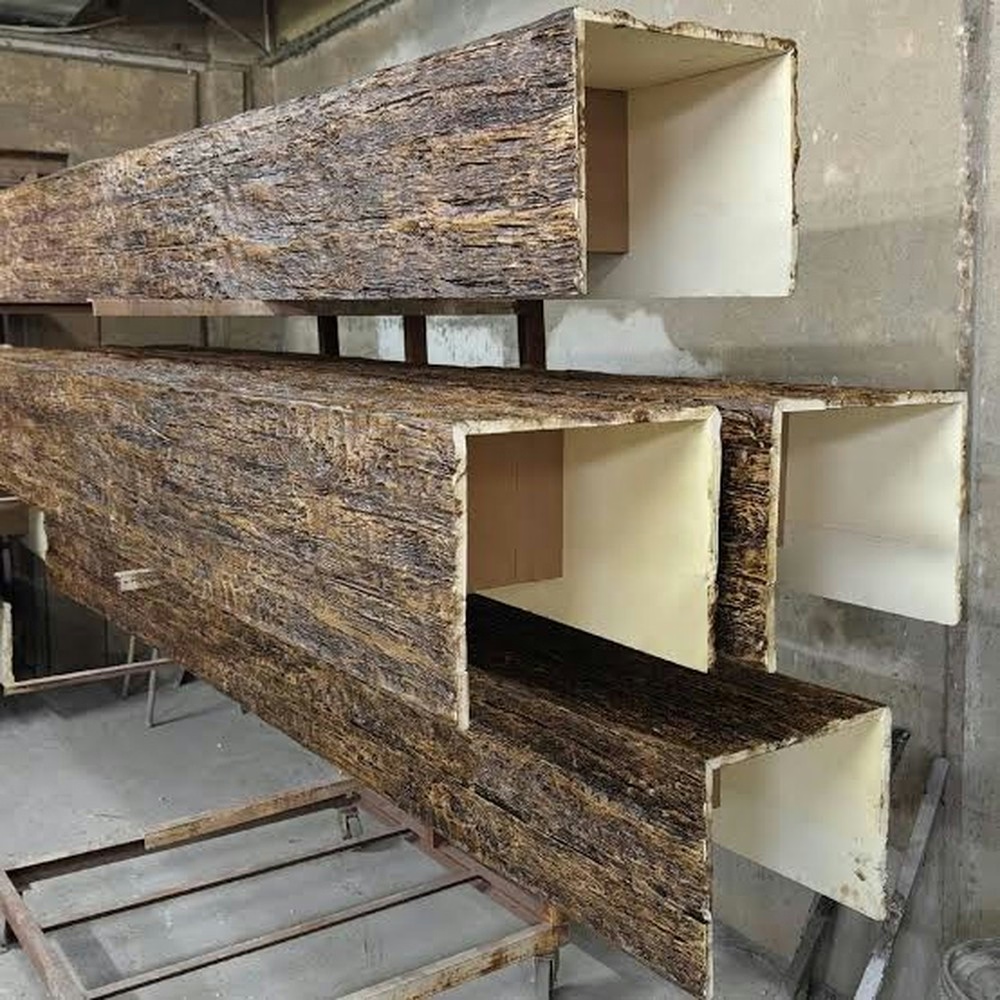
Maintaining Traditional Aesthetics Long-Term
Traditional interiors derive their character from stability and permanence rather than change. Beams selected for these applications should maintain their appearance indefinitely without requiring renewal or updating. Polyurethane faux beams serve these requirements better than natural wood alternatives, eliminating the refinishing cycles that genuine timber demands while maintaining the appearance that traditional design requires.
The maintenance implications of traditional beam selection should inform initial specification decisions. A finish that requires annual attention undermines the timelessness that traditional design pursues; a finish that looks better after years of natural aging serves traditional goals better than one that merely maintains original appearance. Understanding these maintenance implications helps ensure that beam selection serves long-term design intentions.
Protection of traditional beam appearance involves standard precautions: avoiding impact damage, cleaning with appropriate methods, and addressing any developing issues promptly. Beyond these basic requirements, traditional beams require little ongoing attention, freeing homeowners to enjoy their spaces without continuous maintenance concerns.
Technical References
ASTM standards cited in every specification
Test Data
Lab results from internal testing program
Updated 2026
Reviewed against current product specs