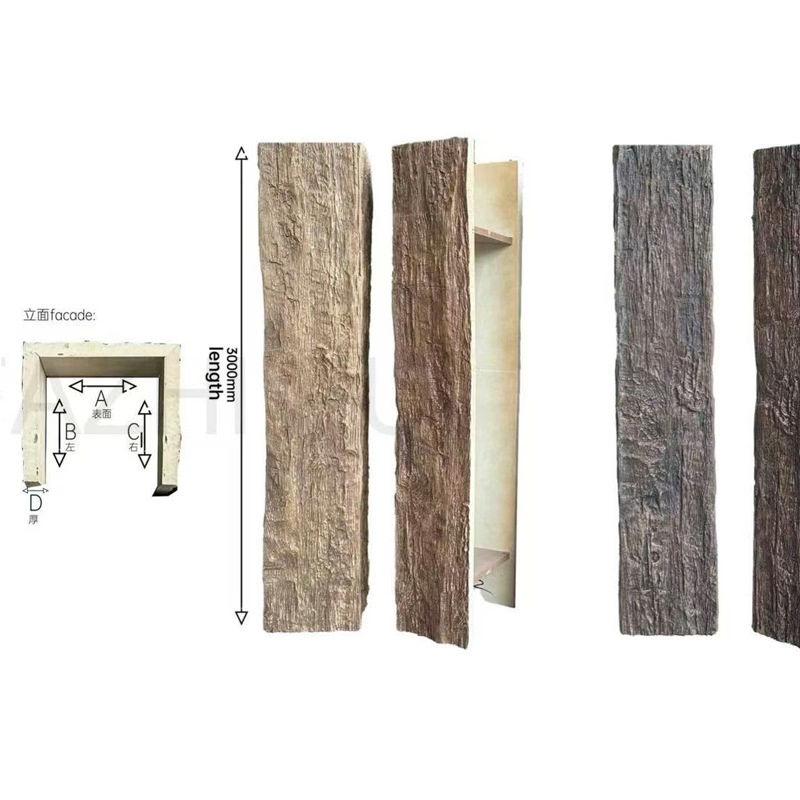
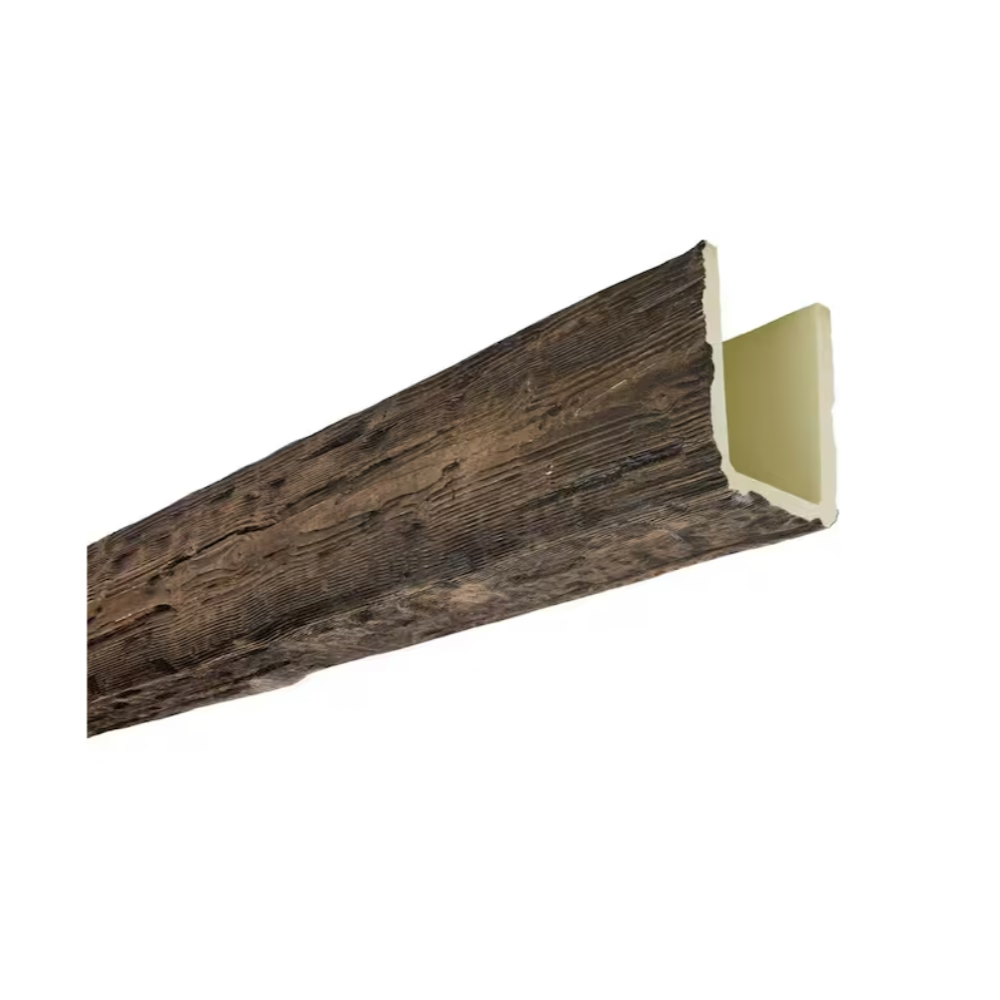
Real estate professionals consistently identify kitchen and bathroom renovations as the highest-return home improvements. What receives less attention is how ceiling treatment affects both perceived home value and actual market performance. Homes with attractive ceiling details—crown moldings, architectural interest, and visible beam installations—consistently command premiums over comparable properties with plain ceiling surfaces. This value differential represents genuine opportunity for homeowners who understand how ceiling beams influence buyer perception and property appraisal.
The mechanism behind ceiling beam value enhancement operates through multiple channels simultaneously. Aesthetic improvement creates emotional appeal that influences buyer decisions. Perceived square footage increases when ceilings feel higher and spaces feel larger. Architectural character distinguishes homes from comparable alternatives. Each of these value channels contributes to overall market performance, making ceiling beam installation one of the most cost-effective ways to enhance property value.
Understanding How Ceiling Beams Add Value
The relationship between ceiling beams and home value involves psychological, aesthetic, and practical factors that combine to influence market outcomes.
Psychological impact operates through the emotional responses that attractive spaces create. Buyers who walk into homes with beautiful ceiling beams experience positive emotional responses that affect their overall perception of property quality. This emotional connection influences offer decisions, negotiation flexibility, and willingness to pay premiums that objective analysis wouldn't justify. Real estate has always involved emotional decisions dressed in rational justifications, and ceiling beams trigger exactly the emotional responses that translate to financial value.
Perceived square footage increases when ceiling beams create visual height and spatial interest. Studies consistently show that buyers overestimate room dimensions when ceilings feature attractive treatments, including beams. This misperception benefits sellers because buyers believe they're getting more space than measurements would indicate. The effect proves particularly valuable in homes with standard eight-foot ceilings, where beam installation creates the impression of higher ceilings without actual height modification.
Architectural character distinguishes properties in crowded markets where similar homes compete for limited buyer attention. When a buyer visits multiple homes in a single afternoon, the property featuring ceiling beams stands out from alternatives with plain ceilings. This differentiation creates memory and preference that influences subsequent decisions, potentially determining which homes receive serious consideration versus quick dismissal.
Market Research and Buyer Preferences
Contemporary home buyers increasingly prioritize design details that previous generations ignored. Understanding current buyer preferences helps explain why ceiling beams add more value today than in previous real estate markets.
Millennial and Gen-Z home buyers—the largest demographic entering home ownership currently—display strong preferences for design-forward spaces with character and personality. Having grown up with design inspiration from social media and home improvement media, these buyers evaluate homes with sophisticated criteria that include architectural details like ceiling beams. Properties lacking these details feel incomplete to significant buyer segments.
Luxury features have migrated downward through market segments as mid-range homes compete with premium properties. What once distinguished only luxury homes now appears across market tiers, raising buyer expectations throughout. Ceiling beams, once limited to high-end homes with genuine timber construction, now represent baseline expectations for design-conscious buyers across price categories.
Open floor plans that dominate contemporary construction make ceiling treatment increasingly important. Without walls to provide architectural interest, ceilings become the primary surface for visual design. Beams provide exactly this interest in open-plan spaces, transforming potentially monotonous ceiling planes into designed environments that justify higher prices.
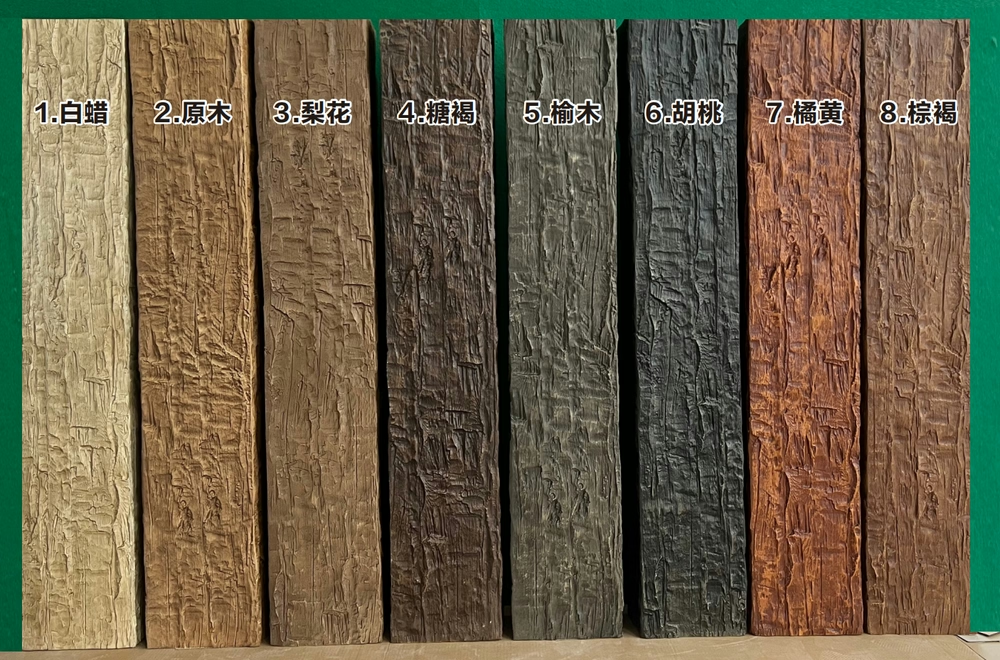
ROI Analysis for Beam Installation
Return on investment calculations for ceiling beam installation depend on multiple variables including property value, market conditions, and installation quality. However, research and industry data suggest favorable returns compared to typical renovation projects.
Cost-per-square-foot analysis positions beam installation competitively against alternative improvements. While kitchen and bath renovations might cost $100-200 per square foot, beam installation typically ranges from $20-60 per square foot depending on beam selection and installation complexity. The lower cost basis means percentage returns can exceed those from more expensive renovations even if absolute value additions prove smaller.
Value addition estimates vary by market and property type, but real estate professionals consistently report that ceiling beam installation adds 2-5% to property value in appropriate contexts. For a $400,000 home, this translate to $8,000-20,000 in added value against installation costs that might total $3,000-8,000. The resulting ROI exceeds most conventional home improvements.
Amortized returns favor beam installation because these elements maintain value indefinitely without the degradation that undermines other improvements. Kitchen renovations might require updating within ten years as styles evolve. Bathroom renovations face similar obsolescence cycles. Ceiling beams, however, maintain their aesthetic value through trend cycles, providing sustained value that more fashionable alternatives cannot match.
Property Type Considerations
Different property types respond differently to ceiling beam installation, affecting both value addition and appropriate specification strategies.
Single-family homes with adequate ceiling height benefit most from beam installation because these properties face the most direct competition in most markets. Buyers evaluating multiple similar homes respond strongly to differentiation through architectural detail. Beam installation in these properties represents opportunity to stand out from comparable alternatives.
Townhouses and row houses with shared walls can use beams to create visual separation between open living zones. The same beams that add aesthetic value also perform functional organization that buyers appreciate. In these attached products, beams provide architectural interest that might otherwise require expensive built-ins or furniture arrangements.
Condominiums and apartments present more complex considerations because HOA rules might restrict modifications and because ceiling structure might differ from single-family construction. However, premium units with adequate ceilings can benefit significantly from beam installation, which distinguishes them from standard finishes that characterize most multi-unit buildings.
Vacation properties and investment rentals benefit from beam installation through enhanced photography and listing appeal. Properties that photograph beautifully command higher nightly rates and attract more booking interest. Beams create exactly the visual interest that makes vacation rental listings stand out in crowded marketplaces.

Quality Considerations for Value Enhancement
Not all ceiling beams contribute equally to property value. Quality selection significantly affects both immediate aesthetic impact and long-term value retention.
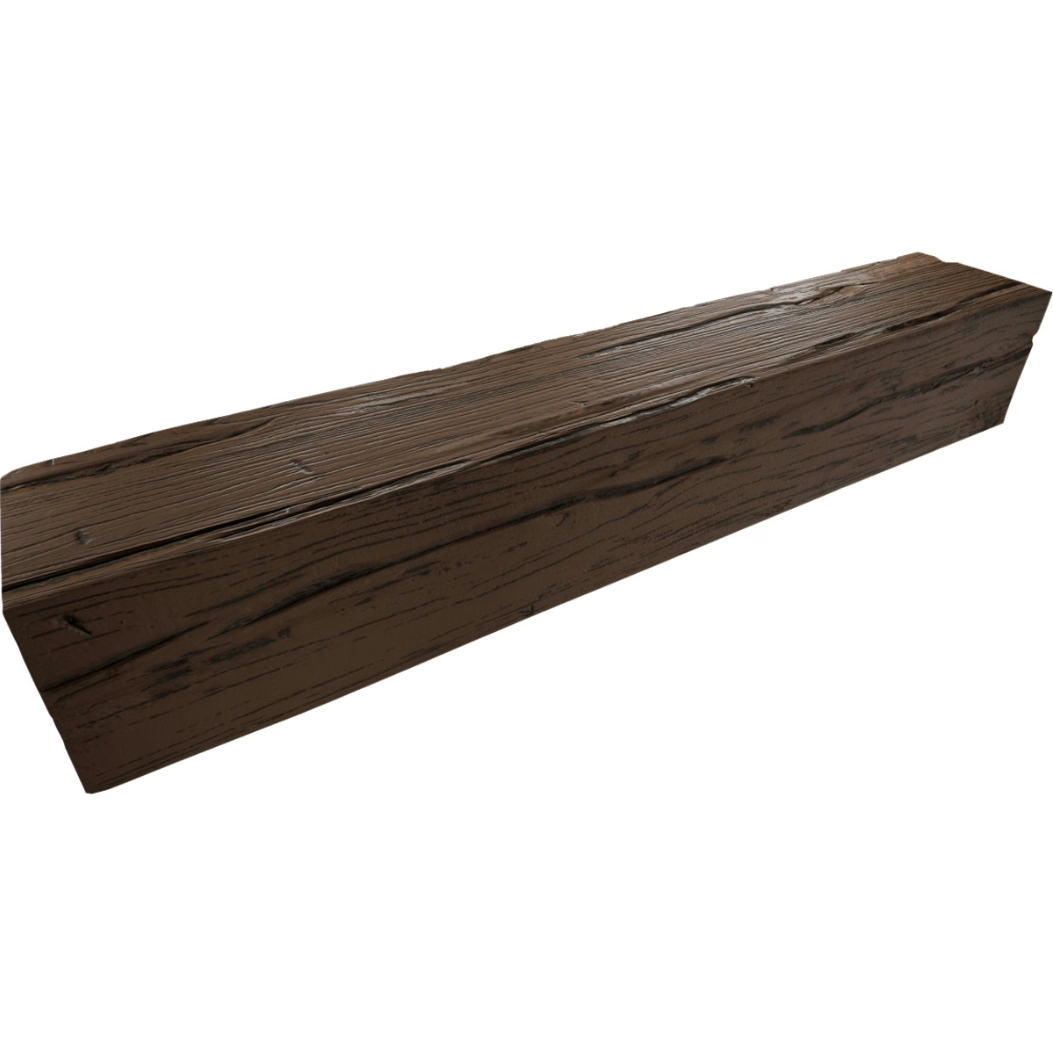
Material quality determines how beams appear to discerning buyers who might inspect properties closely. Premium polyurethane beams with realistic textures and finishes create authentic impressions that inferior products cannot match. Buyers who touch beam surfaces—a common inspection behavior—should encounter realistic wood characteristics rather than obviously synthetic materials.
Finish durability ensures that beams maintain appearance through showing cycles and buyer inspections. Properties on market for extended periods face repeated showings where beam surfaces might accumulate fingerprints, dust, and casual contact. Quality finishes resist these effects, maintaining premium appearance regardless of market timing.
Installation quality affects not only appearance but also buyer perception of overall property condition. Sloppy installation suggests sloppy maintenance elsewhere, potentially affecting offers beyond the ceiling's actual condition. Professional installation that appears seamless conveys care that buyers associate with well-maintained properties throughout.
Strategic Installation Approaches
Strategic beam installation maximizes value addition while controlling costs. Different approaches suit different properties and market conditions.
Living room and great room beams typically provide the highest visibility and greatest value contribution. These primary spaces receive the most buyer attention and photograph most frequently. Prioritizing beam installation in these areas maximizes impact per dollar invested.
Kitchen and dining areas benefit from beam installation that many buyers specifically seek. The warm aesthetic that beams provide softens the practical surfaces—appliances, countertops, cabinetry—that characterize these functional spaces. Buyers consistently rate kitchens highly, and beam-enhanced kitchens command corresponding premiums.
Bedroom beams provide softer value contribution but still enhance overall property perception. The added warmth benefits spaces where buyers seek comfort and retreat. Master bedroom beams create focal points that influence overall property perception even if buyers don't specifically mention them during evaluation.
Strategic partial installation can provide value enhancement at reduced cost. Rather than beam coverage of entire ceilings, targeted installation—perhaps a single dramatic beam in the living room, beams over the kitchen island—creates impact without complete coverage expense.
Professional Consultation Value
Working with real estate professionals and interior designers can enhance beam installation value by ensuring appropriate specification and positioning.
Real estate agents with market knowledge can identify where beam installation provides maximum return in specific neighborhoods and price ranges. What adds value in one market might represent overkill in another. Local expertise helps homeowners avoid both under-improving and over-improving relative to market conditions.
Interior designers bring aesthetic expertise that ensures beam specifications suit contemporary buyer preferences. The designer's understanding of current trends, buyer expectations, and proportional relationships helps specify beams that enhance rather than date properties. This guidance proves particularly valuable for homeowners unfamiliar with current design directions.
Appraisers increasingly recognize architectural detail contribution to property value. Working with professionals who understand how features like ceiling beams contribute to value helps homeowners make cases for premium pricing when negotiating with buyers or lenders.
Long-Term Value Sustainability
Unlike many home improvements that depreciate or date quickly, quality ceiling beams provide sustained value that benefits homeowners throughout their tenure.
Design longevity means that today's installation remains appropriate as design trends evolve. Beams selected for timeless proportions and refined aesthetics maintain relevance across trend cycles. Homeowners can update paint colors, swap furniture, and modify décor without worrying that ceiling beams will appear dated.
Quality durability ensures that beams maintain appearance through years of use. Unlike renovations that require updating or replacement, beam installations provide permanent value addition that never requires refresh. This permanence makes beams increasingly valuable relative to other improvements that face ongoing maintenance and replacement costs.
Adaptability means beams can support future design changes without modification. As homeowner preferences evolve, beams continue providing warmth and architectural interest regardless of how furniture, colors, or style details change. This flexibility maximizes beam value across longer time horizons than most home improvements achieve.
Technical References
ASTM standards cited in every specification
Test Data
Lab results from internal testing program
Updated 2026
Reviewed against current product specs