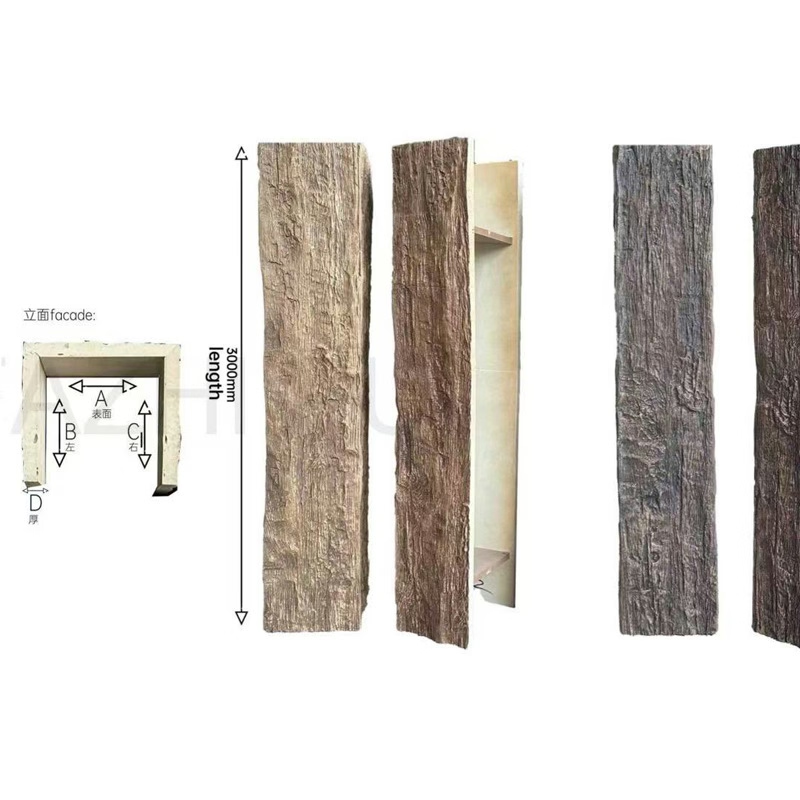
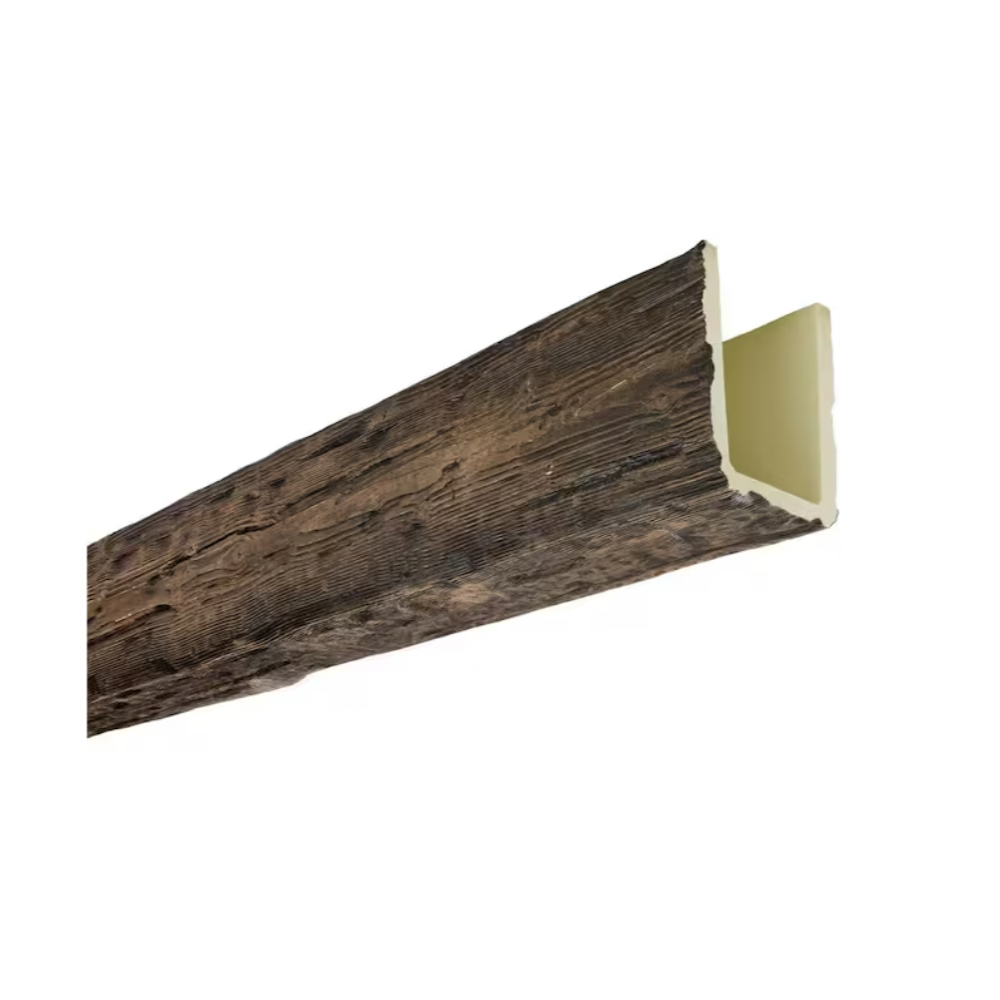
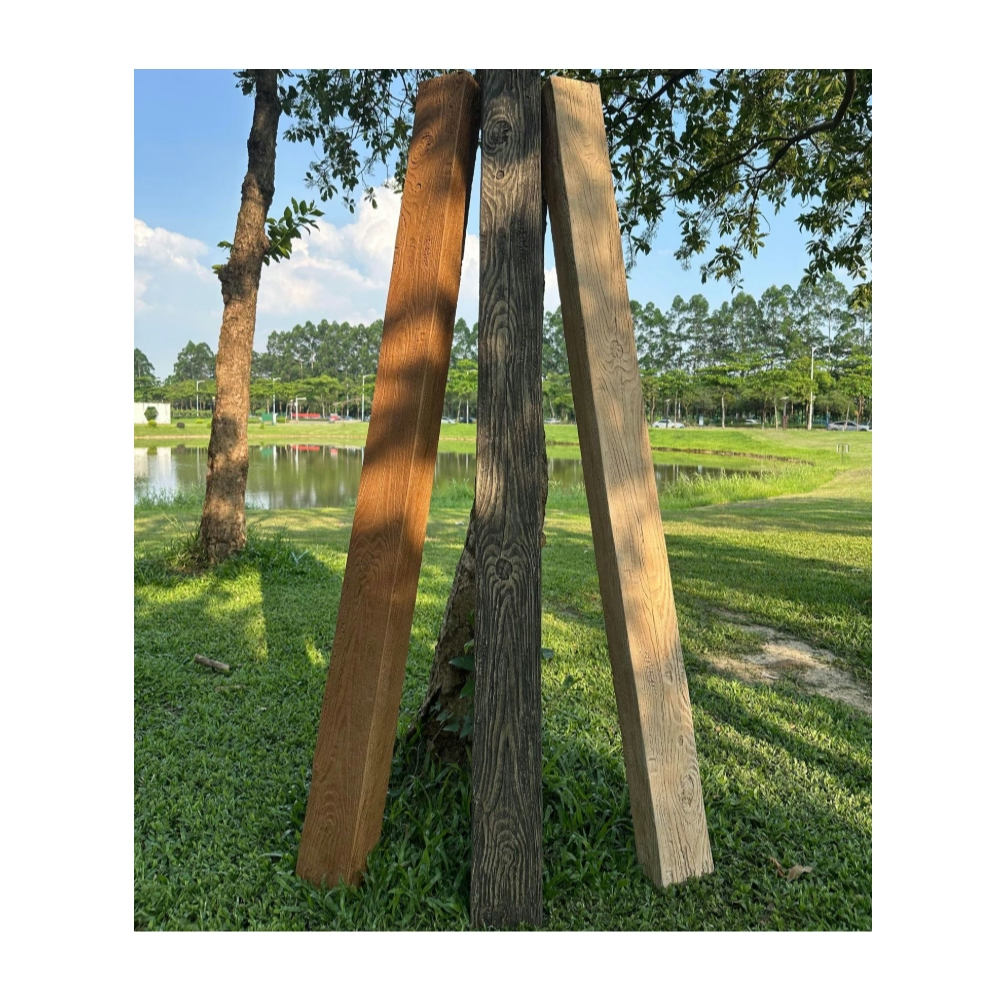
Outdoor living spaces have become essential extensions of homes, with covered patios, porches, and verandas serving as outdoor rooms where families gather, entertain, and relax. Yet these transitional spaces often lack the architectural character that interior rooms provide, with plain soffits and utilitarian eaves failing to establish the warmth that encourages extended outdoor occupation. Waterproof polyurethane faux beams applied to soffit and eave areas transform these overlooked surfaces into design opportunities, introducing the warmth and character of wood without the weather-related deterioration that makes natural timber impractical outdoors.
The challenges that outdoor conditions present to ceiling materials exceed those of interior applications in nearly every dimension. Natural wood soffit beams face rain, snow, humidity, temperature extremes, and UV radiation that collectively accelerate degradation regardless of protective treatment. Even premium hardwoods with excellent natural durability eventually succumb to the relentless assault of weather when installed in exposed locations. The practical result is that authentic timber soffit beams require constant maintenance and eventual replacement at intervals that make them poor investments for most applications.
Polyurethane's approach to outdoor durability differs fundamentally through inherent material characteristics rather than surface treatments. UV stabilizers incorporated during manufacturing protect against the radiation degradation that cracks and discolors many plastics. Closed-cell structures prevent moisture absorption that would lead to rot and delamination. Temperature-stable formulations resist the expansion and contraction stress that eventually damages less sophisticated materials. These engineering advantages enable polyurethane beams to maintain their appearance through years of weather exposure that would devastate natural timber.
Soffit and eave applications benefit from polyurethane's lightweight characteristics in ways that matter for exterior installations. Authentic timber beams of sufficient size for eave treatment would impose substantial loads on structures that may not have been designed for such weight. The dramatic weight reduction that polyurethane provides—often ninety percent or more compared to comparable timber—allows beam installation on structures that could not support authentic timber without expensive structural reinforcement. This weight advantage expands the range of applications where wood-look eaves become feasible.
The waterproof characteristics that make polyurethane suitable for pool environments prove equally valuable in outdoor soffit applications. Covered outdoor spaces experience wind-driven rain, humidity from nearby vegetation, and condensation that forms when temperatures drop below dew point. These moisture sources would penetrate natural wood quickly, promoting the decay that eventually destroys authentic timber in outdoor service. Polyurethane refuses this moisture entirely, maintaining dry internal conditions regardless of what the surrounding environment delivers.
Design flexibility in soffit beam applications allows homeowners to achieve aesthetic goals that might otherwise seem impossible. Standard rectangular beams installed parallel to house walls create subtle definition that enhances without overwhelming existing architecture. Perpendicular beams crossing exposed rafters introduce stronger architectural character for homes seeking more dramatic outdoor presence. Decorative beam arrangements that follow no obvious structural logic can create the appearance of timber-framed construction that adds substantial perceived value to properties. Each approach provides different benefits, with selection depending on architectural context and homeowner preferences.
Integration with outdoor lighting expands the design possibilities that soffit beams provide. Overhead lighting mounted on or within beam installations creates ambient illumination for evening outdoor activities without the harshness of exposed fixture installations. The beam surfaces become part of the lighting design, with fixture placement creating shadow and highlight patterns that add visual interest to the overhead composition. This integration supports outdoor living after dark, extending the practical utility of covered spaces into evening hours when ambient lighting becomes essential.

Maintenance considerations for outdoor soffit beams emphasize the material's resilience rather than the constant care that natural timber would demand. Periodic cleaning removes accumulated dust, pollen, and environmental contaminants that affect all outdoor surfaces. The process requires nothing more than mild detergent solution and soft brushing—no specialized products, no protective coatings, no professional attention. This maintenance simplicity ensures that outdoor beam installations remain attractive with minimal effort, freeing homeowners to enjoy their outdoor spaces rather than maintaining them.
Color selection for outdoor applications should account for UV exposure that may affect color perception over extended periods. Some finishes may experience slight fading with prolonged sun exposure, though quality products incorporate UV inhibitors that minimize this effect. Evaluating sample products after extended outdoor exposure provides the most accurate preview of how selected finishes will perform in specific conditions. The slight tonal change that might occur over many years typically falls within acceptable ranges, with the resulting appearance still reading as beautiful warm wood.
Structural mounting considerations for outdoor applications require attention to weather exposure that affects fasteners and brackets. Stainless steel or properly coated hardware resists the corrosion that outdoor conditions accelerate. Proper flashing installation ensures that water cannot reach mounting points or building structure through gaps or joints. Quality manufacturers specify appropriate hardware and installation practices for outdoor applications, ensuring that beam installations remain secure regardless of weather conditions.
The investment value of outdoor soffit beams reflects both immediate aesthetic improvement and long-term value retention. Outdoor living spaces with attractive architectural treatment command premium values in real estate markets where such features are uncommon. The durability of waterproof polyurethane ensures that this value persists through weather exposure and the passage of time. Property owners can realistically expect to recover their investment through enhanced property values while enjoying improved outdoor living environments throughout their ownership.
Design coordination between indoor and outdoor spaces creates opportunities for visual continuity that makes homes feel more complete and intentional. Matching beam finishes in adjacent interior and exterior spaces connects inside and outside visually, making outdoor spaces feel like natural extensions of indoor living areas. This continuity encourages use of outdoor spaces by making them feel part of the home rather than separate from it. The investment in outdoor beam installations pays dividends in enhanced living experience as well as aesthetic satisfaction.
Technical References
ASTM standards cited in every specification
Test Data
Lab results from internal testing program
Updated 2026
Reviewed against current product specs