The Selective Upgrade Philosophy
Full ceiling beam installations make a statement. Partial upgrades make a different statement: intentional restraint that suggests confidence rather than compromise.
The difference matters in how spaces feel. A room with beams everywhere reads as "decorated." A room with strategically placed beams reads as "designed." The second impression is usually more valuable.
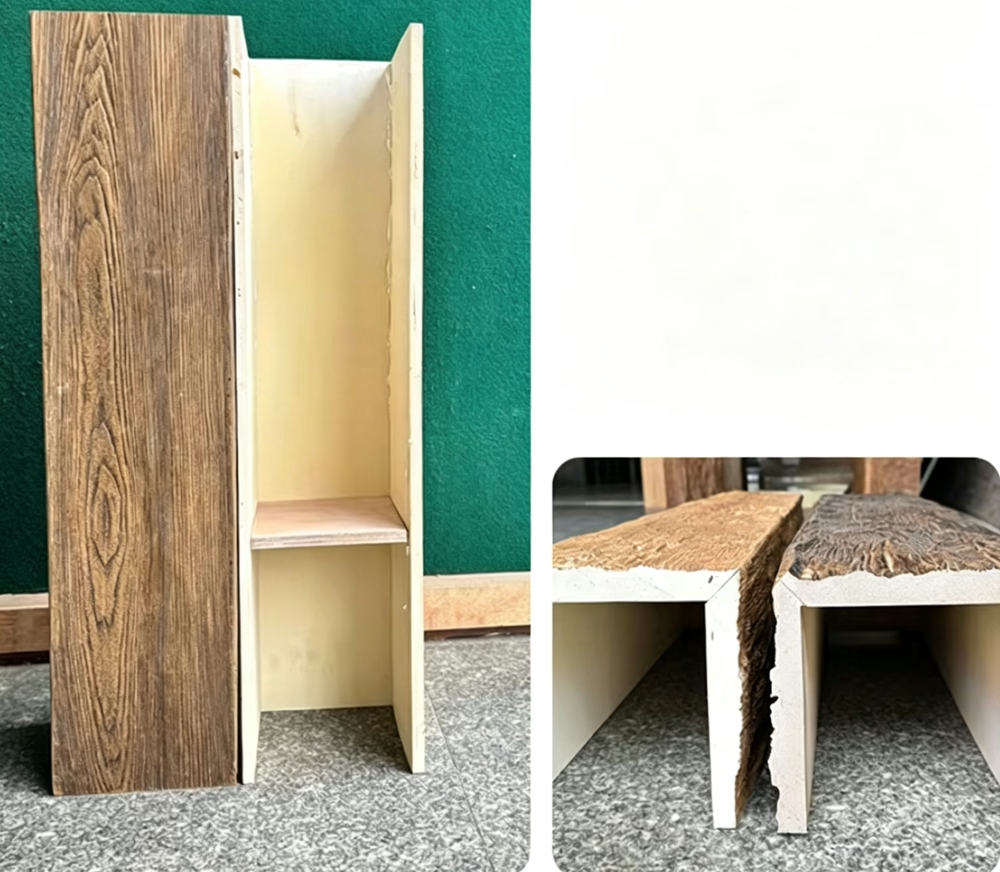
Three-sided hollow beams enable this approach by making selective installation practical.
What You're Actually Upgrading
Perceived Value
A single well-placed beam does more for perceived value than five poorly placed ones. This isn't about deceiving visitors—it's about creating the impression of architectural intention.
In real estate terms: selective upgrades often return more per dollar spent than comprehensive ones. A buyer notices one dramatic beam; they take multiple modest beams for granted.
Functional Enhancement
Beyond appearance, partial beam treatment addresses specific functional needs:
- Acoustic improvement where it's needed most (above seating areas)
- Visual anchoring of specific zones in open plans
- Concealment of ceiling irregularities in specific areas
The upgrade solves problems rather than applying generic decoration.
Budget Efficiency
Partial treatment costs a fraction of full installation:
- Material costs drop proportionally
- Labor time decreases significantly
- Blocking requirements are reduced
This freed budget can address other renovation priorities.
Choosing Upgrade Locations
The Hierarchy of Impact
Not all locations deliver equal return on investment:
High impact: Beams at these locations earn attention and organize space
- Above fireplaces
- Crossing room centers
- Framing specific architectural features
- At transitions between distinct zones
Medium impact: Beams at these locations add presence but don't organize
- Long wall runs
- Above secondary seating
- Peripheral ceiling areas
Low impact: Beams at these locations add little value
- Corners nobody looks at
- Areas hidden by furniture
- Zones that compete with focal points
Invest high, ignore low.
Room-Specific Priorities
Different rooms have different upgrade hierarchies:
Living room: Fireplace zone first, then main seating arrangement, then periphery
Kitchen: Above island, then dining zone, then perimeter
Master bedroom: Above the bed (headboard wall), then seating area, then remaining ceiling
Entry: Crossing the threshold, then along the entry axis
Installation Economy
Hollow Cover Efficiency
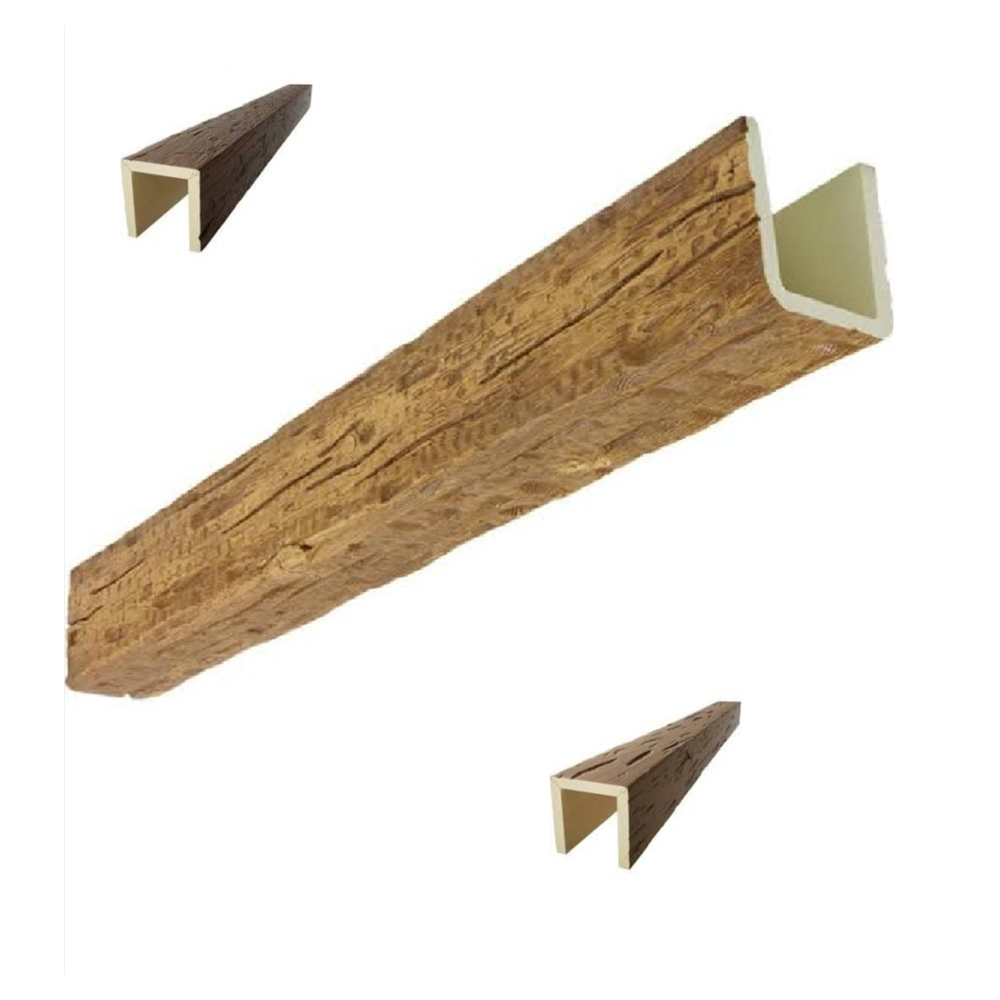
Three-sided hollow covers cost less per linear foot than solid beams:
- Less raw material required
- Easier shipping and handling
- Faster installation
For partial upgrades where the back face is never visible anyway, hollow construction makes economic sense.
Blocking Requirements
Partial installation means partial blocking:
- Only install blocking where beams will actually mount
- Blocking placement follows beam placement
- Total blocking cost drops with beam count
This is another area where selective treatment saves.
Joint Management
Fewer beams mean fewer joints to manage:
- Less opportunity for visible seam problems
- Simpler finishing
- Lower risk of installation issues
A single beam installed perfectly outperforms three beams with visible problems.
Making Partial Look Intentional
The Planned Accent
Partial upgrades succeed when they look chosen, not defaulted:
- Consistent spacing within the treated zone
- Clean terminations at walls
- Transitions that feel designed rather than arbitrary
Avoiding the Orphaned Look
The failure mode for partial upgrades is the orphaned beam—one beam that floats in isolation without clear purpose.
Avoid this by:
- Grouping beams in pairs or sets
- Making beam placement relate to existing architecture
- Ensuring each beam has a visual function
Scaling to the Space
Partial treatment in large spaces requires proportional scaling:
- Larger profiles in larger rooms
- Greater spacing between beams (proportionally)
- More dramatic placement in voluminous spaces
A single beam in a small room can be a statement. That same beam in a great room becomes a curiosity.
Selective ceiling upgrades with three-sided hollow beams deliver maximum impact per dollar invested. The key is intention—every beam placement should solve a design problem or create visual value. When partial treatment looks planned, it outperforms expensive comprehensive installations that lack focus.
Technical References
ASTM standards cited in every specification
Test Data
Lab results from internal testing program
Updated 2026
Reviewed against current product specs