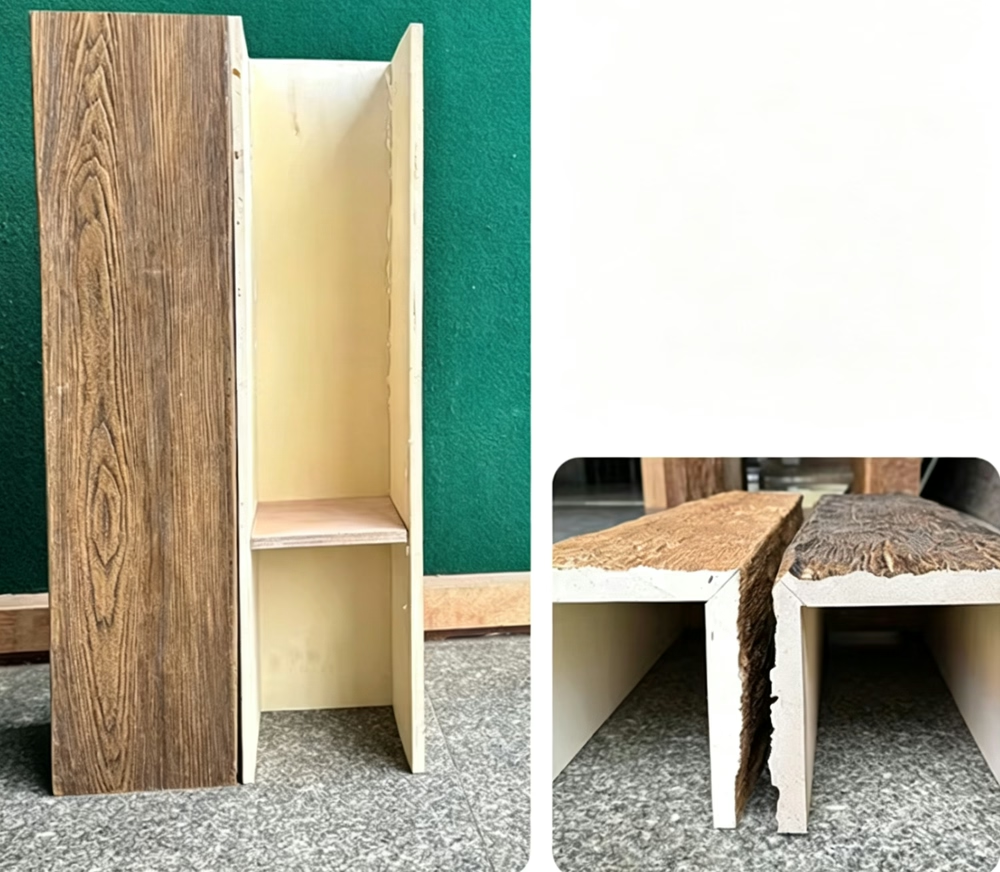
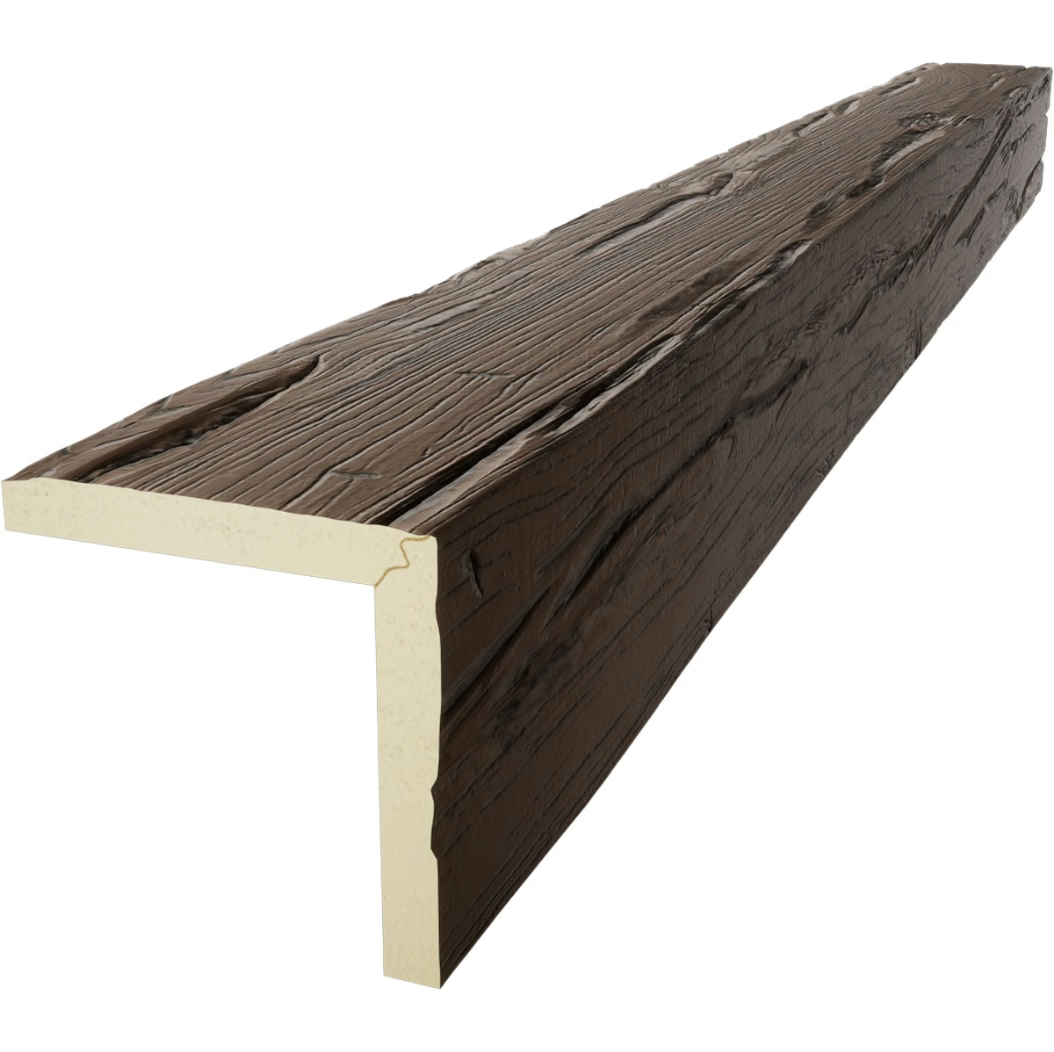
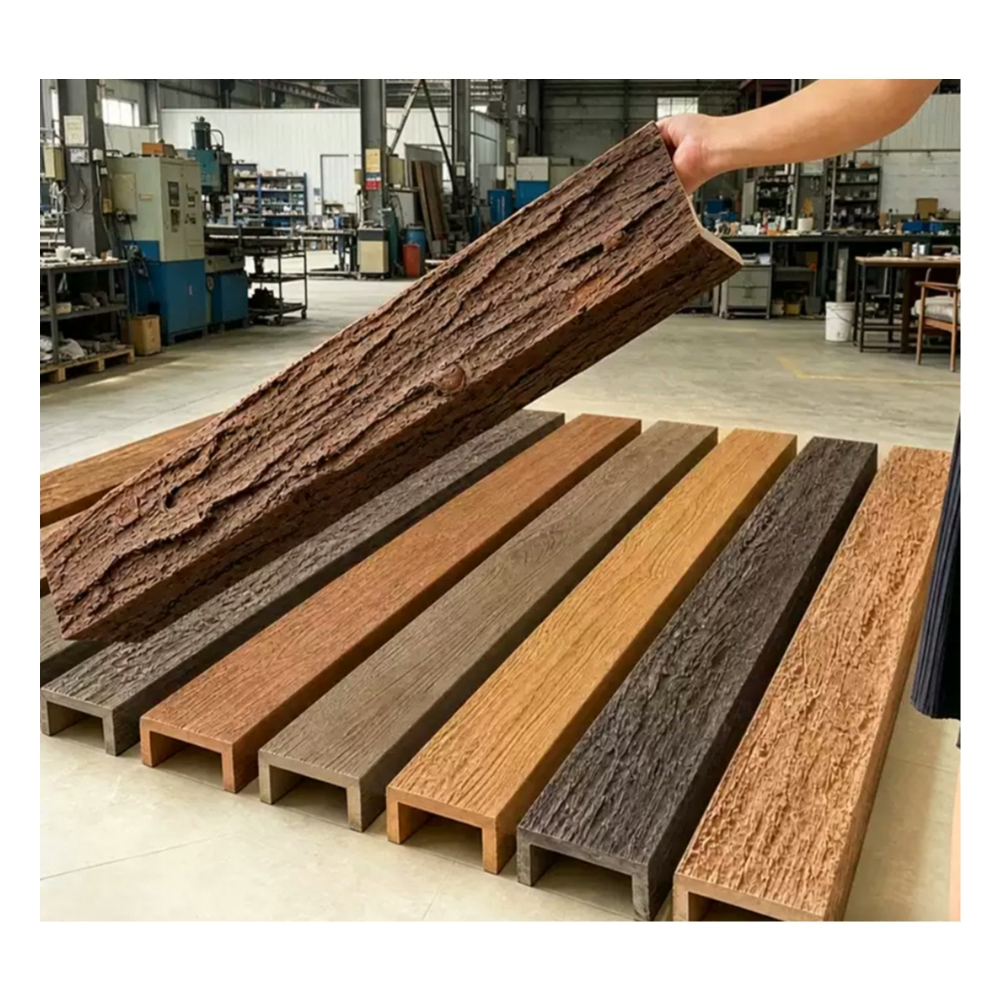
Renovation projects involving original timber beams present distinctive challenges that rarely exist in new construction. Years or decades of service leave their marks—structural damage from moisture, insect activity, or overload; surface deterioration from UV exposure and cleaning; and often modifications made by previous owners that complicate contemporary restoration goals. Modern polyurethane faux timber beams offer renovation advantages that pure replacement with new wood cannot match, but successful application requires understanding the specific considerations these projects introduce.
Assessing Natural Wood Beam Condition
Before selecting replacement materials, thorough assessment determines whether repair or replacement best serves project goals.
Structural evaluation identifies load-bearing concerns. Beams serving structural functions require engineering assessment to determine load capacity and appropriate remediation. Faux timber beams are typically decorative rather than structural, so existing structural elements may need reinforcement regardless of cosmetic approach.
Surface condition determines viable restoration approaches. Beams with intact structure but deteriorated surfaces may benefit from repair and refinishing rather than replacement. Cost comparison between restoration and replacement guides final decision-making.
Moisture damage patterns reveal ongoing issues requiring resolution. Beams damaged by moisture need underlying problems addressed before new materials install. Installing faux beams over unresolved moisture sources guarantees future problems.
Advantages of PU Faux Beams for Replacement Applications
Modern faux timber technology offers specific advantages for replacement scenarios.
Dimensional consistency simplifies installation planning. Natural wood beams vary in dimension, straightness, and profile. Faux beams manufactured to consistent specifications allow precise installation planning without accommodation for material variation.
Weight reduction simplifies mounting requirements. Natural timber density creates substantial loads on mounting systems. Polyurethane faux beams weigh significantly less, potentially allowing simpler mounting approaches and reduced structural demand on existing construction.
Resistance to deterioration eliminates future maintenance concerns. Unlike natural wood vulnerable to moisture damage, insect attack, and rot, polyurethane resists these degradation mechanisms. Install once and the appearance persists without ongoing treatment.
Matching Aesthetic Requirements
Renovation projects often require matching existing architectural elements or achieving specific historical accuracy.
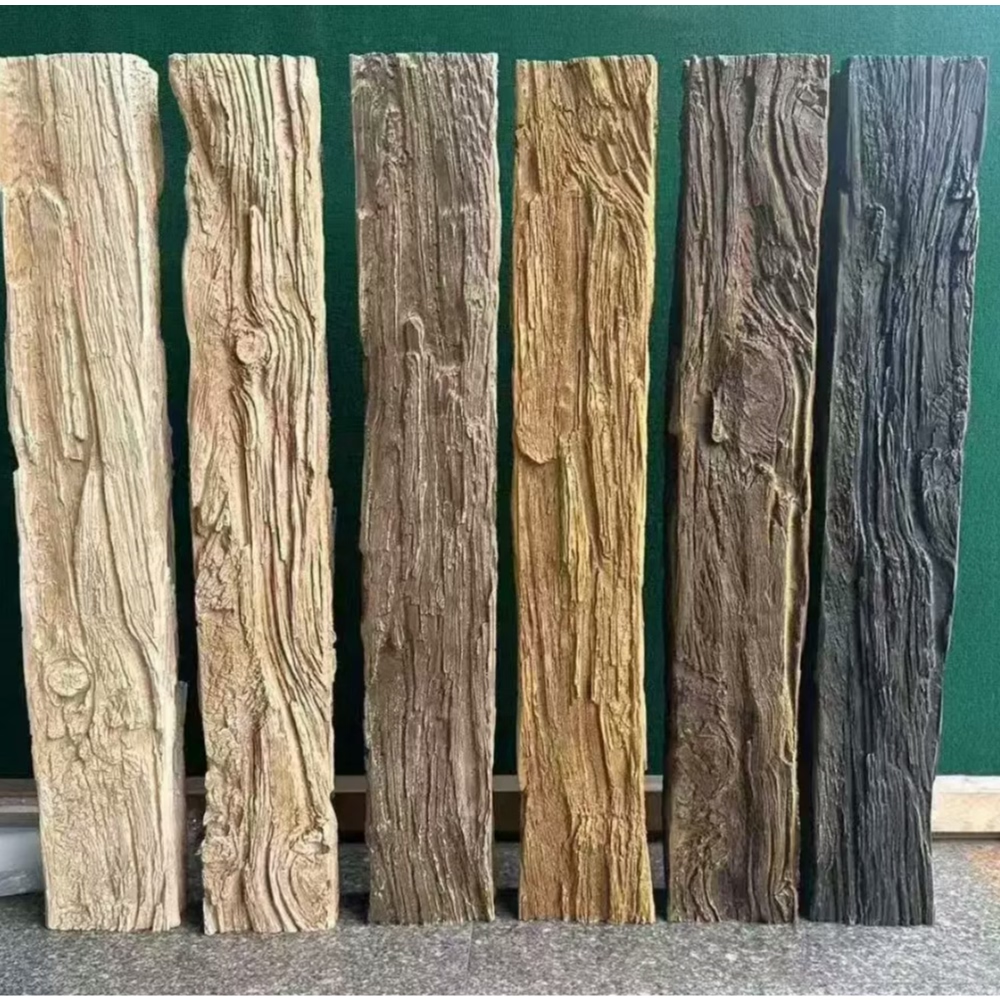
Wood species reproduction expands design possibilities. Natural replacement beams limited by available species and existing inventory. Faux beam manufacturers reproduce diverse wood species—from common oaks and maples to exotic mesquite and padauk—expanding matching possibilities.
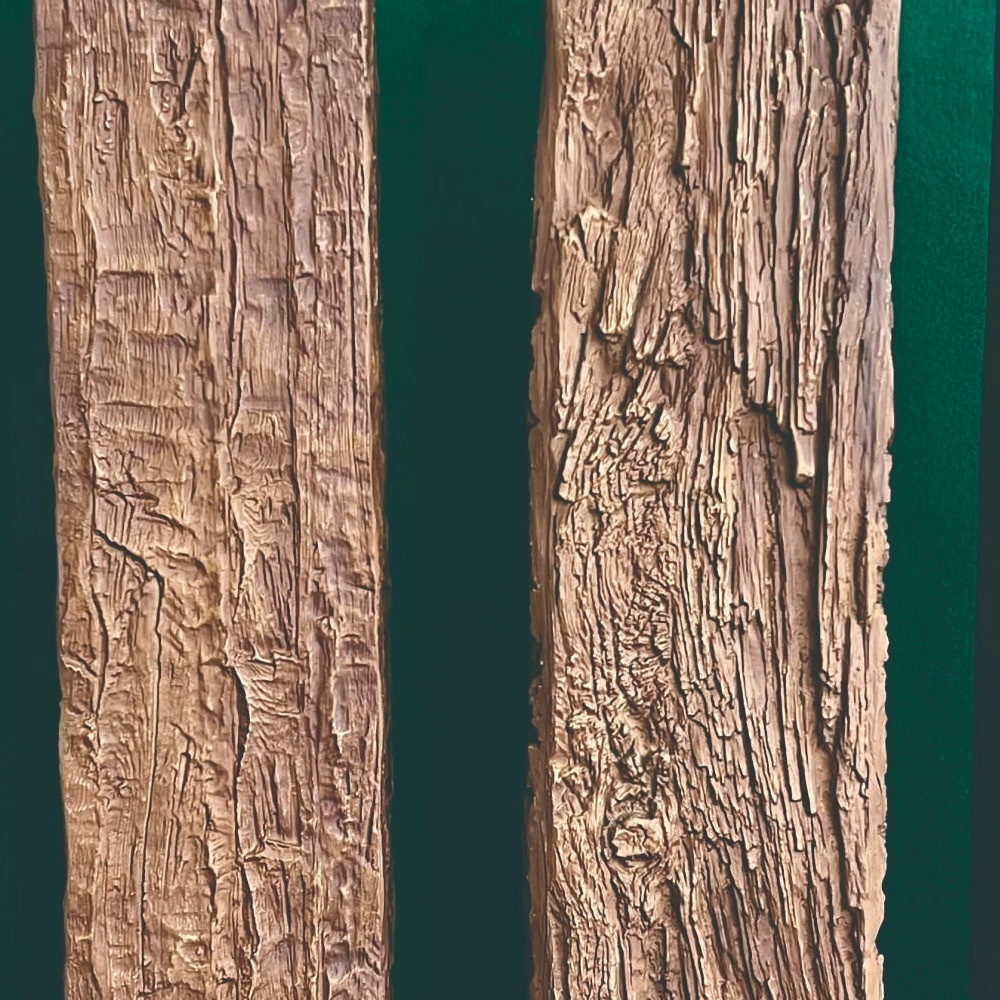
Aged appearance options range from new-milled to heavily weathered. Natural beams available with aged character come from actual aged stock, limiting availability and increasing cost. Faux beams manufactured with various aging levels provide consistent options at predictable pricing.
Profile matching enables seamless integration with existing elements. Custom mold creation from existing beam profiles ensures replacement beams align visually with surviving original elements, creating cohesive appearance across the installation.

Installation Considerations for Replacement Projects
Replacement installations differ from new construction in several important ways.
Existing construction conditions affect mounting approach. Older construction often includes materials and techniques unfamiliar to contemporary installers. Careful survey of existing conditions guides appropriate mounting system selection.
Clearance requirements may differ from natural wood. Faux beams typically install with smaller clearances than natural wood, potentially allowing installation where natural wood options would not fit. This advantage enables more installation flexibility.
Finishing coordination with existing elements ensures appearance consistency. Replacement beams may arrive pre-finished or require on-site finishing to match existing materials. Understanding finishing requirements early in project planning prevents surprises.
Structural Considerations and Load Management
Replacement beam installation must address underlying structural requirements.
Structural beams may need separate treatment. Beams serving genuine structural functions cannot simply be replaced with decorative faux alternatives. Engineering involvement determines appropriate structural remediation, potentially including steel reinforcement or additional supporting elements.
Mounting systems must address actual loads. While faux beams are lightweight, mounting systems still experience loads from the beam weight, mounting hardware, and any incidental loading. Appropriate engineering prevents mounting failures.
Expansion and contraction accommodation prevents damage. Existing construction moves with temperature and humidity changes. Faux beams mounted rigidly without accommodation for this movement risk damage over time. Flexible mounting approaches prevent these problems.
Long-Term Performance Expectations
Renovation projects require understanding realistic performance over extended periods.
Expected lifespan of quality faux beams exceeds natural wood in many conditions. While natural wood may require replacement within decades in challenging environments, polyurethane faux beams continue performing for much longer periods without deterioration.
Maintenance requirements differ significantly from natural wood. Natural wood needs periodic refinishing, treatment application, and inspection for deterioration. Faux beams require only cleaning and occasional touch-up of finish damage.
Warranty coverage provides confidence in product quality. Reputable manufacturers provide warranties covering material defects and finish performance. Understanding warranty terms—and selecting products with meaningful warranty coverage—provides long-term protection.
Cost Analysis for Renovation Applications
Replacement project economics require comprehensive analysis.
Material cost comparison between natural and faux alternatives varies by species and availability. Exotic hardwoods or rare domestic species may cost substantially more than comparable faux options. Common species may offer competitive or better natural wood pricing.
Installation cost differences favor faux alternatives in many scenarios. Lighter weight, dimensional consistency, and mounting simplicity often reduce installation labor compared to natural wood alternatives.
Lifecycle cost comparison reveals total value. Natural wood maintenance, refinishing, and eventual replacement costs add significantly to initial material costs. Faux alternatives' minimal maintenance requirements and extended lifespan often provide better lifecycle economics.
Successful renovation beam replacement requires thorough assessment, appropriate product selection, careful installation, and realistic performance expectations. Modern faux timber technology provides renovation options unavailable through traditional approaches, enabling beautiful, lasting results in applications where natural wood alternatives would struggle.
Technical References
ASTM standards cited in every specification
Test Data
Lab results from internal testing program
Updated 2026
Reviewed against current product specs