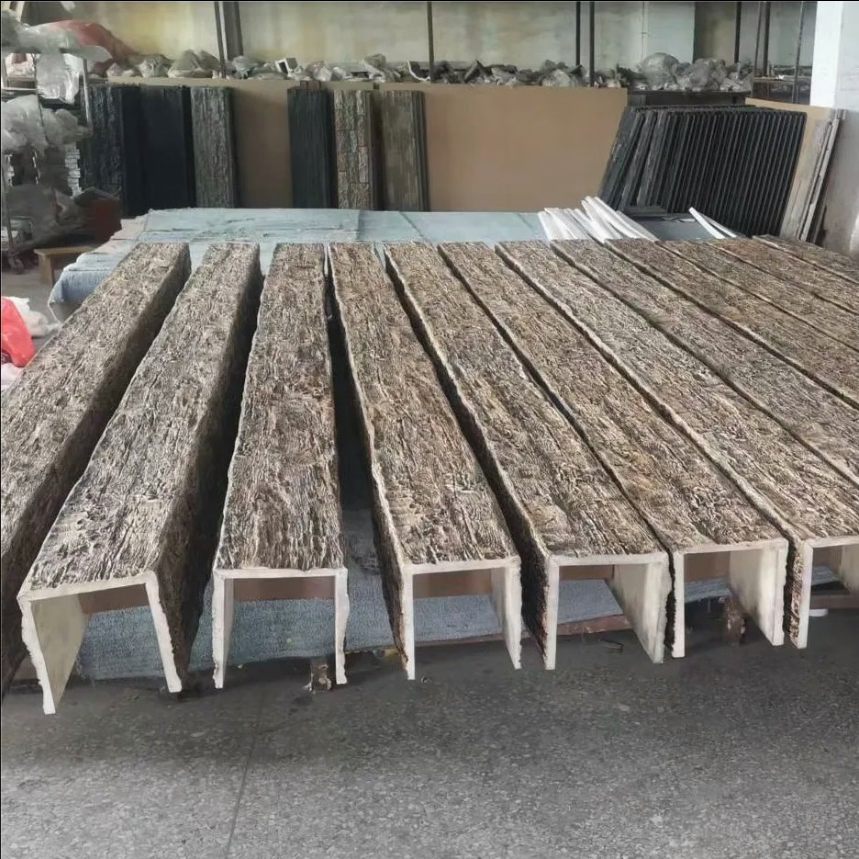
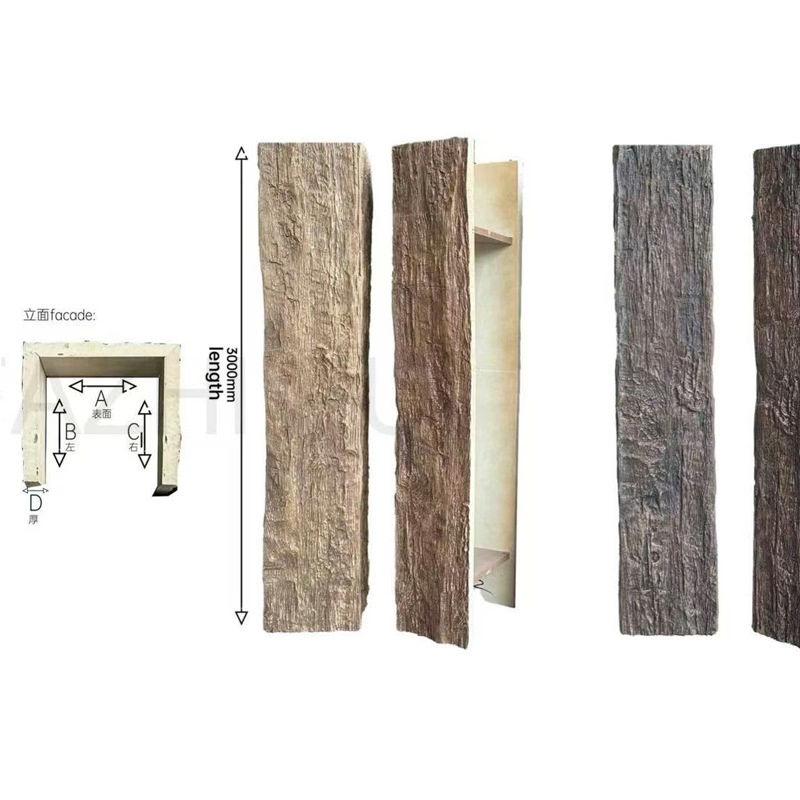
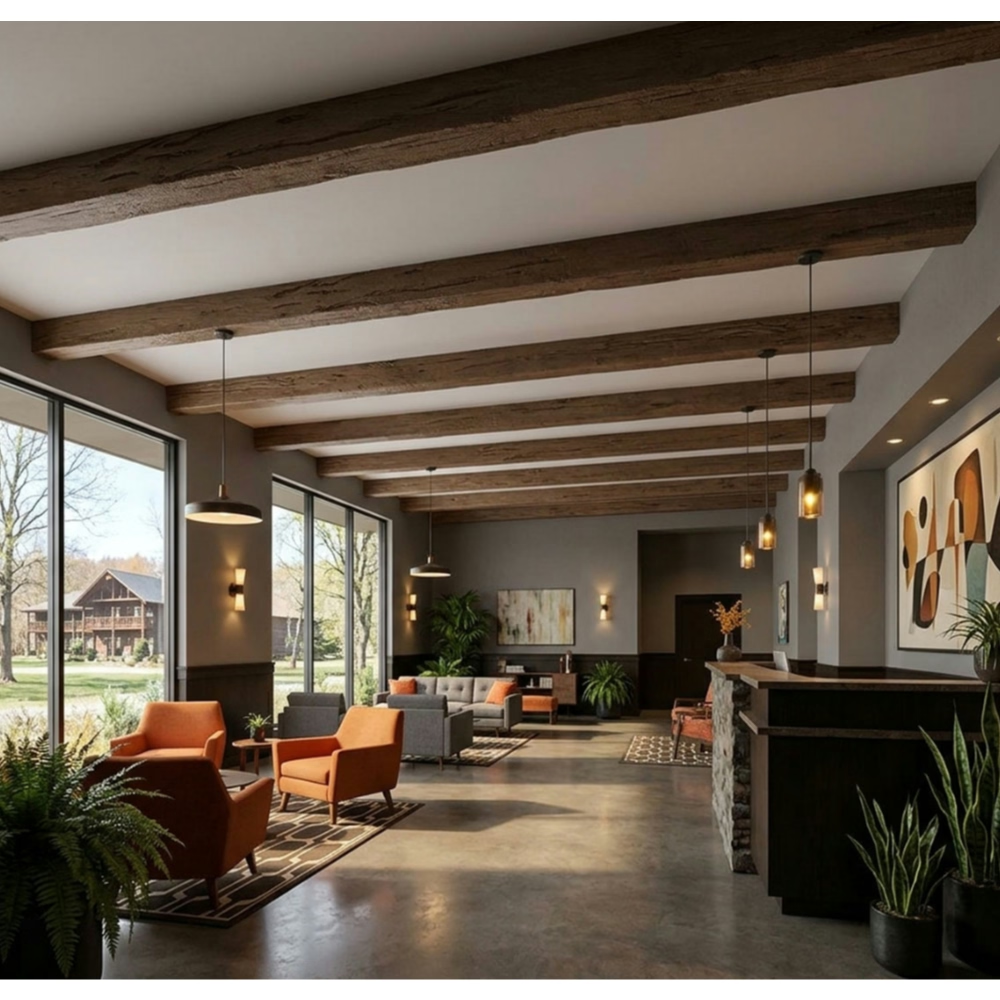
The 6x6 size is foundational to residential faux beam specification. It's the first profile most manufacturers tool, the first size most designers learn, and the first specification most contractors encounter. Understanding 6x6 as the foundational size helps contextualize the entire beam specification system.
Why 6x6 as the foundational size
The 6x6 profile became foundational for several reasons:
Historical precedent — dimensional lumber 6x6 was the standard small structural post size, establishing the dimension in construction vocabulary
Manufacturing efficiency — square molds are simpler to tool and produce consistently
Design proportion — the 6-inch dimension relates well to standard residential ceiling heights (8 to 10 feet) and room widths (10 to 16 feet)
Visual balance — square cross-section provides equal horizontal and vertical presence
Inventory efficiency — high demand means manufacturers keep 6x6 stocked, reducing lead times and pricing
The 6x6 became the baseline against which all other profiles are measured.
6x6 in the product hierarchy
Understanding 6x6's position in the overall specification range:
Smaller than 6x6
- 4x4 — compact minimalist
- 4x6 — narrow accent
- 5x5 — custom niche
Larger than 6x6
- 6x8 — deeper residential
- 6x10 — substantial residential
- 6x12 — oversized residential
- 8x8 — wide-face residential
- 8x10 — wide-face substantial
- 10x10 and up — commercial-scale
The 6x6 sits at the center of the residential range.
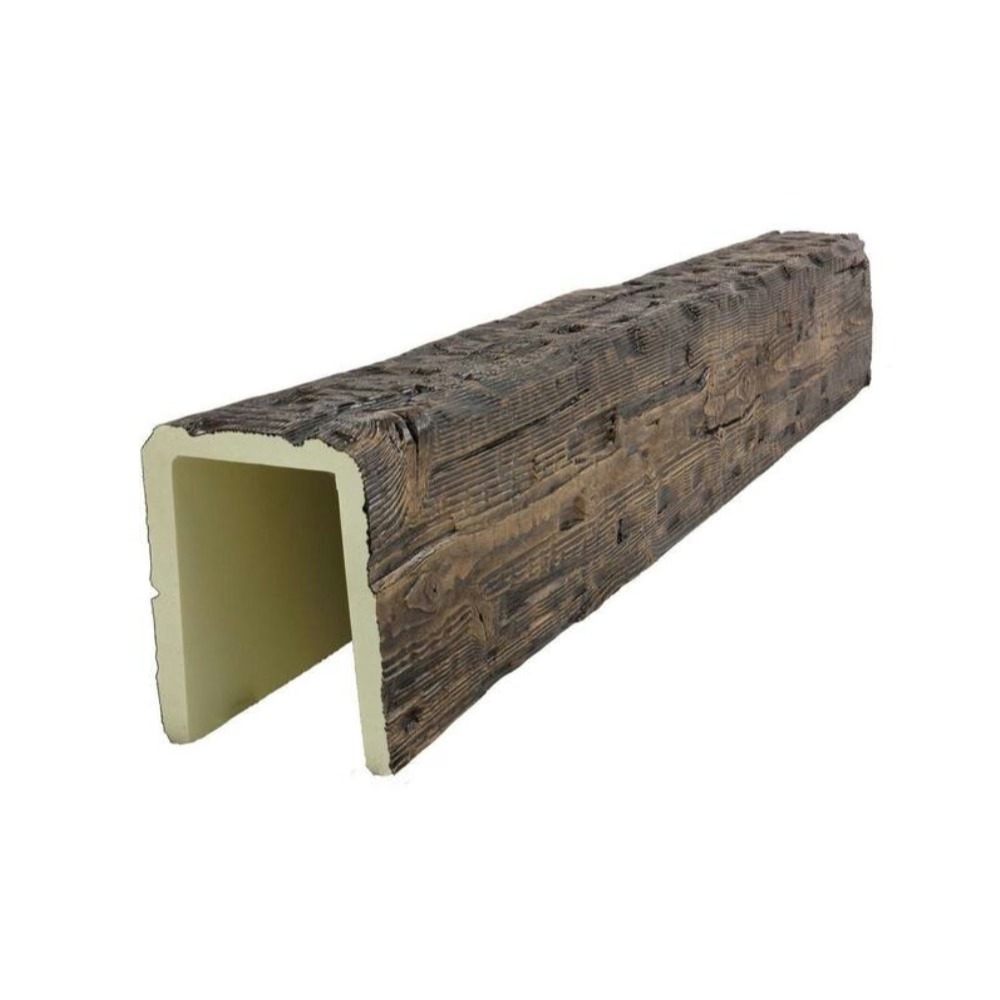
Application spectrum
The 6x6 covers most of the residential application spectrum:
Strong coverage — living rooms, dining rooms, bedrooms, kitchens, home offices
Adequate coverage — hallways, entries, bathrooms, basements
Limited coverage — very small rooms (under 80 sq ft), very large rooms (over 400 sq ft), very high ceilings (over 12 ft)
For the majority of residential applications, 6x6 provides appropriate visual weight.
Specifications reference
6x6 beam technical specifications:
| Specification | Value |
|---|---|
| Face width | 6 inches |
| Depth | 6 inches |
| Profile | Square |
| Wall thickness (hollow) | 4 to 8mm |
| Density range | 1.5 to 2.5 lb/ft³ |
| Standard lengths | 4, 6, 8, 10, 12, 14 ft |
| Custom lengths | Available |
| Fire rating (standard) | Class B |
| Fire rating (premium) | Class A |
| UV resistance | 5 to 10 years |
| Warranty range | 5 to 15 years |
Cost positioning
6x6 pricing in the product range:
| Comparison | Cost Position |
|---|---|
| vs 4x4 | 20–30% higher |
| vs 4x6 | 15–25% higher |
| vs 6x8 | Baseline |
| vs 8x8 | 10–15% lower |
| vs 10x10 | 25–35% lower |
The 6x6 offers good value positioning—more presence than smaller profiles at moderate cost premium.
When to specify 6x6
Specify 6x6 when:
- Room size is 100 to 280 sq ft
- Ceiling height is 8 to 10 ft
- Design style is modern, transitional, farmhouse, or traditional
- Budget is moderate to mid-range
- Standard appearance is acceptable
- No specific requirement pushes toward another profile
When to specify differently
Consider other profiles when:
- Small room (under 100 sq ft): specify 4x4 or 4x6
- Large room (over 280 sq ft): specify 6x8 or 8x8
- High ceiling (over 11 ft): specify 6x8 or 8x8
- Minimalist aesthetic: specify 4x4 or 4x6
- Heavy traditional aesthetic: specify 8x8 or larger
- Commercial scale: specify 10x10 or larger
Trade and sourcing
For distributors and contractors:
- 6x6 is the volume leader in most markets
- Widest availability across manufacturers
- Shortest lead times (often in stock)
- Most competitive pricing per linear foot
- Full finish and texture catalog standard
A practical rule
6x6 standard size PU faux wood beams are the foundational residential specification. The square profile, moderate dimensions, and broad application coverage make it the reliable default when no specific requirements dictate otherwise. Use 6x6 as the baseline and specify differently only when the project has specific requirements.
Technical References
ASTM standards cited in every specification
Test Data
Lab results from internal testing program
Updated 2026
Reviewed against current product specs