
The French country dining room has a personality. It is not as formal as an English dining room, not as spare as a Scandinavian one, and not as curated as a modern farmhouse. It is the kind of room where copper pots hang on the wall, the chairs don't quite match each other, and the ceiling looks like it has been there since the building was a working farm. Capturing that character from new materials is a particular kind of design challenge, and PU faux wood ceiling beams with a relaxed finish are exactly the right tool.
The French country ceiling, as imagined
A French country ceiling is rarely flat. It often includes a hint of geometry overhead, sometimes a slope, sometimes a coffer, but most often a series of beams that look like they were part of the original building. The beams are not perfect. They have visible grain, slight irregularities at the joints, and edges that have been softened by hand or by time.
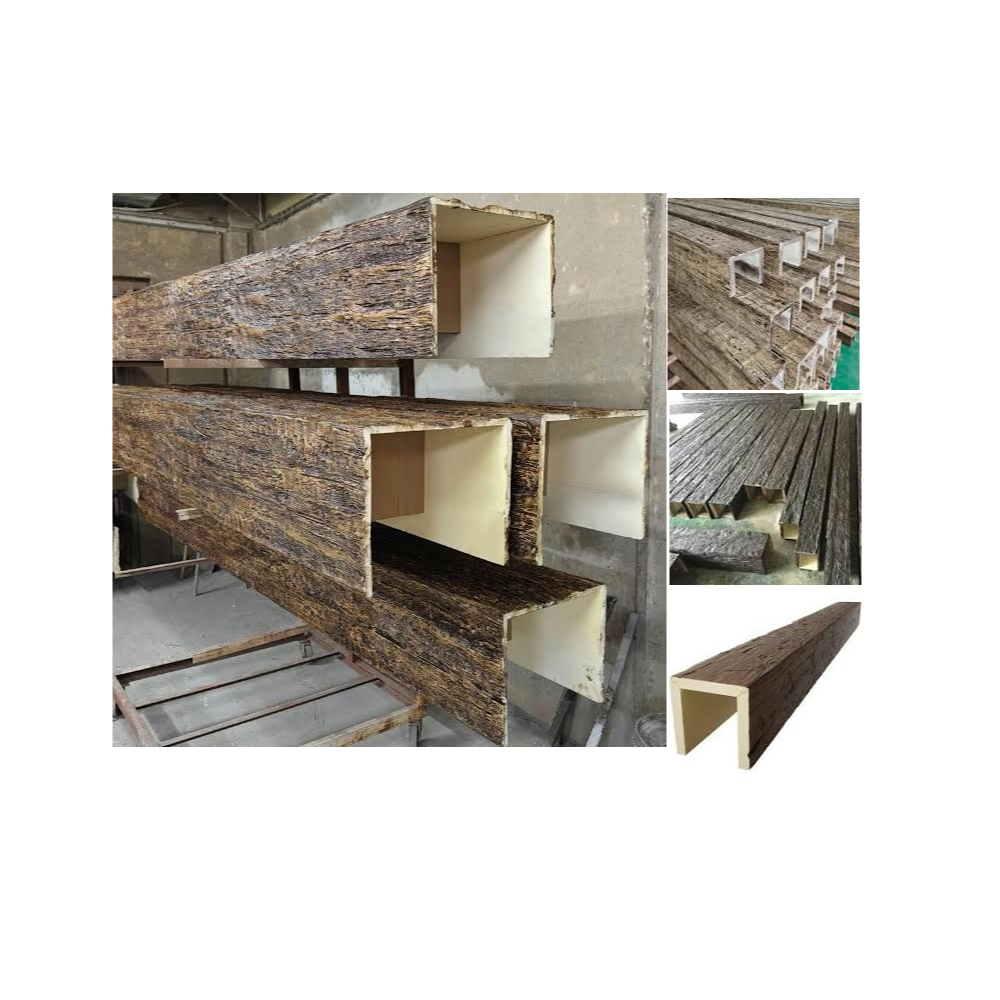
In a new construction or a renovation that wants to capture that feeling, the beams need to look intentional rather than ornamentally fabricated. Polyurethane beams handle this well because the manufacturer can apply a hand-worked texture that includes subtle irregularities. A solid timber beam can be distressed by the installer, but polyurethane arrives already distressed in a way that looks natural because it was tooled into the mold itself.
The result is a ceiling that photographs beautifully but does not feel like a magazine set. It feels like a real room where real meals happen, with food being passed and conversation being had and a few wine spills along the way. That lived-in quality is what defines the genre.
Where French country differs from modern farmhouse
Modern farmhouse is a more curated genre. It tends toward crisp edges, neutral palettes, and a deliberate cleanliness. French country is the older cousin. It accepts patina, incorporates warm tones, and tolerates the kind of decorative excess that modern farmhouse rejects. The ceiling beams should reflect this difference. A hand-planed surface with visible tool marks reads as French country. A clean smooth finish reads as modern farmhouse. Both can work, but they communicate very different intentions.
Designers who are working in a French country direction typically specify a more textured beam finish than they would for a modern farmhouse project. The texture can be subtle, but it should be visible at conversational distance. The eye reads the texture as authenticity, even when the brain knows the beam is polyurethane.
Finishes that feel lived-in
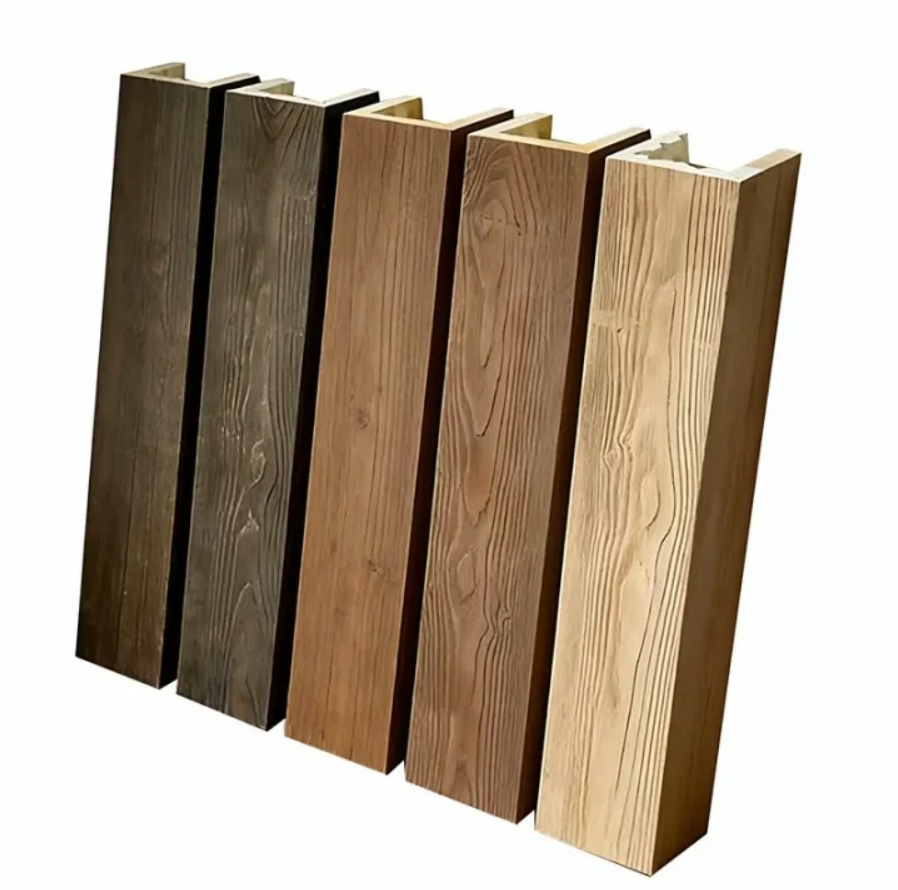
The most popular finishes for French country ceilings are warm oak, golden chestnut, and aged pine. These tones work with the soft palette of stone floors, painted furniture, and natural textiles that defines the genre. Whitewashed finishes are also popular but are usually reserved for ceilings where the rest of the room includes heavier wood tones.
A useful rule for French country finishes is to avoid anything too uniform. The eye expects variation in this genre. A beam that looks perfectly consistent in color and grain reads as artificial. A beam with slight tone variations along its length reads as authentic. Polyurethane can be finished with this kind of variation at the factory, so the homeowner receives a beam that already feels like it has been there for decades.
Working with painted furniture
Many French country dining rooms include painted chairs, often in pale greys, soft creams, or muted blues. The beams above should pick up a tone that complements these painted finishes rather than competes with them. Warm oak or chestnut beams pair well with cool grey chairs. Pale oak beams pair well with cream chairs. The contrast in temperature between the painted furniture and the beam finish is part of what makes the room feel composed.
Tables in French country rooms are usually wood, often with a distressed or weathered finish. The beams above should harmonize with the table without imitating it. A beam finish that is slightly warmer than the table creates visual interest. A beam finish that matches the table exactly looks too coordinated and reads as artificial.
Layouts for relaxed dining rooms
The most common French country dining room layout is three or four beams running parallel to the table's long axis. The center beam hangs above the centerline of the table, with the flanking beams spaced evenly on either side. A simple chandelier or a pair of pendant lights hangs from the central beam.
A second popular layout is the cross-beam pattern, with two beams running along the table's length and a third beam running perpendicular at one end, framing a sideboard or buffet. This layout works in rooms where the table sits a few feet away from one wall and the other end of the room opens to the kitchen or the foyer.
A third option is the perimeter layout, where beams run along the ceiling edges of a tray ceiling, framing a central flat panel above the table. This works particularly well in rooms with strong wall treatments, such as a stone accent wall or heavily textured plaster.
Spacing and rhythm
French country rooms tolerate closer beam spacing than modern interiors. Where a contemporary dining room might space three beams across a 14-foot ceiling, a French country room might space four or five across the same dimension. The closer spacing reinforces the room's hand-built quality and produces the layered overhead texture that defines the genre.
A useful guideline is to space the beams at roughly the same distance as the ceiling height divided by 2 to 3. For a 9-foot ceiling, that means spacing of 3 to 4.5 feet between beams. For a 10-foot ceiling, spacing of 3.5 to 5 feet. These ranges are tighter than the typical modern spacing and they require beams in the 6-by-8 inch range rather than 8-by-10 inches.
Working with stone and plaster walls
French country interiors often feature stone walls, brick accents, or heavily textured plaster. The beams above these surfaces should pick up the same temperature as the wall. A warm stone wall pairs with a warm oak beam. A cool grey plaster wall pairs with a slightly cooler beam tone. The harmony between the wall and the ceiling is what makes the room feel settled rather than decorative.
Where the room includes a stone fireplace at one end, the beams should continue across the entire room rather than stopping at the fireplace. This produces a unified ceiling composition and gives the fireplace its own context. Designers sometimes specify a slightly thicker beam above the fireplace opening as a kind of mantel header, but this is decorative rather than structural.
Working with antique and reproduction furniture
French country rooms often include antique or reproduction pieces. A reproduction farmhouse table with hand-distressed legs, a French-style armoire along one wall, and a few iron-and-wood chairs around the table are typical. The ceiling beams above should be in scale with this furniture. A very slender beam looks inconsistent with chunky antique pieces, while an overly heavy beam competes with them.
A profile around 8-by-8 or 8-by-10 inches typically works well in this context. The beam is heavy enough to look like part of a substantial structure, but not so heavy that it overwhelms the room's other wood elements.
Lighting that supports the long meal
French country dining rooms see long meals. The lighting should be flexible enough to support conversation at the table, food on the plate, and a relaxed ambiance after the meal. Most designers specify three lighting layers: ambient lighting that washes the room, task lighting that focuses on the table, and accent lighting that highlights other features.
Ambient lighting typically comes from recessed cans or cove lighting around the perimeter. Task lighting usually means a chandelier or a series of pendants above the table. Accent lighting might include wall sconces at the sideboard or picture lights above a piece of artwork.
Faux beams can carry any of these layers. The chandelier can hang from a beam at the centerline. The pendants can be spaced along a beam's length. The accent lighting can be mounted on beam faces or hidden in beam pockets. The wiring runs through the beam cores, so the ceiling stays clean and the lighting fixtures appear to float in their own architectural framework.

Decorating the beams themselves
A French country beam is rarely left alone. Designers and homeowners often decorate the beams with garlands of dried flowers, hanging copper pots in kitchens, and seasonal decorations during holidays. The beams become part of the room's decorative vocabulary rather than just a structural gesture.
This is one of the small pleasures of the genre. A beam that looks finished but is actually just a beam can grow into the room's seasonal life, carrying holly at Christmas, fresh lavender in summer, and wheat sheaves at harvest. Polyurethane beams handle this kind of decorative weight easily. Small nails and lightweight hooks hold garlands and seasonal touches without compromising the finish.
The risk is over-decoration. Beams that carry too many accessories look cluttered and lose their architectural presence. A French country room with three beams might carry a single seasonal garland across the central beam and leave the others alone. The eye reads the central beam as featured and the flanking beams as supportive, which is the correct hierarchy.
A short case study in relaxed elegance
Consider a 12-by-16 foot French country dining room in a renovated farmhouse. The walls are painted plaster in a soft cream, with one wall featuring a stone fireplace. The floor is wide-plank reclaimed oak in a warm honey tone. The dining table is a reproduction farmhouse piece in distressed oak, with mismatched painted chairs around it.
Three faux wood beams run parallel to the table, in a warm chestnut finish with hand-planed texture. The center beam hangs above the centerline of the table and carries a wrought-iron chandelier with six candle-style lights. The two flanking beams sit 4 feet on either side, providing rhythm and reinforcing the room's geometry.
A simple linen runner runs the length of the table. A ceramic pitcher of dried lavender sits off-center. A small stack of cookbooks and a pewter candlestick sit at one end. The room is composed and welcoming, neither too formal nor too casual, and the ceiling overhead contributes to the sense of place without demanding attention.
The finish that ages gracefully
A French country ceiling does not require the kind of pristine maintenance that a contemporary ceiling demands. Polyurethane beams in this genre are designed to look slightly weathered from the moment they are installed, so small scuffs, dust accumulation, and the slow patina of daily life do not affect the room's character. The beams accept these age markers as part of their identity.
For homeowners who want the room to look its best at all times, the annual maintenance is simple: a gentle dusting of the beam faces, an inspection of the caulk along the seams, and an occasional waxing of any pieces of furniture that benefit from it. The beams themselves require no special treatment. They sit overhead, doing their job, looking right in a room that is meant to be lived in rather than simply admired.
Frequently Asked Questions About French Country Dining Room Beams
What makes French country beams different from modern farmhouse beams?
French country accepts patina, warm tones, and decorative texture where modern farmhouse prefers crisp edges and neutral palettes. Specify hand-planed surfaces with visible tool marks for French country—the texture reads as authenticity. Modern farmhouse uses clean, smooth finishes. French country beams should show subtle irregularities and tone variations along their length, appearing aged rather than newly manufactured.
What beam finishes work with painted French country furniture?
Warm oak or chestnut beams pair beautifully with cool grey painted chairs—temperature contrast composes the room. Pale oak beams complement cream chairs. The key: beam warmth should balance furniture coolness without competing. Tables are usually distressed wood; choose beam tones slightly warmer than the table to create visual interest while maintaining harmony.
How close should you space beams in French country rooms?
French country tolerates closer spacing than modern interiors—4 or 5 beams across 14 feet versus 3 in contemporary designs. Useful guideline: space beams at ceiling height divided by 2-3. For 9-foot ceilings, use 3-4.5 foot spacing; 10-foot ceilings use 3.5-5 feet. Closer spacing reinforces hand-built quality and produces layered overhead texture that defines the genre.
Should beams match or contrast with stone walls?
Coordinate beam temperature with wall temperature. Warm stone walls pair with warm oak beams; cool grey plaster pairs with slightly cooler beam tones. For stone fireplaces, continue beams across the entire room rather than stopping at the fireplace—this unifies ceiling composition. Consider slightly thicker beams above fireplace openings as decorative mantel headers.
What beam size works with antique French country furniture?
8x8 or 8x10 inch profiles scale appropriately with chunky reproduction farmhouse tables and substantial antique pieces. Beams should feel substantial enough to appear structural without overwhelming the room's other wood elements. Too slender looks inconsistent with heavy furniture; too heavy competes rather than complements.
How do you light French country dining rooms for long meals?
Three lighting layers work best: ambient (recessed cans or cove lighting), task (chandelier or pendants above table), and accent (wall sconces or picture lights). Chandeliers hang from central beams at table centerlines. Pendants space along beam lengths. Wiring runs through hollow beam cores for clean installations without surface-mounted conduit.
Can you decorate French country beams seasonally?
Yes—that's part of the genre's charm. Drape dried flower garlands, hang copper pots in kitchen areas, add seasonal decorations during holidays. Beams become part of the room's decorative vocabulary. Small nails and lightweight hooks hold garlands without compromising finishes. Avoid over-decoration—a single seasonal garland on the central beam with flanking beams left bare maintains proper hierarchy.
Do textured finishes require special maintenance?
No—French country beams are designed to look slightly weathered from installation, so minor scuffs, dust accumulation, and natural patina don't affect character. Annual maintenance: gentle dusting, seam caulk inspection, occasional furniture waxing. Polyurethane beams accept age markers as part of their identity—the lived-in quality is intentional, not problematic.
What's better for French country—whitewashed or natural wood beams?
Both work depending on context. Whitewashed finishes suit rooms where walls and furniture carry heavier wood tones, keeping ceilings bright. Natural warm oak, golden chestnut, and aged pine work with soft palettes of stone floors and painted furniture. Key: avoid uniform appearance—specify slight tone variations along beam lengths so they read as authentic aged timber rather than manufactured products.
Technical References
ASTM standards cited in every specification
Test Data
Lab results from internal testing program
Updated 2026
Reviewed against current product specs


