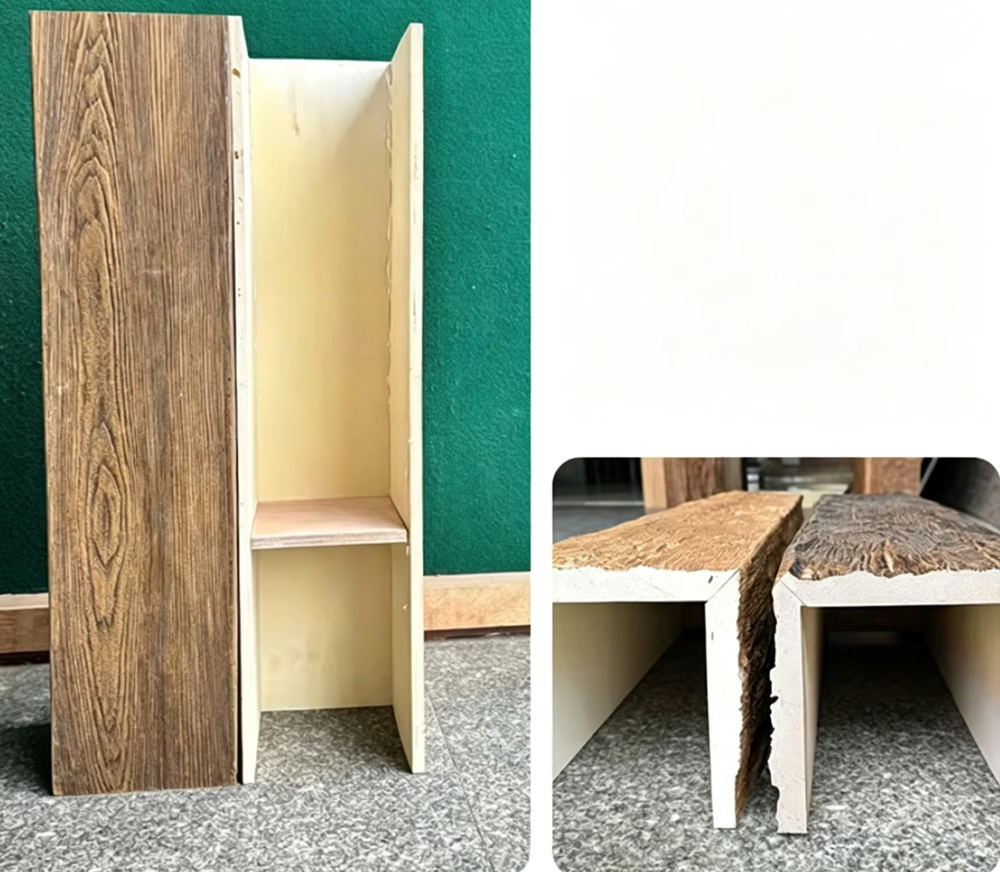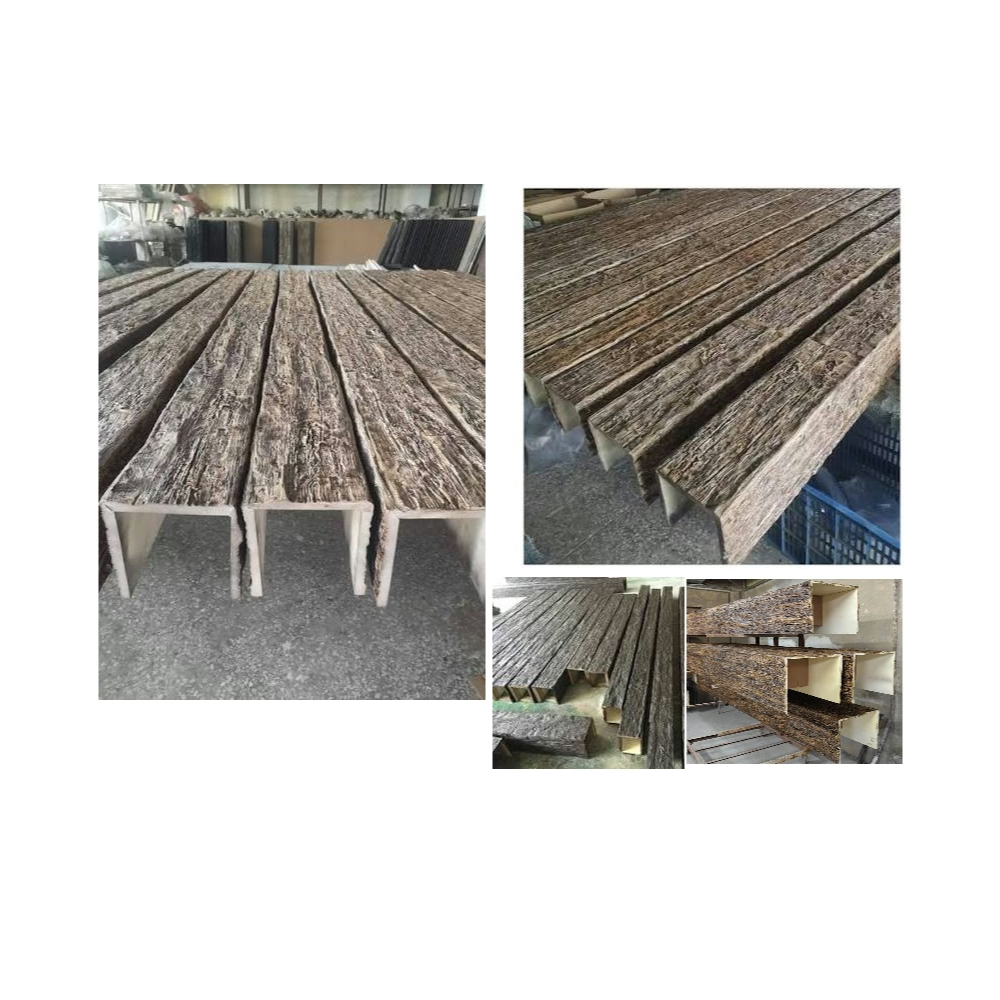
Wire Concealing Polyurethane Faux Wood Ceiling Beams
Interior Installation: fauxwoodbeams 032
Electrician Trade Perspective Perspective
I'm an electrician with twenty-three years of commercial and residential experience, and I've worked with every kind of beam product on the market. From my perspective, the wire-concealing hollow beam is one of the most useful products to come along in years - it solves real problems that electricians and homeowners have wrestled with for decades. Running wire across a finished ceiling means either surface-mounted conduit (ugly) or opening the ceiling to run wire above (expensive and disruptive). Hollow beams let us do neither. Here's how we use them on actual jobs.
Faux Wood Beam Installation
I'm an electrician with twenty-three years of commercial and residential experience, and I've worked with every kind of beam product on the market. From my perspective, the wire-concealing hollow beam is one of the most useful products to come along in years - it solves real problems that electricians and homeowners have wrestled with for decades. Running wire across a finished ceiling means either surface-mounted conduit (ugly) or opening the ceiling to run wire above (expensive and disruptive). Hollow beams let us do neither. Here's how we use them on actual jobs.
writingStyle
electrician-trade-perspective
How Hollow Beams Simplify Wiring
The hollow profile provides a raceway - a continuous channel - for running wire from one point to another. Wire enters the beam at one end (usually through a junction box in the wall), runs through the cavity, and exits at any point along the beam where an outlet, fixture, or device needs power. The wire is concealed within the beam, the beam looks like architectural millwork, and the homeowner gets the functionality they wanted without the ceiling damage they didn't want.
Code Compliance
Electrical code requires that wire be accessible - you can't bury a junction box behind drywall and call it done. Hollow beams provide a workable solution because the wire inside the beam is accessible - you can remove the beam (or access panels in the beam) to reach the wire. For Romex (non-metallic sheathed cable), this approach is straightforward. For conduit-wired systems, the hollow beam can serve as the conduit itself if properly sized. We work with electricians to confirm code compliance for every installation.
Load Capacity
There's a practical limit to how much wire you can run through a hollow beam. The cavity is sized for typical residential loads - a few circuits of 12-gauge wire, a handful of low-voltage data lines, maybe a coax run. You can't run the main service entrance through a beam. We provide cavity dimensions with every product so electricians can plan their wire runs accordingly. Overstuffing a beam with wire is a fire hazard and a code violation - keep the wire load to what the cavity can safely accommodate.
Future Access
Wire that's run through a beam today may need to be replaced, added to, or troubleshot in the future. The beam should be installed with future access in mind - either removable sections, access panels at junction points, or documentation showing where the wire runs are. We've seen too many installations where future electricians couldn't figure out where the wire went because the previous installer didn't document anything. Smart installers leave a wire routing diagram in the panel box for future reference.
Common Wire Routing Problems
Frequently Asked Questions
Are faux wood beams realistic looking?
Yes, our faux wood beams feature hand-carved textures and multi-step finishing that captures every detail of authentic aged wood. Most people cannot tell the difference.
How much do these beams weigh?
Our faux wood beams are approximately 88% lighter than real wood. A typical 8-foot beam weighs only 10-15 pounds, making DIY installation easy.
Can I install these outdoors?
Yes, we offer outdoor-rated faux wood beams that are UV-resistant and waterproof, perfect for covered patios and porches.
How do I get a quote?
Click the "Get Inspired - Contact Us" button above. We typically respond within 2-4 hours with pricing tailored to your project.