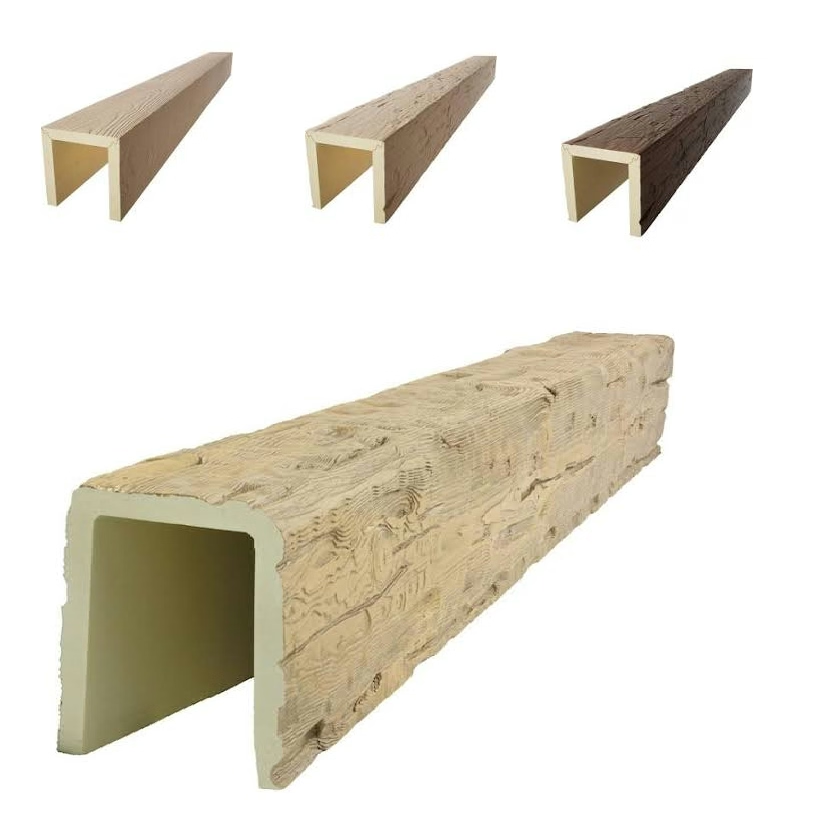
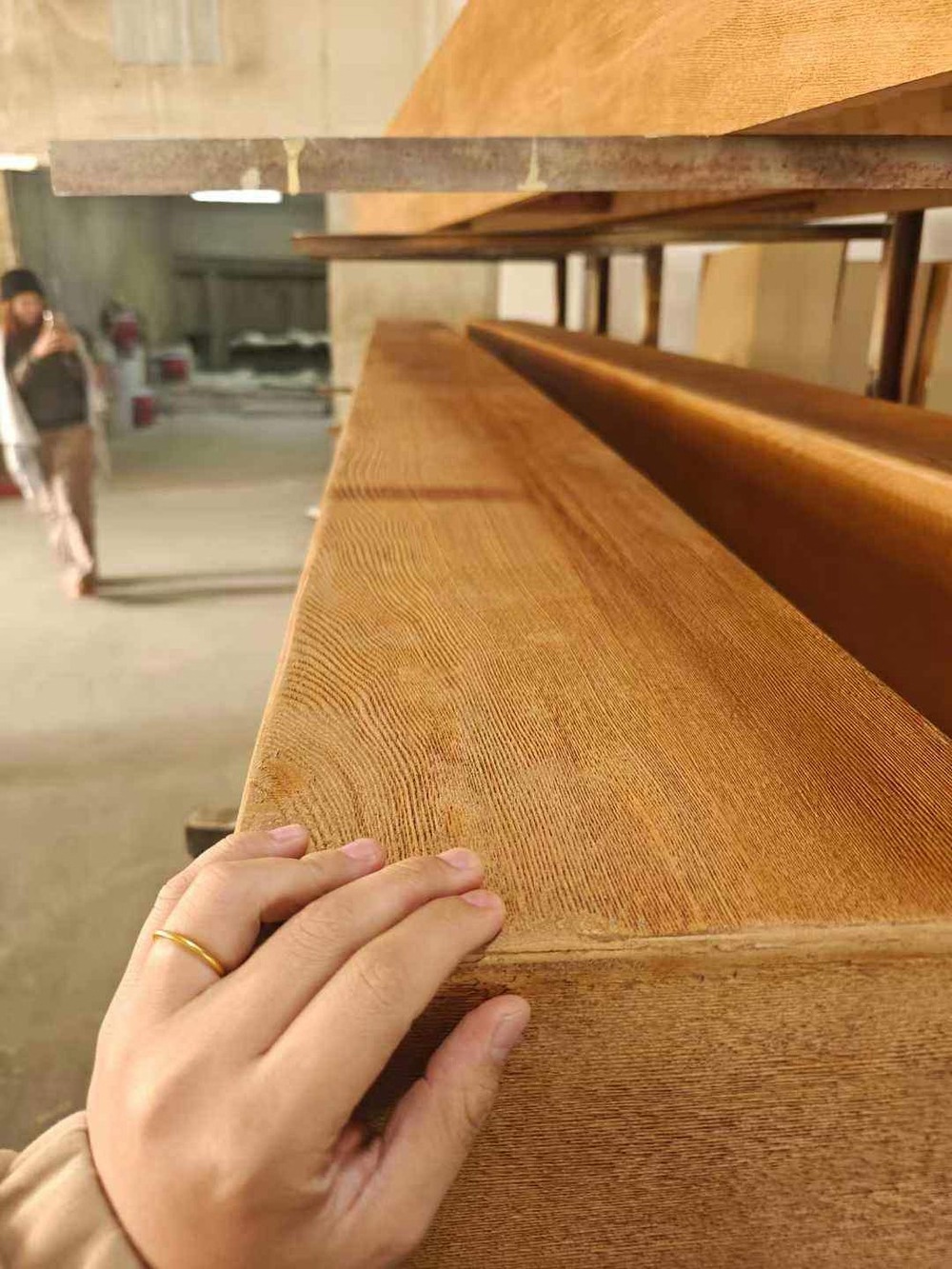
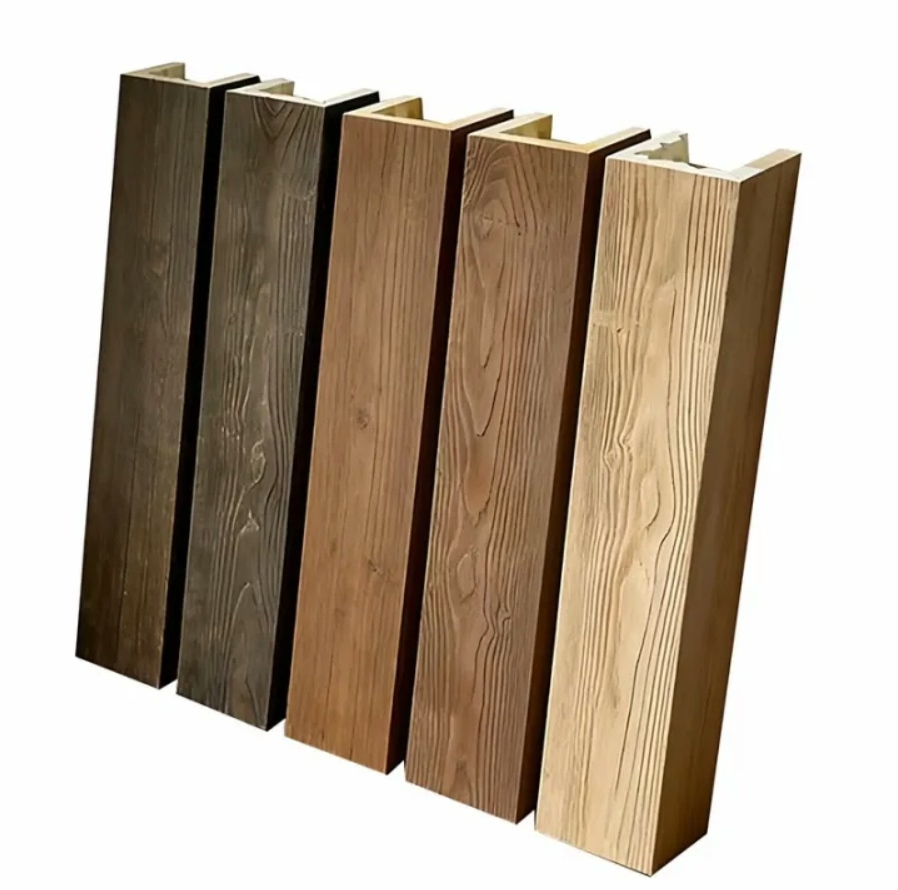
The true test of any building material is time, and polyurethane faux timber beams have now accumulated over a decade of real-world performance data from installations across residential, commercial, and hospitality applications worldwide. This documented record provides concrete evidence of durability characteristics that inform specification decisions and reassure project teams evaluating faux beam technology. The data reveals consistent performance across climates ranging from tropical humidity to arid desert conditions, with installations in heated interiors and exposed exterior applications alike.
Our durability tracking program began when early production beams reached their fifth year of service, with systematic data collection from that point forward. Project owners, installation contractors, and maintenance personnel have contributed observations that form the basis of this performance record. Periodic follow-up surveys capture appearance changes, structural concerns, and maintenance requirements that provide the most meaningful durability indicators.
Climate Performance Across Environmental Conditions
Installations in humid subtropical climates, such as those in Florida, Singapore, and Hong Kong, have maintained appearance and structural integrity despite year-round exposure to elevated moisture levels. These conditions challenge natural timber severely, causing swelling, warping, and decay that requires ongoing maintenance. Faux beam installations in these climates show no measurable dimensional change and surface finishes remain intact without specialized care beyond routine cleaning.
Arid desert climates present different challenges, with low humidity and significant temperature fluctuations creating conditions where natural timber often checks and splits. Installations in Phoenix, Dubai, and Las Vegas have performed well in these conditions, with beam surfaces accepting the thermal movement without cracking or finish separation. The material's dimensional stability in these environments proves particularly valuable for exterior applications where direct sun exposure creates extreme surface temperatures.
Coastal installations face salt air exposure that accelerates corrosion and material degradation for many construction products. Our installations on waterfront properties in Malibu, the Mediterranean coast, and island destinations show no unusual degradation attributable to salt exposure. UV-resistant finish options have proven essential for these applications, with properly finished beams maintaining color stability despite intense solar radiation.
Temperature cycling affects materials differently depending on their thermal mass and expansion characteristics. Interior installations in unconditioned spaces such as covered porches and entry vestibules have experienced temperature ranges exceeding 40 degrees Celsius between seasonal extremes. Beams in these applications show no distortion or joint separation, validating the material's suitability for thermally variable environments.

Structural Integrity Over Extended Service
Structural performance data comes primarily from inspections conducted during property maintenance visits or renovation projects involving beam work. These observations reveal that mounting systems perform reliably over extended periods, with attachment hardware maintaining secure connection to supporting structures. The lightweight nature of PU faux beams places less stress on mounting systems than equivalent natural timber, contributing to this strong structural record.
Beam-to-beam connections show similar reliability, with spliced installations maintaining alignment and load transfer capability throughout the observation period. Quick-connect hardware, when properly installed, has shown no tendency toward loosening or failure. The dimensional stability of polyurethane means that thermal and humidity movement that might stress mechanical connections in natural timber does not affect these assemblies.
Finish adhesion has proven excellent across installations, with field observations confirming that factory-applied finishes remain bonded to beam substrates without peeling, bubbling, or delamination. This adhesion performance exceeds what might be expected from field-applied finishes, validating the value of controlled factory finishing conditions. Even in challenging environments, finish integrity has remained consistent.
Surface hardness has not degraded measurably, with beams maintaining resistance to denting and impact damage comparable to new installations. This characteristic proves particularly valuable in commercial applications where ongoing foot traffic and furniture movement create persistent impact risk. The material's resilience contributes to appearance maintenance that justifies initial investment in quality products.
Maintenance Requirements and Long-Term Care
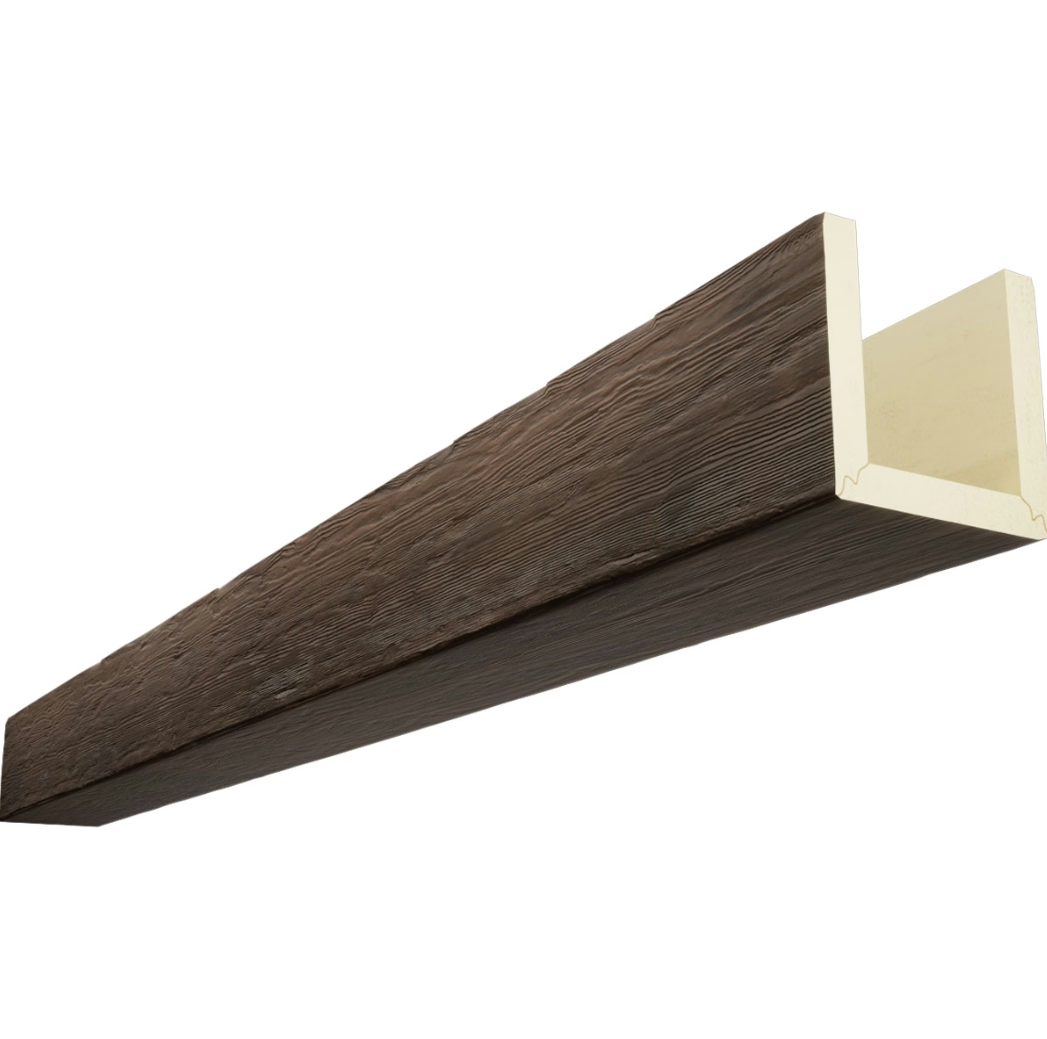
Long-term appearance maintenance for PU faux beams proves simpler than for natural timber alternatives. The sealed surface does not require periodic refinishing, staining, or sealing treatments that natural timber demands to maintain appearance. Routine cleaning with soft brushes or damp cloths removes accumulated dust and debris, with deeper cleaning needed only at multi-year intervals.
Touch-up requirements have proven minimal across the installation base. Occasional scuffs or scratches can be addressed with repair kits provided at installation, but significant finish damage has been rare. The consistency of factory-applied finishes means that repair touch-ups blend seamlessly with surrounding surfaces when properly applied. Property managers report that beam maintenance consumes negligible time compared to natural timber elements in comparable applications.
Replacement component needs have been extremely uncommon, with damage from impacts or accidents accounting for most replacement requirements rather than material failure. This pattern indicates that the material performs as expected, with replacement driven by acute incidents rather than gradual degradation. Having replacement stock available from original installation ensures matching materials are available if needed.
The documented 10-year performance record provides specification-level confidence for project teams evaluating faux beam technology. Rather than relying on laboratory testing alone, this real-world data demonstrates how materials perform in the varied conditions that actual installations encounter. The consistent record supports specification decisions with evidence rather than speculation.

Technical References
ASTM standards cited in every specification
Test Data
Lab results from internal testing program
Updated 2026
Reviewed against current product specs