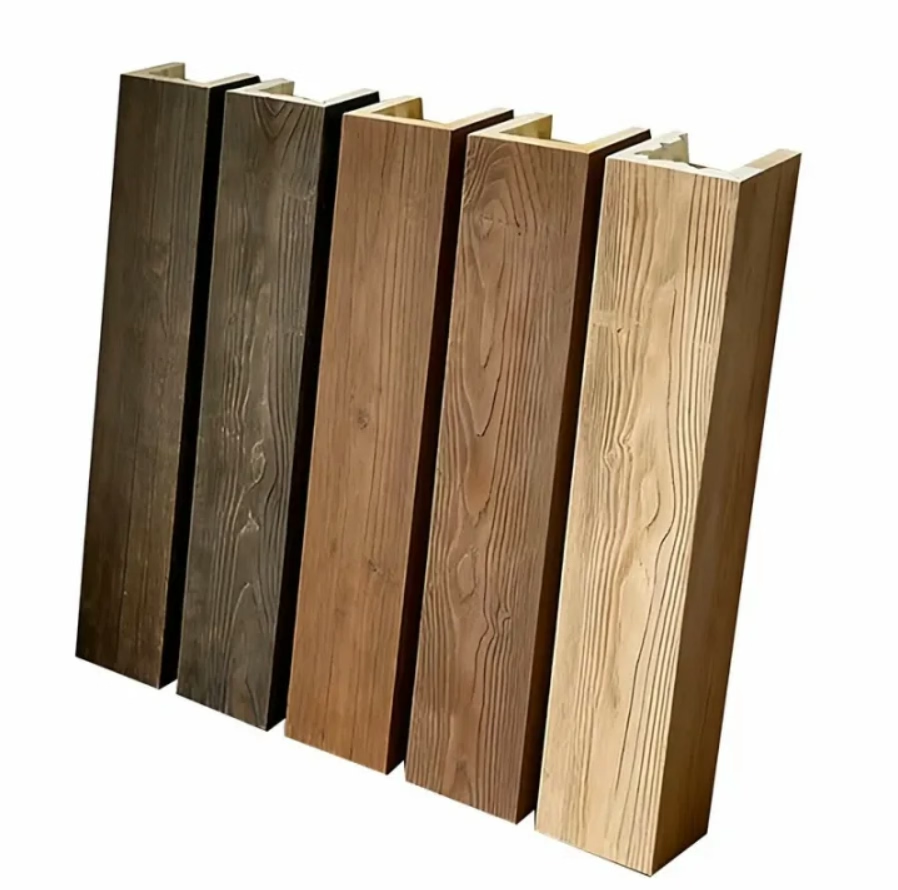
Every interior designer has encountered the dilemma. The client wants the warmth and authenticity of natural timber beams. The space cannot support the weight. The budget stretches only so far. And the timeline will not accommodate the specialized trades required to install structural timber. In years past, these constraints often meant abandoning the ceiling beam concept entirely or settling for a diluted compromise that satisfied no one. Today, ultra-lightweight polyurethane faux beams represent a genuine, first-principles alternative to natural timber that addresses every one of those constraints without meaningful compromise on aesthetics or performance.
The history of faux building materials stretches back centuries, with plaster moldings and papier-mâché ornamental trim used in grand European interiors long before modern manufacturing made polymer-based alternatives possible. What distinguishes the current generation of PU faux beams from those historical precedents is the remarkable fidelity of the surface reproduction. Advances in mold-making technology, surface texturing, and color application mean that a well-made polyurethane beam can replicate the specific grain pattern, color variation, and surface character of a chosen timber species with accuracy that is genuinely difficult to distinguish from the original material at conversational distance.
Comparing Real Timber and PU Faux Beams
The most immediately apparent difference between natural timber and PU faux beams is weight. A solid Douglas fir beam measuring 6 inches by 8 inches by 12 feet weighs approximately 95 to 110 pounds depending on moisture content. The same dimensions in high-density polyurethane faux construction weigh approximately 15 to 22 pounds. This five-to-one weight reduction fundamentally changes the engineering requirements of the installation. Where solid timber requires structural support calculated by an engineer, lightweight faux beams can be mounted to standard ceiling substrates using hardware and methods accessible to any competent tradesperson or experienced homeowner.
The cost differential is equally significant. Solid timber beams in premium hardwood species can cost between $40 and $120 per linear foot depending on species, grade, and finish. A 12-foot beam in American black walnut, for instance, can easily exceed $1,000 at retail pricing, and that figure excludes delivery, handling equipment, and installation labor. Equivalent PU faux beams in premium textured finish typically range from $8 to $25 per linear foot, representing a cost reduction of 70 to 85 percent compared to solid timber. At scale, for an entire room of beams, the savings are substantial enough to make previously unthinkable renovation projects financially viable.
The maintenance profiles of the two materials diverge even more dramatically over time. Natural timber beams require ongoing attention to environmental conditions. They expand and contract with changes in humidity, which can cause joints to open, fasteners to loosen, and surface finishes to crack. They are vulnerable to insect damage from wood-boring beetles and termites, particularly in warm climates. They absorb moisture from the air, which can lead to mold growth and rot in poorly ventilated spaces. PU faux beams are unaffected by all of these concerns. They do not absorb moisture, they resist insect activity, and they maintain dimensional stability across a wide range of environmental conditions. A polyurethane beam installed correctly will look the same after 20 years as it did on the day it was installed, with no maintenance beyond occasional cleaning.

Where Faux Beams Excel Beyond Natural Timber
There are specific applications where PU faux beams possess advantages that natural timber simply cannot match. In outdoor and semi-outdoor environments, natural timber requires either expensive pressure-treated or naturally durable species that can withstand moisture and UV exposure, or regular applications of exterior wood preservatives and sealants. PU faux beams formulated with UV stabilizers and weatherproof coatings can be used in covered outdoor applications such as pergolas, patios, and verandas without the ongoing maintenance demands of natural wood.
The consistency of appearance across a project is another meaningful advantage. Natural timber beams, even from the same species and log, will exhibit color variation, grain differences, and occasional imperfections such as knots, checks, or mineral streaks. While many designers value this natural variation, it can complicate projects where a uniform appearance is desired. PU faux beams are manufactured to consistent color and texture specifications, ensuring that every beam in a project matches perfectly. This predictability simplifies specification, installation planning, and the achievement of a precise design vision.
Hollow-form faux beams also offer practical advantages in spaces where electrical wiring, plumbing, or HVAC ducting runs through the ceiling. Solid timber beams provide no serviceability; any infrastructure running through the beam cavity requires separate conduit or rerouting. Hollow faux beams can be specified with internal channels that accommodate wiring or small-diameter ducting, simplifying the integration of recessed lighting, speakers, or ventilation systems without compromising the ceiling's visual appearance.
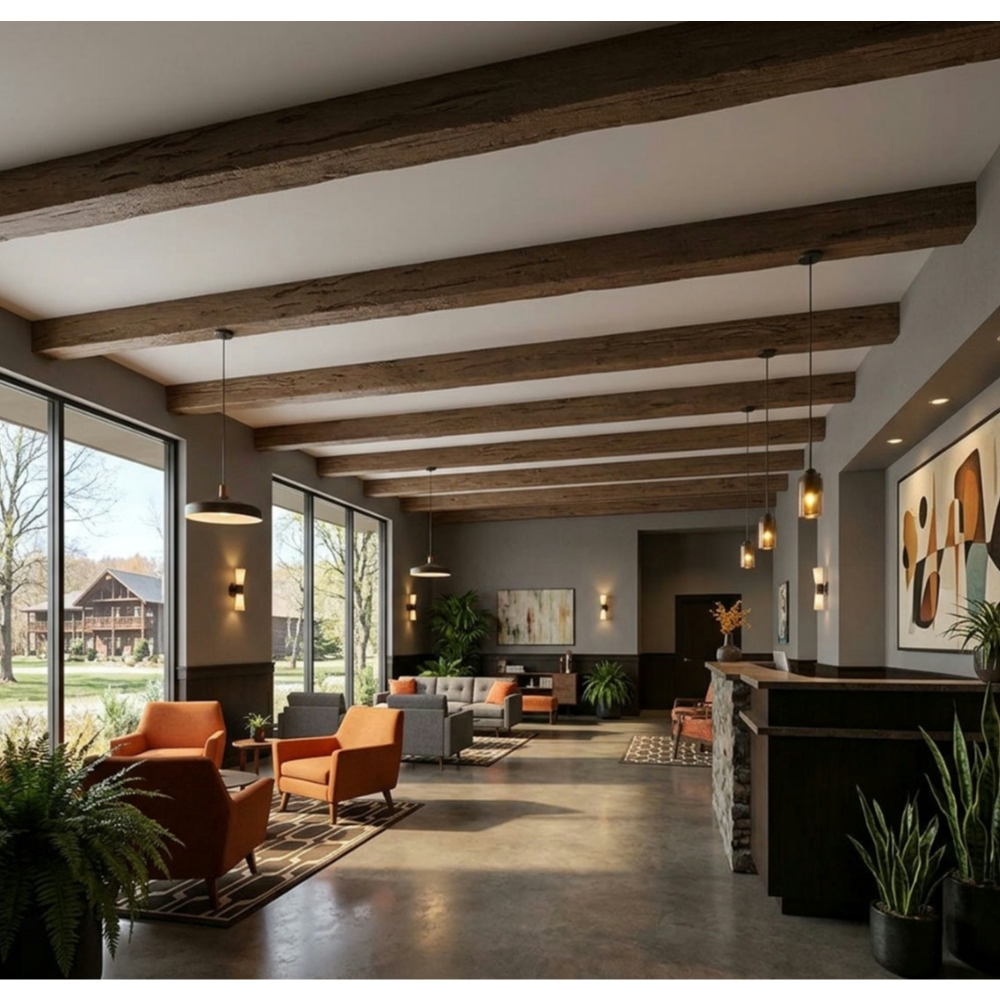
Aesthetic Realism and Design Flexibility
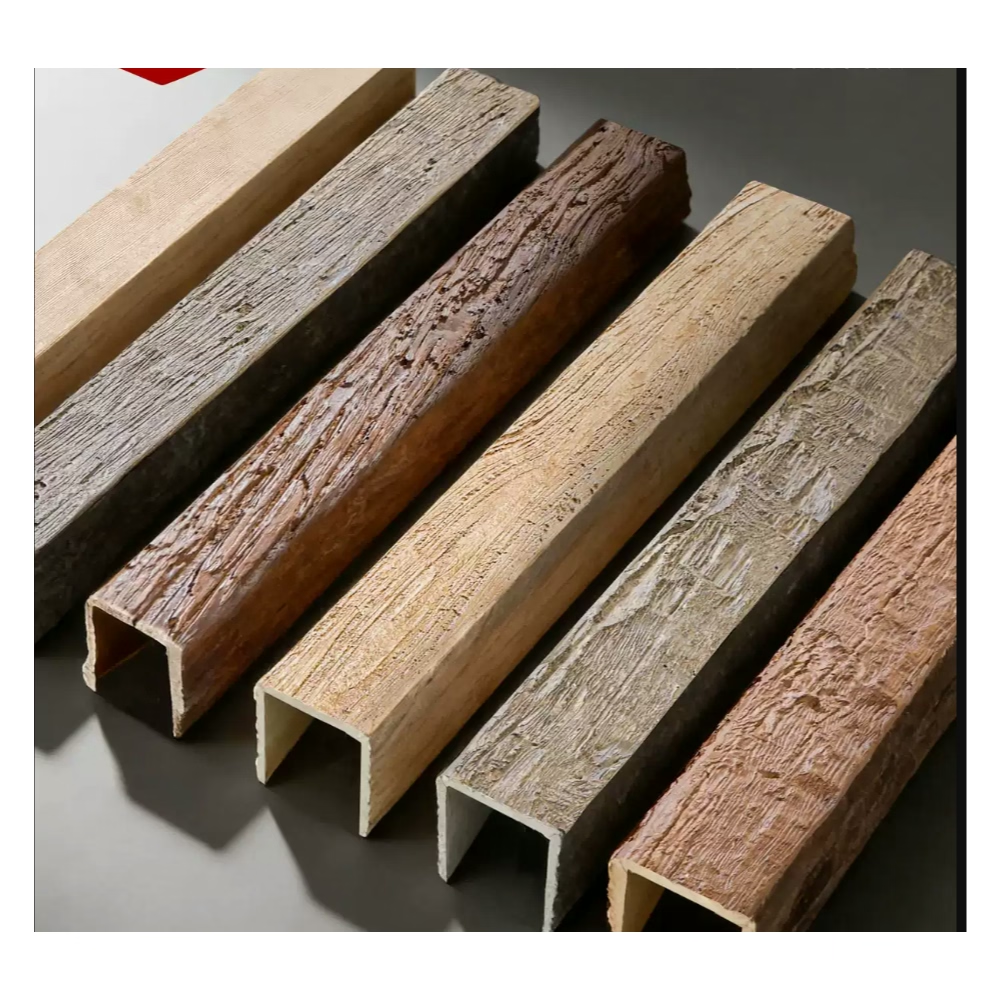
The quality spectrum in PU faux beams is wide, and buyers should understand what distinguishes premium products from economy alternatives. At the premium end, beams feature deeply embossed surface textures that capture the finest details of wood grain, including the subtle ridges and valleys of earlywood and latewood zones, the organic waviness of grain lines, and the natural variation in pore depth between species. Economy products may use shallow texturing or smooth surfaces that lack the tactile authenticity of quality reproductions.
Color application techniques vary similarly. Premium faux beams use multi-step finishing processes that layer base coats, stain, and protective topcoats in a manner analogous to fine furniture finishing. The result is a depth of color and tonal variation that mimics the way light interacts with natural wood surfaces. Less expensive products may use single-step paint or coating applications that produce a flat, uniform appearance lacking the dimensional quality of premium alternatives.
Design flexibility represents a distinct advantage of faux over natural timber. Natural timber beam profiles are limited by the practical realities of sawmilling: beams are typically rectangular or square in cross-section, and more complex profiles require extensive custom milling that is expensive and time-consuming. PU faux beams can be molded into virtually any cross-sectional profile, including curved shapes, compound curves, beams with decorative corbels or brackets, and beams with integrated mounting channels. This design freedom enables architectural expressions that would be prohibitively expensive or physically impossible in natural timber.
Making the Right Choice for Your Project
The decision between natural timber and PU faux beams depends on the specific requirements and constraints of each project. For installations where structural engineers have confirmed that the ceiling can support heavy loads, and where the budget accommodates premium materials and specialized labor, natural timber remains a legitimate choice with its own inherent appeal. The authenticity of reclaimed barn beams or hand-hewn logs carries a narrative quality that no manufactured product can fully replicate.
For the overwhelming majority of ceiling beam installations, however, the practical advantages of ultra-lightweight PU faux beams outweigh the intangible benefits of natural timber. The combination of dramatically lower cost, easier installation, minimal maintenance, consistent quality, and design flexibility makes polyurethane faux beams the rational choice for most residential and commercial applications. When the beams look this good and perform this well, the "faux" designation no longer feels appropriate. They are simply a better solution for the realities of modern construction and renovation.
Technical References
ASTM standards cited in every specification
Test Data
Lab results from internal testing program
Updated 2026
Reviewed against current product specs