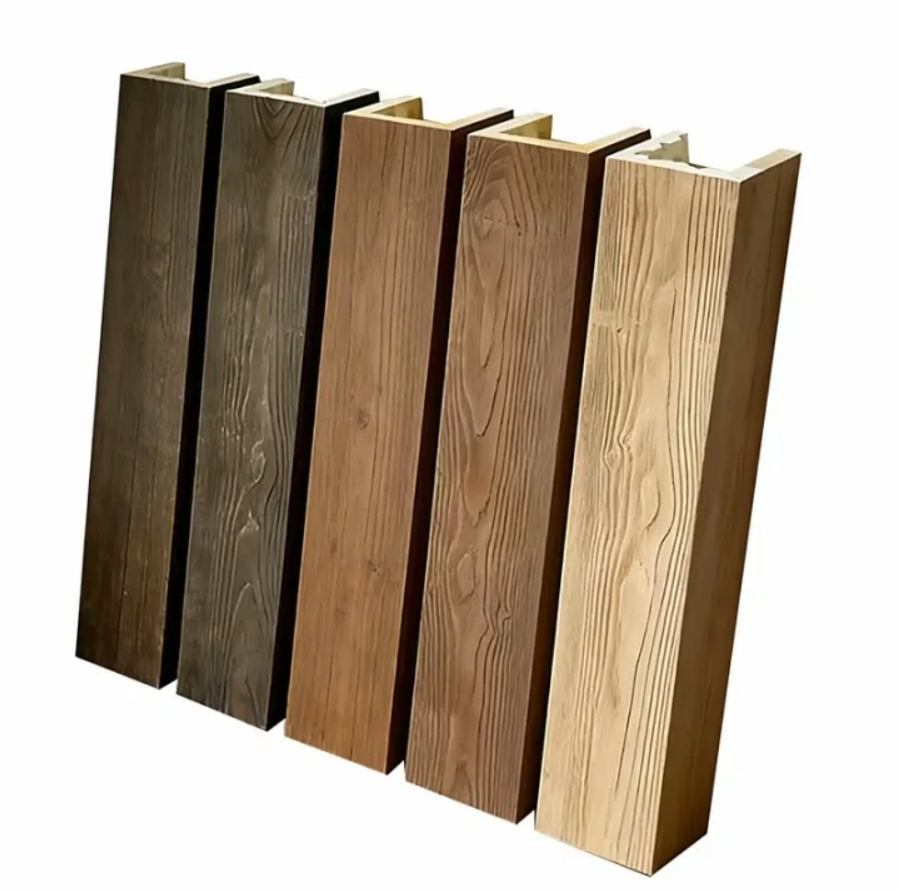
The construction industry has long searched for materials that deliver the aesthetic qualities of natural wood without its practical limitations. Wood's beauty is undeniable: its grain patterns, color warmth, textural depth, and the way it ages and develops character are qualities that no synthetic material has historically matched. But the weight, moisture sensitivity, maintenance demands, and cost of solid timber have consistently created friction between designers' vision and practical reality. Polyurethane faux wood beams represent the most successful resolution of this tension to date, offering a replacement for solid timber that addresses nearly every limitation while preserving the visual qualities that make timber the material of choice for architectural ceiling detailing.
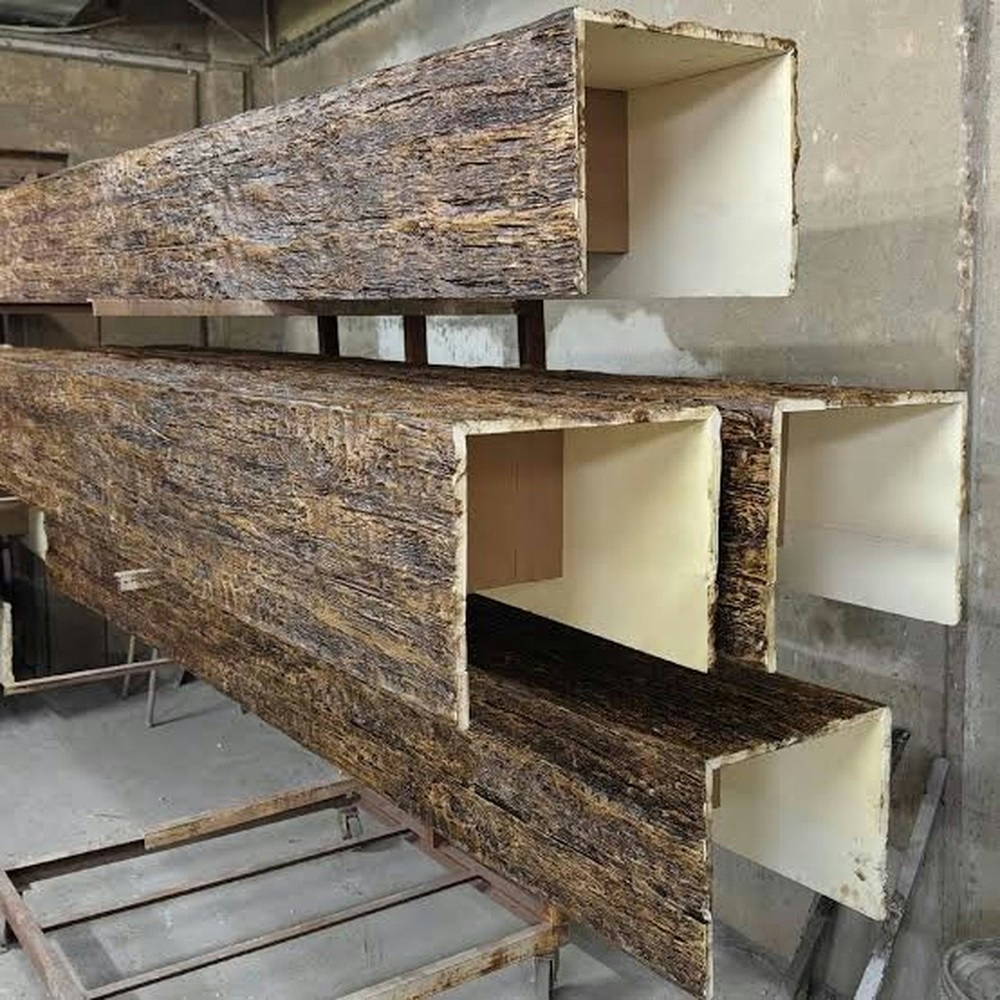
The engineering behind PU beam replacement of solid timber is not a simple case of lighter equals better. Achieving structural adequacy in a hollow-shell beam requires thoughtful internal architecture, appropriate material selection, and mounting systems that distribute loads effectively. Modern PU faux beam manufacturers have invested heavily in this engineering, and the result is products that can genuinely serve as drop-in replacements for solid timber in decorative applications while offering meaningful advantages in weight, cost, durability, and maintenance.
Engineering Equivalence: When Can PU Replace Solid Timber?
The substitution of PU faux beams for solid timber beams requires understanding the distinction between structural and decorative applications. In structural applications, where a beam must bear load — supporting a floor above, carrying roof weight, or resisting lateral forces — only genuine structural elements should be used. PU faux beams are explicitly decorative products. They do not replace structural timbers; they replace the aesthetic appearance of timbers that are installed for visual rather than load-bearing purposes. In virtually every ceiling beam installation, the beams are decorative, and the ceiling structure handles all structural requirements independently.
This distinction is important because it clarifies that the replacement question is not about structural equivalence but about visual and practical equivalence. PU faux beams installed as decorative ceiling elements do not need to bear structural loads; they only need to look convincing, hang securely, and maintain their appearance over time. On these criteria, premium PU beams excel. The surface reproduction quality of modern products means that the visual substitution is nearly perfect. The mounting systems engineered for these products ensure secure, stable installation. And the maintenance-free performance over decades means the practical substitution is unequivocally superior.
There are specific scenarios where the replacement is not merely practical but genuinely advantageous. In seismic zones, reducing the mass of ceiling-mounted elements improves a building's seismic performance by lowering the forces that must be resisted during an earthquake. In buildings with heritage conservation requirements, lightweight beams installed as reversible modifications avoid permanent alterations to original fabric. In temporary installations for events, film sets, or leased commercial spaces, lightweight beams can be installed and removed without structural damage. In each of these scenarios, the PU beam is not just a replacement for timber; it is a better solution for the specific requirements of the application.
Surface Quality and Aesthetic Fidelity
The most critical question for anyone considering PU beams as timber replacements is whether the aesthetic quality is sufficient. After all, the primary reason for choosing timber-look beams over other ceiling treatments is the distinctive warmth and character that wood provides. If the faux alternative looks obviously fake, the substitution fails regardless of its practical advantages.
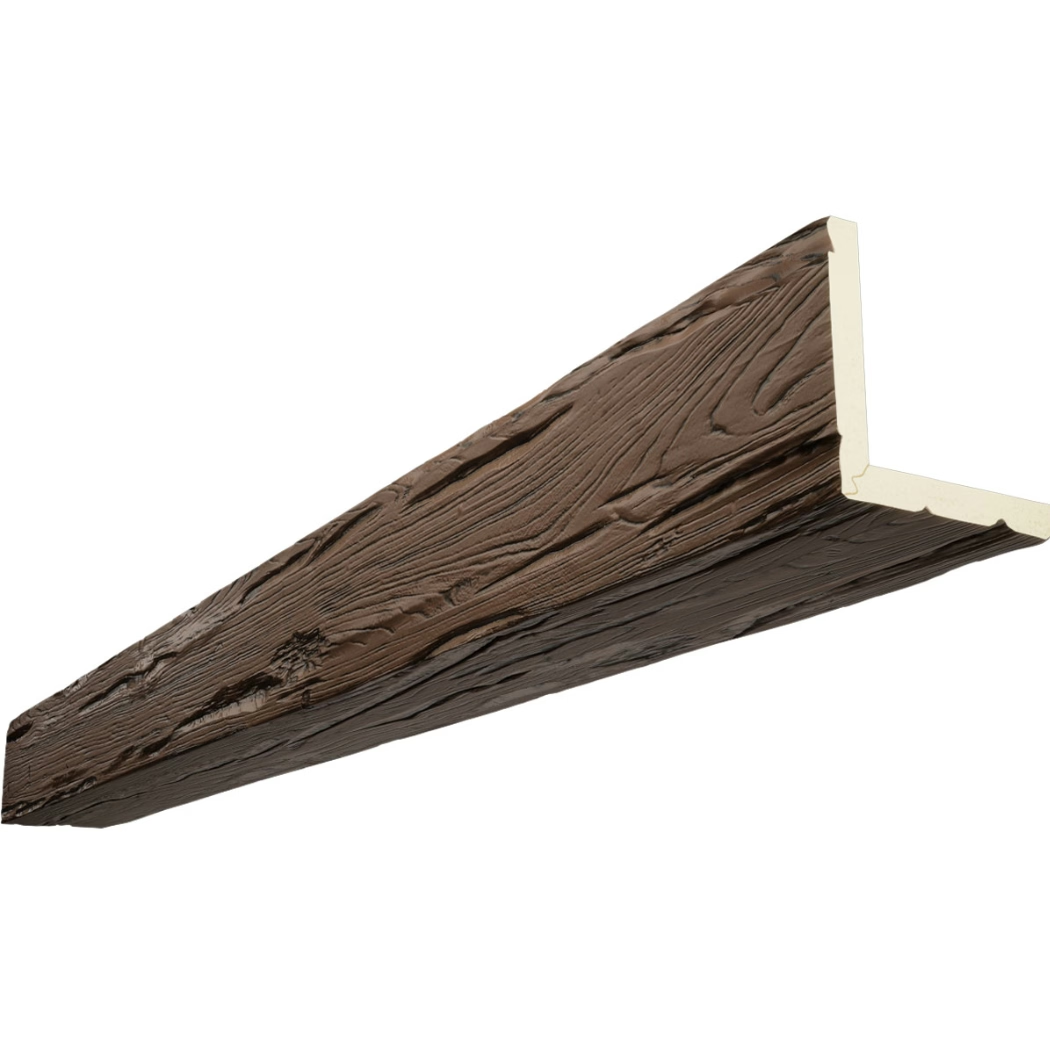
Modern manufacturing techniques have addressed this concern with remarkable thoroughness. Premium faux beams use molds taken directly from actual timber samples, capturing the full complexity of wood grain including the subtle irregularities, natural variations, and minor imperfections that give natural wood its character. Surface texturing is applied through embossing or pressure molding processes that create tactile depth comparable to sanded or hand-planed natural wood surfaces. The result is a product where the grain pattern, surface texture, and color variation convincingly replicate the appearance of real wood when viewed at normal conversational distance.
Color application processes for premium faux beams further enhance authenticity. Rather than a single uniform coating, multi-layer finishing systems apply base coats, stains, and topcoats in a sequence that builds depth and complexity similar to the finishing of fine furniture. The stain penetrates embossed grain lines, creating the characteristic darkening in low areas that gives wood its dimensional appearance. Protective topcoats add the subtle sheen variations that occur naturally in different wood species, from the low-luster matte of oak to the subtle gloss of walnut.

Long-Term Performance Comparison
The long-term performance comparison between PU beams and solid timber heavily favors the polyurethane alternative in most applications. Natural timber beams are organic materials that continue to interact with their environment throughout their service life. Moisture absorption causes swelling, dimensional change, and eventually rot if conditions remain damp. Dry conditions cause shrinkage and checking. UV light exposure causes surface degradation and color change. Insect activity, particularly from termites and wood-boring beetles, can compromise structural integrity without visible external signs until failure is imminent.
PU faux beams are fundamentally different in their aging behavior. High-density polyurethane is chemically stable and does not undergo the moisture-driven dimensional changes that affect natural wood. Premium products include UV stabilizers in their formulation that resist photodegradation from sunlight exposure. The closed-cell structure of the foam core denies insects any pathway for infestation. The surface coatings applied during manufacturing are specifically selected for long-term adhesion and color stability. The result is a product that maintains its as-installed appearance for decades with no special maintenance beyond occasional cleaning.
This performance advantage translates into genuine cost-of-ownership benefits over time. Natural timber beams may require refinishing every five to ten years, depending on exposure conditions. The cost of this refinishing, including labor, materials, and any necessary preparation, accumulates significantly over the life of the installation. For commercial spaces where ceiling access requires scaffolding or lifts, the cost of maintenance can equal or exceed the original installation cost within 15 to 20 years. PU faux beams eliminate these ongoing costs entirely, providing a ceiling treatment that pays for itself through maintenance savings many times over its service life.
Making the Substitution with Confidence
For architects, designers, and homeowners considering the substitution of PU faux beams for solid timber, the decision-making framework is straightforward. Begin by confirming that the application is decorative rather than structural. In virtually all ceiling beam installations, this confirmation will be affirmative. Next, establish the quality standard by examining physical samples of the products under consideration, evaluating surface texture, color depth, and the quality of any mold-matched details such as knots or end-grain reproduction. Finally, review the manufacturer's specifications for mounting hardware, expansion characteristics, and fire rating to ensure compatibility with the project requirements.
Working with established manufacturers who provide comprehensive technical documentation, installation guidance, and realistic performance warranties ensures that the substitution proceeds smoothly. Premium manufacturers stand behind their products with warranties of 10 to 25 years on surface finish and dimensional stability, reflecting confidence in the long-term performance advantages of their materials. These warranties provide the assurance needed to make the substitution with complete confidence, knowing that the finished installation will deliver the aesthetic impact of timber with none of the practical limitations that have historically constrained ceiling design with natural wood.
Technical References
ASTM standards cited in every specification
Test Data
Lab results from internal testing program
Updated 2026
Reviewed against current product specs