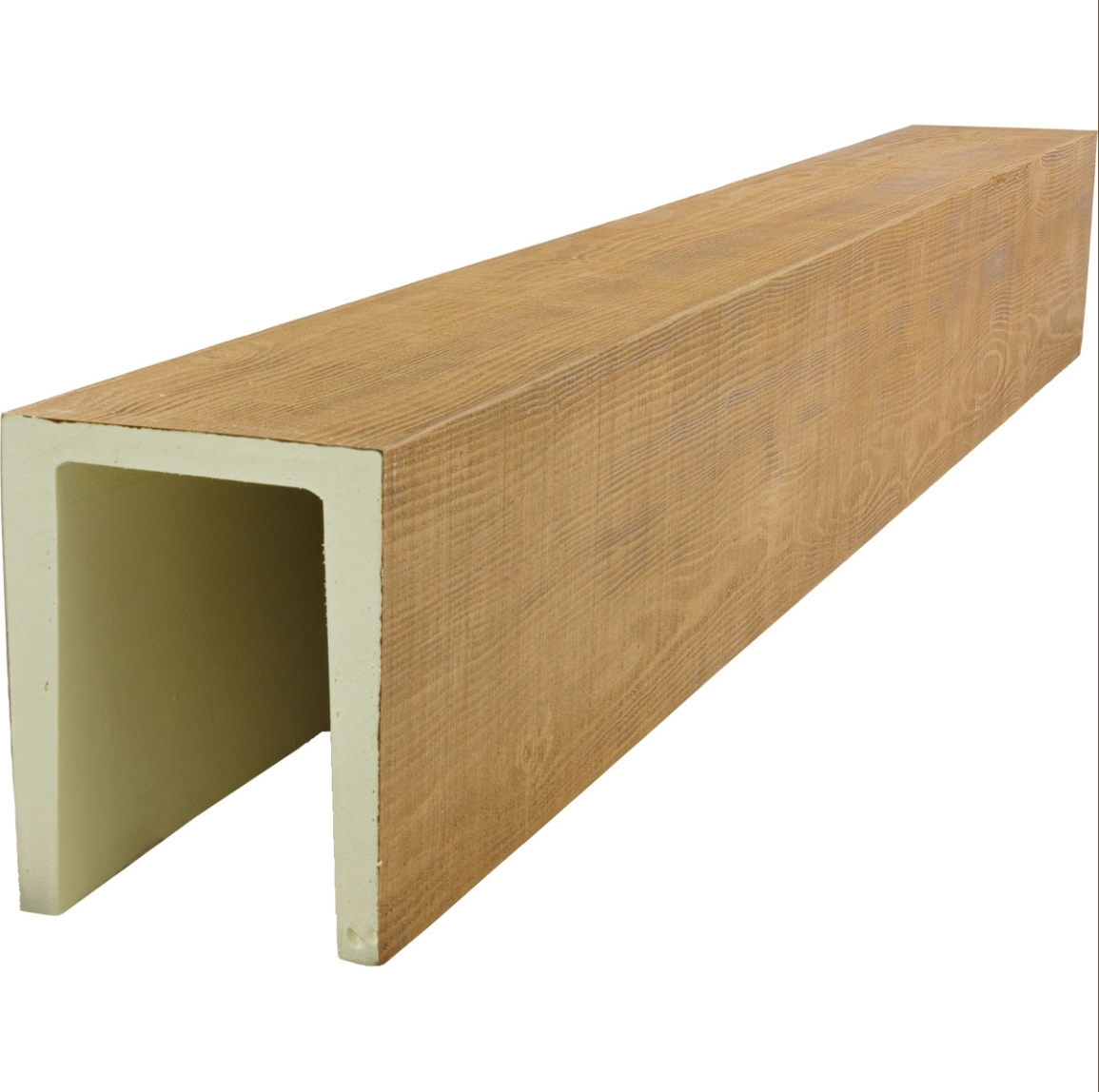
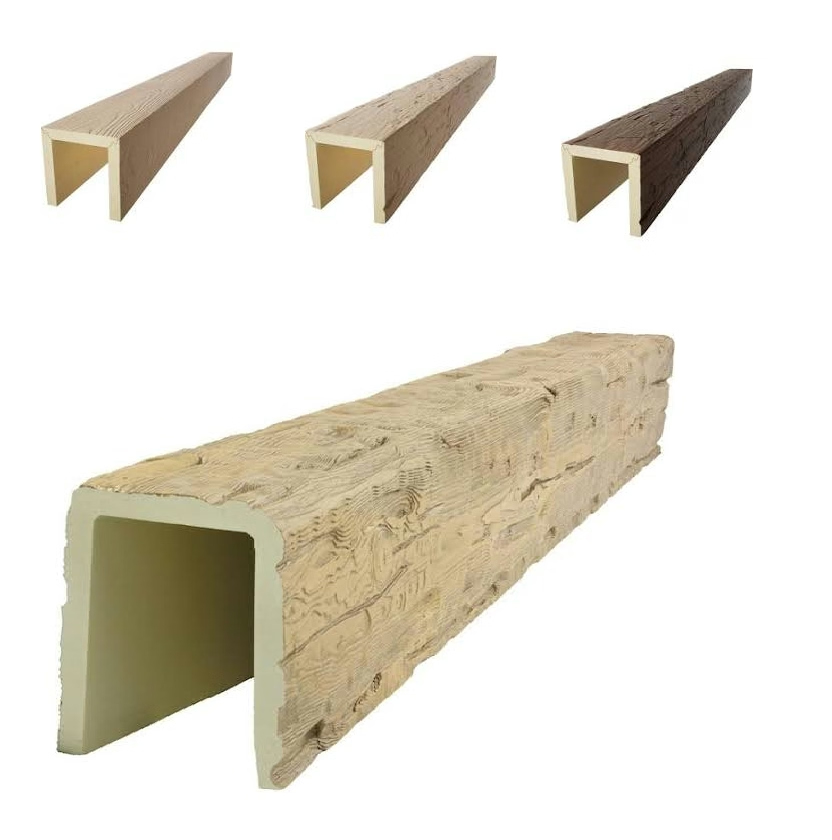
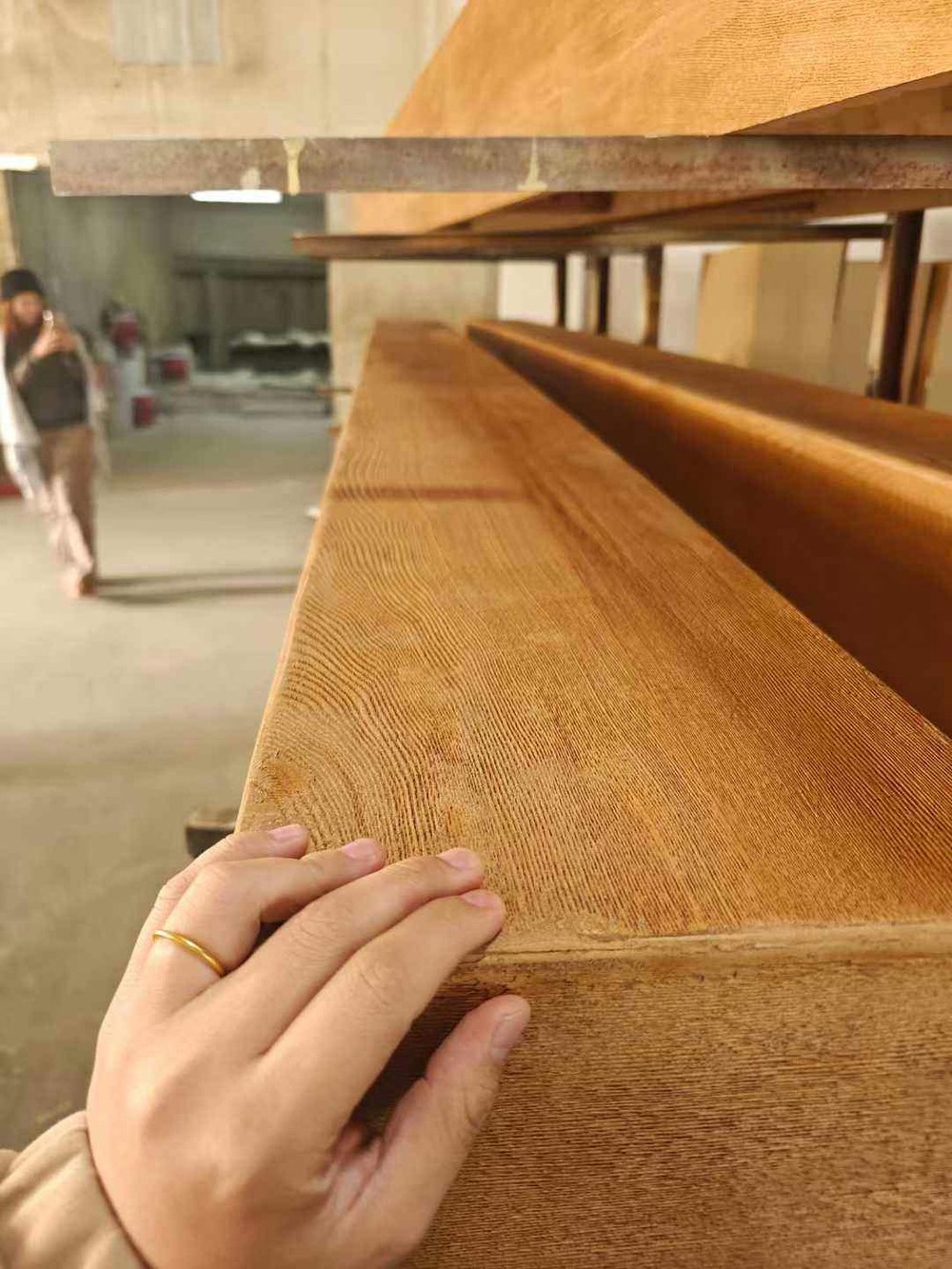
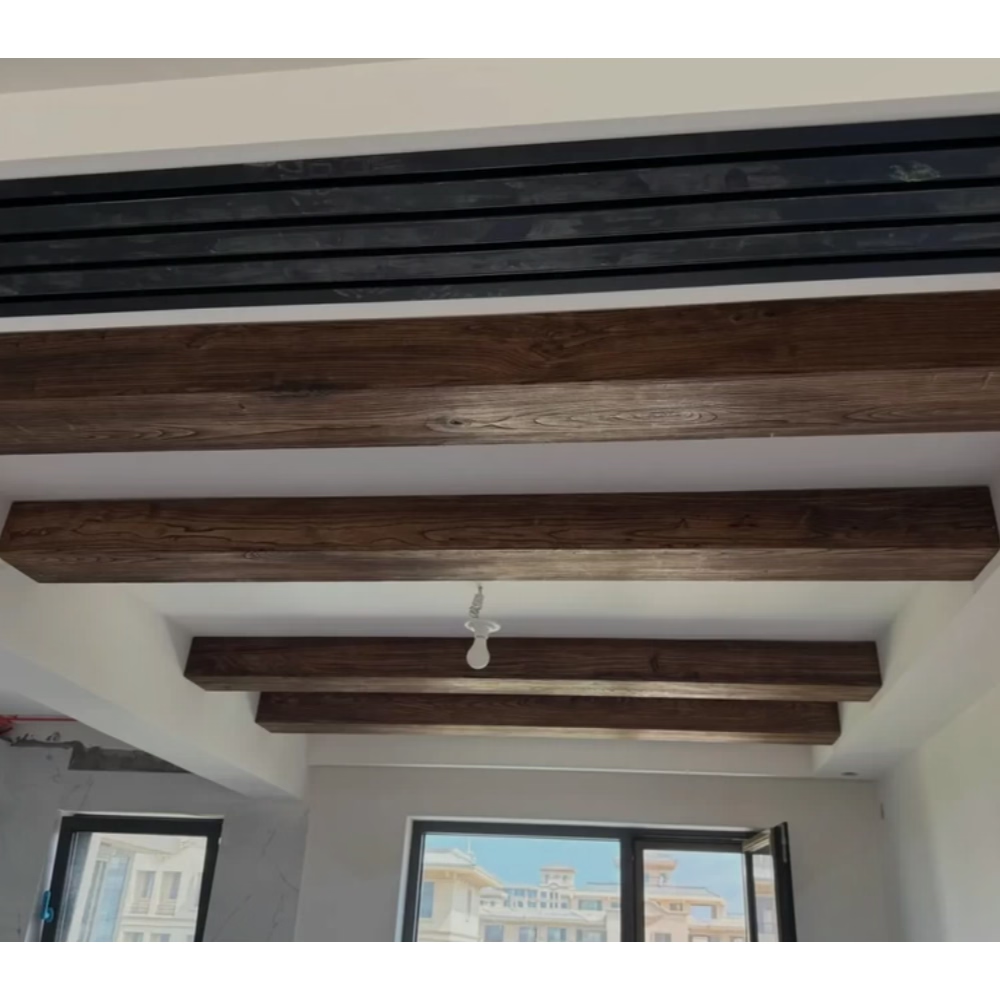
The conversation between an interior designer and her client had reached an impasse. The client, a passionate home cook, wanted a farmhouse kitchen with the warmth of exposed timber beams overhead. The kitchen occupied the second floor of a converted 1920s commercial building with floor-to-ceiling windows and a ceiling height of 11 feet. The building's original ceiling structure consisted of exposed concrete slab with minimal attachment capacity. Installing solid timber beams would have required drilling into the concrete and installing expansion anchors rated for the combined weight of multiple beams, fixtures, and associated hardware. The engineering estimate came back at nearly the same cost as the entire kitchen renovation. The designer proposed a different solution: ultra-lightweight polyurethane faux beams that would achieve the same visual result for a fraction of the structural cost and installation complexity. The client agreed, and the finished kitchen is featured in the portfolio of work she now points to with pride.
This narrative is not unusual. It reflects a pattern that plays out thousands of times each year as designers and homeowners discover that the conventional assumption that "timber beams mean solid timber" no longer holds. The development of high-quality polyurethane faux beams has created a substitute category that is, in many practical respects, superior to the original material it replaces.
Understanding the Substitution Case
The case for PU faux beams as timber substitutes rests on three pillars: practical performance, economic value, and aesthetic quality. Each of these pillars has been strengthened substantially by advances in manufacturing technology over the past decade. The practical performance gap between premium faux beams and natural timber has narrowed to the point where it is effectively zero for decorative ceiling applications. The economic value proposition is dramatically in favor of faux beams when total cost of ownership is considered over the lifecycle of the installation. And the aesthetic quality of the best faux beams is, to the discerning eye, nearly indistinguishable from the natural material it replicates.
The substitution is most straightforward in residential ceiling applications, where the beams are purely decorative and no structural loads are involved. The mounting hardware and methods designed for PU faux beams provide adequate security for any residential ceiling installation, with safety margins that exceed standard building code requirements. For commercial applications, additional consideration of fire ratings, acoustic performance, and maintenance accessibility may be warranted, but these considerations typically favor rather than disadvantage PU beams.
The manufacturing tolerances achievable with polyurethane molding represent a meaningful advantage over natural timber, which varies in dimension, straightness, and surface quality from piece to piece. When installing multiple beams across a ceiling, the consistency of manufactured faux beams ensures that spacing, alignment, and visual appearance are uniform throughout. This predictability simplifies installation and guarantees a finished result that matches the design intent precisely. Natural timber, by contrast, requires sorting, selection, and often custom fitting to achieve comparable consistency.
Comparative Analysis: Where Each Material Excels
Neither material is universally superior in all respects. Natural timber retains genuine advantages in specific applications that should be acknowledged rather than dismissed. For exposed exterior applications such as pergolas, covered porches, or outdoor entertaining structures, naturally durable timber species such as Western Red Cedar or Black Locust provide decades of service with minimal treatment in ways that even premium PU beams cannot fully match without regular maintenance. The organic weathering process of natural timber in exterior applications produces a patina that many homeowners find desirable and that synthetic materials cannot authentically replicate.
In restoration projects targeting historically accurate reproduction, natural timber or timber reclaimed from appropriate sources may be the only acceptable material from a heritage compliance perspective. While PU faux beams have been used successfully in many heritage building renovations, some heritage authorities and preservation architects maintain a preference for original or reproduction materials that are materially identical to the building's historical fabric. This consideration is context-specific and should be evaluated on a case-by-case basis.
For new construction and the vast majority of renovation applications, however, the practical and economic advantages of PU faux beams make them the default choice. The weight advantage eliminates structural reinforcement requirements. The cost advantage makes ceiling beams accessible at price points that would not support solid timber. The maintenance advantage reduces long-term ownership cost and complexity. The consistency advantage ensures reliable, predictable installation results. These advantages are not marginal; they are transformational, changing what is possible in ceiling design across every market segment and building type.

Sourcing Quality Substitutes for Your Project
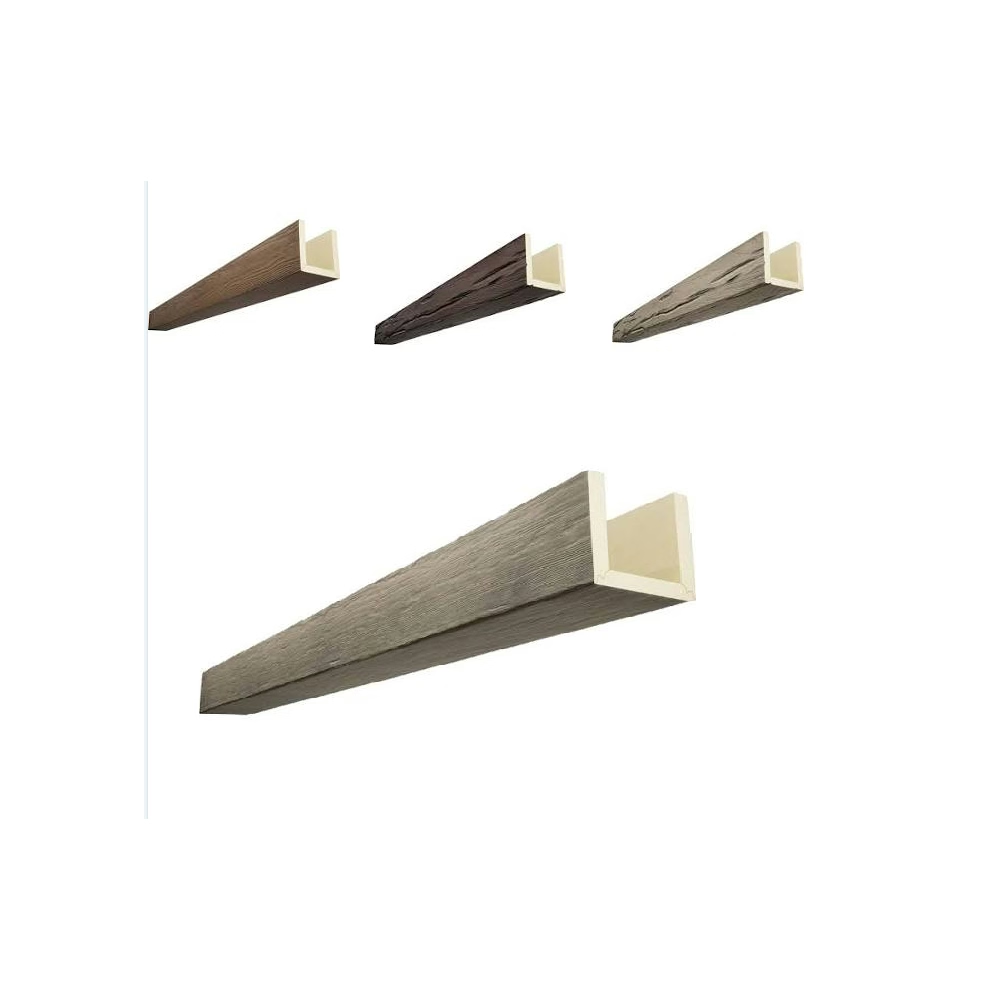
The quality spectrum in PU faux beams is wide, and the substitution case is most compelling when applied to premium products. Economy-tier faux beams may use shallow surface texturing, low-density foam cores with inadequate structural performance, and surface coatings that fade or peel within a few years. These products can undermine confidence in the entire substitution concept, even though the problems are a function of product quality rather than material category.
Sourcing from manufacturers with established quality management systems, comprehensive technical specifications, and realistic performance warranties ensures that the substitution delivers on its promise. Key specifications to request include density (30 to 60 kg/m³ for quality products), compressive strength (minimum 150 kPa for structural adequacy), flexural strength (minimum 300 kPa for beam applications), thermal expansion coefficient (to assess dimensional stability across temperature ranges), and fire rating (Class A or B for interior commercial applications).
Product sampling before committing to a large order is standard practice in the industry and should be requested without hesitation. Physical samples allow evaluation of surface texture depth, color quality, edge detailing, and the overall tactile impression of the product. Walking a sample across your finger and feeling the grain texture, examining how light interacts with the stained surface, and testing the weight in your hand communicates the product's character in ways that photographs and specifications cannot fully capture.
The Broader Implications of Material Substitution
The widespread adoption of high-quality PU faux beams as timber substitutes reflects a broader trend in construction and design toward materials that optimize performance across multiple criteria simultaneously. The historical paradigm that equated natural materials with superior quality is giving way to a more nuanced understanding that recognizes the value of engineered materials that deliver equivalent or superior performance in targeted applications.
This shift benefits the environment in ways that are worth acknowledging. The production of solid timber beams, even from sustainably managed forests, involves harvesting, milling, drying, transport, and finishing processes that consume energy and generate waste. PU faux beam production, while not carbon-neutral, involves significantly less embodied energy per unit of installed visual impact. The dramatically reduced freight footprint of lightweight beams further improves their environmental profile. For projects where sustainability is a priority consideration, the full lifecycle assessment of PU faux beams often compares favorably to solid timber alternatives.
The substitution of PU faux beams for solid timber is no longer a compromise or a fallback position. It is a deliberate, informed choice made by designers and homeowners who understand the tradeoffs and have determined that the practical advantages of polyurethane outweigh the intangible qualities of natural wood in their specific application. The result is better buildings, more accessible design, and ceiling spaces that inspire and delight without demanding structural gymnastics or ongoing maintenance attention.
Technical References
ASTM standards cited in every specification
Test Data
Lab results from internal testing program
Updated 2026
Reviewed against current product specs